![Best Top Rated CNC Machine for Woodworking [Guide]](data:image/svg+xml;base64,PHN2ZyB4bWxucz0iaHR0cDovL3d3dy53My5vcmcvMjAwMC9zdmciIHdpZHRoPSI0NzQiIGhlaWdodD0iNjYiIHZpZXdCb3g9IjAgMCA0NzQgNjYiPjxyZWN0IHdpZHRoPSIxMDAlIiBoZWlnaHQ9IjEwMCUiIHN0eWxlPSJmaWxsOiNjZmQ0ZGI7ZmlsbC1vcGFjaXR5OiAwLjE7Ii8+PC9zdmc+ "Best Top Rated CNC Machine for Woodworking [Guide] Step-by-Step Guides, Tools & Inspiration to Build Beautiful Wooden Decor on a Budget")
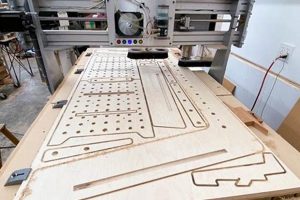
A computer numerical control (CNC) machine employed within woodworking applications represents a technologically advanced tool utilized for precise cutting, shaping, and carving of wood materials. These automated machines follow pre-programmed instructions to execute intricate designs and repetitive tasks with a high degree of accuracy and efficiency. For example, a furniture manufacturer might use such a machine to create identical chair legs or decorative panels.
The significance of these tools in modern woodworking lies in their ability to increase production speed, reduce material waste, and enhance the overall quality of finished products. Historically, woodworking relied heavily on manual skills and craftsmanship. The introduction of automated equipment has streamlined processes, allowing for greater complexity in design and improved consistency in output. This has led to a reduction in labor costs and an increased capacity for mass production while also enabling the creation of highly customized pieces.
The following sections will delve into key aspects of selecting and utilizing these machines, covering topics such as different types available, essential features to consider, and best practices for operation and maintenance. This information will assist in making informed decisions about implementing this technology within a woodworking business or hobbyist workshop.
Essential Guidance
The following offers practical advice intended to assist in maximizing the potential of automated woodworking machinery and ensuring optimal performance and longevity.
Tip 1: Conduct Thorough Research Prior to Purchase. Before investing, evaluate specific woodworking needs and production requirements. Compare technical specifications, such as cutting area, spindle speed, and software compatibility, from multiple manufacturers to ensure alignment with project demands.
Tip 2: Prioritize Robust Construction and Quality Components. The machine’s frame, drive system, and spindle assembly are critical to its performance and durability. Opt for models constructed with heavy-duty materials and precision-engineered components to minimize vibration and maintain accuracy over time.
Tip 3: Invest in Comprehensive Training. Proper operation and maintenance are paramount. Seek out training programs or workshops that cover machine setup, programming, toolpath creation, and troubleshooting to prevent errors and optimize cutting performance.
Tip 4: Implement a Regular Maintenance Schedule. Consistent maintenance is essential for preventing downtime and extending the machine’s lifespan. Follow manufacturer recommendations for lubrication, cleaning, and inspection of key components, such as belts, bearings, and sensors.
Tip 5: Optimize Tool Selection for Specific Materials. The choice of cutting tools directly impacts the quality of the finished product. Select appropriate tools for different wood types, taking into account factors such as hardness, grain direction, and desired surface finish. Utilize sharp, well-maintained tooling to minimize chipping and maximize cutting efficiency.
Tip 6: Regularly Calibrate and Level the Machine. Precise calibration and leveling are crucial for achieving accurate cuts and consistent results. Periodically check and adjust the machine’s alignment to compensate for wear and tear or changes in the operating environment.
Tip 7: Implement Effective Dust Collection Systems. Woodworking generates substantial dust, which can negatively impact machine performance and operator health. Utilize a high-efficiency dust collection system to remove airborne particles and prevent buildup on critical components.
Adhering to these suggestions promotes efficient operation, ensures high-quality output, and contributes to the long-term viability of the investment.
The concluding section will summarize the key considerations for selecting and maintaining woodworking automation equipment and offer a perspective on future trends in the field.
1. Precision

In woodworking, precision is paramount. The relationship between a woodworking CNC machine and precision is central to determining its overall quality and effectiveness. Accurate execution of designs is essential for achieving desired aesthetic and functional outcomes.
- Dimensional Accuracy
Dimensional accuracy refers to the machine’s ability to consistently produce parts that adhere to specified dimensions. Minute deviations can compromise the integrity of assembled components. A top-rated machine maintains tolerances within a narrow range, often measured in thousandths of an inch. For instance, in crafting complex joinery for furniture, achieving precise mortise and tenon dimensions is crucial for a strong, seamless fit. The machines ability to repeatedly cut these joints to the exact specifications dictates the quality of the final product.
- Repeatability
Repeatability indicates the machine’s capacity to perform the same cutting operation multiple times with consistent results. Variations in each pass can accumulate and lead to cumulative errors. In the production of identical components, such as chair legs or decorative moldings, repeatability is critical. If a machine cannot reliably reproduce the same cut, inconsistencies will arise, affecting the uniformity and overall aesthetic appeal of the finished set.
- Resolution and Step Size
Resolution defines the smallest increment of movement that the machine can execute. Smaller step sizes result in smoother curves and finer details in carved surfaces. For intricate relief carvings or ornate patterns, a high-resolution machine is essential. The machine’s capacity to move in precise, minuscule increments enables the creation of smooth gradients and sharply defined edges, enhancing the visual impact of the finished piece.
- Calibration and Compensation
The machine’s ability to be accurately calibrated and compensated for inherent mechanical imperfections is vital. Regular calibration ensures that the programmed movements correspond precisely to the actual movements of the cutting tool. Sophisticated CNC machines incorporate compensation algorithms that correct for backlash, thermal expansion, and other factors that can affect accuracy. This is particularly important for long-duration cutting operations where temperature fluctuations can introduce errors.
The pursuit of precision is a driving force in the design and development of woodworking CNC machines. A machine’s capacity to deliver accurate, repeatable, and finely detailed cuts directly influences its position in the marketplace. Therefore, the level of precision achievable is a key differentiator among CNC machines for woodworking and a primary consideration for woodworkers seeking to invest in high-quality equipment.
2. Durability

The operational longevity and reliability of a woodworking CNC machine are intrinsically linked to its durability. A machine’s ability to withstand the stresses of continuous operation directly impacts its productivity and return on investment. In evaluating a woodworking CNC machine, durability extends beyond the mere physical robustness of its components; it encompasses the capacity to maintain precision and performance under demanding conditions. A durable machine minimizes downtime, reduces the need for frequent repairs, and contributes to a more consistent production flow. For instance, a machine tasked with producing intricate furniture components in a high-volume manufacturing environment requires a robust frame and drive system capable of enduring repetitive stress without compromising accuracy. A machine lacking such durability would exhibit increased vibration, leading to inaccuracies in cutting and premature component failure.
The selection of materials and construction techniques significantly influences the durability of a woodworking CNC machine. Frames constructed from heavy-gauge steel or cast iron provide superior rigidity and vibration damping compared to those made from lighter materials. Likewise, the use of high-quality bearings, linear rails, and ball screws in the motion control system contributes to smoother, more reliable operation and reduces wear and tear over time. Moreover, effective dust collection and cooling systems are essential for preventing the accumulation of debris and heat, both of which can accelerate component degradation. Consider the impact on a small woodworking business: investing in a durable machine, even at a higher initial cost, can translate to significant savings in the long run through reduced maintenance expenses and increased operational uptime. This allows the business to meet production deadlines and maintain customer satisfaction.
In conclusion, durability is a non-negotiable attribute of a high-quality woodworking CNC machine. It is a fundamental factor influencing its long-term value, operational efficiency, and overall suitability for demanding woodworking applications. Evaluating a machine’s construction materials, component quality, and resistance to environmental factors is crucial in determining its ability to withstand the rigors of continuous use and deliver consistent performance over its lifespan. Selecting a machine prioritizing durability is a strategic investment that yields tangible benefits in terms of productivity, reliability, and cost-effectiveness. These elements are crucial when looking for that top rated cnc machine for woodworking.
3. Software

The software component of a woodworking CNC machine acts as the crucial interface between design and physical execution. Without appropriate software, even the most mechanically robust machine remains functionally inert. The efficacy of the software directly dictates the complexity, precision, and efficiency with which designs can be translated into tangible wooden objects. Software limitations can severely restrict the machine’s capabilities, preventing the creation of intricate designs or hindering the optimization of cutting paths. An example of the software’s influence lies in the creation of three-dimensional carvings. Sophisticated software capable of generating complex toolpaths allows the machine to carve intricate details and smooth curves. Conversely, rudimentary software may only permit basic two-dimensional cuts, limiting the machine’s application.
Modern CNC software packages for woodworking offer a range of features, including computer-aided design (CAD), computer-aided manufacturing (CAM), and machine control functionalities. CAD software enables the creation of precise digital models of the desired wooden objects. CAM software then converts these designs into machine-readable code (G-code) that dictates the movements of the cutting tool. Machine control software interprets this G-code and controls the machine’s motors, spindles, and other components. The integration and seamless communication between these software components are essential for efficient and accurate operation. For example, advanced CAM software can optimize toolpaths to minimize cutting time, reduce material waste, and improve surface finish. It might also simulate the cutting process to identify potential collisions or inefficiencies before the machine begins operation. These features significantly enhance productivity and reduce the risk of errors.
In conclusion, the software integrated with a woodworking CNC machine is a critical determinant of its overall performance and utility. Selecting a machine with capable and user-friendly software is as essential as considering its mechanical specifications. The software’s ability to support complex designs, optimize cutting paths, and provide accurate machine control directly impacts the quality, efficiency, and versatility of the woodworking processes. Therefore, in the pursuit of a top-rated CNC machine for woodworking, prioritizing software capabilities is indispensable. Neglecting this aspect can result in a machine that fails to meet the evolving demands of modern woodworking applications.
4. Spindle Power
Spindle power is a critical determinant of a woodworking CNC machine’s capability to efficiently and effectively cut various wood types and thicknesses. Insufficient spindle power restricts the machine’s ability to handle denser hardwoods or perform deep cuts, while excessive power can lead to unwanted vibration and reduced precision. Selecting a machine with appropriately sized spindle power is essential for achieving optimal cutting performance and versatility. The considerations involved when considering Spindle Power are part of determining which machine is a top rated cnc machine for woodworking.
- Material Density and Hardness
Higher spindle power is necessary for machining dense hardwoods such as maple, oak, or walnut. These materials require increased force to overcome their resistance to cutting, and insufficient power can result in stalled spindles, rough cuts, or broken tooling. Conversely, softer woods like pine or balsa require less power, and using an excessively powerful spindle can lead to splintering or tear-out. For example, a cabinet maker working primarily with hardwoods would require a CNC machine with a more powerful spindle compared to a hobbyist who primarily works with softwood.
- Cutting Depth and Feed Rate
Deeper cuts and faster feed rates demand greater spindle power. Increasing the depth of cut or the speed at which the cutting tool moves through the wood requires the spindle to exert more force to maintain consistent cutting speed and accuracy. Exceeding the spindle’s power capacity can result in decreased cutting quality, premature tool wear, or machine failure. A furniture manufacturer producing intricate carvings with deep relief would need a CNC machine with a spindle capable of delivering sufficient power to maintain consistent performance at the required depth of cut and feed rate.
- Tool Size and Type
Larger diameter cutting tools and certain tool geometries require more spindle power to operate effectively. Larger tools engage a greater surface area of the wood, increasing the cutting force required. Certain tool types, such as those used for aggressive material removal, also place greater demands on the spindle. For instance, a CNC machine equipped with a large-diameter surfacing bit would require more spindle power than one using a small-diameter engraving bit. The choice of tooling should be aligned with the spindle’s power capabilities to ensure optimal cutting performance and prevent overloading the motor.
- Spindle Speed and Torque
Spindle power is directly related to both spindle speed and torque. Higher spindle speeds are typically used for smaller diameter tools and for achieving smoother surface finishes. Higher torque is necessary for larger diameter tools and for cutting dense materials. Spindle power represents the product of spindle speed and torque. A woodworking CNC machine with a wide range of adjustable spindle speeds and sufficient torque at lower speeds offers greater flexibility in adapting to different materials, tool types, and cutting conditions. For example, a machine with high torque at low speeds would be better suited for performing heavy material removal operations on hardwoods, while a machine with high speeds would be more appropriate for fine detail work on softwoods.
In conclusion, the selection of a woodworking CNC machine must carefully consider the spindle power rating in relation to the anticipated range of materials, cutting depths, tool sizes, and operating speeds. Insufficient spindle power limits the machine’s capabilities and reduces its overall efficiency, while excessive power can lead to other problems. An appropriately sized spindle contributes to improved cutting quality, increased tool life, and enhanced machine reliability. Hence, a careful evaluation of spindle power is crucial in determining if a particular machine can be considered a top rated cnc machine for woodworking.
5. Cutting Area

The cutting area of a woodworking CNC machine directly influences the scale and type of projects that can be undertaken. A limited cutting area inherently restricts the dimensions of workpieces, precluding the creation of larger furniture components or architectural elements in a single operation. Conversely, an expansive cutting area allows for the machining of full-size panels and complex assemblies, thereby enhancing the machine’s versatility. Therefore, the cutting area represents a fundamental parameter in determining the suitability and overall rating of a woodworking CNC machine.
The practical significance of understanding the relationship between cutting area and project requirements is evident in various woodworking applications. For instance, a small-scale cabinet shop specializing in custom casework may find a machine with a modest cutting area adequate for producing individual cabinet doors and drawer fronts. However, a larger manufacturing facility producing complete kitchen sets would necessitate a machine with a substantially larger cutting area capable of processing full-size cabinet panels. Selecting a machine with an insufficient cutting area would necessitate breaking down larger components into smaller sections and machining them separately, resulting in increased production time, material waste, and potential inaccuracies in assembly. Conversely, investing in a machine with an unnecessarily large cutting area could lead to increased initial cost and footprint without providing commensurate benefits.
The selection of an appropriate cutting area involves a careful analysis of current and anticipated project dimensions. Factors to consider include the typical size of workpieces, the frequency of large-scale projects, and the available floor space within the workshop. In conclusion, the cutting area is a critical attribute that directly impacts the capabilities and productivity of a woodworking CNC machine. A machine’s cutting area must align with the specific needs of the woodworking application to maximize efficiency, minimize waste, and ensure the successful completion of desired projects. The appropriateness of cutting area is central when evaluating a machine with the intention of calling it a top rated cnc machine for woodworking.
6. Material Compatibility

Material compatibility is a defining characteristic influencing the utility and value of a woodworking CNC machine. A machine’s capacity to efficiently and accurately process a diverse range of wood types directly enhances its versatility and expands its applicability across various woodworking domains. The ability to machine both softwoods and hardwoods, along with engineered wood products, is a key factor in determining if a machine qualifies as a top-rated option.
- Wood Hardness and Density
Different wood species exhibit varying degrees of hardness and density, requiring adjustments in cutting parameters such as spindle speed, feed rate, and tool selection. A top-rated CNC machine must possess the power and control necessary to effectively machine dense hardwoods like maple, oak, and walnut, as well as softer woods like pine, cedar, and fir. For instance, attempting to cut hardwood at a speed and feed rate optimized for softwood can result in rough cuts, tool breakage, or even damage to the machine itself.
- Grain Structure and Orientation
The grain structure and orientation of wood significantly influence its machinability. Wood with interlocked or irregular grain patterns can be prone to tear-out or splintering, particularly when cutting against the grain. A top-rated CNC machine should offer features such as variable spindle speed, precise feed control, and advanced toolpath strategies to mitigate these issues. For example, employing climb milling techniques and using specialized cutting tools with shear angles can help to minimize tear-out when machining challenging grain patterns.
- Engineered Wood Products
Beyond solid wood, many woodworking projects utilize engineered wood products such as plywood, MDF, and particleboard. These materials exhibit unique machining characteristics due to their composite structure and the presence of adhesives. A top-rated CNC machine should be capable of efficiently and cleanly cutting these materials without excessive chipping, delamination, or adhesive buildup on the cutting tool. Selecting appropriate cutting tools designed specifically for engineered wood products and optimizing cutting parameters are crucial for achieving satisfactory results.
- Moisture Content
The moisture content of wood can significantly affect its machinability and dimensional stability. Wood with high moisture content is more prone to warping, cupping, and twisting, while excessively dry wood can become brittle and prone to cracking. A top-rated CNC machine should be operated in a controlled environment with consistent humidity levels to minimize these issues. Furthermore, allowing wood to acclimate to the shop environment before machining and employing appropriate drying techniques can further improve its machinability and dimensional stability.
These facets underscore the importance of material compatibility as a defining characteristic of a high-performing CNC machine for woodworking. A machine’s ability to efficiently and accurately process a diverse range of wood types and engineered wood products directly influences its versatility and expands its applicability across various woodworking domains. Therefore, material compatibility must be a primary consideration when assessing the merits of a CNC machine for woodworking applications as it decides whether it may be considered a top rated cnc machine for woodworking.
7. User-Friendliness
User-friendliness, in the context of woodworking CNC machines, significantly contributes to operational efficiency and overall productivity. A machine characterized by intuitive controls, clear documentation, and accessible support systems reduces the learning curve for operators, minimizing training time and potential errors. The effect of user-friendliness directly impacts the proficiency with which operators can utilize the machine’s capabilities, influencing the quality and output of finished products. Machines lacking user-friendly interfaces often lead to operator frustration, increased setup times, and a higher likelihood of mistakes, ultimately diminishing the machine’s value. As a component of a top-rated CNC machine for woodworking, user-friendliness promotes accessibility to a wider range of users, from experienced machinists to novice woodworkers.
For instance, consider two woodworking businesses investing in CNC machines. Business A purchases a machine with a complex interface and poorly written documentation. Operators spend excessive time deciphering instructions, troubleshooting errors, and mastering basic functions. This leads to delayed project completion, increased labor costs, and reduced profitability. Business B, on the other hand, invests in a machine renowned for its user-friendly interface and comprehensive support system. Operators quickly become proficient in using the machine, enabling them to complete projects efficiently, minimize waste, and maximize output. The practical significance of user-friendliness is thus demonstrated in the tangible benefits experienced by Business B, highlighting its importance in achieving operational success.
In summary, user-friendliness is not merely a cosmetic feature but a critical attribute that directly influences the productivity, profitability, and overall satisfaction associated with woodworking CNC machines. While advanced features and technical specifications are essential, a machine’s accessibility and ease of operation are equally important in determining its true value. Addressing the challenges associated with complex interfaces and inadequate support systems is crucial for promoting the widespread adoption and effective utilization of CNC technology in woodworking, contributing to the classification of a machine as top-rated.
Frequently Asked Questions
This section addresses common inquiries regarding the selection and utilization of CNC machines within the woodworking industry, providing essential information for informed decision-making.
Question 1: What distinguishes a “top rated CNC machine for woodworking” from a standard CNC machine?
The designation “top rated” typically implies a machine that excels in several key areas, including precision, durability, software capabilities, spindle power, cutting area, material compatibility, and user-friendliness. It often reflects positive user reviews and expert assessments based on demonstrated performance and reliability.
Question 2: What are the primary factors to consider when selecting a CNC machine for woodworking?
Key factors include the types of wood to be processed, the size and complexity of intended projects, the required level of precision, the available budget, and the skill level of the machine operator. It is crucial to carefully assess these factors to ensure that the selected machine aligns with specific needs and requirements.
Question 3: How does spindle power influence the performance of a woodworking CNC machine?
Spindle power directly affects the machine’s ability to efficiently cut various wood types and thicknesses. Higher spindle power is generally required for machining dense hardwoods and performing deep cuts, while lower power may suffice for softer woods and shallow cuts. Selecting an appropriate spindle power is crucial for achieving optimal cutting performance and preventing motor strain.
Question 4: What role does software play in the operation of a woodworking CNC machine?
The software serves as the interface between the design and the machine’s physical movements. It enables the creation of toolpaths, controls spindle speed and feed rate, and facilitates the precise execution of intricate designs. User-friendly and feature-rich software is essential for maximizing the machine’s capabilities and streamlining the workflow.
Question 5: How important is durability in a woodworking CNC machine?
Durability is paramount, as it directly impacts the machine’s lifespan, reliability, and overall value. A durable machine minimizes downtime, reduces the need for frequent repairs, and maintains its precision and performance over time. Investing in a machine constructed with robust materials and quality components is essential for long-term operational efficiency.
Question 6: Can a less experienced woodworker effectively operate a “top rated CNC machine for woodworking”?
While a top-rated machine offers numerous advantages, its effective operation still requires training and practice. However, user-friendly software and comprehensive documentation can significantly reduce the learning curve, making it easier for less experienced woodworkers to acquire the necessary skills. Investing in training programs or seeking guidance from experienced operators can further enhance proficiency.
The information provided in this FAQ section is intended to serve as a starting point for understanding the complexities of woodworking CNC machines. It is essential to conduct thorough research and consult with industry experts to make informed decisions tailored to specific needs.
Conclusion
The preceding exploration has elucidated the multifaceted considerations integral to identifying a top rated cnc machine for woodworking. Precision, durability, software capabilities, spindle power, cutting area, material compatibility, and user-friendliness have been established as key parameters influencing a machine’s suitability for diverse woodworking applications. These parameters dictate the quality of output, operational efficiency, and overall return on investment.
The ultimate decision regarding the acquisition of a woodworking CNC machine demands meticulous assessment of specific needs and a comprehensive understanding of the trade-offs between various features and price points. While the pursuit of excellence in automation continues, diligent evaluation and informed selection remain paramount to realizing the full potential of this transformative technology within the woodworking industry. Only through this approach can woodworkers ensure a sound investment and a trajectory of enhanced productivity and innovation.