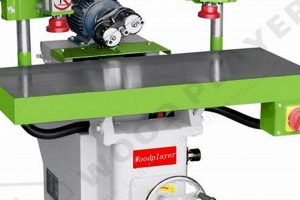
A specialized power tool utilized in woodworking creates precise mortise and tenon joints quickly and efficiently. It employs a unique cutter to mill elongated, oval-shaped mortises. These mortises subsequently receive pre-fabricated, corresponding floating tenons, often referred to as “dominos,” establishing strong and accurately aligned joints. For example, a cabinet maker might employ this type of tool to construct the face frames for kitchen cabinets, ensuring both strength and aesthetic precision.
This method offers significant advantages in joinery. It provides increased strength compared to traditional dowel joinery and simplifies the process compared to cutting mortise and tenon joints by hand or with other machinery. The resulting joints resist racking forces and maintain alignment during assembly. The development of this approach represents an evolution in woodworking techniques, streamlining production and enhancing the consistency of finished products. Its impact is evident in improved efficiency and enhanced structural integrity across a range of woodworking projects.
The following sections will delve into the specific features of this equipment, explore different models available on the market, examine techniques for optimal usage, and consider various applications within different woodworking disciplines. Furthermore, the article will cover maintenance procedures to ensure longevity and performance, along with an overview of associated accessories and their respective functions.
Operation and Maintenance Tips
Optimal performance and longevity of this equipment necessitate adherence to specific operational guidelines and diligent maintenance practices. The following tips provide essential information for maximizing the utility and lifespan of the tool.
Tip 1: Material Selection for Tenons: Select tenons appropriate for the material being joined. Hardwood tenons provide superior strength for demanding applications, while softwood tenons are suitable for lighter-duty projects. Using an inappropriate tenon material can compromise joint integrity.
Tip 2: Cutter Inspection and Replacement: Regularly inspect the cutter for signs of wear or damage. A dull or damaged cutter will produce inaccurate mortises, leading to compromised joint strength. Replace the cutter according to the manufacturer’s recommendations.
Tip 3: Dust Collection Integration: Employ a dedicated dust collection system to extract wood chips and debris generated during operation. Efficient dust collection enhances visibility, prevents clogging, and reduces the risk of respiratory hazards.
Tip 4: Mortise Depth Adjustment: Precisely adjust the mortise depth to match the length of the tenon being used. Overly deep mortises weaken the joint, while shallow mortises prevent proper tenon seating. Calibration should be performed before each project.
Tip 5: Fence Alignment and Clamping: Ensure the fence is properly aligned and securely clamped to the workpiece. Misalignment can result in angled mortises and compromised joint accuracy. Secure clamping prevents workpiece movement during the cutting process.
Tip 6: Lubrication of Moving Parts: Periodically lubricate moving parts, such as the plunge mechanism and bearings, with a suitable lubricant. Proper lubrication ensures smooth operation and reduces wear and tear on critical components.
Tip 7: Proper Storage: Store the tool in a clean and dry environment when not in use. Exposure to moisture and dust can lead to corrosion and component failure. Using the original case or a designated storage container is recommended.
Adhering to these guidelines will ensure precise joinery, prolonged equipment life, and enhanced safety during operation. Prioritizing these practices is crucial for achieving consistent results and maximizing the investment in this woodworking equipment.
The next section will address common troubleshooting scenarios and provide solutions for resolving operational issues. This will further equip the user with the knowledge necessary to maintain optimal tool performance.
1. Precision

The inherent value of a domino woodworking machine is inextricably linked to precision. This tool is designed to execute mortises with exceptional accuracy, which directly impacts the overall quality and strength of the resultant wood joints. The machine’s design allows for controlled and repeatable mortise creation, eliminating inconsistencies that can arise from manual methods. The close tolerances achieved contribute to tight-fitting joints, reducing the need for excessive clamping or gap-filling, and thus contributing to structural integrity.
The precision offered translates directly into practical benefits. For instance, in cabinet making, consistent mortise dimensions ensure flush face frames and aligned drawer fronts. In furniture construction, precise joinery translates to greater stability and resistance to racking forces. The accuracy facilitated by the machine also allows for the efficient creation of complex joinery configurations, such as angled or offset mortises, expanding design possibilities. Consider a scenario where multiple identical components are required; the machines precision ensures consistency across all pieces, streamlining the assembly process and minimizing rework.
Achieving consistent precision requires proper setup and maintenance. Careful calibration of the machine’s fence and depth stop is essential, as is the regular inspection and replacement of the cutter. While the machine enhances precision, it does not eliminate the need for skilled operation and attention to detail. The challenges involve mitigating potential sources of error, such as workpiece movement or cutter wear. Ultimately, the combination of a well-maintained machine and skilled operation delivers the superior precision that defines the value of this woodworking tool.
2. Efficiency
The incorporation of a domino woodworking machine into a woodworking workflow directly impacts efficiency. The machine’s design promotes rapid mortise creation, reducing the time required for joint preparation. This efficiency stems from the tool’s pre-set cutting parameters and streamlined operation, allowing for quicker, more consistent results compared to manual methods. For instance, a furniture manufacturer using traditional mortise-and-tenon joinery could experience significant time savings by switching to this machine for high-volume production. The reduced labor time translates to lower production costs and increased output.
The efficiency gains extend beyond the cutting process. The use of pre-fabricated tenons eliminates the need to custom-cut tenons for each joint, further accelerating the assembly process. The consistent mortise size and shape also simplify the alignment and clamping of workpieces. Consider a scenario where a cabinet maker needs to assemble multiple identical cabinet frames; the machine allows for rapid creation of consistent mortises, ensuring uniform joint quality and speeding up the overall assembly. The increased efficiency enables woodworkers to complete projects faster and handle larger workloads.
However, maximizing the machine’s efficiency requires proper technique and maintenance. Dull cutters can significantly reduce cutting speed and accuracy, negating the intended benefits. Regular maintenance and adherence to recommended operating procedures are essential for maintaining the machine’s efficiency. The advantages of the tool must be balanced with the need for skilled operation and attentive maintenance to ensure sustained time savings and optimal performance. It contributes to a faster throughput of projects, a critical factor in both small workshops and large manufacturing environments.
3. Versatility

The applicability of a domino woodworking machine across a spectrum of woodworking tasks underscores its versatility, a characteristic of significant value. This adaptability allows for its integration into diverse projects, expanding the tool’s utility and contributing to its cost-effectiveness. This section will explore several facets of this versatility.
- Joint Configurations
This equipment facilitates various joint configurations beyond standard mortise and tenon joints. It can accommodate angled joints, offset joints, and mitered joints with relative ease. A furniture maker, for example, might use this tool to create strong, precisely aligned mitered corners on a cabinet frame, a task often challenging with traditional methods. The machine’s adjustable settings and fence systems enable the creation of these diverse joint types, expanding design possibilities.
- Material Compatibility
The tool is compatible with a broad range of wood species and engineered wood products. From hardwoods like oak and maple to softwoods like pine and cedar, the machine can consistently produce accurate mortises. It can also be employed on plywood, MDF, and other composite materials. A construction project using reclaimed lumber, for instance, could leverage the machine’s consistent performance on varied wood densities and grain patterns, ensuring uniform joint strength throughout the project.
- Project Scale
This equipment is applicable to projects of varying scales, from small craft projects to large-scale furniture production. A hobbyist might use it for constructing intricate boxes or small decorative items, while a professional shop could utilize it for assembling entire kitchen cabinet sets. The machine’s adjustability and precision make it suitable for both delicate tasks and high-volume production.
- Tenon Size Adaptability
The machines accept different cutter sizes, enabling the use of various tenon dimensions to match the requirements of the joint. Smaller tenons are suitable for delicate work, while larger tenons provide increased strength for structural applications. This flexibility allows a woodworker to tailor the joint’s strength to the specific demands of the project, ranging from decorative trim to load-bearing components.
The aforementioned facets highlight the adaptability of the domino woodworking machine across joint types, materials, project scales, and tenon sizes. This versatility positions the tool as a valuable asset in a wide array of woodworking applications, making it suitable for both professional and amateur woodworkers. Further applications can be imagined such as creating floating shelves or doors.
4. Strength

The attribute of strength constitutes a primary consideration in woodworking joint design, and the domino woodworking machine facilitates the creation of joints possessing superior structural integrity. The design, employing an elongated mortise and corresponding floating tenon, distributes stress over a larger surface area compared to alternative jointing methods such as dowel joinery. This increased surface area promotes enhanced adhesive bonding and mechanical interlocking, resulting in a more robust joint. For example, in the construction of a solid wood table, joints created with this equipment demonstrate a heightened resistance to racking forces, preventing wobble and ensuring long-term stability. The increased strength is a direct result of the mortise and tenon design’s efficient load distribution.
This enhanced strength translates into tangible benefits across various woodworking applications. In cabinet making, face frames joined with the machine exhibit greater resistance to deformation, ensuring doors and drawers remain aligned over time. In furniture construction, the equipment enables the creation of structurally sound joints in chair legs, table aprons, and other critical components, enhancing the longevity of the piece. For instance, a chair constructed using this jointing method would be less susceptible to joint failure under repeated stress, leading to a more durable and reliable end product. The strength of the connection directly impacts the final product’s ability to withstand daily usage and environmental stressors.
In summary, the strength of the joint achieved is a critical performance characteristic. The machine allows for consistent construction of strong joints. This enhanced strength contributes significantly to the overall quality, durability, and lifespan of woodworking projects. Understanding the relationship between the tool and joint strength enables woodworkers to make informed design and construction decisions, ultimately resulting in superior finished products. The consideration of joint strength remains paramount throughout the woodworking process, and this equipment provides a reliable means of achieving it.
5. Alignment

Accurate workpiece alignment represents a fundamental prerequisite for achieving successful and structurally sound joints. The domino woodworking machine incorporates features designed to facilitate and maintain precise alignment throughout the joint creation process, mitigating common sources of error associated with manual methods and contributing to the overall quality of the finished piece. The tool’s integrated features specifically address common misalignment challenges encountered in woodworking.
- Fence System Accuracy
The incorporated fence system serves as a crucial component in maintaining consistent alignment between the tool and the workpiece. This system allows the operator to establish a reference surface, ensuring the mortise is consistently cut at the desired angle and position. For instance, when joining two cabinet sides, the fence system guarantees that the mortises are parallel, resulting in a flush and square assembly. Deviations in the fence system can compromise the alignment and structural integrity of the final assembled piece.
- Adjustable Depth Stop
Precise control over mortise depth is essential for achieving proper tenon seating and preventing joint weakness. The adjustable depth stop on the tool enables the operator to set the mortise depth accurately, ensuring that the tenon fits snugly within the mortise without protruding or bottoming out. Improper depth can result in a structurally compromised joint. This consistent mortise depth contributes significantly to maintaining alignment throughout the assembly process.
- Centerline Marking and Registration
Many models incorporate features for accurate centerline marking and registration. These features allow the operator to precisely position the tool relative to a marked centerline on the workpiece, ensuring symmetrical mortise placement. This is particularly important when joining components requiring balanced aesthetics, such as table aprons or chair backs. Accurate centerline registration prevents visual asymmetry and maintains structural balance.
- Repeatable Mortise Placement
The design of the machine allows for repeatable mortise placement, essential for projects involving multiple identical joints. Once the fence and depth stop are set, the tool consistently creates mortises in the same location, ensuring uniform joint spacing and alignment across multiple components. This repeatability streamlines the assembly process and reduces the risk of cumulative errors that can arise from manual layout and cutting.
These features of the domino woodworking machine highlight its role in facilitating precise workpiece alignment during the joint creation process. By minimizing the potential for misalignment, the tool contributes to the overall strength, stability, and aesthetic quality of the finished woodworking project. Accurate alignment becomes critical in ensuring the product can be used as intended. The combination of tool design and operator skill allows for consistently accurate and reliable joint construction.
6. Durability
The term “durability,” when applied to the context of a domino woodworking machine, encompasses both the longevity of the tool itself and the long-term structural integrity of the joints it produces. The equipment represents a significant investment, and its capacity to withstand prolonged use under various operating conditions is a crucial consideration. Similarly, the strength and stability of the resulting wood joints over extended periods directly impact the quality and value of the finished woodworking projects.
- Material Composition and Build Quality
The selection of high-quality materials and robust construction techniques directly influences the machine’s operational lifespan. Components fabricated from hardened steel and precision-engineered mechanisms exhibit greater resistance to wear and tear. For example, a model featuring a reinforced base plate and a heavy-duty motor is less susceptible to damage from vibrations and impacts during regular use. Inferior materials and construction can lead to premature component failure and reduced operational effectiveness. Consistent use in workshop environments tests its material composition and durability.
- Maintenance and Serviceability
Regular maintenance and readily available replacement parts are essential for extending the tool’s service life. Models designed with easy access to critical components, such as the cutter and motor, facilitate efficient maintenance procedures. Furthermore, the availability of genuine replacement parts from the manufacturer ensures that repairs can be performed effectively, preventing obsolescence. Neglecting maintenance or using non-OEM replacement parts can compromise the tool’s performance and accelerate its degradation. Proper adherence to manufacturer’s service recommendations is key.
- Joint Strength and Stability Over Time
The durability of joints created with the machine extends beyond initial assembly. The inherent strength of the mortise-and-tenon design, combined with the precise fit facilitated by the tool, contributes to long-term joint stability. For instance, joints in furniture subjected to repeated stress, such as chairs or tables, must maintain their structural integrity over years of use. Joints created with this tool, when properly executed, demonstrate superior resistance to racking forces and joint separation compared to alternative methods. The long term structural integrity of a finished piece is paramount.
- Protection Against Environmental Factors
The tool’s design and storage provisions can mitigate potential damage from environmental factors. A robust carrying case protects the machine from physical damage during transport and storage. Furthermore, storing the tool in a dry environment prevents corrosion and protects sensitive electronic components. Exposure to moisture, dust, and extreme temperatures can negatively impact the tool’s performance and shorten its lifespan. Proper storage in suitable conditions prolongs a tools useful life.
These facets collectively underscore the significance of durability in the context of a domino woodworking machine. A robust machine, coupled with proper maintenance and the creation of inherently strong joints, contributes to long-term cost-effectiveness and superior woodworking outcomes. Considering durability ensures that the initial investment yields lasting benefits, both in terms of the tool’s lifespan and the quality of the finished projects.
Frequently Asked Questions
This section addresses common inquiries regarding the domino woodworking machine, providing clarity on its operation, capabilities, and limitations.
Question 1: What distinguishes this equipment from traditional mortise and tenon joinery methods?
The primary distinction lies in efficiency and consistency. While traditional mortise and tenon joints require meticulous handcrafting or specialized machinery, this equipment allows for the rapid and repeatable creation of mortises with consistent dimensions. Furthermore, the use of pre-fabricated floating tenons simplifies the joinery process.
Question 2: Can this equipment be used with all wood species?
The equipment is generally compatible with a wide range of wood species, from softwoods like pine to hardwoods like oak and maple. However, optimal results are achieved when selecting appropriate cutter settings and tenon materials based on the specific wood density and grain structure. Very dense or resinous woods may require slower feed rates and specialized cutters.
Question 3: What safety precautions should be observed when operating this equipment?
Appropriate safety eyewear and hearing protection are mandatory during operation. The workpiece must be securely clamped to prevent movement. Hands should be kept clear of the cutter at all times. Regular inspection of the power cord and cutter is essential. Adherence to the manufacturer’s safety guidelines is paramount.
Question 4: How does one properly maintain this equipment to ensure longevity?
Regular maintenance includes cleaning the tool after each use, inspecting and replacing worn cutters, lubricating moving parts, and ensuring proper dust collection. The equipment should be stored in a dry environment to prevent corrosion. Adherence to the manufacturer’s recommended maintenance schedule is critical for prolonging the tool’s lifespan.
Question 5: Is this equipment suitable for both professional and hobbyist woodworkers?
The equipment can be beneficial for both professional and hobbyist woodworkers, depending on their project volume and required precision. While the initial investment may be significant, the increased efficiency and accuracy can justify the cost for those who regularly utilize mortise and tenon joinery. Smaller, more affordable models are available for hobbyists with limited budgets.
Question 6: What are the limitations of this equipment?
While versatile, the equipment is not a substitute for all joinery methods. It is primarily designed for creating mortise and tenon joints, and its effectiveness may be limited for complex or unconventional joinery configurations. Furthermore, the size and shape of the mortises are constrained by the available cutter sizes.
These FAQs offer a comprehensive overview of the most pertinent considerations surrounding the domino woodworking machine. Understanding these aspects is essential for making informed decisions regarding its purchase and utilization.
The following section will provide a comparative analysis of different models available on the market, highlighting their respective features and benefits.
Conclusion
This exploration has detailed the function, advantages, and considerations surrounding the domino woodworking machine. Key points covered include its precision, efficiency, versatility, the strength of resultant joints, alignment capabilities, and factors impacting durability. Operation, maintenance, and frequently asked questions have also been addressed, offering a comprehensive understanding of this specialized tool within the context of modern woodworking.
The acquisition and skillful application of a domino woodworking machine represent a significant commitment to quality and efficiency in joinery. Continued advancements in design and manufacturing suggest a sustained role for this technology in shaping the future of woodworking practices. Woodworkers are encouraged to carefully evaluate their specific needs and project requirements before investing in this equipment, ensuring a well-informed decision that aligns with their operational objectives.