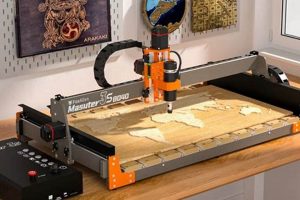
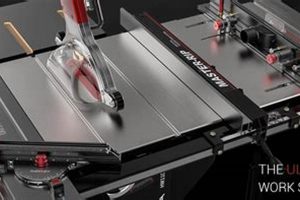
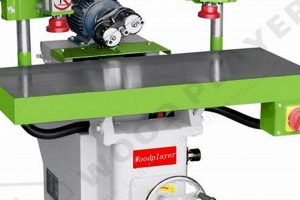
Equipment of this type represents computer-controlled routers employed within woodworking industries. These machines, previously owned, are offered to prospective buyers seeking automation and precision in their woodworking processes. They facilitate tasks such as cutting, carving, and shaping wood materials based on pre-programmed designs.
Acquiring pre-owned automated routing equipment presents economic advantages by reducing initial capital investment compared to purchasing new machinery. This allows businesses, especially smaller operations, to access advanced manufacturing capabilities. Moreover, the availability of such equipment contributes to sustainable practices by extending the lifespan of functioning machinery and reducing overall demand for new production.
The subsequent sections will delve into the factors to consider when assessing such equipment, including inspection protocols, performance evaluation, and understanding the associated risks and benefits. These considerations are crucial for informed decision-making during the acquisition process.
Essential Considerations for Acquiring Previously Owned Automated Wood Routers
The purchase of pre-owned computer-controlled woodworking routers requires careful evaluation to ensure the equipment meets operational needs and provides a satisfactory return on investment.
Tip 1: Thoroughly Inspect Mechanical Components: Examine the condition of the spindle, ball screws, and linear guides. Look for signs of wear, damage, or excessive play. A machine with worn mechanical parts may require costly repairs or replacements shortly after purchase.
Tip 2: Evaluate the Control System: Verify the functionality and compatibility of the CNC control system. Ensure the software is up-to-date and that support is available from the manufacturer or a qualified technician. An outdated or unsupported control system can limit the machine’s capabilities and make it difficult to troubleshoot problems.
Tip 3: Assess the Vacuum System: The vacuum hold-down system is critical for securing materials during machining. Check the pump’s performance and inspect the condition of the vacuum table. A weak or malfunctioning vacuum system can lead to inaccurate cuts and material waste.
Tip 4: Review Maintenance Records: Request and carefully review the machine’s maintenance records. This information can provide insights into the machine’s history and potential problem areas. Regular maintenance indicates a well-cared-for machine.
Tip 5: Test the Machine Under Load: If possible, test the machine by running a sample program with the materials intended for production. This will help identify any performance issues, such as vibration, inaccuracies, or motor overheating.
Tip 6: Verify Electrical Components: Inspect wiring, motors, and safety circuits for proper functionality and adherence to safety standards. Faulty electrical components can pose a safety hazard and lead to downtime.
Tip 7: Consider the Machine’s Age and Hours of Operation: Older machines with high operating hours may require more frequent maintenance and repairs. Assess the machine’s age in relation to its price and overall condition.
Adhering to these guidelines during the evaluation process enhances the likelihood of acquiring a reliable and productive automated wood router, thereby maximizing investment value and operational efficiency.
The following sections will explore financial aspects of such transactions, including valuation and potential return on investment.
1. Condition

The condition of previously owned automated woodworking routers constitutes a primary determinant of their value and operational suitability. It directly impacts the machine’s immediate usability, potential repair costs, and projected lifespan. A machine exhibiting signs of extensive wear, damage to critical components such as the spindle or ball screws, or evidence of neglectful maintenance presents a higher risk of requiring significant investment shortly after acquisition. For example, a unit displaying substantial rust on exposed metal surfaces indicates potential internal corrosion, possibly affecting the performance of motors and other sensitive elements. Conversely, a machine exhibiting well-maintained components, minimal cosmetic blemishes, and comprehensive maintenance records typically represents a lower-risk investment.
Furthermore, condition influences the precision and quality of output produced by the equipment. Worn bearings or misaligned axes contribute to inaccuracies in cutting and carving, potentially leading to material waste and reduced product quality. Prior to acquisition, a detailed inspection, encompassing both visual assessment and operational testing, is imperative to ascertain the machine’s true state. This may involve commissioning a qualified technician to evaluate the machine’s mechanical and electrical systems, providing an objective assessment of its overall condition. For instance, a machine with a history of frequent breakdowns, even if seemingly minor, may indicate underlying issues that could escalate into more significant problems in the future.
In summary, the condition of used woodworking CNC machines for sale holds paramount importance. It serves as a critical indicator of the machine’s potential performance, reliability, and associated costs. A thorough and diligent assessment of condition mitigates the risk of acquiring a machine that proves economically unsound. Understanding the nuances of evaluating condition is thus essential for any entity considering purchasing such equipment.
2. Functionality

The assessment of functionality is a critical stage in evaluating previously owned automated woodworking routers. Functionality, in this context, encompasses the machine’s capacity to perform its intended operations effectively and reliably. This evaluation considers a spectrum of capabilities, from basic cutting and carving to advanced profiling and three-dimensional sculpting. The suitability of a machine’s functionality is directly correlated with the specific needs of the woodworking operation.
- Cutting Precision and Accuracy
This facet pertains to the machine’s ability to execute precise cuts and maintain dimensional accuracy across various material types. For instance, a cabinet maker requiring tight tolerances for joinery will prioritize a machine capable of consistent accuracy. Conversely, a sign maker primarily using softer materials may accept a slightly lower degree of precision. In the context of used equipment, assessing cutting accuracy requires observing the machine in operation and measuring the resulting output against programmed dimensions.
- Spindle Speed and Power
The spindle’s rotational speed and power output determine the machine’s capability to process different wood species and achieve desired surface finishes. Hardwoods, such as maple or oak, necessitate higher spindle speeds and greater power to ensure clean cuts without excessive tool wear. The ability to adjust spindle speed is also crucial for optimizing performance across varying material densities. Evaluation of used equipment should include verification of the spindle’s operational range and its ability to maintain consistent speed under load.
- Axis Movement and Control
The smoothness and precision of axis movement along the X, Y, and Z planes are essential for producing complex shapes and intricate designs. Jerky or inconsistent axis motion can result in dimensional inaccuracies and surface defects. This is especially critical for three-dimensional carving, where coordinated movement across all axes is required. Assessing axis control involves observing the machine’s response to programmed commands and identifying any signs of binding, vibration, or excessive backlash.
- Tool Changing Capabilities
The presence and functionality of an automatic tool changer (ATC) significantly impact the machine’s efficiency and versatility. An ATC allows for the seamless transition between different cutting tools during a single operation, reducing manual intervention and minimizing downtime. This is particularly advantageous for complex projects requiring multiple toolpaths. Evaluating a used machine’s ATC involves verifying its speed, reliability, and capacity to accommodate a range of tool sizes and types.
These facets of functionality are inextricably linked to the overall value and utility of used woodworking CNC machines. A machine that excels in these areas will contribute to improved productivity, reduced waste, and enhanced product quality. Therefore, a comprehensive assessment of functionality, tailored to specific operational requirements, is paramount when considering the acquisition of pre-owned automated woodworking routers.
3. Availability

The term “availability,” in the context of pre-owned automated woodworking routers, refers to the immediate or near-term accessibility of a specific machine for purchase and deployment. This factor significantly influences project timelines, production capacity, and overall return on investment. Limited availability of suitable equipment can impede expansion plans, delay order fulfillment, and potentially lead to lost revenue opportunities. The interplay between demand and supply within the market for such machines dictates availability, often resulting in price fluctuations and extended search periods.
The geographic location of available equipment also affects acquisition feasibility. A machine located within close proximity to a prospective buyer incurs lower transportation costs and potentially simplifies pre-purchase inspection. Conversely, sourcing equipment from distant regions introduces logistical complexities and increases the likelihood of unforeseen expenses. The age and condition of the machine often correlate inversely with availability; newer, well-maintained machines tend to be less readily available due to higher demand and limited turnover. One example is a woodworking shop needing a specific CNC router model for a large contract. If only one suitable machine is available nationwide and the seller is located far away, the shop faces a trade-off between potentially higher shipping costs, travel expenses for inspection, or risking purchasing without an in-person evaluation.
Ultimately, awareness of prevailing market conditions and proactive engagement with equipment vendors and auction platforms are crucial for securing timely access to suitable pre-owned automated woodworking routers. The challenge lies in balancing the need for immediate availability with thorough evaluation and due diligence. A strategic approach, incorporating a pre-defined budget, clear performance criteria, and a network of trusted advisors, enhances the likelihood of a successful acquisition within the constraints of availability. The assessment should also consider the lead time required for decommissioning, transportation, and re-installation to determine the true “available” date for productive use.
4. Price
The price associated with “used woodworking cnc machines for sale” constitutes a critical determinant in the acquisition decision-making process. It directly reflects the confluence of factors such as the machine’s age, condition, features, brand reputation, and prevailing market demand. A lower price may indicate compromised functionality, higher maintenance requirements, or limited technological capabilities. Conversely, a higher price suggests potentially superior performance, enhanced reliability, or inclusion of advanced features like automatic tool changers or sophisticated control systems. The relationship between price and these other characteristics is not always linear, necessitating a thorough evaluation to determine the true value proposition. For example, a well-maintained machine from a reputable manufacturer, even at a premium price, may prove more cost-effective in the long run than a cheaper alternative requiring frequent repairs and resulting in production downtime.
Understanding the pricing dynamics within this market requires consideration of comparable sales data, depreciation schedules, and the potential for negotiating favorable terms with sellers. Sellers may adjust prices based on factors such as urgency, inventory levels, and perceived demand. Prospective buyers can leverage this knowledge to identify opportunities for securing competitive pricing. Further complicating the price assessment is the cost of transportation, installation, and potential upgrades required to integrate the machine into an existing production environment. These ancillary expenses must be factored into the total cost of ownership to accurately assess affordability. For instance, a woodworking business seeking to expand its production capacity may initially be drawn to a lower-priced machine; however, after accounting for transportation, installation, and the cost of upgrading the control system, the total investment may exceed the budget. This necessitates a comprehensive cost-benefit analysis to determine the optimal course of action.
In conclusion, price functions as a pivotal element within the context of “used woodworking cnc machines for sale.” Its proper evaluation demands a holistic approach, encompassing consideration of machine specifications, market conditions, and the total cost of ownership. While price sensitivity is important, prioritizing value over initial cost alone is essential for ensuring a successful and sustainable investment that aligns with operational requirements and long-term business objectives. Due diligence, involving thorough inspection, market research, and financial analysis, is indispensable for making informed decisions regarding the acquisition of pre-owned automated woodworking equipment.
5. Upgrades
The potential for upgrades significantly influences the value and long-term utility of previously owned automated woodworking routers. Upgrading components or systems within the machine can mitigate obsolescence, enhance performance, and expand its capabilities to meet evolving production demands. These modifications can range from software enhancements and control system modernizations to physical alterations involving spindle upgrades or the integration of automated loading systems. The feasibility and cost-effectiveness of upgrades are key considerations when evaluating used equipment; a machine with limited upgrade potential may face premature obsolescence compared to one readily adaptable to newer technologies.
Common upgrades include retrofitting with advanced CNC controllers, which improve processing speed, accuracy, and ease of use. Spindle upgrades, such as replacing an older spindle with a higher-horsepower or higher-speed model, can expand the range of materials that can be processed and enhance surface finish quality. Furthermore, the addition of automated tool changers can significantly reduce cycle times and improve overall production efficiency. For instance, a woodworking shop acquiring a used machine may find that upgrading the control system to a more modern, user-friendly interface can significantly reduce training time for operators and improve programming efficiency. Another scenario involves upgrading the dust collection system to comply with stricter environmental regulations or to improve the working environment for employees. These modifications not only extend the lifespan of the equipment but also increase its productivity and compliance with industry standards.
The decision to pursue upgrades should be based on a thorough assessment of the machine’s current capabilities, the projected return on investment, and the availability of compatible components and technical support. While upgrades offer the potential to enhance performance and extend lifespan, they also involve costs that must be carefully weighed against the benefits. Evaluating the cost-effectiveness of upgrades relative to the purchase price of a newer machine is a crucial step in the decision-making process. The availability of competent technicians capable of performing the upgrades and providing ongoing support is another essential consideration. Properly planned and executed upgrades can significantly enhance the value and productivity of used woodworking CNC machines, ensuring a sound and sustainable investment.
6. Support
Adequate support represents a cornerstone consideration when acquiring pre-owned automated woodworking routers. The availability and quality of support services significantly influence the equipment’s long-term operational effectiveness and return on investment. Lack of accessible support can translate to extended downtime, increased repair costs, and ultimately, diminished productivity.
- Technical Assistance Availability
Accessibility to skilled technicians capable of diagnosing and resolving technical issues is paramount. This includes remote support via phone or online channels, as well as on-site service for more complex repairs. The absence of readily available technical assistance can result in prolonged periods of machine inactivity, disrupting production schedules and impacting profitability. A woodworking business experiencing a critical malfunction on a used CNC router, without access to timely technical support, may incur substantial financial losses due to delayed orders and underutilized labor.
- Parts Accessibility and Lead Times
The ready availability of replacement parts is crucial for minimizing downtime during repairs. Long lead times for procuring necessary components can significantly extend the duration of machine outages, particularly for older or less common models. A pre-owned machine relying on proprietary parts from a manufacturer with limited availability presents a higher risk of extended downtime. Conversely, a machine utilizing standardized components readily available from multiple suppliers offers a more robust and sustainable support ecosystem.
- Documentation and Training Resources
Comprehensive documentation, including user manuals, maintenance guides, and troubleshooting procedures, is essential for effective operation and maintenance. Access to training resources for operators and maintenance personnel enhances their ability to diagnose and resolve common issues independently, reducing reliance on external support. Machines lacking adequate documentation and training resources necessitate a greater investment in external expertise and increase the likelihood of operator errors.
- Software Updates and Compatibility
Ongoing software updates and compatibility with current operating systems are vital for maintaining optimal performance and security. Outdated software can limit functionality, introduce security vulnerabilities, and hinder integration with other systems. Prospective buyers should verify the availability of software updates and ensure compatibility with their existing infrastructure. A used machine with discontinued software support may require costly upgrades or pose a significant security risk.
These facets of support collectively contribute to the overall value and sustainability of used woodworking CNC machines. Prioritizing access to reliable technical assistance, readily available parts, comprehensive documentation, and ongoing software support is essential for maximizing the equipment’s operational lifespan and minimizing the risk of costly disruptions. The investment in a well-supported machine, even at a slightly higher initial cost, often yields a superior return on investment over the long term.
Frequently Asked Questions Regarding Pre-Owned Automated Woodworking Routers
The following provides responses to common inquiries surrounding the acquisition and utilization of previously owned computer-controlled woodworking routers. The information presented aims to clarify misconceptions and provide a foundation for informed decision-making.
Question 1: What is the typical lifespan of a used automated woodworking router?
The operational lifespan varies significantly depending on factors such as the machine’s initial build quality, the intensity of prior use, and the consistency of maintenance practices. Well-maintained machines from reputable manufacturers can often provide several years of reliable service beyond their initial expected lifespan. Conversely, machines subjected to heavy use or neglected maintenance may exhibit a shorter remaining operational life. A thorough inspection and review of maintenance records are essential for estimating the remaining lifespan.
Question 2: What are the primary risks associated with purchasing a used machine?
Key risks include the potential for hidden mechanical or electrical issues, the availability of replacement parts, the compatibility of the machine’s control system with current software, and the uncertainty surrounding the machine’s operational history. Thorough due diligence, encompassing a detailed inspection by a qualified technician, a review of maintenance records, and verification of parts availability, is crucial for mitigating these risks.
Question 3: How does the pricing of used machines compare to new equipment?
The price of used automated woodworking routers is typically significantly lower than that of comparable new equipment. The exact price differential depends on factors such as age, condition, features, and market demand. While used equipment offers a lower initial investment, it may also entail higher maintenance costs and a shorter operational lifespan. A comprehensive cost-benefit analysis is essential for determining the most economically sound option.
Question 4: What level of technical expertise is required to operate and maintain a used machine?
Operating and maintaining used automated woodworking routers requires a certain level of technical proficiency. Operators should possess a fundamental understanding of CNC programming, machine operation, and safety procedures. Maintenance personnel should be familiar with mechanical and electrical systems and possess the skills necessary to diagnose and resolve common issues. Ongoing training and access to technical support are crucial for ensuring optimal performance and minimizing downtime.
Question 5: Are financing options available for purchasing used automated woodworking routers?
Financing options may be available through various lending institutions, equipment leasing companies, or private sellers. The availability and terms of financing depend on factors such as the buyer’s creditworthiness, the value of the equipment, and the lending institution’s policies. Securing favorable financing terms can significantly reduce the upfront investment required for acquiring used equipment.
Question 6: What are the key factors to consider when inspecting a used machine prior to purchase?
Critical inspection points include the condition of the spindle, the accuracy of the axis movements, the functionality of the control system, the presence of any structural damage, and the overall cleanliness of the machine. A thorough inspection should also include testing the machine under load to assess its performance and identify any potential issues. Commissioning a qualified technician to conduct a comprehensive inspection provides an objective assessment of the machine’s condition and functionality.
These responses offer a general overview of common inquiries. Additional research and consultation with industry experts are recommended for informed decision-making.
The subsequent section will provide insights into navigating the negotiation process when acquiring such equipment.
Concluding Remarks on Pre-Owned Automated Woodworking Routers
The preceding analysis underscores the multifaceted nature of acquiring previously owned “used woodworking cnc machines for sale”. Careful consideration of condition, functionality, availability, price, upgrade potential, and support services is paramount for ensuring a sound investment. Thorough due diligence, encompassing meticulous inspection, market research, and financial analysis, forms the cornerstone of informed decision-making in this arena.
The purchase of automated routing equipment represents a significant capital expenditure. Therefore, prospective buyers are encouraged to prioritize comprehensive evaluation over immediate cost savings, with the ultimate goal of securing a reliable and productive asset that aligns with their long-term operational objectives. Ongoing technological advancements necessitate continuous awareness of evolving market dynamics and a proactive approach to equipment management for sustained competitiveness.