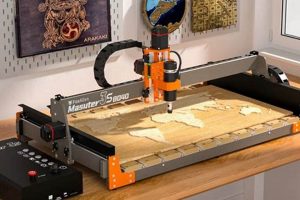
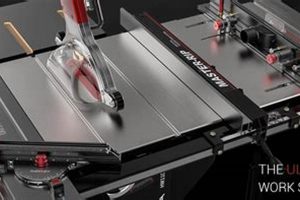
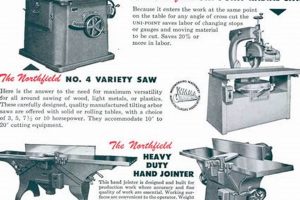
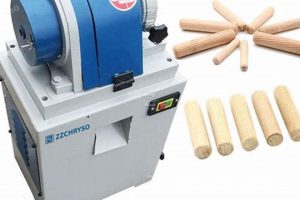
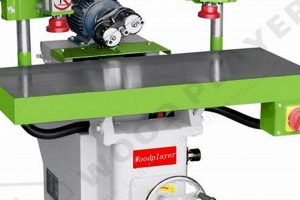
A process involving the use of a powered machine tool with rotary cutters to progressively remove material from a wooden workpiece. This subtractive manufacturing technique allows for the creation of complex shapes, intricate designs, and precise dimensions, unattainable through traditional hand tools or simpler power tools. Examples include crafting custom moldings, creating mortise and tenon joints with exceptional accuracy, or producing detailed carvings on cabinet doors.
This method offers significant advantages in terms of repeatability, efficiency, and precision when working with timber. Its ability to produce identical components reduces errors and streamlines production runs. Historically, it represented a major advancement in woodworking, enabling mass production of furniture and other wooden items while maintaining a high level of quality. It allows for the creation of products with greater design freedom and complexity than traditional techniques.
The remainder of this discussion will delve into the specific types of machinery utilized, the essential safety protocols to be observed, the array of cutting tools available, and the diverse applications in modern woodworking practice. Further exploration will focus on computer numerical control (CNC) integration, material selection best practices, and project planning considerations.
Key Considerations for Operation
Effective utilization necessitates a thorough understanding of best practices to ensure both precision and safety. These considerations encompass machine setup, material selection, and operational techniques.
Tip 1: Secure Workpiece Fixturing: Rigorous clamping and support of the timber are crucial to prevent vibration and movement during the cutting process. Inadequate fixturing can lead to inaccuracies and potential tool damage.
Tip 2: Implement Appropriate Cutting Speeds and Feeds: Select optimal spindle speeds and feed rates based on the wood species and cutter type. Excessive speeds can cause burning or splintering, while insufficient speeds may result in inefficient cutting.
Tip 3: Employ Sharp Cutting Tools: Maintain cutting tools in optimal condition through regular sharpening and inspection. Dull tools increase cutting forces, leading to a compromised finish and potential machine strain.
Tip 4: Utilize Dust Collection Systems: Effective dust extraction is essential for maintaining visibility, ensuring operator safety, and preventing machine malfunction. Employ a dedicated dust collection system to remove chips and airborne particles.
Tip 5: Adhere to Safety Protocols: Prioritize safety by wearing appropriate personal protective equipment (PPE), including eye protection and hearing protection. Ensure familiarity with emergency stop procedures and machine safeguards.
Tip 6: Choose Appropriate Cutter Geometry: Select cutter geometries designed specifically for woodworking applications. Different cutter profiles are suited for various tasks, such as profiling, grooving, or surfacing.
Careful adherence to these points can significantly improve the quality and safety of milling operations. Diligence in these areas ensures consistent and reliable results.
The subsequent section will offer a conclusion, consolidating essential insights.
1. Precision Cutting Capabilities

The utilization of a milling machine in woodworking directly enhances precision cutting capabilities, facilitating the creation of intricate designs and components with tight tolerances. The machine’s inherent stability and controlled movement, coupled with the accuracy of the cutting tools, contribute to minimizing deviations from intended dimensions. The precise control afforded by the machine allows for repeatable cuts and the consistent production of identical parts, a critical requirement in many woodworking applications.
Consider, for example, the creation of complex joinery for fine furniture. Hand-cut dovetails, while possessing aesthetic appeal, are subject to human error and variability. A milling machine, particularly when coupled with CNC technology, can produce perfectly interlocking dovetails with consistent angles and spacing, ensuring structural integrity and a visually seamless connection. Similarly, in the fabrication of musical instruments, the precise shaping of components like guitar necks and bodies is essential for optimal sound quality and playability. Milling machines enable luthiers to achieve the exacting profiles and contours required for these instruments. The benefits extend beyond aesthetics, influencing the functionality and longevity of the finished product.
The mastery of precision capabilities represents a crucial advantage. The level of accuracy achievable directly impacts the quality, efficiency, and ultimate value of woodworking projects. The future of this process will likely depend increasingly on operators who have the skills to harness the precision capabilities.
2. Workpiece Securement Methods

In operations, the stability and immobility of the workpiece are paramount. The forces generated by the rotating cutter can induce vibrations, misalignments, or even ejection of the wood, compromising accuracy and posing safety hazards. Therefore, effective securement methods are not merely ancillary procedures but integral components that directly dictate the success and safety.
- Clamping Systems
Clamps of various designs are fundamental for holding workpieces to the machine table. These range from simple hand-tightened clamps to pneumatic or hydraulic systems that exert greater force. The selection of appropriate clamping mechanisms depends on workpiece size, shape, and material. For example, when machining a long, thin piece of wood, multiple clamps strategically placed along its length are necessary to prevent bowing or deflection. Conversely, complex, three-dimensional shapes may require specialized clamps that conform to the contours of the workpiece. Improper clamp placement or insufficient clamping force can lead to chatter, inaccurate cuts, and potentially damage to the workpiece or cutting tool.
- Vacuum Fixtures
Vacuum fixtures provide an alternative securement method, particularly suitable for large, flat workpieces. This system utilizes a vacuum pump to create negative pressure, holding the wood firmly against a sealed surface. Vacuum fixtures offer several advantages, including quick setup and even distribution of clamping force, minimizing the risk of distortion. However, they are limited by the workpiece’s surface area and porosity. Porous woods may require sealing prior to vacuum clamping to ensure effective suction. In the context of woodworking, vacuum fixtures are often used for machining sheet goods, such as plywood or MDF, where uniform clamping is essential for achieving consistent results.
- Jigs and Fixtures
For repetitive tasks or complex geometries, custom jigs and fixtures offer a highly effective securement solution. These specialized devices are designed to hold the workpiece in a specific orientation, ensuring repeatable and accurate cuts. Jigs may incorporate guide bushings or templates to direct the cutter path, while fixtures provide a stable platform for supporting the workpiece. The creation of jigs and fixtures requires initial investment in design and fabrication, but the benefits in terms of increased efficiency, reduced error, and improved safety often outweigh the costs. They are commonly employed in the mass production of wooden components, where consistency and precision are critical.
- Double-Sided Tape and Adhesives
In certain situations, double-sided tape or other adhesives can be used to temporarily secure the workpiece. This method is particularly useful for small or thin pieces that are difficult to clamp conventionally. However, it is essential to select an adhesive that provides sufficient holding power without damaging the wood surface. The adhesive must also be compatible with the cutting fluid or coolant used. This approach is less robust than other methods and should only be employed for light machining operations where minimal cutting forces are involved. It is critical to ensure the stability before initiating the material removal.
The facets detailed demonstrate the critical role of securement. Inefficient or inappropriate securement methodologies will always result in poor outcomes. Mastery of various securement techniques represents a core competency for individuals aiming to maximize the potential benefits.
3. Optimized Cutter Selection

The selection of appropriate cutting tools constitutes a crucial determinant of success. Incorrect tool selection can result in poor surface finish, accelerated tool wear, and compromised dimensional accuracy, undermining the benefits inherently afforded by this method.
- Cutter Geometry and Wood Species
The interaction between cutter geometry and wood species significantly impacts cutting performance. Softwoods, such as pine, require different cutter geometries compared to hardwoods like oak or maple. For example, cutters with a high shear angle tend to produce cleaner cuts in softwoods, minimizing tear-out and fuzzing. Conversely, hardwoods may require cutters with a lower shear angle and higher rake angle to effectively remove material without excessive heat buildup. The selection should therefore prioritize wood species considerations.
- Flute Count and Feed Rate
The number of flutes on a cutter influences the feed rate and chip load. Cutters with more flutes can generally accommodate higher feed rates, enabling faster material removal. However, increasing the number of flutes also reduces the chip space, potentially leading to chip packing and overheating. The optimal flute count depends on the depth of cut, width of cut, and the available dust extraction system. Choosing a cutter with an appropriate flute count allows for efficient material removal while maintaining adequate chip clearance.
- Cutter Material and Tool Life
The material composition of the cutter directly affects its tool life and cutting performance. High-speed steel (HSS) cutters are commonly used for general-purpose woodworking due to their affordability and ease of sharpening. However, carbide cutters offer superior wear resistance and can maintain sharpness for longer periods, particularly when machining abrasive hardwoods or engineered wood products. The selection of cutter material should consider the volume of material to be removed, the hardness of the wood, and the desired surface finish. The initial cost should be weighed against longevity.
- Cutter Diameter and Cutting Speed
Cutter diameter influences the permissible cutting speed and the resulting surface finish. Larger diameter cutters typically require lower spindle speeds to maintain the optimal surface speed for the wood being machined. Conversely, smaller diameter cutters can be run at higher spindle speeds, allowing for finer surface finishes. The selection of cutter diameter should consider the size and geometry of the workpiece, the available spindle speed range, and the desired surface quality. Appropriate selection enables the user to tailor the cutting operation to yield best results.
The interplay between cutter selection and material considerations cannot be overstated. A holistic approach, incorporating the specific nuances of each project, results in improved efficiency, reduced waste, and enhanced overall quality.
4. Controlled Material Removal

Controlled material removal stands as a cornerstone of milling machine applications in woodworking, delineating the capacity to precisely sculpt timber to specified dimensions and forms. Its mastery directly impacts the quality of finished components, the minimization of waste, and the overall efficiency of the manufacturing process. This process demands a delicate balance of machine parameters, tool selection, and operator expertise.
- Depth of Cut Management
The depth of cut, or the amount of material removed in a single pass, is a critical parameter. Excessive depth of cut can overload the cutting tool, leading to premature wear, chatter, and potentially workpiece damage. Conversely, an insufficient depth of cut may result in inefficient material removal and increased processing time. Proper depth of cut management requires careful consideration of wood species, cutter type, and machine rigidity. Example: When routing a profile on a cabinet door, gradually increasing the depth of cut in multiple passes prevents tear-out and ensures a smooth, consistent finish.
- Feed Rate Optimization
Feed rate, or the speed at which the workpiece advances into the cutting tool, dictates the chip load and surface finish. An excessively high feed rate can cause the cutter to vibrate, producing a rough surface and accelerating tool wear. An insufficient feed rate may result in burning or glazing of the wood. Optimizing feed rate involves balancing the need for efficient material removal with the desired surface quality. Example: Machining intricate carvings often requires reducing the feed rate to allow the cutter to accurately follow the contours of the design.
- Chip Load Considerations
Chip load refers to the amount of material removed by each cutting edge of the tool per revolution. Maintaining an appropriate chip load is essential for effective cutting and prolonging tool life. Insufficient chip load can cause the cutter to rub rather than cut, generating excessive heat and dulling the cutting edges. Excessive chip load can overload the cutter and lead to chatter or breakage. Accurately calculating chip load requires knowledge of spindle speed, feed rate, and the number of cutting edges on the tool. Example: When using a multi-flute cutter, reducing the feed rate proportionally to maintain the appropriate chip load prevents the cutter from becoming overloaded.
- Coolant and Lubrication Strategies
While less common in woodworking than in metalworking, coolant and lubrication can play a role in controlling heat buildup and reducing friction, particularly when machining dense hardwoods or engineered wood products. Water-based coolants can help to dissipate heat and prevent burning, while lubricants can reduce friction between the cutter and the workpiece, improving surface finish. However, the use of coolant and lubrication requires careful consideration of wood species and the potential for staining or warping. Example: When machining phenolic plywood, a water-based coolant can help to prevent the build-up of heat and reduce the risk of delamination.
In milling machine applications for woodworking, control over material removal is not merely about removing wood but about executing the process with precision, efficiency, and a deep understanding of material properties and machine capabilities. The ability to manipulate the parameters described ensures not only that the desired form is achieved but also that it is achieved with minimal waste and maximum quality.
5. Operational Safety Standards

Operational safety standards represent an indispensable element in milling machine woodworking. The high-speed rotation of cutting tools and the potential for projectile debris create inherent hazards. Adherence to established safety protocols mitigates the risk of injury to the operator and damage to the equipment. This is not merely a matter of compliance; it is a fundamental aspect of responsible and effective woodworking practice. For instance, the consistent use of eye and ear protection shields against the long-term effects of wood dust and machine noise. The proper guarding of cutting tools prevents accidental contact, which can result in severe lacerations or amputations.
The practical significance of understanding and implementing these standards extends beyond personal safety. Proper machine maintenance, as dictated by operational safety guidelines, ensures that the equipment functions optimally, reducing the likelihood of mechanical failures that could lead to dangerous situations. Training in emergency stop procedures and the safe handling of materials allows operators to respond effectively in the event of an accident, minimizing potential harm. Consider the scenario of a workpiece becoming dislodged during a milling operation. A trained operator, familiar with emergency protocols, can quickly shut down the machine and prevent further complications. Without such training, the situation could escalate rapidly, leading to serious injury.
In summation, operational safety standards are not merely an addendum to milling machine woodworking but an intrinsic and essential component. Challenges remain in ensuring consistent adherence to these standards, particularly in smaller workshops or among inexperienced operators. However, ongoing education, rigorous training, and a culture of safety consciousness are vital to mitigating the risks associated with this powerful and versatile woodworking technique. Prioritizing safety allows for the full realization of its potential while minimizing the possibility of adverse consequences.
Frequently Asked Questions
The following questions address common concerns and misconceptions regarding the application of milling machines in woodworking. The answers are intended to provide clear and informative guidance for individuals seeking to understand the complexities of this process.
Question 1: What are the fundamental differences between a wood router and a milling machine in woodworking applications?
A wood router is typically a handheld or table-mounted tool primarily designed for edge profiling, shaping, and joinery. A milling machine, conversely, is a stationary machine tool engineered for precise material removal from a fixed workpiece. Milling machines generally offer greater rigidity, accuracy, and control compared to wood routers, making them suitable for more demanding and intricate tasks.
Question 2: Is it possible to adapt a metalworking milling machine for woodworking purposes?
While adapting a metalworking milling machine for woodworking is feasible, certain modifications are necessary. The primary concern is spindle speed; metalworking machines often have lower speed ranges than those ideal for woodworking. Adapting requires careful consideration of cutting tool selection, dust collection, and workpiece holding mechanisms. Operation without these considerations is not advisable.
Question 3: What safety precautions are paramount when operating a milling machine for woodworking?
Essential safety precautions include wearing appropriate personal protective equipment (PPE), such as eye and hearing protection. Secure workpiece fixturing is critical to prevent projectile hazards. Effective dust collection is mandatory to mitigate the risks associated with wood dust inhalation. Familiarization with emergency stop procedures is likewise essential.
Question 4: What types of wood are most suitable for milling machine woodworking?
The suitability of wood species depends on the specific application and the desired finish. Hardwoods, such as maple, oak, and cherry, generally offer greater dimensional stability and machinability, resulting in cleaner cuts. Softwoods, such as pine and fir, can be milled but require careful attention to grain direction and cutting parameters to minimize tear-out. Engineered wood products, such as MDF and plywood, are also commonly used, though their composition may affect cutter selection and feed rates.
Question 5: How does computer numerical control (CNC) integration impact milling machine woodworking?
CNC integration significantly enhances the capabilities by enabling the automation of complex cutting paths and the precise replication of designs. CNC technology allows for the creation of intricate shapes and patterns that would be difficult or impossible to achieve manually. This integration improves efficiency, repeatability, and design freedom.
Question 6: What are the key considerations for selecting cutting tools for milling machine woodworking?
Key considerations include cutter geometry, material composition, flute count, and diameter. Cutter geometry should be tailored to the specific wood species and cutting task. Carbide cutters offer superior wear resistance compared to high-speed steel (HSS) cutters. Flute count influences feed rate and chip clearance, while cutter diameter affects cutting speed and surface finish. Optimal tool selection requires careful analysis of project demands.
These FAQs aim to clarify key aspects of milling machine use. Understanding the nuances of this process, from machine adaptation to safe operating procedures, will enable effective utilization of these powerful tools.
The next section will conclude this discussion.
Conclusion
This exploration has outlined the critical facets of milling machine woodworking, encompassing essential operational considerations, securement methodologies, cutter selection, material removal techniques, and adherence to safety standards. A clear understanding of these elements dictates the efficacy and safety with which this technique can be applied.
The judicious application of these insights will empower woodworkers to achieve superior precision, efficiency, and design complexity in their projects. Continued vigilance regarding evolving technologies and safety practices is paramount for realizing the full potential of milling machine woodworking in the years to come.