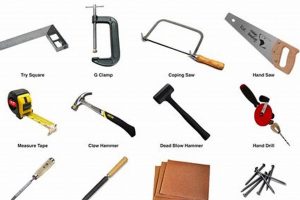
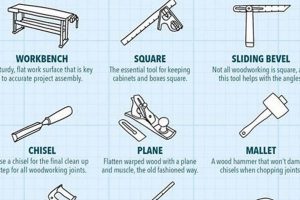
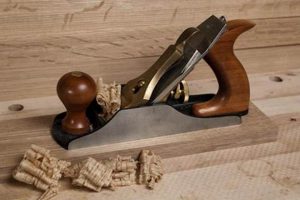
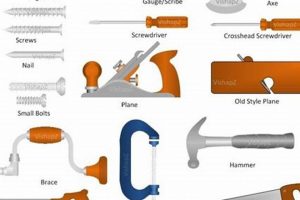
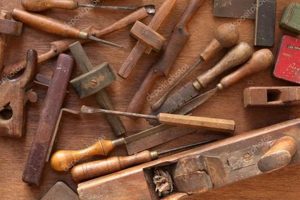
Essential implements manipulated by hand are fundamental to shaping wood. These instruments, excluding power-driven devices, allow for precise material removal and manipulation. A classic example is a hand plane, used for smoothing surfaces, or a dovetail saw, employed for creating intricate joinery.
The importance of these tools lies in their ability to afford the woodworker greater control and tactile feedback, resulting in higher quality craftsmanship. Historically, these implements represent the bedrock of woodworking, predating widespread electrification and automated processes. The skill in using these instruments enables a deeper understanding of the material and its properties.
This discussion will delve into specific examples, examining their purpose, maintenance, and selection criteria, ensuring the woodworker possesses the means to execute projects effectively.
Essential Hand Tool Usage
Effective utilization of hand tools requires practice, proper technique, and a commitment to safety. The following guidelines aim to enhance the user’s experience and the quality of their work.
Tip 1: Sharpening is Paramount: A dull tool is not only inefficient but also dangerous. Regularly hone blades to maintain optimal cutting performance. Consider investing in a quality sharpening system and dedicating time to mastering its use.
Tip 2: Proper Stance and Grip: Maintain a stable and balanced posture while working. Use both hands to control the tool, applying consistent pressure and avoiding sudden movements. This ensures accuracy and reduces the risk of injury.
Tip 3: Practice Grain Awareness: Understanding wood grain is critical to successful hand tool work. Cutting with the grain reduces tear-out and produces a cleaner surface. Observe the grain direction before each cut and adjust the tool accordingly.
Tip 4: Utilize Marking and Measuring Tools Accurately: Precision is essential in woodworking. Use marking gauges, squares, and rulers to create accurate reference lines. Double-check measurements before committing to a cut.
Tip 5: Secure Workpiece Fixation: Ensure the workpiece is securely clamped or held in a vise. Movement during cutting compromises accuracy and increases the likelihood of accidents. Choose appropriate clamping methods for the specific task.
Tip 6: Apply Appropriate Force: Hand tools rely on controlled force rather than brute strength. Let the sharpness of the blade do the work, and avoid forcing the tool. Excessive pressure can lead to inaccurate cuts and tool damage.
Tip 7: Regular Maintenance: Clean and lubricate tools after each use to prevent rust and maintain smooth operation. Store tools in a dry environment to prolong their lifespan. Inspect tools regularly for damage and address any issues promptly.
The diligent application of these techniques will lead to improved precision, efficiency, and safety when employing hand tools. Mastering these skills is fundamental to achieving refined woodworking results.
The following sections will address specific tool selection criteria and maintenance procedures in greater detail, offering a comprehensive resource for the discerning woodworker.
1. Sharpening

Sharpening is intrinsically linked to the efficacy of woodworking implements. A keen edge is paramount for clean cuts, efficient material removal, and user safety. Without a sharp edge, tools become inefficient, requiring excessive force, which can lead to inaccurate work and potential injury.
- Edge Geometry and Performance
The profile of a cutting edge significantly affects its performance. A properly shaped edge, achieved through consistent sharpening, allows the tool to slice through wood fibers cleanly. Conversely, a rounded or damaged edge tears fibers, resulting in rough surfaces and increased resistance. Maintaining the correct bevel angle is crucial for optimal cutting action.
- Material Removal Efficiency
Sharp tools require less force to remove material, leading to greater control and reduced fatigue. This is particularly important for intricate work, where precision and finesse are essential. A dull tool necessitates increased pressure, compromising accuracy and potentially damaging the workpiece. Sharpening optimizes material removal efficiency, allowing for controlled shaping and sculpting.
- Safety Considerations
Counterintuitively, sharp tools are safer than dull tools. A sharp edge requires less force, reducing the likelihood of slippage and unintended movements. Dull tools, on the other hand, require excessive force, increasing the risk of losing control and causing injury. Regular sharpening minimizes the effort required to execute a cut, enhancing safety and control.
- Tool Longevity and Preservation
Proper sharpening techniques, when executed diligently, can extend the lifespan of woodworking tools. Regular maintenance of the cutting edge prevents excessive wear and tear, preserving the tool’s geometry and function. Neglecting sharpening leads to accelerated degradation of the edge, necessitating more aggressive reshaping and reducing the tool’s overall lifespan. The practice of honing and stropping, integral to sharpening, is essential for tool preservation.
The discussed elements illustrate the indispensable role of sharpening in achieving optimal results with woodworking tools. A commitment to maintaining sharp edges ensures efficient, safe, and precise woodworking practices. The investment in sharpening equipment and skills directly translates to enhanced craftsmanship and prolonged tool life, validating its significance in the realm of essential woodworking implements.
2. Ergonomics

Ergonomics, the science of designing and arranging tools to optimize human well-being and overall system performance, holds significant relevance in the context of woodworking hand tools. Prolonged or repetitive use of poorly designed implements can lead to musculoskeletal disorders, diminished productivity, and reduced enjoyment of the craft. Consequently, ergonomic considerations are crucial when selecting essential woodworking hand tools.
- Handle Design and Grip
The design of a tool’s handle directly influences the user’s grip and posture. Handles should be shaped to fit comfortably in the hand, minimizing strain on the wrist and fingers. Materials such as hardwood or composite polymers offer a secure grip, even in damp conditions. A well-designed handle allows for efficient force transfer and reduces the risk of slippage, promoting accuracy and control. For example, a spokeshave with an ergonomically contoured handle reduces hand fatigue during intricate shaping tasks.
- Weight and Balance
The weight and balance of a tool affect the amount of effort required to manipulate it. Tools that are excessively heavy or poorly balanced can lead to fatigue and reduced precision. Ideally, a tool should feel balanced in the hand, allowing for effortless movements and consistent results. A lightweight hand saw, for instance, reduces arm strain during extended cutting sessions, enhancing overall efficiency. Correct weight distribution allows for greater control over the tool, promoting accuracy and minimizing the risk of errors.
- Force Exertion and Leverage
Ergonomic hand tools are designed to maximize leverage and minimize the force required to perform a task. Features such as long handles or specialized mechanisms amplify the user’s strength, reducing strain on joints and muscles. A block plane with an adjustable mouth allows for fine-tuning the cutting action, minimizing the force required for smooth surfacing. Efficient leverage translates to increased productivity and reduced risk of injury.
- Vibration Dampening
Prolonged exposure to vibration from hand tools can lead to hand-arm vibration syndrome (HAVS), a debilitating condition affecting nerves and blood vessels. Ergonomic tools incorporate vibration-dampening materials and designs to minimize the transmission of vibrations to the user’s hands. Handles made from materials like neoprene or gel absorb vibrations, reducing the risk of HAVS. A well-dampened hand saw, for example, minimizes vibration transfer during cutting, protecting the user’s long-term health.
The aforementioned facets underscore the vital role of ergonomics in the selection and use of hand tools. Prioritizing ergonomic design elements promotes user comfort, reduces the risk of injury, and enhances overall woodworking performance. Tools that are carefully chosen with ergonomic considerations in mind are essential investments for any serious woodworker, ensuring long-term health and productivity.
3. Precision
The execution of fine woodworking is inextricably linked to the concept of precision, a quality directly influenced by the selection and application of hand tools. In joinery, accurate measurements and cuts are paramount for creating tight-fitting, structurally sound connections. For instance, constructing a dovetail joint relies on precise sawing and chiseling to ensure the tails and pins interlock seamlessly. Discrepancies, even minute ones, can compromise the joint’s integrity and aesthetic appeal. The ability to achieve precision with hand tools is, therefore, not merely desirable but essential for crafting durable and visually pleasing wooden structures. It provides the structural integrity required for the furniture or woodwork.
The role of measuring and marking instruments is central to achieving accuracy. A high-quality marking gauge, for example, allows for consistent scribing of lines parallel to a reference edge, crucial for creating uniform mortises or tenons. Similarly, a precision square ensures that corners are accurately aligned, vital for assembling square or rectangular structures. The skill in using these instruments in conjunction with cutting tools like saws and planes directly impacts the overall precision of the finished piece. The importance of precision with these tools affects the overall look of woodworking
Ultimately, achieving precision with woodworking implements demands a commitment to both quality tools and meticulous technique. The challenges associated with mastering these skills are considerable, but the rewardsstructurally sound, aesthetically pleasing, and enduring wooden creationsare commensurate with the effort invested. This understanding underscores the practical significance of selecting and employing tools that facilitate precision in all facets of woodworking.
4. Durability
The lifespan of woodworking instruments is a critical factor in their overall value and utility. Durable implements withstand repeated use, resist damage from environmental factors, and maintain their functionality over extended periods. The selection of robust materials and construction techniques directly influences the longevity of these tools. For example, a hand plane crafted from high-carbon steel is less prone to deformation or breakage compared to one made from inferior alloys. Consequently, the initial investment in durable tools often proves more cost-effective in the long term, reducing the need for frequent replacements or repairs.
The operational environment frequently subjects woodworking implements to considerable stress. Chisels endure repeated impacts, saws undergo continuous friction, and planes experience constant pressure. Tools constructed with inferior materials or weak joints are susceptible to premature failure under these conditions. Conversely, implements crafted from hardened steel, reinforced with robust joinery, and protected with corrosion-resistant finishes demonstrate resilience in demanding environments. The choice of a durable mallet, such as one constructed from laminated hardwoods, can significantly extend its service life compared to mallets made from softer materials. This robustness enables consistent performance, even under heavy use.
The selection of woodworking implements predicated on durability represents a practical and economically sound decision. These tools not only offer enhanced reliability and performance but also contribute to sustainability by minimizing waste and the need for frequent replacement. An investment in durable, well-maintained implements ensures consistent performance over the long term, ultimately promoting efficiency and economy in woodworking endeavors. The long-term benefits associated with durable tools far outweigh the initial cost, making them indispensable components of any well-equipped workshop.
5. Versatility

The capacity of a hand tool to perform diverse functions constitutes a critical attribute in a woodworking setting. Implements offering adaptability across a spectrum of tasks enhance efficiency and reduce the overall investment required to equip a functional workshop. The ability of a single tool to substitute for multiple specialized instruments is a key determinant in its value and practicality.
- Chisel Application Across Tasks
The chisel exemplifies versatility in woodworking. Beyond its primary function of paring wood, it can be employed for mortising, shaping curves, cleaning joints, and even carving details. Different sizes and bevel angles allow for adaptation to various projects, from rough stock removal to delicate inlay work. Its ability to serve multiple purposes makes it a quintessential component of any woodworking arsenal.
- Hand Plane Adaptability
Hand planes, through variations in blade geometry and body length, provide adaptability across diverse woodworking applications. A jack plane, for example, can flatten rough stock, while a smoothing plane refines surfaces for finishing. Block planes excel at end-grain work, while specialty planes, like rabbet or shoulder planes, address specific joinery needs. The range of functions attainable with different plane types underscores their versatility.
- Saw Multifunctionality
Saws, similarly, demonstrate versatility through variations in tooth configuration and blade design. A dovetail saw facilitates precise joinery, while a carcase saw handles general-purpose cuts. Coping saws navigate intricate curves, and frame saws efficiently break down larger stock. The availability of diverse saw types allows woodworkers to adapt to various cutting requirements with optimized tools.
- Combination Square Utility
The combination square, beyond its primary function of measuring right angles, serves as a marking gauge, depth gauge, and level. Its adjustable head and built-in features enable a range of tasks, from setting blade heights to verifying squareness. The utility of the combination square in layout and measurement underscores its versatility in woodworking.
These examples illustrate the significance of versatility in the selection of essential woodworking implements. Tools possessing adaptability enhance efficiency, reduce costs, and contribute to a more streamlined and productive woodworking environment. The ability of a single tool to perform multiple functions is a key factor in determining its overall value and practicality.
Frequently Asked Questions
The following questions address common inquiries regarding the selection, usage, and maintenance of essential woodworking implements, providing concise and informative responses.
Question 1: What constitutes a foundational set of instruments for commencing woodworking activities?
A core set typically includes a hand saw (crosscut and rip), chisels (various sizes), a hand plane (jack or smoothing), a marking gauge, a combination square, and sharpening stones. This assortment permits basic shaping, joining, and finishing operations.
Question 2: Why is sharpening considered paramount for these tools?
A keen edge enhances cutting efficiency, reduces the force required, and improves control, resulting in cleaner cuts and safer operation. Dull tools necessitate increased pressure, leading to potential inaccuracies and injuries.
Question 3: What factors should influence the selection of a hand plane?
Consider the plane’s size, blade material, adjustability, and intended use. Larger planes are suitable for flattening, while smaller planes excel at detail work. Blade quality and ease of adjustment are critical for optimal performance.
Question 4: How does one maintain the condition of implements?
Regular cleaning, lubrication, and sharpening are essential. Store tools in a dry environment to prevent rust. Inspect tools periodically for damage and address any issues promptly.
Question 5: Are vintage instruments viable alternatives to contemporary models?
Vintage instruments can offer excellent quality and value, provided they are in good condition and properly restored. Inspect for rust, damage, and missing parts before purchase. Restoration may require specialized knowledge and skills.
Question 6: What safety precautions should be observed when using these tools?
Always secure the workpiece firmly, use sharp tools, and maintain a stable stance. Wear safety glasses to protect against flying debris. Avoid distractions and concentrate on the task at hand.
Proper understanding and application of these principles contribute to a more efficient and rewarding woodworking experience. Adherence to these guidelines ensures longevity in both tool use and produced projects.
The subsequent section will provide specific recommendations for selecting tools based on budget and skill level, catering to the diverse needs of woodworkers.
Essential Woodworking Hand Implements
The exploration of “must have woodworking hand tools” has underscored the significance of tool selection, maintenance, and skillful application. Sharpening, ergonomics, precision, durability, and versatility emerged as critical factors influencing the efficacy and longevity of these implements. Emphasis was placed on understanding the properties of materials and the mechanics of cutting, shaping, and joining wood. A foundational set of tools, encompassing saws, chisels, planes, and measuring instruments, forms the core of any woodworking endeavor.
Continued mastery of these fundamental tools and techniques remains essential for achieving refined craftsmanship. The commitment to honing skills, maintaining equipment, and embracing the time-honored traditions of woodworking will yield enduring results, fostering both personal satisfaction and the creation of lasting legacies in wood. Further investment into these implements is of paramount importance.