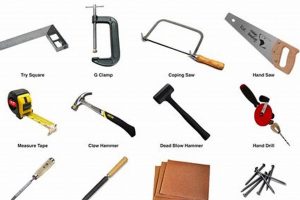
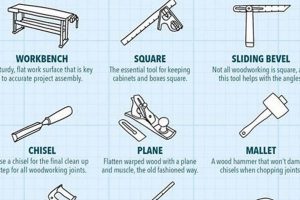
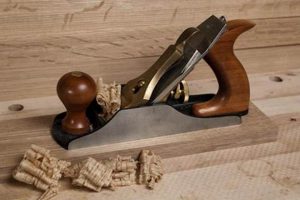
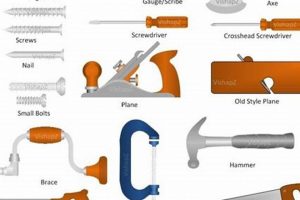
The craft involves shaping wood through manual power, employing tools like saws, chisels, planes, and mallets. This method contrasts with machine-operated techniques, emphasizing precision and control achieved through direct physical interaction with the material. A representative example includes crafting dovetail joints for drawers using a handsaw and chisels.
The practice offers numerous advantages, including reduced noise and dust pollution compared to power tool alternatives. It fosters a deeper understanding of wood properties and grain direction, leading to enhanced craftsmanship and a connection to historical methods. Furthermore, the inherent limitations necessitate careful planning and efficient use of resources, promoting sustainable practices.
The following sections will delve into specific techniques, tool maintenance, wood selection, and project planning, providing a foundational understanding for practitioners seeking to explore this time-honored tradition. Detailed explanations will guide the reader through essential skills and considerations for successful execution.
Essential Guidance for Manual Wood Shaping
The following guidance provides valuable insights for optimizing outcomes and promoting efficiency when manually shaping wood. Proper execution of these suggestions leads to enhanced precision and longevity of both tools and finished projects.
Tip 1: Sharpening Implements Regularly: Maintaining a keen edge on cutting tools such as chisels and planes is paramount. Dull tools require excessive force, reducing control and increasing the risk of errors. Employ sharpening stones and strops consistently to achieve optimal performance.
Tip 2: Prioritizing Grain Direction: Always work with the grain of the wood to avoid tear-out. Identifying the grain direction and planning cuts accordingly will yield smoother surfaces and cleaner results. Consider using a card scraper to address areas prone to tear-out.
Tip 3: Employing Accurate Marking Techniques: Precise layout is crucial for achieving accurate joinery. Utilize sharp marking knives and accurate measuring tools to delineate cut lines. Taking time for meticulous marking minimizes errors and ensures a tight, professional fit.
Tip 4: Mastering Hand Saw Technique: Practice maintaining a consistent sawing angle and rhythm. Avoid forcing the saw; allow the teeth to do the work. Regular practice improves accuracy and reduces fatigue.
Tip 5: Secure Workholding: Ensure the workpiece is firmly secured during all operations. A stable platform reduces vibration and allows for more precise control. Use vises, clamps, and bench dogs to secure the wood effectively.
Tip 6: Waxing Tool Surfaces: Applying a thin coat of wax to the soles of planes and the sides of saws reduces friction and improves the ease of operation. This simple step significantly enhances efficiency and minimizes effort.
Tip 7: Practice Joint Fitting: Before applying glue, dry-fit all joints to ensure proper alignment and fit. This allows for necessary adjustments before permanent assembly. Disassembly and adjustment are far easier without adhesive present.
Adherence to these guidelines contributes to enhanced precision, efficiency, and overall quality in woodworking endeavors. Careful attention to these details enables the practitioner to achieve superior results and maximize the benefits of manual methods.
The subsequent section will address considerations for choosing appropriate wood types for specific projects, further enhancing the understanding necessary for successful project completion.
1. Tool Sharpening

The efficacy of manual wood shaping is directly and unequivocally linked to the sharpness of the tools employed. Blunt edges necessitate increased force, resulting in diminished control and a heightened risk of material damage. A keen edge, conversely, allows for precise cuts with minimal effort, preserving the integrity of the wood and the accuracy of the intended form. Consider the task of cutting a dovetail joint; a dull chisel will crush the wood fibers, leading to a sloppy, ill-fitting joint. A sharp chisel, however, will sever the fibers cleanly, resulting in a tight, strong, and visually appealing connection.
The connection extends beyond mere ease of use. Properly sharpened tools reduce the likelihood of “tear-out,” where wood fibers are lifted and torn from the surface rather than cleanly sliced. This is particularly crucial when working with figured woods or end grain, where the orientation of the fibers makes them more susceptible to damage. Furthermore, sharp tools promote safer working conditions. Less force is required, reducing the risk of slippage and accidental injury. Regular sharpening, therefore, is not simply a matter of convenience but a fundamental aspect of responsible and effective practice.
In summary, tool sharpening is an indispensable component of manual wood shaping. It directly impacts precision, efficiency, and safety. Neglecting this aspect undermines the potential of the technique, leading to inferior results and increased risk. The maintenance of sharp edges is an investment in both the quality of the work and the well-being of the practitioner.
2. Wood Grain

Wood grain, the arrangement of wood fibers, profoundly influences the behavior of wood under stress and during shaping. In the context of manual wood shaping, understanding and adapting to grain direction is not merely a stylistic consideration but a fundamental prerequisite for achieving clean cuts and structurally sound joinery. The interaction between tool and grain dictates the success or failure of many operations.
- Tear-Out Mitigation
Working against the grain invites “tear-out,” where wood fibers fracture and lift, resulting in uneven surfaces. Skilled practitioners assess grain direction visually and tactically before each cut. This might involve adjusting the angle of the tool or employing techniques like back-planing to minimize fiber disruption. For example, when planing a board with reversing grain, changing the direction of the plane is essential to prevent tear-out.
- Joint Strength Enhancement
Grain orientation affects the strength of joints. Long grain-to-long grain glue joints are inherently stronger than end grain-to-long grain joints. When designing joinery, aligning grain direction strategically maximizes the surface area for glue adhesion and resistance to stress. Dovetail joints, for instance, exploit grain direction to create a mechanical interlock that complements the adhesive bond.
- Splitting Tendency Prediction
Wood splits most easily along the grain. This property is exploited in tasks like splitting firewood but must be avoided in fine woodworking. Understanding grain direction allows for controlled splitting when necessary (e.g., riving green wood for chair making) while also enabling the prevention of unintended splits during sawing, chiseling, or screwing. Driving a screw parallel to the grain near the edge of a board is more likely to cause splitting than driving it perpendicular.
- Surface Finishing Considerations
Grain pattern influences the application and appearance of finishes. Open-grained woods like oak require grain filling before finishing to achieve a smooth surface. Closed-grained woods like maple generally do not. The direction of sanding also affects the final appearance; sanding with the grain minimizes scratches and highlights the natural pattern of the wood.
These facets illustrate the inseparable relationship between wood grain and the manual shaping process. Mastery of the craft necessitates a deep understanding of how grain impacts tool behavior, joint integrity, and aesthetic outcomes. Adaptations in technique, tool selection, and even project design are often dictated by the inherent characteristics of the wood’s grain.
3. Joint Accuracy

Joint accuracy represents a critical determinant of structural integrity and aesthetic appeal in woodworking. The precision with which joints are executed dictates the overall strength, stability, and visual quality of the finished piece. In the domain of manual woodworking, where machine-assisted precision is absent, the reliance on meticulous technique and careful measurement becomes paramount.
- Layout Precision and Material Waste
Accurate layout is the foundation of precise joinery. Errors in marking and measuring accumulate and propagate throughout the construction process, leading to ill-fitting joints, weakened structures, and ultimately, material waste. Careful layout necessitates sharp marking tools, reliable measuring devices, and a systematic approach to transferring dimensions. For instance, consistently using the same face and edge of a board as reference points minimizes cumulative error. Improperly measured tenons may require complete re-fabrication of components.
- Tool Control and Surface Quality
Maintaining control over hand tools directly impacts the accuracy of joinery. A sharp tool, properly wielded, allows for clean, precise cuts that minimize gaps and ensure tight-fitting joints. Conversely, a dull or improperly used tool can lead to ragged edges, uneven surfaces, and difficulty in achieving the desired fit. Sharpening chisels and planes, employing appropriate sawing techniques, and practicing controlled paring are essential for achieving accurate joinery. Angled cuts on a mortise cheek can lead to a weakened joint and visual imperfections.
- Fit Adjustment and Iterative Refinement
Manual woodworking necessitates an iterative approach to joint fitting. Achieving a perfect fit often requires multiple cycles of trial and adjustment. Skillful practitioners learn to identify areas of interference and selectively remove material until the joint fits snugly and squarely. This process demands patience, attention to detail, and an understanding of wood properties. Dry fitting, before glue application, is crucial. Overtight joints risk splitting components; loose joints compromise structural strength.
- Structural Integrity and Longevity
The ultimate consequence of inaccurate joinery is compromised structural integrity and reduced longevity. Joints that are not square, tight, or properly aligned are inherently weaker and more susceptible to failure under stress. Furthermore, gaps in joints can trap moisture, promoting decay and further weakening the structure. Precise joinery ensures that loads are distributed evenly across the joint, maximizing its strength and resistance to deformation. A wobbly table exemplifies the direct consequence of imprecise joinery.
In summation, joint accuracy is not merely a desirable attribute in manual woodworking; it is a fundamental requirement for producing pieces that are both aesthetically pleasing and structurally sound. The absence of machine-assisted precision places a heightened emphasis on meticulous technique, careful measurement, and an iterative approach to fitting. Mastery of joinery is a hallmark of skill and a testament to the practitioner’s commitment to quality.
4. Work Holding

Work holding constitutes a foundational element in manual woodworking. The secure and stable positioning of a workpiece directly affects the precision, safety, and efficiency of all subsequent operations. In the absence of robust work holding, the application of force during sawing, chiseling, or planing can induce movement, leading to inaccurate cuts, damaged materials, and potential injury. Consequently, the selection and implementation of appropriate work-holding strategies are integral to the successful execution of any manual woodworking project. For instance, attempting to hand-plane a thin board without adequate support results in bowing and chattering, rendering the surface uneven and unusable. Conversely, securely clamping the board to a bench allows for smooth, controlled planing.
Various work-holding methods exist, each suited to specific tasks and workpiece geometries. Bench vises provide a versatile means of clamping materials horizontally or vertically. Bench dogs, used in conjunction with bench holes, offer support and prevent movement during planing. Clamps, available in numerous styles (e.g., pipe clamps, bar clamps, hand screws), provide adjustable pressure for securing irregular shapes or assembling glued joints. The correct choice of work-holding technique minimizes vibration, maximizes control, and contributes to a safer working environment. An example includes the use of a bird’s mouth on a workbench for securing long pieces on edge, allowing for easier hand planing of thin pieces.
Effective work holding, therefore, transcends mere convenience; it is a prerequisite for achieving accurate and repeatable results in manual woodworking. Challenges arise when dealing with complex shapes or delicate materials, requiring innovative solutions and a thorough understanding of clamping principles. Recognizing the interplay between workpiece geometry, tool forces, and work-holding strategy enables the practitioner to execute projects with confidence and precision, ultimately contributing to the longevity and quality of the finished piece.
5. Technique Refinement

In manual woodworking, technique refinement represents the ongoing process of improving skills and optimizing methods to achieve superior results. It is not a singular event but rather a continuous cycle of learning, practice, and adaptation, vital to maximizing the potential of hand tools and materials.
- Muscle Memory and Efficiency
The development of muscle memory through repetitive practice leads to increased efficiency and reduced fatigue. Repeated motions become more fluid and natural, requiring less conscious thought and effort. For instance, a woodworker repeatedly practicing sawing to a line will eventually develop the ability to do so accurately and consistently without needing to constantly check the saw’s position. Over time, they’ll use less energy to achieve the same result.
- Tool Control and Precision
Refined technique enhances tool control, allowing for greater precision in shaping and joinery. Mastery of hand tools involves understanding the subtle nuances of their use and developing the ability to anticipate their behavior. An experienced chisel user, for example, can accurately pare away thin shavings of wood, achieving a perfectly flat surface or precisely fitted joint. Consistent practice in sharpening is also a component of tool control.
- Problem Solving and Adaptation
Technique refinement fosters the ability to identify and solve problems effectively. Encountering challenges is inevitable in manual woodworking, and skilled practitioners develop the ability to analyze situations, adapt their methods, and find creative solutions. Addressing tear-out, misaligned cuts, or wood movement requires a deep understanding of both the materials and the tools being used. Instead of scrapping a project, they may use steam bending to correct issues.
- Material Knowledge and Application
Consistent application of skill promotes a deeper understanding of material properties and how the specific material responds to different techniques. Working with various types of wood exposes practitioners to the unique characteristics of each species, enabling them to select appropriate materials for specific projects and to tailor their techniques accordingly. Understanding how different grains react to chisels, saws, or planes is crucial for maximizing quality and mitigating wood defects.
These aspects of technique refinement collectively contribute to a significant improvement in the quality and efficiency of manual woodworking. The ongoing pursuit of skill development not only enhances the finished product but also fosters a deeper appreciation for the craft and the inherent beauty of the materials. The ability to adapt and improve builds not only confidence but also creative opportunities for unique projects.
6. Material Selection

The selection of appropriate materials exerts a profound influence on the success and longevity of woodworking projects. In the context of manual woodworking, where precision and control are paramount, the interplay between tool and material becomes even more critical. The inherent properties of the chosen wood species directly impact workability, joinery strength, and the final aesthetic outcome. Selection, therefore, requires careful consideration of factors beyond mere appearance.
- Workability and Tool Response
Different wood species exhibit varying degrees of hardness, density, and grain structure, directly affecting their response to hand tools. Softwoods like pine are generally easier to shape but may be prone to splintering. Hardwoods like maple require more force but yield cleaner cuts and finer detail. The choice of wood must align with the intended techniques and the user’s skill level. For example, attempting intricate carving on a dense, interlocked hardwood without adequate experience can lead to frustration and tool damage. Softer woods are more forgiving for beginners.
- Joinery Suitability and Structural Strength
The structural integrity of a woodworking project depends heavily on the selection of wood that is well-suited for the intended joinery. Certain woods are more amenable to specific joint types. Tight-grained hardwoods, such as oak or maple, are ideal for intricate joinery like dovetails, where strength and precision are paramount. Softer woods, like pine or fir, may be more suitable for simpler joinery techniques, such as butt joints or rabbets. A carefully chosen material, like hickory, is critical for elements that withstand repeated shock, such as hammer handles or mallets.
- Stability and Environmental Factors
Wood is a hygroscopic material, meaning it absorbs and releases moisture from the surrounding environment. The stability of a wood species is its ability to resist changes in dimension due to fluctuations in humidity. Highly stable woods, like mahogany or walnut, are less prone to warping or cracking. Less stable woods, like pine or poplar, may require greater attention to moisture control and acclimatization before use. Selecting a material, like cedar, that can withstand constant exposure to wet environments, in the case of making a boat, is integral to the projects success.
- Aesthetic Properties and Finish Compatibility
The visual appeal of a woodworking project is inextricably linked to the natural beauty of the selected wood. Grain pattern, color, and texture all contribute to the overall aesthetic. Furthermore, the compatibility of a wood species with various finishes is an important consideration. Open-grained woods, like oak, may require grain filling to achieve a smooth surface, while closed-grained woods, like maple, typically accept finishes more readily. A material like cherry, which darkens attractively over time, could be valued for its unique aging qualities.
These considerations underscore the vital role of material selection in manual woodworking. The successful execution of a project hinges not only on skill and technique but also on a thorough understanding of wood properties and their interaction with hand tools. Prudent material selection optimizes workability, ensures structural integrity, enhances aesthetic appeal, and ultimately contributes to the creation of lasting and functional pieces.
Frequently Asked Questions
This section addresses common inquiries and misconceptions surrounding the practice, providing clarity and practical guidance for those seeking to understand or engage in this craft.
Question 1: Is manual woodworking inherently slower than using power tools?
While certain tasks may require more time when executed manually, the overall process can be surprisingly efficient. Careful planning, sharp tools, and refined technique minimize wasted effort. Furthermore, the elimination of setup time and the increased control afforded by hand tools can offset the perceived time disadvantage in many situations.
Question 2: Does manual woodworking require significant physical strength?
Technique supersedes brute force. Efficient use of body mechanics, sharp tools, and proper work-holding minimize the need for excessive strength. In fact, many practitioners find that manual woodworking promotes a more sustainable and ergonomic approach to the craft, reducing the risk of strain and injury.
Question 3: Is manual woodworking suitable for large-scale projects?
While large-scale projects may present unique challenges, manual woodworking is certainly feasible. It requires meticulous planning, a strategic approach to task sequencing, and a willingness to embrace the inherent limitations of hand tools. Smaller, manageable components are often fabricated individually and then assembled to create larger structures.
Question 4: Is specialized equipment required to maintain hand tools?
While specialized sharpening stones and strops are beneficial, a comprehensive toolkit for manual woodworking does not necessitate expensive or elaborate equipment. A basic set of sharpening stones, a honing guide, and a means of securing tools for sharpening are typically sufficient. Investment in quality tools and regular maintenance is more crucial than acquiring an extensive collection of accessories.
Question 5: Can accurate joinery be achieved without power tools?
Accurate joinery is entirely achievable with hand tools, albeit requiring greater attention to detail and precision in layout and execution. Sharp marking knives, accurate measuring tools, and well-honed chisels enable the creation of tight-fitting, structurally sound joints. The absence of machine-assisted precision necessitates a more iterative approach, involving careful fitting and adjustment.
Question 6: Is manual woodworking a viable option for beginners?
Manual woodworking provides an excellent entry point for beginners, fostering a deep understanding of wood properties and tool behavior. The slower pace and tactile nature of the craft allow for greater feedback and control, facilitating the development of fundamental skills. Starting with simple projects and gradually increasing complexity is recommended.
These frequently asked questions highlight the core principles and practical considerations of manual woodworking. Understanding these aspects empowers practitioners to make informed decisions and approach the craft with confidence.
The following section will explore the historical significance and contemporary relevance of this time-honored tradition.
Conclusion
The preceding exploration has detailed the multifaceted aspects of woodworking using hand tools. From tool maintenance and material selection to technique refinement and joint accuracy, a clear understanding of these elements constitutes a foundation for proficient practice. The inherent limitations imposed by manual methods necessitate a deliberate approach, fostering precision and thoughtful execution.
The enduring relevance of woodworking using hand tools lies in its capacity to cultivate a profound connection with both the material and the creative process. Mastery of the craft demands patience, discipline, and a commitment to continuous learning. The legacy of this tradition persists, offering a tangible link to the past and a pathway to sustainable and meaningful creation in the future. Further investigation and diligent practice are encouraged to fully realize the potential of this venerable skill.