



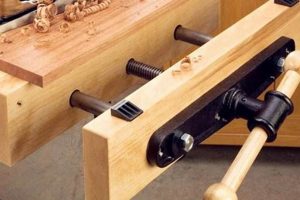
These specialized tools, originating from Japan, are designed to hold pieces of wood firmly together during the processes of gluing, fastening, and assembly. They come in various forms, including wooden vises, rope-based devices, and metal-banded solutions. An example is a wooden-threaded vise used for securing a workpiece while dovetails are cut.
These implements offer several advantages, including the ability to apply even pressure, minimize marring of the wood surface, and, in some cases, adapt to irregular shapes. Historically, these tools have been integral to Japanese woodworking techniques, reflecting a philosophy of precision, efficiency, and respect for materials. Their design often prioritizes functionality and longevity over elaborate aesthetics.
The following sections will delve into specific types of these tools, their characteristics, materials, and applications within traditional and contemporary woodworking practices. Furthermore, it will explore how these tools compare to their Western counterparts and their significance in achieving high-quality joinery.
Tips for Effective Utilization
Employing these specialized devices effectively requires understanding their nuances and adapting techniques accordingly. The following tips are presented to maximize their utility and ensure successful woodworking projects.
Tip 1: Select the Appropriate Type: Different forms are suited to different tasks. Wooden hand screw types are ideal for delicate work, while metal band versions provide greater clamping force for larger projects. Assess the project requirements to determine the optimal tool.
Tip 2: Protect Wood Surfaces: To prevent indentation or damage, use softwood cauls between the clamping surfaces and the workpiece. These cauls distribute pressure evenly and protect the wood from direct contact with the tool.
Tip 3: Apply Even Pressure: Over-tightening can damage wood fibers and compromise the joint. Gradually increase pressure, ensuring consistent contact across the entire joint surface. Observe glue squeeze-out to gauge adequate clamping force.
Tip 4: Consider Material Compatibility: The tool’s material should be considered in relation to the workpiece. Using a metal device on a soft wood may lead to marring. Wooden variants often mitigate this risk.
Tip 5: Maintain Proper Alignment: Before applying pressure, verify that the pieces are aligned correctly. Adjustments become significantly more challenging once clamping force is applied.
Tip 6: Understand Thread Direction: When using screw-based models, be cognizant of thread direction to prevent accidental loosening during the clamping process.
Effective employment of these tips will enhance the precision and quality of woodworking projects, yielding stronger and more aesthetically pleasing results. Skillful use of these tools is an integral aspect of achieving superior joinery.
The next section will address common challenges encountered when using these tools and strategies for overcoming them.
1. Material Composition

The material composition of these tools is a crucial determinant of their performance, durability, and suitability for various woodworking applications. The materials employed directly influence clamping force, the potential for workpiece marring, and the overall lifespan of the tool.
- Wood Selection and its Implications
Certain variants utilize hardwoods like Japanese white oak (Mizunara) or cherry (Sakura) for their bodies and clamping surfaces. The choice of hardwood offers substantial resistance to wear and deformation, crucial for maintaining consistent clamping pressure over extended periods. The relatively soft nature of some hardwoods compared to metal can also reduce the risk of damaging delicate wood surfaces during clamping. The wood’s grain orientation is also considered to maximize strength.
- Metal Components and their Properties
Many incorporate metal components, such as threaded rods, screws, and banding. The type of metal used, typically steel or iron, significantly impacts the tool’s clamping force and resistance to corrosion. High-carbon steel provides greater strength and durability but requires more diligent maintenance to prevent rust. The threading quality on metal screws directly affects the precision and smoothness of the clamping action. Consideration is also given to the temper of the metal, balancing hardness with resistance to fracture.
- Hybrid Designs and Material Synergies
Some designs combine wood and metal components to leverage the advantages of both materials. For example, a wooden body might house a metal screw mechanism, providing a balance of clamping force and surface protection. The interaction between the materials is carefully considered to minimize stress points and ensure long-term structural integrity. Glue selection for bonding dissimilar materials also becomes a critical factor in these hybrid designs.
The interplay of these material properties underscores the importance of understanding material composition when selecting these specialized woodworking tools. The optimal choice depends on the specific woodworking task, the type of wood being worked, and the desired level of precision and durability.
2. Clamping Force

Clamping force, the pressure exerted by a tool to hold workpieces together, is a critical parameter in woodworking, significantly impacting joint strength and overall project quality. The design and construction of Japanese woodworking clamps directly influence the magnitude and distribution of this force.
- Mechanical Advantage and Clamping Efficiency
Many types of these clamps, particularly those incorporating screw mechanisms, rely on mechanical advantage to amplify the user’s input force into substantial clamping pressure. The thread pitch of the screw, the lever arm length, and the friction within the mechanism all contribute to clamping efficiency. A finer thread pitch generates greater clamping force for a given input, while longer lever arms offer increased leverage. Minimizing friction through lubrication and precise machining is crucial for maximizing efficiency.
- Material Properties and Force Distribution
The materials used in clamp construction, such as specific hardwoods or metal alloys, dictate the maximum force the tool can withstand without deformation or failure. The geometry of the clamping surfaces influences the distribution of force across the joint. Wider clamping faces distribute force more evenly, reducing the risk of localized stress concentrations that can damage the wood. Flexible clamping arms can conform to irregular surfaces, ensuring uniform pressure distribution.
- Adjustability and Controlled Application of Force
The ability to precisely adjust and control clamping force is essential for achieving optimal joint strength without damaging the wood. These clamps often feature mechanisms that allow for incremental adjustments, enabling the user to apply the appropriate level of pressure for the specific wood species and joint type. A calibrated scale or torque indicator can provide a quantitative measure of clamping force, enhancing precision and repeatability.
- Force Maintenance and Creep Resistance
The ability of a clamp to maintain a consistent clamping force over time is crucial for ensuring a strong and durable joint. Wood is a viscoelastic material, meaning it deforms under sustained pressure. The design and materials of the clamp must minimize creep, the gradual loss of clamping force due to deformation of the wood or the clamp itself. Regularly retightening the clamp may be necessary to compensate for creep and maintain adequate pressure.
Understanding the interplay between these facets of clamping force and the specific design features of these woodworking clamps is essential for achieving successful and long-lasting woodworking results. The appropriate selection and application of these tools, guided by a thorough understanding of clamping force principles, are integral to the art of fine woodworking.
3. Application Specificity
The efficacy of woodworking practices is significantly enhanced by tools tailored to specific tasks. Within Japanese woodworking, this principle is exemplified by the diverse array of holding devices, each designed for a narrow range of applications. These tools are not general-purpose implements, but rather specialized devices optimized for particular joinery techniques or workpiece geometries.
- Dovetail Joint Clamps
Dovetail joints, revered for their strength and aesthetic appeal, require precise alignment and clamping pressure during glue-up. Specialized clamps with angled jaws and adjustable arms are designed to apply even pressure to the angled surfaces of the dovetail joint, ensuring tight interlocking and preventing slippage during the curing process. These clamps often incorporate features to maintain squareness and prevent racking, critical for achieving a flawless dovetail joint.
- Edge-Gluing Clamps
Creating wide panels from narrower boards requires edge-gluing, a process that demands uniform clamping pressure along the entire length of the joint. Edge-gluing clamps, often featuring long, parallel jaws and multiple clamping screws, are designed to distribute pressure evenly across the joint, preventing gaps and ensuring a seamless bond. Some variants incorporate features to align the boards vertically, minimizing the need for planing or sanding after glue-up.
- Carving Vises
Wood carving often involves intricate shaping and detailed work that requires secure workpiece holding. Carving vises, typically featuring adjustable jaws and swiveling bases, are designed to grip the workpiece firmly while allowing the carver to access all surfaces. The jaws are often lined with soft materials, such as leather or cork, to prevent marring of the wood. The swiveling base enables the carver to rotate the workpiece without releasing the grip.
- Bent Lamination Clamps
Creating curved wooden components through bent lamination requires specialized clamps that can conform to the desired curvature and apply uniform pressure to the laminations during glue-up. These clamps often feature flexible bands or contoured cauls that match the shape of the curve. The clamping pressure must be carefully controlled to prevent the laminations from slipping or distorting during the curing process.
The dedication to application-specific tooling within Japanese woodworking reflects a commitment to precision, efficiency, and quality. By employing implements designed for narrow tasks, woodworkers can optimize their processes, minimize errors, and achieve superior results. The selection and use of these specialized devices are integral components of traditional Japanese woodworking practices.
4. Traditional Design

The traditional design of Japanese woodworking clamps is inextricably linked to the historical practices and philosophical underpinnings of the craft. These designs often reflect a preference for natural materials, minimal ornamentation, and functional efficiency. The enduring forms of these tools are not merely aesthetic choices, but rather the result of centuries of iterative refinement, each modification driven by the practical demands of woodworking.
An example is the use of wooden threads in vises. This design choice, while seemingly rudimentary, offers several advantages. Wooden threads are less likely to damage delicate wood surfaces than their metal counterparts. The self-lubricating properties of wood also reduce friction, allowing for smooth and controlled clamping force. Furthermore, the use of locally sourced materials promotes sustainability and reduces reliance on external resources. The rope clamps represent another illustration. Their simple construction allows for adaptability to various shapes, showcasing the ingenuity in addressing complex woodworking challenges with readily available materials.
The adherence to traditional designs also signifies a respect for the knowledge and skills passed down through generations. By utilizing time-tested methods and tools, woodworkers connect with a rich heritage and maintain the integrity of the craft. The understanding of this connection is crucial for appreciating the value and purpose of these specific tools, and subsequently, applying them correctly in a modern woodworking context. While contemporary materials and techniques may offer certain advantages, the principles embedded within these traditional designs remain relevant and provide a foundation for innovative adaptations.
5. Maintenance Requirements

The longevity and optimal performance of Japanese woodworking clamps are directly contingent upon adherence to specific maintenance protocols. These tools, often constructed from a combination of wood and metal, are susceptible to environmental factors and wear and tear associated with regular use. Neglecting proper upkeep can lead to diminished clamping force, increased risk of workpiece damage, and ultimately, tool failure. For instance, wooden components are prone to warping or cracking if exposed to excessive humidity or dryness. Metal parts, particularly threaded elements, are susceptible to corrosion and seizing, impeding smooth operation. A concrete example is a wooden vise whose thread strips as a result of dryness which leads to uneven pressure on the wood, leading to an ineffective bond.
Preventative maintenance is essential. Wooden components benefit from periodic application of a protective finish, such as oil or wax, to mitigate moisture fluctuations. Metal parts require regular cleaning and lubrication to prevent rust and ensure smooth threading. The frequency of maintenance depends on usage intensity and environmental conditions. In humid environments, more frequent lubrication is necessary. Careful handling during use also contributes to reduced maintenance needs. Avoid over-tightening clamps, as this can stress the tool’s components. Store clamps in a dry, protected environment when not in use. The investment in time for consistent maintenance translates to extended tool life and consistent performance.
In summary, maintenance of these specific tools is not merely a perfunctory task but a crucial element in preserving their functionality and extending their lifespan. A proactive approach to cleaning, lubricating, and protecting these tools ensures they remain reliable assets in the pursuit of quality woodworking. Ignoring these requirements increases the likelihood of premature failure and compromised joinery. The understanding and implementation of consistent maintenance practices are therefore vital for any woodworker utilizing these implements.
Frequently Asked Questions
The following section addresses common inquiries and misconceptions concerning Japanese woodworking clamps, providing concise and informative answers based on established woodworking principles.
Question 1: What distinguishes these from Western-style clamps?
Design philosophies and material choices represent primary distinctions. Traditional Japanese designs often prioritize natural materials like wood and rope, emphasizing even pressure distribution and minimizing marring. Western clamps frequently utilize metal construction, focusing on high clamping force. The specific geometries often reflect the joinery techniques prevalent in each woodworking tradition.
Question 2: Are wooden clamps as effective as metal clamps?
Effectiveness is application-dependent. Wooden clamps excel in situations where minimizing surface damage is paramount. Their ability to conform to irregular shapes provides an advantage when clamping non-uniform workpieces. Metal clamps offer greater clamping force, making them suitable for projects demanding high pressure. The appropriate choice hinges on project-specific requirements.
Question 3: How should the clamping force be determined when using these tools?
Clamping force depends on the wood species, the joint type, and the adhesive used. Over-tightening can damage wood fibers, while insufficient force compromises joint integrity. Observing glue squeeze-out is a reliable indicator of adequate pressure. Experimentation and experience refine the ability to judge appropriate clamping force.
Question 4: What are the best practices for maintaining wooden clamps?
Protect wooden components from excessive moisture fluctuations. Periodic application of oil or wax helps prevent warping and cracking. Metal components should be cleaned and lubricated to prevent corrosion. Avoid over-tightening, as this can stress the tool’s components.
Question 5: Can these tools be used with synthetic glues?
These clamps are compatible with various adhesives, including synthetic glues. Ensure that the clamping pressure and duration align with the glue manufacturer’s recommendations. Clean any glue residue from the clamping surfaces after each use to prevent adhesion and maintain consistent pressure distribution.
Question 6: Where can authentic models of these tools be purchased?
Reputable woodworking supply retailers specializing in Japanese tools, online marketplaces featuring handcrafted items, and direct purchases from Japanese toolmakers represent avenues for acquiring authentic tools. Verify the tool’s origin and materials to ensure authenticity and quality.
Understanding the nuances of these tools, their maintenance, and proper application is essential for achieving superior woodworking results. Informed decision-making ensures the optimal selection and utilization of these specialized implements.
The next section will explore the historical evolution of these tools and their place in the broader context of Japanese woodworking.
Conclusion
The preceding discussion has explored the diverse characteristics, applications, and maintenance requirements associated with japanese woodworking clamps. From their material composition to their role in achieving precise joinery, these tools represent a significant aspect of traditional Japanese woodworking practices. Emphasis has been placed on understanding their specific functionalities and adapting techniques to maximize their potential.
Continued exploration of these tools and their integration into both traditional and contemporary woodworking environments is encouraged. Further research into their historical development and potential for innovation promises to enhance the understanding and appreciation of this unique and valuable aspect of woodworking. Woodworkers are encouraged to seek additional knowledge and practical experience to fully realize the benefits offered by these specialized clamping solutions.
![Top-Rated: Best Quick Clamps for Woodworking Projects [2024] | Step-by-Step Guides, Tools & Inspiration to Build Beautiful Wooden Decor on a Budget](https://woodfromhome.com/wp-content/uploads/2026/04/th-264-300x200.jpg "Top-Rated: Best Quick Clamps for Woodworking Projects [2024] Step-by-Step Guides, Tools & Inspiration to Build Beautiful Wooden Decor on a Budget")