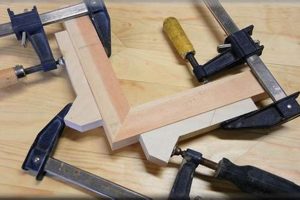
These specialized tools, primarily employed in the domain of woodworking, are designed to hold workpieces at a 90-degree angle. This secure fastening is crucial during assembly processes such as gluing, screwing, or nailing, ensuring accurate and stable corner joints. For instance, these devices are frequently used in the creation of picture frames, drawers, cabinets, and various box constructions.
The significance of achieving precise right angles in woodworking projects cannot be overstated. These tools directly contribute to the overall structural integrity, aesthetic appeal, and professional finish of the completed piece. Their use can significantly reduce the potential for misalignment, gaps, and structural weaknesses, leading to durable and visually pleasing results. Historically, simpler methods were used to achieve this, but these modern aids offer increased precision and efficiency.
The following sections will delve into the different types available, discussing their specific features, materials of construction, and applications. Furthermore, the advantages and disadvantages of each type will be analyzed, along with essential considerations for selection and proper usage to optimize project outcomes.
Essential Usage Guidelines
Optimizing the utility of these tools necessitates adherence to specific guidelines. Proper implementation can significantly enhance accuracy and project longevity.
Tip 1: Prior to clamping, ensure the workpieces are accurately aligned. Misalignment at this stage will compromise the final joint, regardless of the clamping force applied.
Tip 2: Select the appropriate type for the specific task. Different models are designed for varying material thicknesses and joint configurations. Utilizing an undersized or inappropriate type may result in insufficient holding power or damage to the workpiece.
Tip 3: Employ consistent clamping pressure. Over-tightening can deform the material, while insufficient pressure will fail to create a secure bond. A moderate and uniform force is generally optimal.
Tip 4: Utilize protective padding between the tool and the workpiece when working with delicate materials. This will prevent indentation and surface marring during the clamping process.
Tip 5: Before applying adhesives, perform a dry run. This allows for a comprehensive assessment of joint alignment and ensures all components fit together correctly before permanent bonding.
Tip 6: Inspect these tools regularly for wear and tear. Damaged or worn components can compromise their functionality and pose a safety risk. Replace parts as needed to maintain optimal performance.
Tip 7: When working with multiple pieces, consider using multiple sets to ensure uniform pressure and prevent warping. Simultaneous application of pressure across all corners is crucial for achieving precise and stable joints.
Adherence to these guidelines will improve joint accuracy, structural integrity, and the overall quality of woodworking projects. Consistent application of best practices is key to achieving professional-grade results.
The subsequent section will explore the proper maintenance and storage procedures to extend the lifespan and ensure the continued effectiveness of these tools.
1. Joint Accuracy
Joint accuracy is paramount in woodworking, directly influencing structural integrity, visual appeal, and overall project quality. The reliable establishment of right angles is facilitated by corner clamps, making them an indispensable tool for achieving desired precision.
- Precise Alignment
Corner clamps maintain workpieces in a fixed 90-degree orientation during assembly, preventing unwanted movement or shifting. This precise alignment is critical for creating seamless and robust joints, minimizing the need for subsequent corrections or adjustments. Misaligned joints can compromise the structural integrity of the piece, leading to instability and potential failure under stress. The clamps ensure that components are perfectly aligned before adhesives are applied or fasteners are secured.
- Consistent Angle Maintenance
These tools maintain a consistent angle while fasteners are applied. Variations in angle can lead to stress concentrations and uneven load distribution within the joint. This consistency ensures that the load is evenly distributed across the joint, increasing its overall strength and durability. Variations in angle, even minor deviations, can manifest as visible flaws in the final product. Ensuring right angles are true to form makes for aesthetically pleasing corners.
- Minimized Gap Formation
Proper clamping eliminates gaps between mating surfaces by applying uniform pressure. Gaps compromise joint strength and provide entry points for moisture, leading to wood rot and structural degradation over time. The tight fit achieved through proper clamping promotes optimal adhesion between surfaces, maximizing the effectiveness of adhesives. When gaps are minimized, the joint is more resilient to environmental factors and mechanical stresses. This tight fit also provides the ideal surface for joinery and glue to work.
- Enhanced Structural Integrity
By ensuring accurate angles and tight-fitting joints, corner clamps contribute directly to the overall structural integrity of woodworking projects. Strong, precisely aligned joints provide a solid foundation for the entire structure, increasing its ability to withstand loads and resist deformation. Structural integrity is particularly important in load-bearing applications such as furniture construction and cabinet making. This makes corner clamps critical for making furniture and cabinetry.
In summary, corner clamps play a crucial role in achieving and maintaining joint accuracy in woodworking. Their ability to ensure precise alignment, consistent angles, minimized gaps, and enhanced structural integrity makes them indispensable for producing high-quality, durable, and aesthetically pleasing woodworking projects.
2. Clamping Pressure
Clamping pressure, in the context of corner clamps for woodworking, represents the force applied to workpieces to ensure secure adhesion and precise alignment during the bonding process. This pressure is a critical factor affecting the strength and aesthetics of the resultant joint. Insufficient pressure leads to weak bonds, gaps, and potential joint failure. Conversely, excessive pressure can damage the wood fibers, deform the material, or squeeze out too much adhesive, also compromising the joint’s integrity. Therefore, the optimal clamping pressure is contingent upon material type, adhesive properties, and the specific design of the joint.
The distribution of clamping pressure is equally important. Corner clamps must apply even pressure across the entire joint surface to prevent localized stress points or uneven adhesion. Examples of corner clamp failure often trace back to uneven pressure distribution. The clamp itself must be robust enough to maintain this consistent pressure over the curing time of the adhesive. This necessitates careful selection of corner clamps based on the project’s size, material, and intended use. In practice, a cabinetmaker assembling a frame for a cabinet door uses clamps designed to deliver consistent, distributed pressure. This consistent pressure prevents warping and assures uniform glue distribution between the mating surfaces. This method optimizes the structural integrity of the joints.
Achieving proper clamping pressure with corner clamps poses challenges. Factors such as wood density, humidity, and adhesive viscosity can influence the ideal pressure range. Skillful application involves adjusting the clamp’s mechanism to attain the required force without exceeding material limits. Understanding the nuances of wood species and adhesives is fundamental to successful woodworking. The proper application is a careful balance between too little and too much pressure. It is an application that promotes optimal bonding and stability. Mastering this balance contributes to high-quality woodworking outcomes and extends the lifespan of finished projects.
3. Material Compatibility
Material compatibility is a crucial consideration when selecting and utilizing corner clamps for woodworking projects. The effectiveness and longevity of both the clamps and the workpieces are directly influenced by their mutual material properties. Incompatibility can lead to damage, inaccurate joints, and compromised structural integrity. For instance, using metal clamps with excessive tightening force on softwood can leave permanent indentations, marring the surface and weakening the wood fibers. Similarly, certain clamp materials might react adversely with specific wood treatments or adhesives, leading to discoloration or bonding failure. Understanding these interactions is paramount for achieving optimal results.
The choice of corner clamp material, whether it is steel, aluminum, plastic, or a composite, should align with the characteristics of the wood being worked on. Hardwoods require robust clamps capable of exerting significant pressure without deformation, while softer woods necessitate gentler clamps to prevent damage. Moreover, the presence of corrosive agents in certain woods, such as oak containing tannic acid, can accelerate the deterioration of certain clamp materials. Appropriate padding or coatings on the clamp surfaces can mitigate these risks. An example of this is a woodworker using plastic-faced clamps on a delicate cherry wood project to avoid iron staining that can occur when using bare metal clamps.
In conclusion, material compatibility is an indispensable factor in woodworking applications involving corner clamps. Careful consideration of the material properties of both the clamps and the workpieces ensures the preservation of surface integrity, prevents adverse chemical reactions, and ultimately contributes to the creation of durable, aesthetically pleasing, and structurally sound finished products. A thorough understanding of these interactions enables informed decision-making, leading to enhanced project outcomes and minimizing potential damage or failures. Ignoring this aspect introduces unnecessary risks and diminishes the quality of craftsmanship.
4. Application Versatility
The application versatility of corner clamps in woodworking stems from their ability to secure right-angle joints across a wide spectrum of projects, ranging from small-scale crafting to large-scale furniture construction. This adaptability is a core component of their utility; without it, their applicability would be severely limited. The ability to handle varied material thicknesses and joint types is directly linked to their value in a woodworking shop. For instance, the same set of clamps might be used to assemble a delicate picture frame one day and a robust cabinet carcass the next. This inherent adaptability is a primary reason for their widespread adoption.
The spectrum of applications further includes box making, drawer construction, and even the creation of architectural millwork. The differing designs, such as miter clamps, band clamps, and quick-release clamps, expand the range of tasks they can effectively address. Each design caters to specific needs, whether it’s securing complex angled joints or providing rapid adjustments during assembly. A practical example is a furniture maker employing a band clamp to assemble a circular tabletop with apron, highlighting the tool’s capacity to handle non-traditional corner assemblies. The variety ensures they remain relevant across diverse woodworking methodologies.
In conclusion, the application versatility of corner clamps is a direct consequence of their design evolution and adaptability to diverse woodworking needs. Their prevalence is a testament to their capacity to enhance accuracy and efficiency across an array of projects. While challenges remain in adapting to extremely complex or unconventional geometries, their widespread applicability solidifies their status as indispensable tools for woodworkers of all skill levels. Recognizing the breadth of their application enhances the woodworkers ability to approach projects with confidence, knowing that a reliable solution exists for achieving precise and durable right-angle joints.
5. Durability
Durability, in the context of corner clamps for woodworking, signifies the tool’s capacity to withstand prolonged use, resist wear and tear, and maintain operational integrity under diverse working conditions. Its relevance is paramount, as woodworking tools are often subjected to substantial forces and repetitive stress. The lifespan and effectiveness of corner clamps are directly proportional to their inherent durability.
- Material Composition
The materials used in the construction of corner clamps directly influence their durability. High-grade steel or hardened alloys offer superior resistance to bending, cracking, and deformation compared to lower-quality alternatives. For example, clamps constructed from malleable iron may exhibit greater flexibility, but they are also more susceptible to permanent deformation under high stress. The selection of appropriate materials extends the tool’s lifespan and ensures consistent performance. Proper selection allows the clamp to maintain its shape and resist damage.
- Design and Construction
The design and construction techniques employed contribute significantly to the overall durability of corner clamps. Reinforced joints, robust clamping mechanisms, and precision machining enhance the tool’s ability to withstand repeated use and heavy loads. A poorly designed clamp with weak connection points may fail prematurely, rendering it unusable and potentially causing damage to the workpiece. Sound construction guarantees long-term structural integrity and reliable functionality. Design features such as ribbing, bracing, and heat treatment are also included in this facet.
- Resistance to Corrosion
The ability of corner clamps to resist corrosion is crucial, particularly in environments with high humidity or exposure to moisture. Rust and corrosion can weaken the material, compromise the clamping force, and ultimately lead to tool failure. Protective coatings, such as zinc plating or powder coating, can significantly extend the lifespan of metal clamps by preventing the onset of corrosion. A corrosion resistant surface enables the clamp to function at its highest potential.
- Maintenance and Care
Even the most durable corner clamps require proper maintenance and care to ensure their continued functionality. Regular cleaning, lubrication of moving parts, and appropriate storage practices can prevent premature wear and tear. Neglecting these essential maintenance steps can accelerate the deterioration of the tool, reducing its lifespan and impacting its performance. Routine maintenance prolongs durability, preventing rust and removing debris.
In summary, the durability of corner clamps for woodworking is a multifaceted attribute influenced by material composition, design, corrosion resistance, and proper maintenance. A durable corner clamp minimizes downtime, reduces replacement costs, and ensures consistent, reliable performance over an extended period. Prioritizing durability in the selection and care of these tools is essential for any woodworking professional or hobbyist seeking to maximize efficiency and achieve high-quality results.
Frequently Asked Questions
The following addresses common inquiries regarding the selection, application, and maintenance of these woodworking accessories. The responses are intended to provide clarity and enhance understanding for optimal utilization.
Question 1: What constitutes the most critical factor in selecting corner clamps?
The primary consideration is the type of joint being created and the material thickness of the workpieces. Clamps must be capable of accommodating the material dimensions and exerting sufficient pressure to ensure a secure and accurate bond.
Question 2: How does one prevent damage to the workpiece when using corner clamps?
Protective padding between the clamp jaws and the workpiece surfaces is essential. Materials such as cork, leather, or specialized clamp pads distribute the clamping force evenly and prevent indentation or marring, especially when working with softer woods.
Question 3: What is the optimal clamping pressure for achieving strong corner joints?
Optimal clamping pressure varies depending on the wood species, adhesive type, and joint design. As a general rule, apply sufficient pressure to close any gaps between the mating surfaces without crushing the wood fibers or squeezing out all the adhesive. Experimentation and experience are key to determining the appropriate pressure for specific scenarios.
Question 4: How frequently should corner clamps be inspected and maintained?
Corner clamps should be inspected regularly, ideally before each use. Check for wear, damage, or corrosion on the clamping mechanism, jaws, and frame. Lubricate moving parts as needed and clean any accumulated debris to ensure smooth and reliable operation.
Question 5: Are specialized corner clamps necessary for miter joints?
While standard corner clamps can be adapted for use with miter joints, specialized miter clamps offer enhanced precision and stability. These clamps are designed to align the angled surfaces accurately and maintain consistent pressure during the bonding process, resulting in stronger and more visually appealing mitered corners.
Question 6: Can corner clamps be effectively used with materials other than wood?
Corner clamps can be used with materials other than wood, such as plastics or composites, provided the clamp material is compatible and the clamping pressure is carefully controlled. Always test the clamp on a scrap piece of material to ensure it does not cause damage or distortion before applying it to the final project.
In summary, the effective use of these tools requires careful consideration of material properties, clamping pressure, and maintenance protocols. Adhering to best practices ensures optimal joint strength, aesthetic appeal, and longevity of woodworking projects.
The subsequent section provides an overview of advanced clamping techniques for complex woodworking assemblies.
Conclusion
The preceding examination of corner clamps for woodworking has underscored their integral role in achieving precise and structurally sound joints. The tool’s selection criteria, encompassing material compatibility, clamping pressure modulation, and application versatility, are crucial determinants of project success. Proper utilization, characterized by meticulous alignment and consistent pressure distribution, directly influences the final product’s integrity and aesthetic appeal. These factors affect the long-term quality of assembled woodworking products.
Given the enduring demand for high-quality woodworking and the increasing complexity of contemporary designs, the continued refinement and informed application of corner clamps remain paramount. Woodworkers are encouraged to prioritize both tool selection and usage practices to ensure consistently superior results. Mastering these techniques guarantees professional quality in any woodworking project.
![Top-Rated: Best Quick Clamps for Woodworking Projects [2024] | Step-by-Step Guides, Tools & Inspiration to Build Beautiful Wooden Decor on a Budget](https://woodfromhome.com/wp-content/uploads/2026/04/th-264-300x200.jpg "Top-Rated: Best Quick Clamps for Woodworking Projects [2024] Step-by-Step Guides, Tools & Inspiration to Build Beautiful Wooden Decor on a Budget")