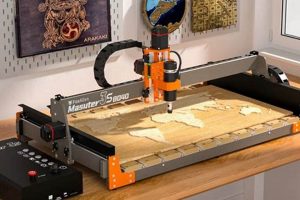
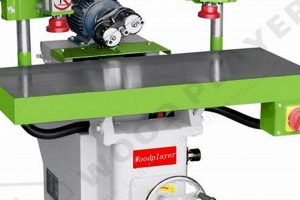
Computer Numerical Control (CNC) technology has revolutionized various manufacturing sectors, and woodworking is no exception. Entry-level systems designed for this application offer a pathway for hobbyists and small businesses to automate and enhance their craft. These systems allow for precise cutting, carving, and engraving of wood materials based on digital designs.
The implementation of such equipment streamlines production, enabling the creation of intricate designs with consistent accuracy. Historically, CNC machines were expensive and complex, limiting their accessibility. However, technological advancements have led to more cost-effective solutions, democratizing access and fostering innovation in the woodworking field. The reduced cost allows businesses to expand their offerings, improve efficiency, and increase profitability. For hobbyists, it opens up possibilities for complex projects and personalized creations previously unattainable.
This article will explore the key considerations for selecting a suitable system for woodworking applications. It will cover factors such as machine size, materials compatibility, software integration, and overall value. Further, it will touch on various applications and user levels best suited for these machines.
Guidance on Selecting Cost-Effective Woodworking CNC Equipment
Prudent selection of automated woodworking equipment necessitates careful consideration of several critical factors. Neglecting these aspects can result in compromised performance and an unfavorable return on investment.
Tip 1: Define Project Scope: Before acquiring any equipment, assess the types of projects it will be used for. Intricate carvings require higher precision than basic cuts, influencing the necessary specifications.
Tip 2: Material Compatibility Assessment: Woodworking encompasses a wide range of materials, from softwoods like pine to hardwoods like oak. Ensure the machine possesses the power and rigidity to process the intended materials effectively.
Tip 3: Evaluate Work Area Dimensions: The physical dimensions of the machine’s work area should accommodate the typical size of workpieces. Choosing too small a work area severely restricts project possibilities.
Tip 4: Consider Software and Control: User-friendly software is paramount for efficient operation. Assess the software’s compatibility with design tools and its ability to generate accurate toolpaths.
Tip 5: Analyze Spindle Power and Speed: Spindle power dictates the machine’s ability to cut through dense materials. Higher speeds are advantageous for delicate work, while lower speeds are often preferable for more substantial material removal.
Tip 6: Scrutinize Rigidity and Frame: A robust frame minimizes vibration, contributing to enhanced accuracy and longevity. Prioritize machines with solid construction from reputable manufacturers.
Tip 7: Research Maintenance Requirements: Routine maintenance is essential for maintaining performance. Inquire about maintenance schedules, spare parts availability, and associated costs.
By carefully evaluating these factors, individuals and organizations can make informed decisions, ensuring the acquisition of equipment that aligns with their specific needs and budgetary constraints.
The subsequent section will address practical applications of the selected equipment and considerations for optimizing its operation.
1. Machine Size

Machine size is a primary determinant in the overall cost and operational capabilities of automated woodworking equipment. Dimensions directly correlate with material capacity and the complexity of projects undertaken. Therefore, understanding the size implications is paramount for cost-effective selection.
- Work Envelope Dimensions
The work envelope, or cutting area, dictates the maximum dimensions of a workpiece. Larger envelopes accommodate bigger projects, but generally increase machine footprint and price. Smaller, more units provide adequate space for many common woodworking projects while significantly reducing cost.
- Footprint and Workshop Space
A machine’s physical footprint must be considered within the context of available workshop space. Larger machines demand substantial floor area, potentially necessitating facility modifications. Compact systems offer greater flexibility in smaller workspaces, aligning with budgets.
- Material Handling Considerations
Machine size impacts the ease of loading, unloading, and manipulating materials. Larger work envelopes allow for processing full sheets of material, but demand robust material handling equipment. Smaller machines may require pre-cutting materials, increasing preparation time but potentially reducing equipment overhead.
- Scalability and Future Needs
Machine size should be considered in the context of anticipated future needs. While selecting a smaller machine may seem economical initially, it may limit future project scope. Assess project needs and future goals to balance cost savings with operational flexibility.
In summary, machine size presents a trade-off between cost, workspace requirements, and project versatility. Selecting the appropriate size requires a thorough evaluation of current and future woodworking needs to achieve optimal value.
2. Material Compatibility

The suitability of Computer Numerical Control (CNC) equipment for woodworking applications is fundamentally linked to material compatibility. Equipment designed for cost-effective operation often represents a compromise in capabilities, and the selection of an appropriate machine necessitates a clear understanding of the materials intended for processing. A mismatch between machine specifications and material properties leads to compromised performance, reduced lifespan of tooling, and potentially, damage to the equipment itself. For instance, a machine intended for softwoods may struggle to efficiently process hardwoods like oak or maple, resulting in slower cutting speeds, increased wear, and diminished precision. This incompatibility directly impacts project timelines and material costs, negating the intended benefits of affordability.
Conversely, over-specification of equipment to accommodate occasional use of more challenging materials can lead to unnecessary capital expenditure. A business primarily working with pine or plywood may not require a high-powered spindle or a reinforced frame designed for heavy-duty machining. Instead, focusing on equipment optimized for the primary materials allows for a more efficient allocation of resources. The selection of appropriate cutting tools and optimized machining parameters further enhances material compatibility and reduces stress on the machine. These strategies, combined with a practical understanding of material properties, enable the effective utilization of entry-level CNC equipment across a spectrum of woodworking applications.
In summary, material compatibility represents a critical determinant of value when considering CNC systems for woodworking. Careful assessment of intended materials, coupled with an understanding of machine specifications, ensures that the selected equipment aligns with operational requirements, maximizing efficiency and minimizing costs. Ignoring this crucial factor introduces the risk of premature equipment failure or underperformance, ultimately undermining the purported affordability.
3. Software Integration

Software integration is a critical component of cost-effective CNC woodworking systems. It encompasses the seamless interaction between design software (CAD), manufacturing software (CAM), and the machine’s control system. Inadequate software integration results in workflow inefficiencies, increased material waste, and elevated labor costs, effectively negating any initial savings from choosing an affordable machine. A system with poor software compatibility necessitates manual intervention, complex workarounds, and increased risk of errors, ultimately reducing productivity and undermining the benefits of automation. For example, if the CAD/CAM software struggles to generate accurate G-code for a particular machine, operators must spend significant time manually editing the code, introducing potential for costly mistakes.
Effective software integration streamlines the design-to-production process, enabling users to efficiently translate their ideas into physical objects. User-friendly interfaces, intuitive toolpath generation, and real-time machine monitoring are essential features that contribute to overall efficiency. Many budget-conscious CNC machines are bundled with basic software packages. However, the long-term cost-effectiveness hinges on the software’s ability to handle diverse projects, optimize material usage, and minimize downtime. Consider a small woodworking shop that invests in a machine with limited software capabilities. They may find themselves quickly outgrowing the software’s functionality, forcing them to purchase additional software licenses or upgrade to a more capable system, thus negating initial savings.
In conclusion, software integration is not merely an add-on but an intrinsic element of value in entry-level CNC woodworking equipment. Comprehensive software integration allows for optimized workflow, reduced operational costs, and the capacity to tackle a wide array of projects. Therefore, a thorough evaluation of software capabilities and compatibility is essential in ensuring the overall cost-effectiveness and long-term viability of affordable CNC woodworking solutions. Without this crucial component, the potential benefits are severely diminished, leading to a less-than-optimal return on investment.
4. Spindle Power

Spindle power is a crucial specification that significantly impacts the capabilities of Computer Numerical Control (CNC) equipment, especially within the context of cost-conscious woodworking applications. The motor’s power output directly determines the machine’s ability to remove material, influence cutting speeds, and affect the range of compatible wood types. Therefore, spindle selection requires careful consideration to ensure that it aligns with the machine’s operational requirements and budget limitations.
- Material Hardness and Cutting Performance
Spindle power directly dictates the equipment’s ability to machine various wood densities. Higher power output facilitates efficient cutting of hardwoods like oak or maple, reducing the risk of stalling or burning the material. Lower-powered spindles are generally suited for softer woods such as pine or balsa. Selecting an undersized spindle for the material leads to slower cutting speeds and increased wear. Over-specifying the spindle power elevates the machine’s cost and energy consumption, without necessarily enhancing performance if the majority of work involves softwoods.
- Cutting Tool Size and Depth of Cut
Spindle power influences the maximum size of cutting tools that can be effectively utilized and the depth of cut achievable in a single pass. Larger tools require more torque and power to maintain cutting speed and prevent chatter or vibration. Deeper cuts demand greater force, placing higher demands on the motor. Lower-powered spindles are restricted to smaller tools and shallower cuts, increasing the number of passes required to achieve the desired result. This can significantly increase project completion time and reduce overall efficiency.
- Spindle Speed and Surface Finish
Spindle speed, often correlated with spindle power, impacts the surface finish of the machined workpiece. Higher spindle speeds are generally preferred for achieving smoother finishes, particularly when working with intricate designs or delicate materials. However, higher speeds also demand greater power to maintain consistent performance, and may not be feasible with lower-powered spindles. The optimal spindle speed is a function of both the material and cutting tool. Striking a balance is critical for achieving the desired surface quality without overstressing the motor.
- Operational Cost and Longevity
Spindle power consumption contributes significantly to the machine’s overall operational cost. Higher-powered spindles consume more electricity, increasing energy bills. Lower-powered spindles, while initially more economical, may require more frequent maintenance or replacement if constantly operated at their performance limits. Therefore, a comprehensive assessment of the machine’s expected usage pattern is essential to determining the optimal spindle power that minimizes operational expenses and maximizes the equipment’s lifespan.
Selecting a CNC machine for woodworking involves carefully balancing spindle power with budgetary constraints and operational needs. The appropriate choice can substantially enhance productivity and maintain cost-effectiveness. Conversely, an ill-suited spindle selection risks compromising performance and undermining the initial investment. Thorough assessment of material types, cutting tool requirements, and desired surface finishes is key to making informed decisions.
5. Frame Rigidity
Frame rigidity is a pivotal attribute impacting the performance and longevity of Computer Numerical Control (CNC) equipment designed for woodworking, particularly in systems marketed as “affordable cnc machines for woodworking.” A rigid frame minimizes vibration during operation, ensuring accurate and consistent cutting, carving, and engraving. The inherent trade-off in equipment priced for affordability often involves compromises in material selection and construction methods, directly influencing frame stability. Insufficient frame rigidity leads to inaccuracies in the finished product, increased tool wear, and potential damage to the machine itself. The cause-and-effect relationship is clear: a less robust frame translates to decreased precision and increased operational costs over time.
In the context of entry-level CNC woodworking, frame rigidity is not merely a desirable feature but a fundamental requirement for achieving acceptable results. Consider, for example, two machines with similar specifications but differing frame designs. One machine, constructed with lightweight materials and a less structurally sound design, exhibits noticeable vibrations during cutting, resulting in rough edges and dimensional inaccuracies. The second machine, featuring a sturdier frame constructed from heavier gauge steel, operates with minimal vibration, yielding cleaner cuts and improved precision. While the latter machine may have a slightly higher initial cost, the improved accuracy and reduced tool wear translate to long-term savings and a superior quality output. The choice of material, such as steel or aluminum, and the design of the frames support structure are critical considerations.
In summary, while the allure of affordable cnc machines for woodworking is strong, neglecting the critical aspect of frame rigidity is a false economy. A robust and well-designed frame serves as the foundation for accurate and reliable operation, mitigating vibration, minimizing tool wear, and ensuring the creation of high-quality woodworking projects. Prioritizing frame rigidity, even within a limited budget, is essential for maximizing the return on investment and ensuring long-term satisfaction. The initial cost savings of a less rigid machine will often be offset by increased material waste, reduced product quality, and the potential for premature equipment failure. Careful consideration of frame design and construction is therefore paramount when selecting a cost-effective CNC solution for woodworking.
6. Maintenance Needs

Maintenance needs represent a critical factor in the long-term cost-effectiveness of entry-level Computer Numerical Control (CNC) equipment for woodworking. Initial affordability can be quickly offset by unexpected or excessive maintenance requirements, rendering the overall investment less advantageous. Therefore, a thorough understanding of potential maintenance demands is essential when evaluating these systems.
- Component Quality and Replacement Frequency
Entry-level systems often utilize lower-cost components to achieve a competitive price point. This may result in shorter lifespans for critical components such as spindle bearings, stepper motors, and linear guides. Increased replacement frequency translates directly to higher maintenance costs and potential downtime. Evaluating component quality and researching expected lifespans are crucial steps in assessing long-term maintenance needs. For instance, bearings should be checked regularly and be replaced once degraded to ensure the spindle keeps performing at its maximum potential.
- Lubrication and Cleaning Schedules
Consistent lubrication and cleaning are essential for maintaining the performance and longevity of any CNC machine. Affordable systems may require more frequent lubrication due to the use of less sophisticated bearing and lubrication systems. Accumulation of sawdust and debris can lead to malfunctions and premature wear. Adhering to a strict cleaning schedule and utilizing appropriate lubricants are necessary to minimize maintenance costs and ensure reliable operation.
- Software and Control System Updates
CNC machines rely on software and control systems for accurate operation. Affordable systems may have limited or infrequent software updates, potentially leading to compatibility issues with newer design software or limitations in functionality. Regular software maintenance is essential for resolving bugs, improving performance, and ensuring compatibility. Evaluate the software update policy and potential costs associated with upgrades when considering an affordable system.
- Availability of Spare Parts and Technical Support
The availability of spare parts and access to technical support are critical factors in minimizing downtime and reducing maintenance costs. Affordable systems from less established manufacturers may have limited spare parts availability or lack comprehensive technical support. Difficulty obtaining replacement parts or resolving technical issues can lead to prolonged downtime and increased repair expenses. Researching the manufacturer’s reputation for support and verifying the availability of spare parts are essential steps in assessing long-term maintenance needs. The quicker support is provided, the higher the machine’s potential to work.
In conclusion, while the initial purchase price of entry-level CNC woodworking equipment may be appealing, a comprehensive evaluation of maintenance needs is essential for determining its true cost-effectiveness. Component quality, lubrication schedules, software updates, and the availability of spare parts and technical support are all crucial factors that influence long-term maintenance expenses. Overlooking these aspects can lead to unexpected costs and operational disruptions, undermining the perceived affordability of the system. Maintenance costs and the quality of the machine determine its life span.
7. Application Specificity
The concept of application specificity is paramount when considering cost-effective Computer Numerical Control (CNC) equipment for woodworking. An affordable system optimized for a specific range of tasks provides a superior return on investment compared to a more versatile, but ultimately less efficient, machine attempting to address a broader spectrum of applications. Over-generalization leads to compromises in performance, reduced precision, and diminished longevity, ultimately negating the initial cost savings. Conversely, carefully tailoring the machine’s capabilities to the intended use case ensures that resources are allocated effectively, maximizing productivity and minimizing waste.
Consider a small business specializing in custom cabinet doors. An machine equipped with a high-powered spindle and a large work envelope may seem appealing due to its perceived versatility. However, the high cost of this equipment and its excessive capabilities for the specific task would likely prove economically inefficient. Instead, a machine designed with the particular purpose of cabinet door milling, with the correct work envelope dimensions, would provide all necessary functions. This machine could still allow the manufacturer to produce the intended goods with the same quality, but without the excessive cost. Application specificity extends beyond physical dimensions and power to encompass software integration and tooling options. A system optimized for carving intricate designs requires different software and tooling compared to a machine primarily used for cutting sheet goods. Selecting the appropriate tools for the job is important, or the product may be damaged and the machine may not run at its full efficiency.
In summary, effective deployment of resources and reduced long-term costs are associated with the “application specificity” that aligns with the manufacturer’s needs. While the appeal of versatile machines is strong, the ultimate measure of efficiency lies in the machine’s capability to perform specific tasks with precision, speed, and minimal maintenance. Prioritizing application specificity leads to a more strategic investment, ensuring that the chosen woodworking system delivers tangible value and contributes directly to the business’s profitability. Manufacturers can save time and money with the use of proper CNC woodworking machine.
Frequently Asked Questions
The following addresses common queries regarding cost-effective CNC solutions for woodworking applications. These responses aim to provide clarity and guidance for informed decision-making.
Question 1: What constitutes an “affordable” CNC machine for woodworking?
The definition of “affordable” varies based on individual budgets and operational requirements. It typically refers to systems priced lower than industrial-grade machinery, often incorporating compromises in size, power, or features. Defining the budget before searching for a machine is an important task.
Question 2: Can affordable CNC machines produce professional-quality woodworking projects?
Yes, provided the machine is appropriately sized and specified for the intended applications. Careful attention to material selection, toolpath optimization, and proper machine maintenance is crucial for achieving satisfactory results. Using the proper tools and having the machine checked every so often is important.
Question 3: What are the common trade-offs associated with affordable CNC woodworking machines?
Typical compromises include smaller work areas, lower spindle power, reduced frame rigidity, and limitations in software capabilities. Assessing the importance of these factors in the context of specific project requirements is essential. The work area size and tool size are common limiting factors.
Question 4: Is specialized training required to operate a cost-effective CNC woodworking machine?
While formal training is beneficial, many systems are designed with user-friendly interfaces and readily available online resources. Familiarity with CAD/CAM software and basic machining principles is recommended. Watching tutorials is useful for understanding the basics.
Question 5: What type of maintenance is required for entry-level CNC woodworking equipment?
Routine maintenance includes lubrication of moving parts, cleaning of debris, inspection of belts and bearings, and periodic software updates. Adhering to the manufacturer’s recommended maintenance schedule is crucial for prolonging machine life. All parts should be checked every so often to maintain machine longevity.
Question 6: Where can reliable affordable CNC woodworking machines be purchased?
Reputable suppliers and online marketplaces offer a range of options. Conducting thorough research, reading customer reviews, and comparing specifications are recommended before making a purchase. Research ensures that your money is spent correctly.
In summary, selecting a cost-effective CNC machine for woodworking involves careful consideration of individual needs, budgetary constraints, and potential trade-offs. Informed decision-making and a clear understanding of machine capabilities are essential for achieving satisfactory results.
The subsequent section will summarize the core considerations for selecting a cost-effective CNC woodworking solution.
Concluding Thoughts
This article has explored various facets of “affordable cnc machines for woodworking,” emphasizing the critical factors that influence overall value and performance. Careful consideration of machine size, material compatibility, software integration, spindle power, frame rigidity, maintenance needs, and application specificity is paramount. The pursuit of initial cost savings must not overshadow the importance of long-term operational efficiency and product quality.
Ultimately, the selection of appropriate equipment for woodworking within budgetary constraints necessitates a comprehensive understanding of specific needs and a commitment to informed decision-making. Prioritizing diligent research and realistic assessment of requirements is essential for realizing the full potential of automated woodworking solutions. The decision must reflect a balance of capability and application.