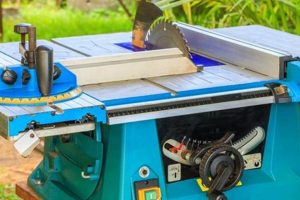
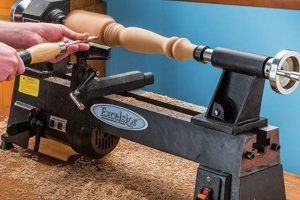
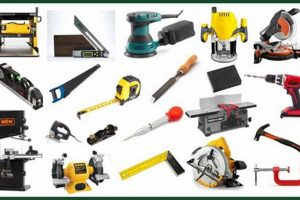
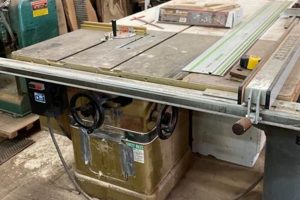
A multipurpose woodworking machine combines several functions typically performed by individual tools into a single unit. Examples include devices that can perform sawing, planing, jointing, and mortising operations, consolidating capabilities for space-saving and efficiency.
The integration of multiple functionalities offers benefits such as reduced workshop footprint, simplified workflow, and potentially lower initial investment compared to purchasing separate machines. Historically, these machines have been valued in environments where space is limited or for hobbyists seeking versatility without extensive equipment costs.
The following sections will delve into the specific capabilities, considerations for selection, and best practices associated with these combined-function woodworking solutions.
Guidance for Multipurpose Woodworking Machines
Maximizing the utility of a combined woodworking machine necessitates careful consideration of operational parameters and maintenance protocols. The following tips provide guidance for effective utilization.
Tip 1: Space Assessment: Before acquisition, measure available workshop space to ensure adequate clearance for operation and material handling around the machine. Consider the full range of motion for each function.
Tip 2: Functional Prioritization: Identify primary woodworking tasks to determine if the integrated machine adequately supports those needs. Ensure that the machine’s specifications align with the typical dimensions and material types processed.
Tip 3: Operational Familiarization: Thoroughly review the machine’s manual and safety guidelines before commencing any operation. Practice each function individually to develop proficiency and familiarity with the controls.
Tip 4: Calibration and Adjustment: Regularly calibrate the machine’s components, such as fences, tables, and blades, to maintain accuracy and prevent deviations in cut quality. Utilize precision measuring tools for verification.
Tip 5: Dust Collection Integration: Connect a dedicated dust collection system to the machine to mitigate airborne particulate matter and maintain a clean working environment. This will also prevent dust accumulation on the machine’s components.
Tip 6: Routine Maintenance: Implement a schedule for routine maintenance tasks, including lubrication, blade sharpening, and belt tension adjustment. Refer to the manufacturer’s recommendations for specific intervals and procedures.
Tip 7: Material Support Systems: Employ auxiliary support systems, such as roller stands or outfeed tables, to manage long or heavy workpieces. This will enhance control and reduce the risk of material sag or kickback.
Adhering to these guidelines will optimize the performance and longevity of the equipment, enhancing productivity and safety in woodworking operations.
The subsequent sections will explore specific models and advanced techniques related to these machines.
1. Space Optimization
The correlation between space optimization and multipurpose woodworking machines is intrinsic, driven by the consolidation of multiple functions into a singular footprint. The primary effect of this consolidation is a reduction in the area required to perform a range of woodworking operations. For example, a small workshop might necessitate the use of individual tools for sawing, planing, and jointing, each demanding dedicated space. A combined machine performs these functions within a single station, freeing up valuable square footage.
Space optimization, as a core attribute of a combined woodworking machine, directly impacts the feasibility of woodworking in environments where space is a premium. This is particularly relevant for hobbyists, urban dwellers, or small businesses operating in confined locations. An all-in-one solution avoids the space constraints associated with acquiring and housing individual machines, enabling woodworking activities that would otherwise be impractical.
In summation, space optimization is a key advantage of a multipurpose woodworking machine, enabling woodworking activities in areas where traditional, individual machines would be infeasible. This factor influences the machine’s appeal and utility across a spectrum of users, from hobbyists in home workshops to professionals in constrained commercial settings.
2. Functional Integration

Functional integration is a core attribute of a multipurpose woodworking machine, representing the aggregation of distinct woodworking operations within a single unit. This integration yields a synergistic effect, optimizing workflow and minimizing changeover time between tasks. For instance, a machine combining sawing and planing functions allows for sequential material processing without relocating the workpiece to a separate station. The practical consequence is an increase in overall efficiency.
The extent of functional integration directly influences the utility of the machine. A device incorporating only basic operations, such as sawing and drilling, offers limited versatility compared to a more comprehensive system that also includes jointing, mortising, and sanding capabilities. Understanding the range of integrated functions is crucial for selecting a machine that aligns with specific project requirements. For example, cabinetmakers often require machines with a high degree of functional integration to complete various stages of construction.
In summary, functional integration is a defining characteristic of multipurpose woodworking machines, contributing directly to their efficiency and versatility. Evaluating the degree of integration is essential when choosing a suitable machine, as it dictates the range of tasks that can be performed without the need for additional equipment. The ability to seamlessly transition between operations offers a significant advantage in diverse woodworking applications.
3. Operational Precision

Operational precision in multipurpose woodworking machines is paramount, directly affecting the quality and accuracy of finished projects. This attribute encompasses multiple facets, each crucial to achieving desired woodworking outcomes.
- Cutting Accuracy
Cutting accuracy refers to the machine’s ability to consistently produce cuts within specified tolerances. Factors influencing this include blade sharpness, fence alignment, and the stability of the workpiece support system. For instance, an improperly aligned fence on a combined saw/jointer can result in angled cuts, compromising the integrity of joints and assemblies. High operational precision ensures consistent results, minimizing material waste and rework.
- Planar Surface Quality
When a multipurpose machine incorporates a planer, the quality of the resulting surface is a critical element of operational precision. Achieving a smooth, level surface requires accurate table alignment, proper knife projection, and a consistent feed rate. Deviations in any of these parameters can lead to uneven planing, tear-out, or snipe. Precision in planing operations reduces the need for subsequent sanding and ensures a professional finish.
- Joint Alignment
Machines capable of performing jointing operations must maintain precise alignment between the infeed and outfeed tables. Misalignment results in tapered or skewed edges, impeding the creation of strong, accurate joints. Operational precision in jointing is vital for achieving tight-fitting mortise and tenon joints, dovetails, and other interlocking connections. Accurate joint alignment directly correlates with the structural integrity and aesthetic appeal of the finished piece.
- Dimensional Repeatability
Dimensional repeatability refers to the machine’s ability to consistently reproduce identical cuts or shapes across multiple workpieces. This requires precise measurement scales, reliable stop mechanisms, and minimal machine vibration. Lack of repeatability introduces variation into projects, complicating assembly and affecting the overall appearance. High operational precision ensures that all parts are dimensionally consistent, streamlining the construction process and ensuring a uniform final product.
Collectively, these facets of operational precision define the effectiveness of the combined machine in producing accurate and repeatable results. By maintaining high standards in these areas, the multipurpose woodworking machine can deliver performance comparable to that of individual, specialized tools, maximizing its value in diverse woodworking applications.
4. Material Compatibility
Material compatibility, in the context of a multipurpose woodworking machine, dictates the range of materials that can be effectively processed without compromising machine performance or workpiece integrity. This consideration is paramount in selecting a versatile machine capable of handling diverse project requirements.
- Wood Hardness and Density
Wood hardness and density significantly influence the machine’s cutting capacity and power demands. Softer woods, such as pine or cedar, are generally easier to machine and require less power. Harder woods, like oak or maple, demand higher torque and sharper cutting edges to avoid burning or splintering. A machine with insufficient power or poorly maintained blades may struggle with dense hardwoods, resulting in subpar cuts and accelerated wear. Selecting a machine rated for a wide range of wood hardness levels ensures versatility across various projects.
- Material Dimensions and Support
Material dimensions, including thickness and width, determine the machine’s capacity to accommodate specific workpieces. A machine with limited throat depth or table size may be unsuitable for processing large panels or thick timbers. Furthermore, adequate material support systems, such as outfeed rollers or extension tables, are crucial for maintaining stability during machining operations. Insufficient support can lead to inaccuracies and potentially hazardous situations. Considering material dimensions and ensuring proper support mechanisms are essential for safe and accurate processing.
- Abrasive Properties
Certain wood species contain high levels of silica or other abrasive compounds that can accelerate blade dulling and wear on machine components. Exotic hardwoods, such as teak or ipe, are known for their abrasive properties and may require specialized blades or frequent sharpening. Using standard blades on highly abrasive materials can lead to premature failure and reduced cutting efficiency. Understanding the abrasive properties of common wood species is crucial for selecting appropriate tooling and maintenance schedules.
- Moisture Content
Moisture content in wood affects its machinability and stability. Wood that is too wet can be prone to warping, binding, and tear-out during machining. Conversely, excessively dry wood may be brittle and prone to cracking. Maintaining proper moisture content, typically between 6% and 12%, is essential for achieving optimal results. Allowing wood to acclimate to the workshop environment before processing can minimize moisture-related issues and improve machining quality.
In summary, material compatibility is a critical factor to evaluate when considering a multipurpose woodworking machine. Selecting a machine with adequate power, capacity, and appropriate tooling ensures the ability to process a wide range of materials effectively and safely, maximizing its utility and extending its service life.
5. Power Requirements

Power requirements represent a critical specification for a combined woodworking machine, dictating its operational feasibility and influencing its performance across diverse woodworking tasks. The necessary power supply must align with the machine’s operational demands to ensure efficient and safe functionality.
- Voltage and Phase
Voltage and phase configuration are fundamental aspects of power requirements. Combined woodworking machines can operate on either single-phase or three-phase power, with voltage requirements varying based on regional electrical standards. Operating a machine on an incorrect voltage or phase can result in damage to the motor, reduced performance, or safety hazards. For example, a machine designed for 220V operation connected to a 110V supply will likely experience insufficient power, while a three-phase machine connected to a single-phase supply will not function correctly. Matching the machine’s voltage and phase requirements to the available electrical supply is essential for safe and reliable operation.
- Amperage Draw
Amperage draw indicates the amount of electrical current the machine requires during operation. This value is crucial for determining the appropriate circuit breaker size and wiring gauge needed to power the machine safely. Overloading a circuit can lead to overheating, tripped breakers, or even electrical fires. For example, a machine with a high amperage draw may require a dedicated circuit to prevent overloading existing circuits. Accurately assessing the machine’s amperage draw and ensuring the electrical system can accommodate it is paramount for preventing electrical hazards and maintaining consistent performance.
- Motor Horsepower
Motor horsepower (HP) is a measure of the machine’s mechanical power output and its ability to perform demanding tasks. Higher horsepower motors generally provide greater cutting capacity and the ability to process harder materials. For example, a machine with a low-horsepower motor may struggle to plane thick hardwoods or perform deep cuts. Selecting a machine with sufficient horsepower for the intended applications is essential for achieving optimal performance and preventing motor strain. The motor’s HP rating directly correlates with its ability to handle a range of woodworking operations effectively.
- Starting Current
Starting current, also known as inrush current, refers to the surge of electrical current required to start the machine’s motor. This current is typically several times higher than the machine’s running current. A high starting current can cause voltage dips in the electrical system, potentially affecting other equipment connected to the same circuit. Some machines incorporate soft-start mechanisms to reduce starting current and minimize these effects. Understanding the machine’s starting current and ensuring the electrical system can accommodate it is crucial for preventing voltage fluctuations and ensuring smooth startup.
These facets of power requirements are integral to selecting and operating a combined woodworking machine effectively. Matching the machine’s power specifications to the available electrical supply is essential for safe operation and optimal performance across a range of woodworking tasks. Failure to address power requirements adequately can result in equipment damage, safety hazards, and compromised project outcomes.
6. Maintenance Demands
Maintenance demands are intrinsically linked to the operational longevity and consistent performance of a multipurpose woodworking machine. The aggregation of multiple functions into a single unit concentrates wear and tear, necessitating a comprehensive maintenance regime to mitigate degradation and ensure accurate operation. The failure to address maintenance demands adequately results in diminished performance, compromised precision, and an increased risk of mechanical failure. A machine combining sawing, planing, and jointing, for example, requires regular blade sharpening, belt tension adjustments, and lubrication of moving parts. Neglecting these tasks leads to reduced cutting efficiency, uneven surfaces, and ultimately, machine downtime.
The significance of maintenance demands is amplified by the complexity inherent in combined woodworking machines. Unlike single-function tools, a malfunction in one component of a multipurpose machine can impact the functionality of other integrated systems. Therefore, proactive maintenance, including regular inspections, timely replacements of worn parts, and adherence to manufacturer-recommended service schedules, is crucial for preventing cascading failures. A poorly maintained combined machine can exhibit inaccuracies across multiple functions, rendering it unsuitable for precision woodworking tasks. For instance, a loose fence on a jointer function can compromise the accuracy of subsequent cuts performed on the sawing function, illustrating the interconnectedness of maintenance requirements.
In conclusion, the consistent execution of maintenance protocols is indispensable for preserving the utility and accuracy of a multipurpose woodworking machine. Addressing maintenance demands proactively mitigates the risk of performance degradation, costly repairs, and operational downtime. The practical significance of this understanding lies in the realization that neglecting maintenance undermines the very benefits that a combined woodworking machine offers: efficiency, space optimization, and versatility. Adherence to a rigorous maintenance schedule is therefore essential for maximizing the return on investment and ensuring the long-term viability of this type of equipment.
Frequently Asked Questions
The following questions address common inquiries and misconceptions regarding multipurpose woodworking machines, providing informative responses based on practical considerations.
Question 1: What is the typical lifespan of a multipurpose woodworking tool?
The lifespan of a combined woodworking machine varies considerably based on usage frequency, maintenance rigor, and build quality. Machines used in professional settings with high duty cycles require more frequent maintenance and may have a shorter lifespan compared to those used intermittently in hobbyist workshops. Adhering to manufacturer-recommended maintenance schedules, using appropriate materials, and avoiding overloading the machine’s capacity contribute to extending its lifespan. Generally, a well-maintained machine can provide reliable service for a decade or more.
Question 2: Can an all in one woodworking tool replace dedicated, single-function machines?
While a multipurpose machine offers space-saving and versatility benefits, it may not fully replicate the performance of specialized, single-function machines. Dedicated machines are typically optimized for specific tasks, offering greater precision, power, and specialized features. A combined machine represents a compromise, providing a range of capabilities within a single unit but potentially sacrificing some performance compared to dedicated tools. The suitability of a combined machine as a replacement depends on the specific woodworking needs and the acceptable trade-off between versatility and performance.
Question 3: What safety precautions are essential when operating a combined woodworking machine?
Operating a multipurpose woodworking machine requires strict adherence to safety guidelines due to the presence of multiple exposed blades and moving parts. Key safety precautions include wearing appropriate personal protective equipment (PPE), such as safety glasses, hearing protection, and dust masks; thoroughly reading and understanding the machine’s manual; ensuring proper blade guards and safety switches are in place and functioning correctly; never operating the machine while fatigued or under the influence of substances; and maintaining a clean and organized workspace free from obstructions. Regular safety inspections and adherence to established safety protocols are crucial for preventing accidents and injuries.
Question 4: What factors influence the accuracy of a multipurpose woodworking tool?
The accuracy of a combined woodworking machine is influenced by several factors, including blade sharpness, fence alignment, table flatness, and machine stability. Dull blades result in rough cuts and increased risk of kickback, while misaligned fences lead to angled or inaccurate cuts. Warped or uneven tables compromise the ability to create flat, square surfaces. Excessive vibration or instability can affect the precision of cuts and joints. Regularly calibrating and adjusting the machine, maintaining sharp blades, and ensuring a stable working platform are essential for maintaining accuracy.
Question 5: How does dust collection impact the performance of an all in one woodworking tool?
Efficient dust collection is crucial for maintaining the performance and longevity of a combined woodworking machine. Wood dust accumulation can clog moving parts, reduce motor cooling, and create a fire hazard. A dedicated dust collection system, connected to each operating station on the machine, effectively removes airborne dust and chips, improving visibility, reducing the risk of respiratory problems, and preventing performance degradation. Regular cleaning of the machine’s internal components and the dust collection system is essential for maintaining optimal performance and preventing mechanical issues.
Question 6: What are the typical maintenance requirements for a multipurpose woodworking tool?
Maintenance requirements for a combined woodworking machine include regular blade sharpening or replacement, lubrication of moving parts, belt tension adjustments, fence and table alignment, and inspection of electrical components. Blade sharpness directly affects cutting performance and safety, requiring frequent attention. Lubrication reduces friction and wear on moving parts, extending their lifespan. Belt tension ensures proper power transfer and prevents slippage. Fence and table alignment is crucial for maintaining accuracy. Regular inspection of electrical components identifies potential issues before they escalate into major problems. Adhering to the manufacturer’s recommended maintenance schedule is essential for preserving the machine’s performance and reliability.
These responses provide essential information to address common concerns. Understanding the machine’s capabilities, limitations, and maintenance requirements is paramount for successful operation.
The next section will explore advanced techniques and applications related to these machines.
All in One Woodworking Tool
This exploration of the multipurpose woodworking machine has underscored its multifaceted nature. The aggregation of diverse functionalities, space optimization, and considerations of operational precision, material compatibility, and power demands have been extensively examined. Maintenance demands, as a critical determinant of longevity, have also been thoroughly addressed. The inherent trade-offs between versatility and specialization have been acknowledged, along with the imperative of adhering to stringent safety protocols.
The acquisition and utilization of the all in one woodworking tool necessitate a judicious assessment of project requirements and operational constraints. The potential benefits, particularly in space-limited environments, must be weighed against the limitations in performance compared to dedicated machinery. Continued adherence to safety standards and diligent maintenance practices remain paramount for realizing the full potential of these integrated systems and ensuring both operator safety and project integrity.