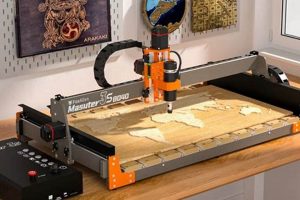
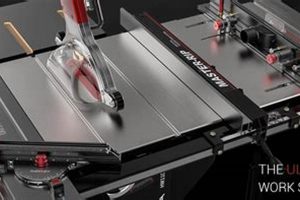
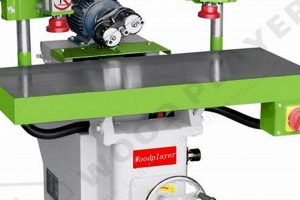
Multi-functional woodworking equipment consolidates several operations, such as sawing, jointing, planing, and routing, into a single unit. These tools are designed to perform multiple woodworking tasks, often switching between functions via mechanical adjustments or modular attachments. An example includes a machine capable of functioning as a table saw for cutting sheet goods and, with a quick adjustment, transforming into a jointer for flattening lumber edges.
The integrated design of these devices offers several advantages, notably saving valuable floor space in workshops, particularly in smaller environments. Historically, woodworkers required individual, dedicated machines for each process, resulting in a significant investment in both equipment and the area to house it. The advent of space-saving, multi-functional units has broadened accessibility to quality woodworking capabilities for hobbyists and professionals alike, reducing initial capital expenditure and ongoing operational costs.
The subsequent sections will delve into the specific functionalities offered by these versatile machines, examining their operational principles, maintenance requirements, and factors to consider when selecting a suitable model.
Operating and Maintaining Multi-Functional Woodworking Equipment
The following guidelines are designed to assist users in optimizing the performance and longevity of multi-functional woodworking equipment. Adherence to these principles will enhance safety and ensure the consistent production of high-quality woodworking projects.
Tip 1: Thoroughly Review Operational Manuals: Prior to operating any multi-functional woodworking equipment, comprehensively study the manufacturer’s operational manual. This will ensure a complete understanding of the machine’s capabilities, limitations, and safety features.
Tip 2: Implement Regular Maintenance Procedures: Establish a consistent maintenance schedule that includes cleaning, lubrication, and inspection of critical components. Regular maintenance helps to prevent breakdowns and extends the operational lifespan of the equipment.
Tip 3: Verify Secure Workpiece Clamping: Always ensure the workpiece is securely clamped or supported before initiating any cutting or shaping operation. Inadequate clamping can result in inaccurate cuts and potentially hazardous situations.
Tip 4: Employ Proper Safety Equipment: Consistently utilize appropriate personal protective equipment, including safety glasses, hearing protection, and dust masks. These measures are crucial for minimizing the risk of injury during operation.
Tip 5: Maintain Sharp Cutting Tools: Employ sharp cutting tools such as blades and router bits. Sharp tools reduce the required force, improving cut quality and decreasing the risk of kickback.
Tip 6: Adjust Machine Settings Accurately: Pay close attention to the accurate adjustment of machine settings, such as blade height, fence alignment, and feed rate. Incorrect settings can lead to inaccurate cuts and damage to the workpiece or the equipment itself.
Tip 7: Understand Power Requirements: Ensure that the power supply is compatible with the electrical specifications of the equipment. Using an incorrect voltage or amperage can damage the machine and create a fire hazard.
Adherence to these tips will promote safe and efficient operation of multi-functional woodworking equipment, maximizing productivity and ensuring a safe working environment.
The concluding section will provide recommendations for selecting appropriate combination woodworking machines based on project requirements and workshop size.
1. Space-saving efficiency

The primary impetus for adopting combination woodworking machines lies in their spatial economy. Traditional woodworking shops often allocate considerable square footage to individual machines dedicated to specific tasks such as sawing, jointing, planing, and shaping. Combination units, by integrating multiple functions into a single platform, reduce the overall footprint required for equipping a workshop. This feature is particularly crucial for smaller workshops where available space is a limiting factor, enabling the performance of a wide range of woodworking operations within confined areas. For example, a small business owner with limited shop space could utilize a combination machine to complete various aspects of building furniture pieces such as cabinets, tables and chairs.
Space-saving efficiency translates directly into tangible benefits. Reduced floor space requirements can lower rental or mortgage costs for workshops located in urban areas or commercial properties. A smaller workspace is often easier to organize and manage, improving workflow efficiency. Furthermore, the reduced distance between operations inherent in a combination machine setup can minimize material handling and transportation time, potentially accelerating project completion. Consider a hobbyist who has an 8×10 foot garage. Using a combination machine allows for the inclusion of capabilities for sawing, planing, and jointing in one unit.
In conclusion, space-saving efficiency is a foundational benefit derived from combination woodworking machines. By consolidating multiple functions, these machines allow for the effective utilization of limited space, resulting in operational advantages and cost savings. The trend towards smaller workshops, increasing demand for portable equipment, and the continuing need for flexibility will perpetuate the value of combination woodworking machines in contemporary woodworking practice.
2. Multi-functional versatility

The integration of multiple woodworking operations into a single machine represents the core concept of multi-functional versatility in combination woodworking machines. This design philosophy addresses the constraints of space, cost, and efficiency, offering a comprehensive solution for workshops with limited resources. The scope of functions encompassed within a single machine varies across models, but commonly includes sawing, jointing, planing, routing, and occasionally, mortising.
- Operational Consolidation
Multi-functional versatility reduces the need for distinct, single-purpose machines, optimizing workflow and minimizing setup time between operations. An example is the rapid transition from jointing a board edge to planing its face, executed on the same machine with minimal adjustment. This consolidation streamlines the production process, particularly in scenarios involving small batch production or custom woodworking projects.
- Adaptive Project Scope
The inherent versatility allows woodworkers to undertake a broader range of projects without investing in additional equipment. A craftsman working on furniture construction can use a single combination machine for dimensioning lumber, creating joinery, and shaping components. This adaptability facilitates creative exploration and expands the potential project scope within a single workshop environment.
- Skill Enhancement
Operating a combination machine necessitates a comprehensive understanding of various woodworking techniques and machinery operations. This fosters skill development and promotes a holistic approach to woodworking. For instance, a woodworker must understand the proper techniques for both sawing and jointing to achieve optimal results when preparing stock on a combination machine.
- Economical Resource Allocation
Multi-functional versatility offers significant cost advantages compared to acquiring individual machines for each operation. Initial investment costs are reduced, as is the ongoing expense of maintenance and repairs. This economic advantage is particularly relevant for hobbyists and small-scale woodworking businesses with limited capital resources.
In summary, multi-functional versatility in combination woodworking machines is a critical feature that directly impacts operational efficiency, project scope, skill development, and economic resource allocation. The adoption of this technology enables woodworkers to optimize their workflows, expand their creative potential, and achieve cost savings, ultimately enhancing their productivity and competitiveness in the woodworking industry.
3. Cost-effectiveness
Cost-effectiveness, as it pertains to combination woodworking machines, is a primary consideration for both professional woodworkers and hobbyists. The economic implications of acquiring and operating these machines extend beyond the initial purchase price, influencing long-term business profitability and personal woodworking budgets.
- Reduced Capital Expenditure
The most immediate cost benefit is the lower initial investment compared to purchasing separate, single-function machines. Instead of acquiring a table saw, jointer, planer, and possibly a shaper, a single combination machine can perform all these operations. This consolidation represents a significant reduction in upfront costs, particularly beneficial for startups or individuals with limited capital.
- Minimized Operational Costs
Combination machines often require less electricity to operate compared to multiple individual machines. While the power consumption for specific operations might be similar, the elimination of idle machines and reduced overall running time contribute to lower energy bills. Furthermore, the space-saving design translates into reduced workshop rental or mortgage costs, further minimizing operational overhead.
- Lower Maintenance Expenses
Maintaining a single combination machine typically incurs lower costs than maintaining several individual machines. The simplification of mechanical components and centralized maintenance schedule reduces the overall time and resources required for upkeep. While individual repairs might be complex, the frequency and scope of maintenance are generally lower compared to managing multiple separate machines.
- Increased Labor Productivity
The versatility of combination machines can lead to increased labor productivity. The ability to quickly switch between operations on a single machine reduces setup time and material handling, allowing woodworkers to complete projects more efficiently. For instance, a furniture maker can dimension stock and cut joinery on the same machine, streamlining the production process and reducing labor costs.
In summary, the cost-effectiveness of combination woodworking machines stems from reduced capital expenditure, minimized operational costs, lower maintenance expenses, and increased labor productivity. These factors collectively contribute to a more economically viable woodworking operation, making combination machines an attractive option for both professional and amateur woodworkers seeking to maximize their return on investment. It’s important to evaluate the build quality to ensure cost-effective long term usage of a particular machine.
4. Operational Complexity
Combination woodworking machines, while offering space-saving and cost benefits, introduce a significant degree of operational complexity compared to single-purpose machines. This complexity arises from the need to understand and execute a variety of adjustments and setups to transition between functions. A machine designed to perform sawing, jointing, and planing, for example, requires the operator to reconfigure fences, adjust blade or cutterhead heights, and potentially swap out components depending on the intended operation. Incorrect configurations can result in inaccurate cuts, damage to the material, or even hazardous situations. The operator must possess a thorough understanding of each individual function and how they interrelate within the machine’s overall operation.
The multi-functional nature necessitates meticulous attention to detail and a heightened level of mechanical aptitude. Unlike a dedicated table saw where the primary focus is on blade height and fence alignment, a combination machine demands a broader skillset encompassing the nuances of jointing, planing, and potentially other operations. For example, switching from sawing to jointing might involve rotating the table, installing a different fence, and ensuring the cutterhead is properly aligned and set to the correct depth of cut. Neglecting any of these steps can lead to substandard results. The reliance on a single motor and drive system to power multiple functions also requires an understanding of load management and potential limitations when performing demanding tasks such as heavy stock removal during planing.
In conclusion, the operational complexity inherent in combination woodworking machines necessitates a commitment to thorough training, diligent adherence to safety protocols, and a continuous pursuit of knowledge regarding woodworking techniques. While the benefits of space-saving and cost-effectiveness are undeniable, operators must be prepared to invest the time and effort required to master the machine’s intricacies to fully realize its potential and avoid costly errors or accidents. This added complexity serves as a critical factor that potential purchasers must consider before choosing such equipment.
5. Maintenance Demands
The upkeep of combination woodworking machines presents unique challenges due to the integration of multiple functions into a single unit. These maintenance demands are critical to consider when evaluating the long-term operational costs and lifespan of such equipment.
- Component Accessibility
The compact design of combination machines often complicates access to internal components for servicing and repair. The close proximity of various mechanisms requires dismantling adjacent parts to reach specific areas, increasing the time and skill needed for maintenance procedures. For instance, replacing a belt driving the planer function may necessitate removing parts of the saw mechanism. This complexity dictates careful adherence to service manuals and potentially specialized tools.
- Lubrication Requirements
Combination machines incorporate numerous moving parts that demand regular lubrication to minimize friction and wear. These points include bearings, gears, slides, and threaded components within the sawing, jointing, and planing mechanisms. Neglecting lubrication can lead to premature failure of components, reduced accuracy, and increased noise during operation. The diversity of materials and lubricants required necessitates strict adherence to the manufacturer’s recommendations to prevent damage and ensure optimal performance.
- Alignment Sensitivity
The accuracy of a combination woodworking machine hinges on precise alignment between its various functions. Shifts in alignment, caused by vibration, wear, or improper handling, affect the quality of cuts, joints, and surface finishes. For example, misalignment between the jointer and planer tables can produce tapered or uneven stock. Periodic checks and adjustments, using precision measuring tools and alignment techniques, are essential to maintain the machine’s accuracy and prevent cumulative errors.
- Dust Management
Woodworking generates substantial quantities of dust and debris, which can accumulate within the machine’s mechanisms, hindering performance and accelerating wear. Combination machines, due to their integrated design, are particularly susceptible to dust buildup in hard-to-reach areas. Regular cleaning, employing vacuum systems and compressed air, is necessary to prevent malfunctions and ensure efficient dust extraction. Failure to manage dust can also pose a fire hazard and contribute to respiratory problems for the operator.
The various maintenance demands associated with combination woodworking machines highlight the importance of proactive maintenance practices. Addressing these issues proactively can substantially extend the operational life of the machine, maintain accuracy and reduce the likelihood of expensive repairs. Potential buyers should evaluate the ease of access, lubrication requirements, and dust management features when selecting a machine to minimize long-term maintenance burdens.
6. Safety considerations

The integration of multiple woodworking functions into a single machine necessitates a heightened awareness of safety protocols. Combination woodworking machines, due to their inherent complexity and versatility, present specific safety challenges that require careful consideration and mitigation.
- Lockout/Tagout Procedures
Combination machines require strict adherence to lockout/tagout procedures during maintenance or setup changes. The interconnected nature of the various functions means that unintended activation of one mechanism could inadvertently engage another, leading to injury. For example, if adjustments are being made to the jointer while the machine is still connected to power, accidental engagement of the saw could cause severe harm. Implementing comprehensive lockout/tagout protocols ensures the machine is completely de-energized and isolated before any maintenance or adjustments are performed.
- Guarding and Shielding
Effective guarding and shielding are paramount in combination woodworking machines. Because the same workspace is used for multiple operations, guards must be properly positioned and adjusted to protect the operator from moving parts such as blades, cutterheads, and belts. A poorly adjusted guard on the saw function, for instance, could fail to prevent contact with the blade, particularly during operations that require close proximity to the cutting edge. Regular inspection and maintenance of guards are essential to ensure their functionality.
- Dust Collection Systems
Wood dust poses a significant health and safety hazard in any woodworking environment, and combination machines are no exception. The efficient removal of dust and debris is crucial to maintain visibility, prevent respiratory problems, and reduce the risk of fire. An inadequate dust collection system can lead to the accumulation of fine particles around the machine, increasing the likelihood of inhalation and creating a slippery surface that can lead to falls. A well-designed dust collection system integrated with the machine is essential for maintaining a safe and healthy working environment.
- Operator Training and Competency
Comprehensive operator training is essential for safe and effective use of combination woodworking machines. Operators must be thoroughly familiar with the machine’s operating procedures, safety features, and potential hazards. Simply reading the manual is insufficient; hands-on training and practical experience are necessary to develop the skills and judgment required to operate the machine safely. Inadequate training can result in improper setups, incorrect adjustments, and potentially dangerous operational practices.
The safety considerations associated with combination woodworking machines underscore the importance of a proactive and disciplined approach to woodworking safety. Thorough training, diligent adherence to safety protocols, and the consistent use of appropriate personal protective equipment are essential to mitigate the risks and ensure a safe working environment. Prioritizing safety considerations is paramount for any operator of combination woodworking machines.
7. Power Requirements

The power requirements of combination woodworking machines are a critical specification, directly influencing their operational capacity and suitability for various workshop environments. Understanding these requirements is paramount for ensuring safe and efficient operation, preventing equipment damage, and avoiding electrical overloads.
- Voltage and Phase Configuration
Combination woodworking machines are typically available in both single-phase (220V-240V) and three-phase (208V, 440V-480V) configurations. Single-phase machines are generally suitable for smaller workshops and home use, while three-phase machines are favored in industrial settings due to their higher power output and efficiency. Selecting the appropriate voltage and phase configuration is essential to match the existing electrical infrastructure and avoid damage to the machine or the electrical system. Operating a 440V machine on a 220V circuit, for example, will likely result in motor failure and potential fire hazards.
- Amperage Draw and Circuit Capacity
The amperage draw of a combination woodworking machine indicates the amount of electrical current it consumes during operation. This value directly impacts the required circuit capacity and the size of the circuit breaker needed to protect the electrical system. Exceeding the circuit capacity can cause the breaker to trip, interrupting operation and potentially damaging the machine’s motor. Combination machines with multiple functions operating simultaneously often exhibit higher amperage draw, necessitating dedicated circuits with sufficient capacity. A machine performing sawing, jointing, and planing functions concurrently may require a 30-amp or higher circuit to operate safely.
- Motor Horsepower and Performance
The motor horsepower (HP) rating of a combination woodworking machine is a direct indicator of its cutting power and material removal capabilities. Higher horsepower motors generally provide greater torque, enabling the machine to process thicker or denser materials with greater ease. Insufficient horsepower can result in reduced cutting speed, increased strain on the motor, and premature wear. A machine with a 3 HP motor, for example, will typically handle hardwoods and larger stock dimensions more effectively than a machine with a 1.5 HP motor. Choosing the appropriate horsepower rating is essential to match the machine’s capabilities to the intended woodworking tasks.
- Starting Current and Inrush Considerations
Electric motors, particularly those found in combination woodworking machines, exhibit a significant inrush of current during startup. This starting current can be several times higher than the machine’s normal operating current, potentially overloading the circuit and causing the breaker to trip. To mitigate this issue, some combination machines incorporate soft-start mechanisms that gradually ramp up the motor speed, reducing the inrush current. Additionally, oversized circuit breakers or time-delay fuses may be necessary to accommodate the starting current without causing nuisance tripping. Understanding the machine’s starting current characteristics is crucial for ensuring reliable operation and preventing electrical problems.
The power requirements of combination woodworking machines are a multifaceted consideration encompassing voltage, phase, amperage, horsepower, and starting current. Properly assessing these requirements and ensuring compatibility with the available electrical infrastructure is essential for safe, efficient, and reliable operation. Ignoring these factors can lead to equipment damage, electrical hazards, and compromised woodworking performance. Potential purchasers should consult with a qualified electrician to determine the appropriate electrical setup for their specific machine and workshop environment.
Frequently Asked Questions
The following addresses common inquiries regarding combination woodworking machines, offering concise and factual information to aid in understanding their capabilities and limitations.
Question 1: What are the primary advantages of using combination woodworking machines?
Combination woodworking machines offer space-saving benefits, consolidate multiple functions into a single unit, and reduce the overall capital expenditure compared to purchasing individual machines. These benefits are particularly relevant for workshops with limited space or budget constraints.
Question 2: How does the operational complexity of combination machines compare to single-function equipment?
Combination machines generally exhibit greater operational complexity due to the need for frequent adjustments and reconfigurations when switching between functions. This requires a thorough understanding of each individual operation and a heightened level of mechanical aptitude.
Question 3: What are the key maintenance requirements for combination woodworking machines?
Maintenance demands include regular lubrication of moving parts, precise alignment of various functions, and effective dust management. Access to internal components may be restricted due to the compact design, necessitating careful adherence to service manuals.
Question 4: What safety precautions should be observed when operating combination woodworking machines?
Safety precautions include strict adherence to lockout/tagout procedures during maintenance, proper adjustment and maintenance of guards and shields, and the use of adequate dust collection systems. Comprehensive operator training is essential to ensure safe and effective operation.
Question 5: How do the power requirements of combination machines differ from those of single-function machines?
Power requirements vary depending on the specific machine and the number of functions operating simultaneously. Combination machines may require higher amperage circuits and dedicated power supplies to accommodate the increased electrical load. Evaluating voltage, phase, amperage, and horsepower is crucial for safe and efficient operation.
Question 6: Are combination woodworking machines suitable for professional woodworking environments?
Combination woodworking machines can be suitable for professional environments, particularly those with space constraints or specialized production needs. However, professional users should carefully evaluate the machine’s capacity, durability, and precision to ensure it meets the demands of their specific applications.
In summary, combination woodworking machines represent a trade-off between space-saving convenience and operational complexity. Careful consideration of the specific needs and capabilities of the user is essential for making an informed decision.
The subsequent article section will present factors for consideration when making a purchase decision.
Conclusion
This exposition has methodically examined “combination woodworking machines”, highlighting their defining characteristics, operational considerations, maintenance demands, and safety protocols. The advantages of space efficiency and reduced capital outlay are balanced against the complexities of operation and the need for comprehensive training. Power requirements necessitate careful assessment, while maintenance requires a disciplined approach.
The informed selection and responsible utilization of combination woodworking machines dictate a comprehensive understanding of their capabilities and limitations. Woodworkers are encouraged to weigh these factors carefully to optimize their workshop operations and ensure a safe and productive environment. The enduring relevance of combination machines within woodworking practice depends on the judicious application of knowledge and a commitment to best practices.