

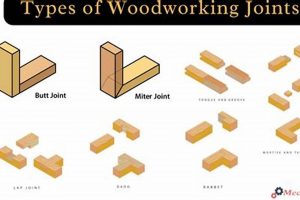

This construction method involves creating a grid-like pattern of interlocking recesses and protrusions on the surfaces of two pieces of wood, which are then joined together to form a strong bond. The... Read more »
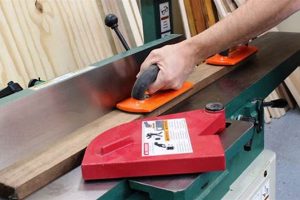
A woodworking machine designed to produce perfectly flat and square edges on lumber is frequently found in professional shops. It uses a rotating cutterhead with knives set flush to a table surface... Read more »

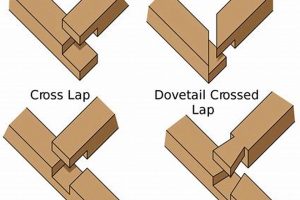
A connection where two pieces of wood overlap, with material removed from each piece to create a flush surface. This technique joins wood pieces together face to face. Examples include joining boards... Read more »
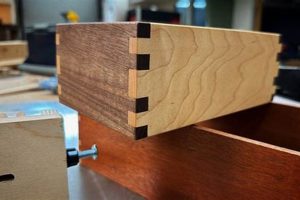
Interlocking wood joinery, often employed in creating strong and visually appealing corners, involves a series of pins and slots that mesh together to form a robust connection. This technique, typically seen in... Read more »
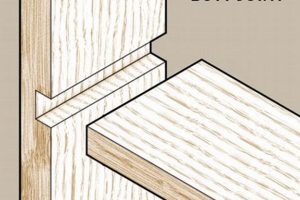
A rectangular channel or groove cut into the surface of a piece of wood, designed to receive another piece, forms a strong and aesthetically pleasing connection. This recess runs perpendicular to the... Read more »
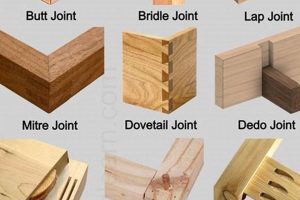
Connections made between pieces of timber or lumber form an integral element of structural integrity and aesthetic appeal in woodworking projects. These connections, achieved through a variety of methods, range from simple... Read more »
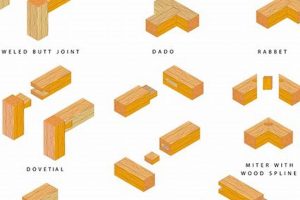
The intersection where two pieces of wood meet to form a rectangular enclosure, typically for the purpose of holding a picture or artwork, necessitates strong and aesthetically pleasing connections. These connections are... Read more »
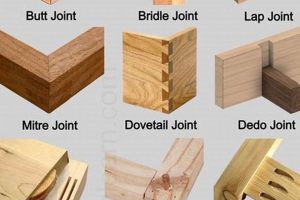
Methods of joining wood that rely solely on the shape and fit of the components, rather than mechanical connectors or chemical bonding agents, represent a foundational skill in woodworking. These techniques utilize... Read more »

A collaborative arrangement involving two or more parties pooling resources, expertise, and capital to undertake a woodworking project or business endeavor. This partnership allows each participant to share in the profits, losses,... Read more »
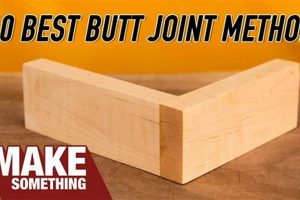
A method of joining two pieces of wood by simply placing their ends together edge to edge, surface to surface, or end to surface. It is the most basic of all joinery... Read more »