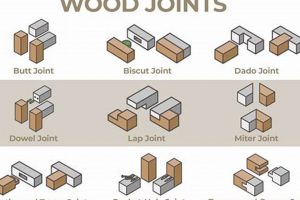
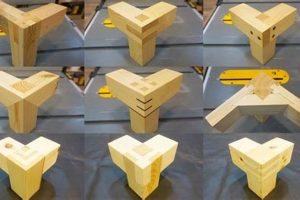
The intersection where two pieces of wood meet to form a rectangular enclosure, typically for the purpose of holding a picture or artwork, necessitates strong and aesthetically pleasing connections. These connections are achieved through various techniques that involve shaping and interlocking the wood pieces. A common example is the miter, where each piece is cut at a 45-degree angle, creating a seamless 90-degree corner when joined.
The integrity of a framed piece relies heavily on the strength and durability of the corner attachments. Secure corner construction prevents warping and separation, ensuring the artwork remains protected and properly displayed for an extended duration. Historically, crafting durable and visually appealing corners was a testament to a woodworker’s skill, and it continues to be a key element in determining the overall quality of the finished product. Careful selection of joining methods enhances both the structural stability and the visual appeal of the completed frame.
The following sections will explore different methodologies employed in achieving robust and aesthetically pleasing corner constructions. Detailed explanations of each method, including their strengths and weaknesses, will be provided. This exploration will delve into techniques ranging from simple butt joints to more complex and decorative options, providing a comprehensive understanding of available choices for the discerning craftsman.
Essential Considerations for Corner Construction
Achieving professional results requires meticulous attention to detail and a thorough understanding of best practices. The following guidelines provide essential advice for ensuring strong, accurate, and aesthetically pleasing corner constructions.
Tip 1: Accuracy in Angle Measurement: Precise angle cuts are paramount. Utilize a high-quality miter saw or a precision miter gauge for a table saw. Double-check all measurements before cutting to avoid discrepancies. A slight error in angle compounds across all four corners, leading to a visible distortion of the final frame.
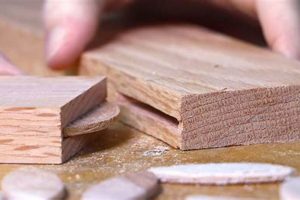
Tip 2: Joint Reinforcement: Beyond a simple adhesive bond, reinforcement is crucial. Consider using splines, dowels, or biscuits to add mechanical strength to the connection. The type of reinforcement should be chosen based on the wood species and the size and weight of the framed artwork.
Tip 3: Selection of Appropriate Adhesive: Wood glue is not a one-size-fits-all solution. Select an adhesive formulated for the specific wood species being used. Consider factors such as open time and clamping pressure. A tight, well-glued joint is essential for long-term structural integrity.
Tip 4: Proper Clamping Technique: Clamping pressure should be evenly distributed and sufficient to close any gaps in the connection. Avoid over-clamping, which can starve the joint of adhesive. Use specialized corner clamps or apply clamping cauls to protect the wood surface and ensure consistent pressure.
Tip 5: Wood Preparation and Conditioning: Ensure the wood is properly seasoned and acclimated to the environment where the finished frame will reside. This minimizes the risk of warping or movement after assembly. Lightly sanding the surfaces to be joined can improve adhesive bond.
Tip 6: Consider the Grain Direction: When joining pieces, pay attention to the grain direction of the wood. Aligning the grain strategically can improve the visual flow of the frame and enhance its overall aesthetic appeal. It can also impact the strength of certain joint types.
Tip 7: Test Joints Before Final Assembly: Dry-fitting the components before applying adhesive is a crucial step. This allows for verification of proper fit and identification of any potential issues. Adjustments can be made before the pressure of glue and clamps is applied.
Adhering to these guidelines ensures a stable, visually appealing, and enduring enclosure for valued artwork. Attention to these details separates amateur results from professional craftsmanship.
The next section will explore specific joint styles, offering detailed instructions and considerations for each technique.
1. Strength

The structural integrity of constructed corners is paramount to the longevity and functionality of a framed piece. The capacity to withstand external forces and internal stresses directly dictates its ability to maintain its form and protect its contents. Understanding the various factors contributing to connection robustness is, therefore, essential.
- Joint Design and Surface Area
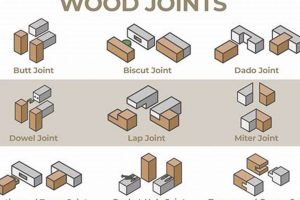
The geometrical configuration dictates the surface area available for adhesive bonding. A larger bonding area translates to greater resistance against shear forces. Mortise-and-tenon, dovetail, or splined miters inherently possess increased surface area compared to simple butt arrangements, thereby offering enhanced structural properties. The choice of method significantly influences its capacity to withstand stress.
- Material Selection and Grain Orientation
The inherent properties of the chosen material, including density and grain orientation, critically impact the durability of the union. Hardwoods generally provide greater strength compared to softwoods. Aligning the wood grain strategically relative to the stress vectors can further enhance resistance to splitting and separation. Proper material selection is a prerequisite for achieving optimal performance.
- Adhesive Type and Application Technique
The selection of an appropriate adhesive and its correct application directly influence the bonding strength. Different adhesives possess varying shear and tensile strength properties. Proper surface preparation and clamping pressure are crucial for maximizing the adhesive bond. Inadequate preparation or insufficient clamping can compromise the joint’s overall integrity, leading to premature failure.
- Reinforcement Methods and Mechanical Fasteners
The addition of mechanical reinforcements, such as dowels, splines, or metal fasteners, provides supplemental resistance against racking and shear forces. These reinforcements act as mechanical interlocks, distributing stress and preventing joint separation. The strategic placement of these elements can significantly enhance the load-bearing capacity of the assembly. These methods directly improve the durability of the corner construction.
Therefore, ensuring structural capacity in corners requires a holistic approach that considers design, material, adhesive, and reinforcement methods. A well-engineered and executed joint not only enhances the aesthetic appeal of the frame but also guarantees its long-term stability and protective function, underscoring its importance in fine woodworking. This approach will minimize movement and damage.
2. Accuracy

In crafting robust and aesthetically pleasing corner constructions, precision emerges as a non-negotiable element. Discrepancies in angle measurements or cut lengths propagate across the structure, resulting in visible distortions. For example, a miter joint intended to create a precise 90-degree corner will exhibit gaps and misalignment if either piece is not cut at an exact 45-degree angle. This deviation affects not only the visual appeal but also the structural integrity, weakening the connection. Therefore, meticulous execution of each cut is paramount in ensuring that the final assembly meets the required specifications.
The consequences of inaccuracy extend beyond mere aesthetics. Inconsistencies in the dimensions of individual components can lead to difficulties during assembly, potentially requiring the application of excessive force to achieve a flush fit. This can induce stress within the material, increasing the likelihood of warping or failure over time. Furthermore, inaccurate corners compromise the frame’s ability to securely hold and protect the artwork. A poorly aligned structure may allow moisture or dust to infiltrate, accelerating deterioration of the enclosed piece. Thus, stringent adherence to precise measurements and angles translates directly to the longevity and protective function of the finished product.
In summary, the correlation between accuracy and quality in frame construction is undeniable. Achieving and maintaining precise dimensions necessitates employing high-quality measuring tools, calibrated machinery, and meticulous attention to detail throughout the fabrication process. The investment in accuracy yields not only visually appealing corners but also ensures the structural stability and long-term preservation of both the frame and the artwork it houses. Overlooking accuracy introduces potential points of failure and compromises the overall integrity of the woodworking project.
3. Aesthetics

The visual appeal is inextricably linked to the construction of corner unions. The chosen joinery method contributes significantly to the overall artistic impression conveyed by the finished piece. The miter, for instance, creates a seamless, continuous grain pattern around the perimeter, offering a clean, minimalist aesthetic. Conversely, a contrasting wood spline adds a deliberate decorative element, showcasing the craftsmanship and providing visual interest. The selection of a particular technique, therefore, represents a conscious design choice that influences the perceived value and artistic merit of the framed work.
Consider the historical context; ornate frames of the Baroque period featured complex, layered corners often employing elaborate carving and gilding. The joinery itself, while structurally sound, was often concealed beneath these embellishments, prioritizing visual grandeur over the overt display of woodworking technique. In contrast, Shaker-style frames emphasized simplicity and functionality, with clean lines and exposed joinery, reflecting the values of honesty and utility. These examples illustrate how corner construction serves as a visual language, communicating stylistic intentions and cultural values. The appropriate combination of practical, precise joint construction, and artistic style can make or break the final composition.
The interplay between visual appeal and construction extends to considerations of proportion and scale. A bulky, over-engineered union can overwhelm a delicate artwork, while a weak or poorly executed corner detracts from the overall presentation. Achieving balance requires a thoughtful assessment of the artwork’s style and dimensions, along with a keen understanding of how different construction methods contribute to the final visual effect. Therefore, the selection of techniques should not solely focus on its mechanical properties, but with equal consideration of its aesthetic impact, ensuring the finished product complements and enhances the artwork it is intended to showcase.
4. Alignment
Precise alignment represents a critical factor in the creation of structurally sound and aesthetically pleasing woodworking picture frame joints. Misalignment, even minimal, introduces stress points, compromises the integrity of the glue bond, and results in a visually unappealing outcome. The cause of misalignment often stems from inaccurate cutting, improperly prepared surfaces, or inadequate clamping during the assembly process. For example, if the mitered corners of a frame are not perfectly aligned, the resulting joint will exhibit gaps or unevenness, detracting from the frame’s overall appearance and potentially weakening its ability to hold the picture securely.
The importance of proper alignment extends beyond mere aesthetics. A frame with misaligned joints is more susceptible to warping or breaking under stress. This is because the forces acting on the frame are not evenly distributed, leading to concentrated pressure on the weaker, misaligned areas. Consider a large frame holding a heavy piece of artwork. If the corners are not properly aligned, the weight of the artwork will exacerbate the stress on the joints, increasing the risk of joint failure and potentially damaging the artwork itself. Accurate alignment ensures that the load is distributed evenly across the frame, enhancing its durability and longevity.
In summary, proper alignment is essential for creating high-quality woodworking picture frame joints. It requires meticulous attention to detail throughout the cutting, surface preparation, and assembly stages. Challenges in achieving perfect alignment can be mitigated by using precision measuring tools, ensuring surfaces are perfectly flat and square, and employing appropriate clamping techniques to hold the joints firmly in place while the adhesive sets. By prioritizing alignment, the woodworker can ensure that the finished frame is not only visually appealing but also structurally sound and capable of providing long-lasting protection for the enclosed artwork.
5. Reinforcement

Reinforcement, within the context of woodworking picture frame joints, constitutes the augmentation of a joint’s inherent strength and durability through secondary methods. While adhesive bonding forms the primary connection, reinforcement provides added mechanical stability, thereby mitigating the risk of joint failure due to stress, impact, or environmental factors. The inclusion of reinforcement is often dictated by the frame’s size, the weight of the artwork it will hold, and the type of wood employed. For instance, a large frame constructed from a less dense wood species necessitates more robust reinforcement than a smaller frame made from a hardwood.
Various reinforcement techniques exist, each offering distinct advantages. Splines, thin strips of wood inserted into grooves cut across the joint, significantly increase the bonding surface area and provide mechanical interlock, resisting shear forces. Dowels, cylindrical pins inserted into pre-drilled holes, offer similar reinforcement but are generally less visible. Metal fasteners, such as screws or brad nails, provide immediate and substantial holding power but may detract from the aesthetic appeal if not carefully concealed. The selection of an appropriate reinforcement method should consider both its structural efficacy and its impact on the frame’s visual characteristics. An example of this is using dovetail keys across mitered joints for larger frames which both reinforces the frame, and provides a visually appealing design.
In conclusion, reinforcement is a crucial element in ensuring the longevity and stability of picture frame corners. It addresses the inherent limitations of adhesive bonding alone and provides added protection against various stresses. Understanding the principles and techniques of reinforcement allows woodworkers to create frames that are not only aesthetically pleasing but also capable of withstanding the test of time. Neglecting reinforcement can lead to premature joint failure and compromised protection of the enclosed artwork, highlighting the practical significance of this aspect of woodworking craftsmanship. As a practical insight, a frame subjected to movement or vibration, like one hung in a busy hallway, should likely use a more robust reinforcement than a similar frame hung in a still environment.
6. Adhesive

The selection and application of adhesive are fundamental determinants of the structural integrity and longevity of woodworking picture frame joints. Adhesive serves as the primary bonding agent, uniting separate pieces of wood into a cohesive unit capable of withstanding external stresses and maintaining dimensional stability over time.
- Types of Wood Adhesive and Their Properties
Various adhesive formulations exist, each possessing distinct characteristics that influence their suitability for specific woodworking applications. Polyvinyl acetate (PVA) glue, commonly known as wood glue, offers good strength and ease of use for general-purpose joinery. Aliphatic resin glue provides enhanced water resistance and a longer open time, beneficial for complex assemblies. Polyurethane glue expands as it cures, filling gaps and providing exceptional bond strength, particularly useful for dissimilar materials. Epoxy resins offer superior strength and chemical resistance but require careful mixing and have a limited working time. Selection must align with the project requirements and wood species used.
- Surface Preparation and Adhesive Bond Strength
The strength of an adhesive bond is critically dependent on proper surface preparation. Surfaces must be clean, dry, and free from contaminants such as dust, grease, or old finish. Lightly sanding the surfaces to be joined increases the surface area and promotes better adhesive penetration. The application of adequate clamping pressure ensures intimate contact between the surfaces, maximizing the adhesive bond strength. Failure to properly prepare surfaces can significantly reduce the effectiveness of the adhesive, leading to premature joint failure.
- Open Time and Clamping Pressure Considerations
Open time refers to the duration for which the adhesive remains workable after application. Exceeding the open time can result in a weakened bond. Clamping pressure is essential to ensure close contact between the bonded surfaces during the curing process. Insufficient clamping pressure can lead to gaps and a weak bond, while excessive pressure can starve the joint of adhesive. The optimal clamping pressure varies depending on the type of adhesive and the wood species being used. Manufacturers’ recommendations should always be followed to achieve the best results.
- Environmental Factors Affecting Adhesive Performance
Temperature and humidity influence adhesive curing and long-term performance. Extreme temperatures can accelerate or retard the curing process, while high humidity can weaken some adhesive bonds. It is important to adhere to the manufacturers recommendations for optimal temperature and humidity conditions during adhesive application and curing. Furthermore, the long-term exposure to environmental factors such as UV radiation or moisture can degrade some adhesives over time, necessitating the selection of adhesives specifically formulated for exterior or high-humidity applications.
Consequently, adhesive plays a role in the construction of durable and aesthetically pleasing woodworking picture frame joints. Proper adhesive selection, surface preparation, and application techniques are essential for achieving a strong and lasting bond, ensuring that the frame maintains its structural integrity and protects the enclosed artwork for years to come. Understanding these variables, a stronger, durable, and valuable frame construction can be achieved.
7. Wood Selection

The choice of wood species directly impacts the strength, stability, and aesthetic properties of corners. Different wood types exhibit varying degrees of hardness, density, and grain patterns, influencing their suitability for specific construction methods. For instance, hardwoods such as maple or oak provide greater structural integrity for complex or load-bearing corners, while softwoods like pine may be appropriate for smaller, decorative frames utilizing simpler joinery techniques. The inherent characteristics of the selected material dictate the type of joint that can be effectively employed and the level of reinforcement required to ensure long-term durability. Using a softer wood with a miter joint might require far more reinforcement to prevent the joint from failing.
Moreover, the wood’s dimensional stability, or its resistance to changes in size and shape due to variations in moisture content, is a critical consideration. Unstable wood can cause joints to weaken, crack, or separate over time, compromising the frame’s structural integrity and potentially damaging the artwork it contains. Proper acclimatization of the wood to the environment in which the frame will be displayed is essential to minimize the risk of dimensional changes. For example, hardwoods are often used with elaborate corner constructions because their strength and integrity allows for more elaborate decorations, and a greater structural stability.
Ultimately, the selection of wood for corners represents a balance between structural requirements, aesthetic preferences, and practical considerations. A thorough understanding of the properties of different wood species enables informed decisions that result in robust, visually appealing, and enduring enclosures. Neglecting this aspect of the construction process can lead to compromised joints and a shortened lifespan for the finished product. A key example of this is when a softwood has elaborate engravings which, due to the nature of the wood type, may not be as sharp, or as durable, compared to an equivalent engraving on a hardwood material. These properties and techniques are interconnected and are a crucial step in ensuring a quality construction.
Frequently Asked Questions
This section addresses prevalent inquiries concerning the creation of robust and aesthetically pleasing picture frame corners.
Question 1: What joint construction offers the greatest strength for large frames?
The mortise and tenon joint, or a miter joint reinforced with splines or dovetail keys, generally provides superior strength for larger frames. These designs maximize surface area for adhesive bonding and offer mechanical interlocks, resisting shear forces and preventing joint separation under stress.
Question 2: How does wood selection influence corner stability?
Denser hardwoods, such as oak or maple, offer greater resistance to warping and splitting compared to softwoods like pine. Proper wood acclimatization is crucial to minimize dimensional changes due to humidity fluctuations, which can weaken or distort corners.
Question 3: Is adhesive alone sufficient for securing corners, or is reinforcement necessary?
While quality adhesive is essential, reinforcement methods such as splines, dowels, or metal fasteners are highly recommended, particularly for larger frames or those subject to significant stress. Reinforcement provides added mechanical stability and prevents joint failure over time.
Question 4: What tools are essential for achieving accurate corner cuts?
A high-quality miter saw with a precise blade angle adjustment is paramount. A precision miter gauge used in conjunction with a table saw also offers accurate cutting capabilities. Regular calibration of these tools is crucial for maintaining consistent results.
Question 5: How does one prevent gaps in mitered corners?
Preventing gaps requires precise angle cuts, flat and square surfaces, and adequate clamping pressure during glue-up. Using specialized corner clamps or clamping cauls can help distribute pressure evenly and ensure tight closure of the joint.
Question 6: What adhesive types are best suited for frame construction?
Polyvinyl acetate (PVA) glues are generally suitable for most frame applications due to their good strength and ease of use. Aliphatic resin glues offer enhanced water resistance, while polyurethane glues provide exceptional gap-filling capabilities. The specific adhesive choice should align with the wood species and environmental conditions to which the frame will be exposed.
In summary, strong construction demands careful attention to joint design, wood selection, adhesive application, and reinforcement techniques. Prioritizing these factors ensures the creation of durable and aesthetically pleasing frames capable of protecting artwork for extended periods.
The subsequent section explores common mistakes in the construction of picture frame corners and offers strategies for their avoidance.
Conclusion
The preceding exploration of woodworking picture frame joints emphasizes the critical interplay between structural integrity, aesthetic considerations, and material properties. Meticulous execution, informed material selection, and appropriate reinforcement techniques are paramount for ensuring the creation of durable and visually appealing frames. A thorough understanding of joint mechanics, adhesive properties, and wood characteristics is indispensable for achieving professional-quality results.
Mastering the art of constructing robust and aesthetically refined picture frame corners requires dedication, precision, and a commitment to continuous learning. The principles outlined herein serve as a foundation for ongoing exploration and refinement of woodworking skills, contributing to the preservation and enhancement of valued artworks. The careful application of these techniques will ensure a lasting legacy of craftsmanship.