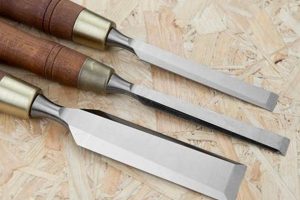
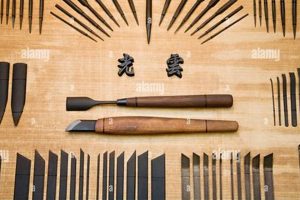
Implements employed in traditional craftsmanship from China, designed for shaping, joining, and finishing wood, form a distinct category. These instruments, often hand-forged and meticulously maintained, include items such as specialized planes, chisels with unique geometries, and saws adapted for specific grain orientations. Their construction frequently incorporates locally sourced hardwoods and steels, reflecting regional variations in material availability and woodworking traditions.
The significance of these implements extends beyond mere utility. They embody centuries of accumulated knowledge and skill, passed down through generations of artisans. The efficiency and precision afforded by well-crafted examples contribute to the creation of intricate joinery and refined surfaces, characteristic of classical Chinese furniture and architectural elements. Historically, the quality of these items directly impacted the longevity and aesthetic appeal of wooden structures and objects.
This article will delve into the specific types, construction techniques, and regional variations associated with this essential aspect of Chinese material culture. Detailed examinations of individual tool categories, alongside discussions of their historical development and practical applications, will provide a comprehensive understanding of their role in shaping the landscape of traditional woodworking.
Practical Guidance for Effective Utilization
This section outlines critical considerations for optimizing the performance and longevity of tools originating from established Chinese woodworking traditions. Adherence to these guidelines will enhance precision, minimize material waste, and ensure safe operational practices.
Tip 1: Sharpening Protocol: Consistent and meticulous sharpening is paramount. Employ appropriate honing angles based on the tool’s intended use. Utilize water stones or oil stones with progressively finer grits to achieve a razor-sharp edge, critical for clean cuts and minimizing tearing of the wood fibers.
Tip 2: Handle Maintenance: Regularly inspect wooden handles for cracks or looseness. Tighten loose handles by driving wedges deeper into the mortise. Replace damaged handles with hardwoods of similar density and grain orientation to maintain balance and prevent premature failure.
Tip 3: Steel Temper Awareness: Be cognizant of the steel’s temper. Overheating during sharpening can compromise the hardness and edge retention. Avoid prolonged grinding or polishing at high speeds. Use ample coolant to dissipate heat effectively.
Tip 4: Plane Sole Preparation: Flatten the sole of planes regularly to ensure consistent contact with the workpiece. Use abrasive paper adhered to a flat surface, such as a granite slab or glass plate. Correct any concavity or convexity to achieve optimal planing performance.
Tip 5: Appropriate Wood Selection: Match tool selection to the wood species being worked. Harder woods, such as ebony or rosewood, require tools with superior steel and sharper cutting angles. Softer woods, like pine or cedar, can be effectively worked with tools of lower hardness.
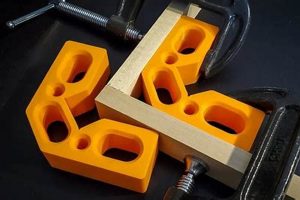
Tip 6: Secure Work Holding: Implement robust work-holding methods to prevent slippage and ensure stability. Use clamps, vises, or bench dogs to securely fasten the workpiece to the bench. This minimizes the risk of injury and improves the accuracy of cuts and joinery.
Tip 7: Respect Grain Direction: Always consider the grain direction when cutting or planing. Working against the grain can cause tear-out and uneven surfaces. Adjust the tool’s angle of attack and use a sharp blade to minimize this effect.
Proper implementation of these techniques will dramatically improve the efficiency and precision achievable when utilizing these specific woodworking implements. Consistent application of these guidelines will translate into higher quality finished products and a safer working environment.
The following sections will explore specific types of tools and their applications in greater detail, providing further insights into their effective use and maintenance.
1. Precision Cutting Edges

Precision cutting edges are a foundational element in traditional Chinese woodworking. The efficacy of these tools hinges upon the meticulous creation and maintenance of exceptionally sharp blades, enabling intricate joinery and refined surface finishes. The quality of the cutting edge directly influences the precision and efficiency of woodworking processes.
- Steel Composition and Hardness
The selection of appropriate steel alloys and the subsequent heat treatment processes directly determine the hardness and durability of the cutting edge. Higher carbon steels, skillfully tempered, are favored for their ability to maintain a keen edge for extended periods. The precise balance between hardness and brittleness is crucial for preventing chipping or premature dulling during use. The metal’s quality ensures tools’ performance in challenging tasks.
- Sharpening Techniques and Geometry
Traditional Chinese woodworking emphasizes specialized sharpening techniques tailored to specific tool types and intended applications. The geometry of the cutting edge, including the bevel angle and the presence of a secondary micro-bevel, significantly impacts the tool’s performance. These geometric considerations enable cleaner cuts and reduced effort during operation. Correct geometry yields smooth, accurate results.
- Edge Retention and Maintenance
The ability of a cutting edge to retain its sharpness over prolonged use is paramount. Regular honing and periodic re-sharpening are essential for maintaining optimal performance. The frequency of maintenance depends on the type of wood being worked and the intensity of use. Diligent maintenance ensures consistently high-quality outcomes. Sharp tools enhance safety and minimize wood damage.
- Impact on Joinery and Surface Finish
The precision of the cutting edge directly correlates with the quality of joinery and the smoothness of surface finishes. Sharp blades minimize tear-out and allow for tight, seamless joints. The ability to achieve highly refined surfaces reduces the need for extensive sanding or other post-processing techniques. Precision cuts are vital for a quality result.
The emphasis on precision cutting edges reflects a deep understanding of material properties and the importance of meticulous craftsmanship in traditional Chinese woodworking. These techniques represent a synthesis of practical knowledge and artistic sensibility, essential for creating durable and aesthetically pleasing wooden objects. The focus remains on clean cuts and quality results.
2. Specialized Plane Designs

Specialized plane designs constitute a critical component of traditional Chinese woodworking tools. These designs, developed over centuries, reflect a deep understanding of wood properties, grain orientation, and the specific demands of diverse woodworking tasks. The connection between specialized plane designs and broader Chinese woodworking traditions is causal: particular designs enable specific joinery techniques and surface finishes, thereby shaping the overall aesthetic and structural integrity of finished works. The absence of these tailored planes would necessitate alternative, less precise methods, compromising the quality and efficiency of woodworking processes. Examples include the bao, a smoothing plane with variations designed for different wood types and grain directions, and specialized grooving planes used to create intricate channels for joinery or decorative purposes.
The practical significance of understanding these specialized designs lies in the ability to replicate and maintain traditional woodworking techniques. Each plane design embodies a specific set of geometric parameters and functional characteristics optimized for particular applications. For instance, a shoulder plane, characterized by its low angle and closely fitted sides, is designed for precisely trimming tenon shoulders, creating tight and structurally sound joints. A compass plane, with a flexible sole, allows for shaping curved surfaces, essential in crafting traditional furniture components. Furthermore, the construction and maintenance of these planes require a deep understanding of materials, sharpening techniques, and the interplay between tool geometry and wood behavior.
In summary, specialized plane designs are not merely tools, but rather embodiments of accumulated knowledge and skill within the context of Chinese woodworking. Their effective utilization requires an appreciation for their historical development, functional characteristics, and the specific woodworking traditions they represent. The challenge lies in preserving and disseminating this knowledge to ensure the continuation of these time-honored techniques. Future research could focus on documenting the diversity of plane designs across different regions of China, thereby contributing to a more comprehensive understanding of this vital aspect of material culture.
3. Durable Handle Materials

The selection and utilization of durable handle materials are paramount in the construction and longevity of implements from Chinese woodworking traditions. The handles serve as the interface between the artisan and the tool, directly impacting control, comfort, and overall efficiency. Material failures in handles compromise the tool’s functionality and pose potential safety hazards. Therefore, rigorous selection criteria are applied, favoring materials that withstand the rigors of continuous use.
- Hardwood Selection and Properties
Dense hardwoods, such as ebony, rosewood, and certain types of locally sourced hardwoods, are preferred due to their high strength, resistance to splitting, and ability to absorb shock. The specific wood species selected often reflects regional availability and established traditions. Properly seasoned and dried wood is essential to minimize warping or cracking over time. Examples include the use of tielimu (ironwood) in Southern China for its exceptional density and resistance to wear in plane handles, where a tight fit is crucial. The choice of hardwood is crucial to resisting splitting during heavy use.
- Grain Orientation and Structural Integrity
The orientation of the wood grain significantly affects the handle’s strength and durability. Handles are typically crafted with the grain running parallel to the tool’s axis to maximize resistance to bending and splitting forces. Careful attention is paid to avoiding knots or other imperfections that could weaken the handle’s structure. This strategic grain alignment improves longevity and tool performance, for example, in chisels where consistent force is applied along the handle’s length during mortise creation.
- Ergonomics and User Comfort
Durable handle materials also contribute to ergonomic design. The shape, size, and surface texture of the handle are carefully considered to provide a comfortable and secure grip, reducing fatigue and improving control. Smooth, polished surfaces minimize friction and prevent blisters during prolonged use. The integration of ergonomic design enhances the user’s ability to apply force accurately and efficiently, as seen in adze handles designed for comfortable two-handed grip during timber shaping.
- Protective Finishes and Preservation Techniques
Protective finishes, such as oil-based varnishes or traditional lacquer coatings, are often applied to wood handles to enhance their resistance to moisture, abrasion, and insect damage. These finishes penetrate the wood fibers, strengthening the surface and preventing cracking or checking. Regular maintenance, including cleaning and re-application of finishes, extends the handle’s lifespan and preserves its aesthetic appeal. The application of tung oil to chisel handles provides a protective barrier against moisture and prevents premature degradation.
The durable handle materials used in Chinese woodworking tools are thus integral to both the functionality and longevity of these implements. The careful selection, preparation, and maintenance of these materials reflect a deep understanding of wood properties and a commitment to craftsmanship. These aspects ensure that these tools continue to serve as reliable instruments for generations of artisans, preserving the rich traditions of Chinese woodworking.
4. Intricate Joinery Capabilities
The sophisticated joinery found in traditional Chinese woodwork is inextricably linked to the design and function of the implements employed. These instruments, including specialized chisels, planes, and saws, are not merely tools; they are integral components enabling the creation of complex and aesthetically refined connections. The precision of these tools is a direct causal factor in the execution of intricate joinery, such as mortise-and-tenon joints, dovetails, and splined miters, which are essential for the structural integrity and visual elegance of furniture and architecture. Without the specialized capabilities afforded by these tools, achieving the characteristic complexity and precision of such joinery would be exceedingly difficult, if not impossible. The importance of these tools cannot be overstated; they determine the range of possible joinery techniques and the resulting quality of the finished piece.
Consider the sunmao joint, a sophisticated variation of the mortise-and-tenon widely used in traditional Chinese furniture. The precise execution of this joint relies on the use of specifically shaped chisels and planes to create interlocking surfaces that provide exceptional strength and stability without the need for adhesives or fasteners. Similarly, the creation of complex curved joinery, common in traditional architecture, requires the use of compass planes and specialized carving tools to shape and fit the components with remarkable accuracy. These examples illustrate how the characteristics of the implements directly enable and define the possibilities of joinery. Furthermore, the understanding and mastery of these tools are crucial for preserving and replicating the time-honored techniques of Chinese woodworking.
In summary, the intricate joinery capabilities inherent in traditional Chinese woodwork are fundamentally dependent on the design and function of the associated tools. These implements are not simply passive instruments; they are active participants in the creative process, shaping the possibilities of joinery and influencing the overall aesthetic of the finished product. The challenge lies in preserving the knowledge and skills required to create and maintain these specialized tools, ensuring the continuation of these time-honored woodworking traditions. The connection between tools and joinery represents a crucial aspect of Chinese material culture, highlighting the ingenuity and craftsmanship of generations of artisans.
5. Historical Context

The historical context surrounding Chinese woodworking tools is crucial for understanding their design, function, and cultural significance. These implements are not static artifacts; they are products of specific historical periods, reflecting technological advancements, economic conditions, and prevailing aesthetic values. Examining the historical evolution of these tools provides insights into the development of woodworking techniques and the broader socio-cultural landscape of China.
- Dynastic Influences and Technological Innovation
Different dynasties witnessed varying levels of technological innovation in woodworking. The Song Dynasty, for example, saw advancements in iron metallurgy, leading to improved tool quality and durability. The Ming Dynasty’s focus on craftsmanship and furniture design spurred the development of specialized tools for intricate joinery. Understanding these dynastic influences clarifies the evolution of tool designs and their correlation with specific periods of artistic and technological flourishing. Historical progression can be seen in tools.
- Regional Variations and Trade Networks
China’s vast geography and diverse regional cultures resulted in significant variations in woodworking techniques and tool designs. Coastal regions, influenced by maritime trade, often incorporated imported materials and techniques, while inland areas relied on locally sourced resources. Examining these regional variations reveals the interplay between local traditions and external influences in shaping tool development. Trade routes are an important factor to consider.
- Social Status of Woodworkers and Guild Systems
The social status of woodworkers and the organization of guild systems influenced the transmission of knowledge and the standardization of tool designs. Highly skilled artisans often held privileged positions within society, contributing to the prestige and value associated with their craft. Guilds regulated training, quality control, and the dissemination of woodworking techniques, ensuring a high level of craftsmanship and consistency in tool production. These systems of knowledge transmission are important.
- Influence of Architectural Styles and Furniture Design
Prevailing architectural styles and furniture designs directly impacted the development of specialized woodworking tools. The intricate joinery and decorative elements characteristic of traditional Chinese architecture necessitated the creation of tools capable of executing precise cuts and intricate carvings. Similarly, the demand for specific furniture styles, such as Ming furniture, drove the development of tools optimized for creating specific shapes, joinery, and surface finishes. Form follows function due to architectural demands.
In conclusion, the historical context provides a framework for interpreting the design, function, and cultural significance of Chinese woodworking tools. Understanding the interplay between dynastic influences, regional variations, social structures, and architectural styles illuminates the complex evolution of these implements and their enduring legacy in Chinese material culture. These tools’ characteristics tell a story.
6. Regional Variations

The geographic diversity of China has profoundly influenced the development and characteristics of its woodworking tools. Regional Variations are not merely cosmetic differences; they represent adaptations to local resources, building traditions, and cultural preferences. This adaptation has resulted in a diverse array of implements, each optimized for specific tasks and materials prevalent in particular areas. The availability of certain hardwoods, for example, directly shaped the design and construction of planes and chisels. In regions abundant with bamboo, specialized tools evolved for working with this versatile material. The link between regional environment and tool design is a clear example of cause and effect. Furthermore, the importance of Regional Variations lies in their contribution to the overall richness and adaptability of Chinese woodworking traditions, allowing artisans to create distinctive and locally appropriate structures and objects. An instance of this adaptation can be seen in the heavier, sturdier tools found in northern China, designed for working with the denser hardwoods common to that region, in contrast to the lighter, more delicate tools used in the south, where softer woods like cedar are more prevalent. Understanding this geographic influence is crucial for accurately identifying and appreciating the nuances of traditional Chinese woodworking.
The practical significance of recognizing Regional Variations is twofold: first, it aids in the accurate dating and provenance of antique tools, allowing for a more informed assessment of their value and historical significance; and second, it provides valuable insights for contemporary woodworkers seeking to emulate traditional techniques. By studying the tools used in specific regions, modern artisans can gain a deeper appreciation for the underlying principles of Chinese woodworking and adapt these principles to their own practice. For instance, studying the tool sets from Fujian province, known for its intricate joinery and lacquered furniture, can provide valuable lessons in achieving complex interlocking joints and applying durable, aesthetically pleasing finishes. Ignoring these Regional Variations would lead to a superficial and incomplete understanding of Chinese woodworking, potentially resulting in inaccurate reproductions or inappropriate application of techniques.
In conclusion, Regional Variations are an essential component of Chinese woodworking tools, reflecting the interplay between geography, material availability, cultural traditions, and functional requirements. Understanding these variations is critical for accurate identification, historical interpretation, and the preservation of traditional woodworking techniques. While the sheer diversity of tool designs across China presents a challenge to comprehensive documentation, ongoing research and the careful study of existing collections can contribute to a more nuanced appreciation of this vital aspect of Chinese material culture. The link to broader themes of cultural heritage and adaptation further underscores the importance of understanding Regional Variations when studying Chinese woodworking tools.
Frequently Asked Questions
This section addresses prevalent inquiries regarding implements employed in traditional Chinese woodworking. Information presented aims to clarify common misunderstandings and provide informed perspectives on their usage and historical significance.
Question 1: What distinguishes implements used in Chinese woodworking from those found in Western traditions?
Chinese woodworking tools often exhibit unique geometries and are specifically designed to work with the region’s diverse wood types. Furthermore, traditional techniques emphasize joinery over fasteners, influencing tool design to facilitate complex interlocking connections.
Question 2: How does one properly maintain the cutting edge of tools originating from China?
Sharpening protocols vary depending on the tool’s intended use and steel composition. However, consistent honing with progressively finer water stones or oil stones is generally recommended to achieve and maintain a keen edge. The angle must be suited for the appropriate hardness of the metal.
Question 3: Are specific woods preferred for crafting handles of Chinese woodworking tools?
Durable hardwoods, such as ebony, rosewood, and locally sourced equivalents, are favored for handle construction due to their strength, resistance to splitting, and ability to absorb shock. Grain orientation along the tool’s axis enhances the handle’s longevity and structural integrity.
Question 4: Do regional variations exist in the design of these instruments?
Significant regional variations are indeed present. Tool designs often reflect adaptations to locally available resources, established building traditions, and cultural preferences. Coastal regions may exhibit influences from maritime trade, while inland areas rely on local resources.
Question 5: How critical is the historical context for understanding the use of these specific implements?
The historical context is paramount. Dynastic influences, social structures, and architectural styles all played a role in the development and evolution of these tools. Understanding these influences provides a deeper appreciation for their design and function.
Question 6: Where can authentic implements employed in Chinese woodworking be sourced?
Authentic tools may be found through specialized antique dealers, woodworking tool auctions, and online marketplaces focusing on vintage or traditional implements. Due diligence is advised to ensure the tool’s provenance and authenticity.
The answers address key questions about these instruments, their maintenance, and regional variations. Recognizing the tools’ historical context aids in their proper utilization and appreciation of their cultural significance.
The subsequent sections will offer more information on Chinese woodworking history.
Conclusion
The preceding exploration has illuminated key aspects of implements employed in traditional Chinese woodworking. The implements’ distinct design, historical context, regional variations, and the meticulous methods of their use and maintenance underscore a rich legacy of craftsmanship and ingenuity. These objects transcend mere functionality; they represent the tangible embodiment of cultural knowledge and aesthetic sensibilities passed down through generations.
Continued research and preservation efforts are essential to safeguarding this valuable aspect of Chinese material culture. Further investigation into specialized techniques, regional adaptations, and the social context surrounding these instruments will contribute to a more comprehensive understanding of their significance. The study and practice of these woodworking traditions stand as a testament to human creativity and the enduring power of skilled craftsmanship.
![Buy Woodworking Tools Sales Online - [Your Brand] | Step-by-Step Guides, Tools & Inspiration to Build Beautiful Wooden Decor on a Budget](https://woodfromhome.com/wp-content/uploads/2026/05/th-213-300x200.jpg "Buy Woodworking Tools Sales Online - [Your Brand] Step-by-Step Guides, Tools & Inspiration to Build Beautiful Wooden Decor on a Budget")