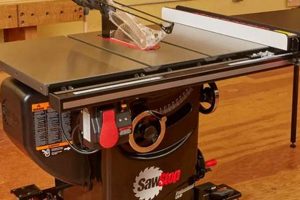
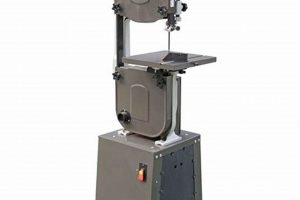
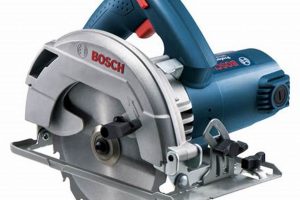
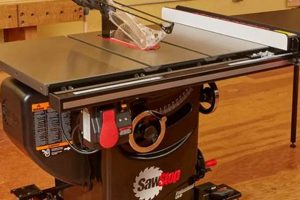
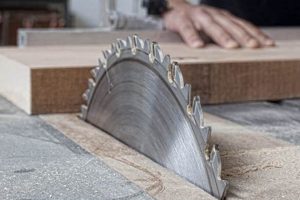
A powered rotary cutting tool, specialized for creating precise and smooth cuts in wood, is essential for intricate woodworking projects. This tool utilizes a rotating blade with specifically designed teeth to achieve clean edges and accurate dimensions on various wood types. Its design prioritizes control and precision over raw power, allowing for delicate maneuvers and detailed shaping.
The advantages of employing such a tool extend to enhanced efficiency and reduced material waste. The clean cuts minimize the need for extensive sanding or post-processing. Historically, advancements in blade technology and motor control have significantly improved the tool’s capability to handle demanding tasks with greater accuracy. Its adoption has streamlined processes and elevated the quality of finished pieces.
The subsequent discussion will delve into essential aspects such as blade selection, optimal cutting techniques, safety protocols, and the tool’s maintenance. This comprehensive overview aims to provide a thorough understanding of how to maximize the tool’s potential in achieving superior woodworking results.
Essential Practices for Precision Woodworking
Achieving optimal results with a specialized rotary cutting tool for intricate woodwork requires adherence to specific techniques and considerations. The following points outline key practices for maximizing the tool’s potential while maintaining safety and precision.
Tip 1: Blade Selection is Paramount: Choose blades with a high tooth count designed for fine cuts. A blade with 60 or more teeth will produce cleaner edges and minimize splintering, particularly when working with hardwoods or veneers.
Tip 2: Control Feed Rate Deliberately: Avoid forcing the tool through the material. A slow, steady feed rate allows the blade to cut cleanly and reduces the risk of kickback or tear-out. Adjust the feed rate based on the wood’s density and grain direction.
Tip 3: Secure Material Prior to Cutting: Ensure the workpiece is firmly clamped to a stable surface. Movement during cutting can compromise accuracy and increase the risk of injury. Utilize a combination of clamps and work-holding devices to prevent shifting.
Tip 4: Employ a Zero-Clearance Insert: A zero-clearance insert minimizes the gap around the blade, providing support to the wood fibers and further reducing tear-out on the underside of the cut. Fabricate or purchase an insert specifically designed for the tool in use.
Tip 5: Use Guide Rails for Straight Cuts: For extended straight cuts, utilize a guide rail system. This ensures accuracy and consistency, especially when cutting large panels or sheet goods. The guide rail should be securely attached to the workpiece.
Tip 6: Practice Proper Body Positioning: Maintain a stable stance and keep hands clear of the blade path. Avoid reaching over the tool or working in an awkward position that could compromise control.
Tip 7: Regular Maintenance is Crucial: Keep the blade sharp and clean. A dull blade requires more force, increasing the risk of kickback and producing inferior cuts. Regularly inspect the tool for any signs of wear or damage.
Adherence to these best practices enhances both the quality of the finished product and the safety of the operator. The precision afforded by these techniques is essential for achieving professional-level results in fine woodworking applications.
The subsequent section will discuss considerations for safety and necessary equipment.
1. Blade Tooth Count

The number of teeth on a circular saw blade is a critical factor dictating the quality of cut achievable in fine woodworking applications. The interplay between tooth count, material properties, and saw operation profoundly influences the precision and finish of woodworking projects.
- Cutting Speed and Finish Quality
A higher tooth count correlates with a slower cutting speed but produces a smoother, cleaner finish. The increased number of teeth engaging the material at any given time results in smaller chips and reduced tear-out, particularly crucial when working with hardwoods or delicate veneers. For instance, a 60-tooth blade is preferable to a 24-tooth blade when cutting maple trim due to its ability to minimize splintering.
- Material Specificity
The optimal tooth count varies based on the type of wood being cut. Softwoods generally require fewer teeth, as they are less prone to chipping. Hardwoods and manufactured wood products, such as plywood and MDF, necessitate higher tooth counts to prevent splintering and ensure clean edges. Cutting melamine, for example, demands a blade with upwards of 80 teeth to avoid significant edge damage.
- Impact on Motor Load and Heat Generation
Blades with a higher tooth count place a greater load on the saw’s motor, potentially leading to increased heat generation and reduced motor lifespan if improperly used. Maintaining a proper feed rate and ensuring the blade is sharp are critical to mitigating these effects. Attempting to force a high tooth count blade through thick material can lead to overheating and blade warping.
- Relationship to Kerf Width
Tooth count can indirectly influence the kerf width, or the amount of material removed by the blade. While blade thickness primarily determines kerf, blades with a high tooth count often have a thinner kerf to reduce material waste and improve cutting efficiency. This is particularly relevant in intricate woodworking where precise dimensions are paramount.
Ultimately, selecting the appropriate blade tooth count is a nuanced decision requiring careful consideration of the material being cut, the desired finish quality, and the operational characteristics of the circular saw. Proper blade selection is integral to maximizing the tool’s potential and achieving superior results in fine woodworking.
2. Controlled Feed Rate

The rate at which a powered rotary cutting tool is advanced through the material represents a crucial determinant of cut quality, particularly in the realm of precision woodworking. An uncontrolled or excessive feed rate induces a cascade of adverse effects, impacting the accuracy, smoothness, and safety of the operation. This connection between feed rate and cut characteristics underscores the importance of diligent speed management for optimal performance.
An appropriate feed rate ensures the blade’s teeth engage the wood fibers in a controlled, shearing action. Conversely, forcing the blade forward causes the teeth to aggressively tear the wood, resulting in splintering, tear-out, and an uneven surface. Examples of the practical impact of feed rate are readily apparent. When cutting a dovetail joint using a guide rail, a slow, deliberate advance minimizes chipping at the delicate corners. Similarly, when shaping intricate profiles, a carefully modulated feed rate allows for precise conformity to the desired contour. An overly rapid feed rate can overload the motor, potentially causing it to stall or leading to premature wear. For instance, ripping a hardwood board at an excessive pace can generate excessive heat and potentially warp the blade.
Mastering the feed rate is a central skill in fine woodworking applications. Its effective application hinges upon the operator’s awareness of material properties, blade sharpness, and the machine’s capabilities. Although challenging for novice users, deliberate speed control delivers precision and high-quality results that would otherwise be unattainable. The subsequent sections will explore additional critical components of achieving superior outcomes with this cutting apparatus.
3. Material Securement

Secure workpiece stabilization is paramount in employing a powered rotary cutting tool for detailed woodwork. Inadequate support invariably leads to inaccuracies and augmented safety risks. The tool’s operation relies on maintaining consistent contact between the blade and the material, a condition compromised when the material shifts or vibrates. Securement effectiveness has direct correlation to the quality of the final product and the well-being of the operator. For instance, attempting to cut a small piece of veneer without a clamp will result in the workpiece moving during the cut, which is not only dangerous but also compromises accuracy.
Effective securement methods include clamping, using a vise, and applying non-slip mats. The selection of a securement method is dependent on the size and shape of the material. Large panels require multiple points of securement to prevent bowing or movement. Small or irregularly shaped pieces may necessitate custom jigs or fixtures. Proper securement not only minimizes inaccuracies but also reduces the risk of kickback, a hazardous event in which the tool forcefully ejects the workpiece. Consider the scenario of cutting a rabbet joint on a long board. Without adequate clamping along the length of the board, the vibration induced by the tool can cause the material to shift, producing an uneven rabbet.
In summary, proper material securement is not merely a preparatory step but an integral component of safe and accurate utilization. Challenges often stem from inadequate clamping pressure or the use of inappropriate securement devices. Addressing these challenges requires careful assessment of the workpiece and a commitment to implementing suitable stabilization methods. Recognizing the symbiotic relationship between tool operation and workpiece stability is crucial for realizing the full potential in delicate woodworking.
4. Zero-Clearance Insert

The zero-clearance insert serves as a critical component in maximizing the utility of a powered rotary cutting tool for precise woodworking. This insert, designed as a replaceable throat plate, directly addresses the issue of tear-out and splintering, thereby enhancing cut quality and operator safety.
- Tear-Out Mitigation
The primary function of the insert is to minimize the gap surrounding the blade, thereby providing support to the wood fibers during the cutting process. This support is particularly effective in reducing tear-out on the underside of the workpiece. Without this support, the upward rotation of the blade can lift and tear wood fibers, especially when working with brittle materials like veneers or hardwoods. Consider the scenario of cutting a delicate piece of figured maple; without a zero-clearance insert, significant splintering would likely occur along the cut line.
- Dust Collection Enhancement
By reducing the open space around the blade, the insert also improves the efficiency of dust collection systems. The confined space allows for a more focused airflow, drawing dust and debris away from the cutting area. This not only improves visibility but also reduces the health risks associated with airborne wood particles. In contrast, a standard throat plate with a wide opening allows dust to escape, diminishing the effectiveness of dust collection efforts.
- Safety Augmentation
The diminished gap around the blade also reduces the likelihood of small workpiece fragments becoming lodged between the blade and the throat plate. Such fragments can cause the blade to bind or kickback, posing a significant safety hazard to the operator. The snug fit of the zero-clearance insert minimizes this risk. This is particularly important when cutting small or thin pieces of wood that might otherwise slip into the blade opening.
- Customization and Material Compatibility
Zero-clearance inserts can be readily customized to accommodate specific blade angles or blade types. This customization allows for optimized performance in a variety of woodworking tasks, such as bevel cuts or dado cuts. Furthermore, the inserts are typically made from materials like phenolic or MDF, which are easily machinable and replaceable, allowing woodworkers to create inserts tailored to specific projects or materials.
In essence, the zero-clearance insert is an indispensable accessory for woodworkers seeking to achieve clean, precise cuts while minimizing safety risks. Its capacity to control tear-out, enhance dust collection, and augment safety measures makes it an integral element in professional woodworking environments. The utilization of such an insert exemplifies a commitment to quality and safety, hallmarks of expert craftsmanship.
5. Guide Rail Accuracy

The precision of a guide rail system directly influences the outcome of fine woodworking tasks involving powered rotary cutting tools. Inaccurate guide rails negate the potential for clean, straight cuts, a fundamental requirement for achieving professional-grade results. Deviation from a true, straight line, even by a fraction of a millimeter, becomes readily apparent in assembled components, compromising the integrity of the finished piece. The cause-and-effect relationship is undeniable: inaccurate guide rails produce inaccurate cuts, leading to misaligned joinery and aesthetically displeasing results. For example, using a warped guide rail to cut the stiles and rails of a cabinet door will result in a door that is not square, making proper fitting and operation impossible. This highlights the critical importance of ensuring guide rails are manufactured to exacting standards and maintained in optimal condition.
Guide rail accuracy is essential for tasks demanding repetitive cuts with consistent dimensions. Cabinetmaking, furniture construction, and any project involving precisely sized components rely heavily on the capability of the guide rail to facilitate repeatable accuracy. The practical significance lies in minimizing material waste and reducing the time spent on correcting errors. Furthermore, an accurate guide rail system reduces the risk of operator fatigue and potential injury by allowing for controlled, predictable tool movement. The use of an inaccurate guide rail while cutting multiple shelves for a bookcase, for instance, would likely result in shelves of varying widths, requiring time-consuming adjustments or complete recuts.
In summary, guide rail accuracy forms an indispensable element in leveraging the potential of a powered rotary cutting tool within the context of fine woodworking. Regular inspection, proper storage to prevent warping, and careful alignment procedures are necessary to ensure optimal performance. The pursuit of precision in woodworking begins with a commitment to maintaining the accuracy of guiding systems, underscoring its direct impact on project success and the quality of the final product.
6. Regular Maintenance
The longevity and consistent performance of a specialized powered rotary cutting tool designed for precise woodworking are directly proportional to the diligence applied to its regular maintenance. A failure to adhere to a structured maintenance schedule precipitates a decline in cutting accuracy, an increase in operational hazards, and ultimately, a shortened tool lifespan. The tool’s intricate design and the demands placed upon it during fine woodworking necessitate proactive maintenance rather than reactive repairs. For example, a blade left encrusted with resin and wood particles will generate increased friction during operation, leading to overheating, reduced cutting efficiency, and accelerated wear on the motor. Similarly, neglecting the lubrication of moving parts increases friction, leading to premature failure of bearings and gears. Maintenance should focus on the key components to reduce risk factors.
Specific maintenance procedures include regular blade sharpening, cleaning of internal mechanisms, inspection of power cords, and lubrication of moving parts. Blade sharpening is crucial for maintaining clean cuts and minimizing the risk of kickback. A dull blade necessitates increased force to advance the tool, elevating the likelihood of a dangerous kickback event. Cleaning dust and debris from the motor housing and ventilation ports prevents overheating and ensures efficient cooling. Inspection of the power cord for fraying or damage is essential for preventing electrical hazards. Lubricating gears and bearings reduces friction and extends the lifespan of these critical components. Failing to do so might cause premature part replacement. These are real-world examples where preventative practice can minimize risks.
In conclusion, regular maintenance is not an optional addendum but an indispensable component of utilizing a powered rotary cutting tool in intricate woodworking. The ramifications of neglecting maintenance extend from diminished cutting precision to augmented safety hazards and shortened tool longevity. Addressing maintenance proactively requires establishing a structured schedule, utilizing appropriate cleaning agents and lubricants, and diligently inspecting the tool for any signs of wear or damage. Through a sustained commitment to maintenance, woodworkers can ensure the continued reliable performance of this essential tool, achieving superior results and promoting a safe working environment.
Frequently Asked Questions
The following addresses common inquiries regarding the utilization of specialized rotary cutting tools for achieving high-quality results in detailed woodworking applications. These questions aim to clarify best practices and address potential challenges.
Question 1: What constitutes an appropriate blade type for achieving exceptionally fine cuts in hardwood materials?
Blades with a high tooth count, typically ranging from 60 to 80 teeth or more, specifically designed for fine woodworking applications, are generally recommended. These blades minimize tear-out and splintering, producing smoother edges on hardwoods.
Question 2: How does the feed rate influence the overall quality of the cut when employing a specialized rotary cutting tool?
A controlled, deliberate feed rate is crucial. An overly aggressive feed rate leads to splintering, tear-out, and an uneven surface. A slower, more controlled rate allows the blade to shear the wood fibers cleanly.
Question 3: What measures should be taken to adequately secure the workpiece during operation to guarantee accuracy and safety?
The workpiece must be firmly clamped to a stable surface. A combination of clamps and specialized work-holding devices prevents movement during cutting, ensuring accuracy and reducing the risk of kickback.
Question 4: What is the purpose of a zero-clearance insert, and how does it enhance the performance of the rotary cutting tool?
A zero-clearance insert minimizes the gap around the blade, providing support to the wood fibers and reducing tear-out on the underside of the cut. This enhances both cut quality and operator safety.
Question 5: How frequently should the blade be sharpened to maintain optimal cutting performance and prevent potential hazards?
Blade sharpening frequency depends on usage and material type. However, it should be performed regularly, ideally whenever the blade exhibits signs of dullness, such as increased resistance or a decline in cut quality. A sharp blade is essential for both performance and safety.
Question 6: What are the critical maintenance procedures necessary to ensure the longevity and consistent performance of the tool?
Key maintenance procedures include regular blade sharpening, cleaning of internal mechanisms, inspection of power cords, and lubrication of moving parts. These steps prevent overheating, reduce wear, and ensure safe operation.
In conclusion, achieving superior results with this tool in intricate woodworking applications necessitates a comprehensive understanding of blade selection, feed rate control, material securement, insert usage, blade maintenance, and sharpening protocols. Adherence to these principles is essential for realizing the tools full potential.
The next section will provide a comparative analysis of available tools.
Conclusion
This exploration of the circular saw for fine woodworking has underscored its significance in achieving precision and quality in intricate woodworking projects. Blade selection, controlled feed rate, material securement, zero-clearance inserts, guide rail accuracy, and regular maintenance have been identified as crucial factors governing optimal performance and safety. Adherence to these principles enables woodworkers to maximize the potential of this essential tool, producing superior results with minimized risk.
The future of fine woodworking will undoubtedly see continued advancements in rotary cutting tool technology. A commitment to understanding and implementing these fundamental principles remains essential for any woodworker seeking to achieve professional-level results. Mastering the circular saw for fine woodworking is not merely acquiring a skill but embracing a dedication to precision, safety, and the pursuit of excellence in craftsmanship.