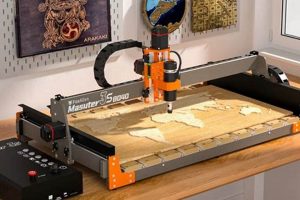
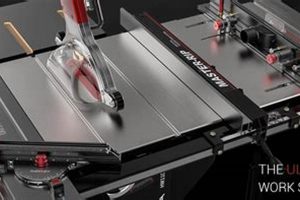
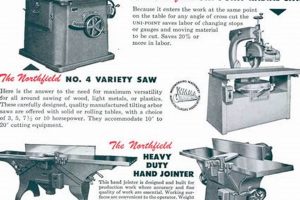
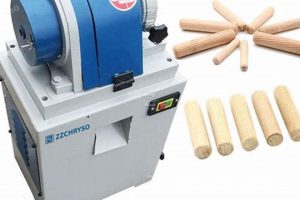
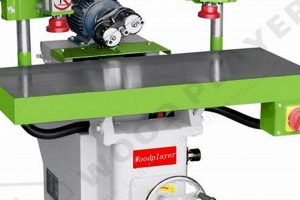
Automated routing, shaping, and cutting of wood-based materials using computer-controlled equipment is a modern method in fabrication. These systems utilize pre-programmed instructions to execute precise and repeatable operations. An example includes the creation of intricate furniture components based on digital designs.
This technology enhances manufacturing efficiency, precision, and design complexity. It enables mass production of identical parts and the creation of custom pieces with intricate detailing, aspects often challenging or impossible to achieve through manual methods. Historically, the adoption of this technology has revolutionized wood product manufacturing, moving it from primarily manual craftsmanship to automated production.
The following sections will delve into the various types of equipment employed, the software used to create designs and control operations, the materials suitable for processing, and the applications found across different industries.
Effective Strategies for Computer Numerical Control in Woodworking
This section offers essential guidelines for optimizing the application of computer-controlled machinery in woodworking processes, focusing on precision, safety, and efficient production.
Tip 1: Material Selection and Preparation: Ensure appropriate material selection, considering density, moisture content, and grain orientation. Prior to processing, properly acclimate materials to the workshop environment to minimize warping or cracking during machining. Precise material dimensions are critical for accurate processing, minimizing errors, and ensuring the project meets specifications.
Tip 2: Software Proficiency and Toolpath Optimization: Invest in comprehensive training on the design and control software. Efficient toolpaths minimize processing time, reduce material waste, and extend the lifespan of cutting tools. Utilize simulation features to identify potential collisions or errors before actual machining commences.
Tip 3: Secure Workholding Systems: Implement robust workholding strategies to prevent movement or vibration during processing. Vacuum clamping, mechanical fasteners, and specialized jigs are commonly used to stabilize workpieces. Insufficient workholding can compromise accuracy and safety.
Tip 4: Proper Tooling Selection and Maintenance: Select cutting tools specifically designed for wood. Different wood species require specific tooling for optimal results. Implement a regular maintenance schedule for sharpening or replacing worn cutting tools. Dull tools generate excessive heat, increasing the risk of burning or splintering the workpiece.
Tip 5: Dust Extraction and Machine Maintenance: Establish an effective dust extraction system to maintain a clean and safe working environment. Wood dust is a significant health hazard and can damage machinery components. Regularly lubricate moving parts, inspect wiring, and clean the machine to ensure reliable operation.
Tip 6: Cutting Parameter Optimization: Adjust feed rates, spindle speeds, and depth of cut to match the material properties and tool characteristics. Overly aggressive cutting parameters can lead to tool breakage, material damage, or poor surface finish. Conversely, insufficient parameters can increase processing time and reduce efficiency.
Tip 7: Quality Control and Inspection: Implement quality control measures to verify dimensional accuracy and surface finish. Use calipers, micrometers, and visual inspection techniques to identify deviations from the design specifications. Address any discrepancies promptly to prevent further errors in subsequent production stages.
Adhering to these strategies enhances the precision, efficiency, and safety of wood processing with computer-controlled machinery, yielding improved product quality and reduced operational costs.
The subsequent sections will explore specific applications within various woodworking industries and the future trends shaping the advancement of this technology.
1. Precision Cutting

Precision cutting, a core capability, is fundamentally intertwined with computer numerical control (CNC) machine operation in woodworking. It represents a departure from traditional methods, enabling tolerances and complexities previously unattainable. This precision directly influences the quality, functionality, and aesthetic appeal of finished wood products.
- Dimensional Accuracy
Dimensional accuracy refers to the ability of computer-controlled machines to consistently produce parts that adhere to specified dimensions within minimal variance. In applications such as cabinet making, accurate dimensions ensure proper fit and alignment of components. Deviations can lead to structural weaknesses and aesthetic flaws, impacting product integrity.
- Surface Finish Quality
Beyond dimensional accuracy, precision cutting extends to the quality of the surface finish. Computer-controlled machining can produce smooth, clean edges that require minimal sanding or finishing. This is crucial in applications where a high-quality surface finish is essential, such as furniture manufacturing and musical instrument construction. The consistency afforded by automated systems minimizes the need for manual intervention, reducing labor costs.
- Intricate Detail Replication
Computer-controlled machinery allows for the replication of intricate designs and complex geometries with a high degree of accuracy. This capability is advantageous in crafting decorative elements, custom millwork, and ornate carvings. The precision extends to reproducing fine details, complex curves, and three-dimensional shapes that would be exceptionally difficult or impossible to achieve manually.
- Material Optimization and Waste Reduction
Precision cutting contributes to material optimization by minimizing waste. Toolpath optimization algorithms calculate the most efficient cutting paths, reducing the amount of scrap material generated during the machining process. This leads to significant cost savings, especially when working with expensive hardwoods or specialized composite materials. Optimized material usage also aligns with sustainability goals by reducing the demand for raw materials.
The enumerated facets highlight how precision cutting, integral to computer-controlled wood processing, enables superior product quality, minimizes waste, and opens new avenues for intricate design and manufacturing possibilities. The integration of automated systems translates to enhanced efficiency and cost-effectiveness in woodworking operations.
2. Automated Routing

Automated routing, a direct consequence of computer numerical control in woodworking, represents a fundamental shift from manual techniques. This integration enables complex, repeatable cutting paths determined by pre-programmed instructions. The core of this process lies in translating digital designs into machine-executable code, dictating the movement of cutting tools with precision and consistency. Consider the manufacturing of cabinet doors with intricate raised panel designs; manual routing would be time-consuming and prone to errors, whereas automated routing ensures uniformity across thousands of units. The importance of automated routing stems from its ability to enhance production speed, minimize material waste, and improve the accuracy of complex shapes.
The practical significance extends beyond mere efficiency. Automated routing allows for the creation of unique and customized woodworking designs that would be nearly impossible to execute manually. Architectural millwork, custom furniture, and even musical instruments benefit from the intricate detailing achievable through this process. For example, producing the complex curves of a violin body requires extreme precision; automated routing ensures these curves are replicated accurately, contributing to the instrument’s acoustic properties. Furthermore, the integration of computer-aided design (CAD) and computer-aided manufacturing (CAM) software facilitates the rapid prototyping and refinement of designs, accelerating the innovation cycle in woodworking.
In conclusion, automated routing is an essential component of modern woodworking, providing significant advantages in terms of precision, efficiency, and design complexity. Challenges remain in optimizing toolpaths for specific materials and geometries, but the overall impact of automated routing on the woodworking industry is undeniable. It has not only transformed manufacturing processes but also expanded the creative possibilities for designers and craftsmen.
3. Material Optimization

Material optimization, within the context of computer numerical control (CNC) machining in woodworking, is the process of minimizing material waste and maximizing resource utilization. This is achieved through strategic planning and programming of cutting paths. The implementation of CNC technology enables precise control over tool movements, allowing for nested layouts and the extraction of maximum usable material from each workpiece. Inefficient nesting strategies in traditional woodworking often result in substantial scrap; CNC systems, conversely, facilitate the creation of tightly packed cutting patterns, significantly reducing waste. For instance, manufacturers of furniture components employ nesting algorithms to arrange pieces on a sheet of plywood, minimizing unusable sections and lowering raw material costs.
The effectiveness of material optimization is contingent upon several factors, including the software used, the geometry of the parts being cut, and the properties of the material itself. Sophisticated CAD/CAM (Computer-Aided Design/Computer-Aided Manufacturing) software allows designers to simulate cutting processes and identify optimal nesting arrangements before any physical machining takes place. This reduces the likelihood of errors and further enhances material usage. Real-world applications include the production of complex architectural millwork, where the efficient use of expensive hardwoods is paramount. CNC systems also allow for the recovery of smaller pieces of material that would otherwise be discarded, as these remnants can be used for smaller parts or decorative elements.
Material optimization within CNC woodworking directly impacts both economic and environmental sustainability. Reduced material consumption translates to lower production costs and increased profitability for manufacturers. Furthermore, minimizing waste reduces the demand for raw materials, contributing to conservation efforts and reducing the environmental footprint of the woodworking industry. While challenges exist in optimizing toolpaths for complex geometries and accommodating material variations, the integration of CNC technology continues to drive advancements in material optimization strategies.
4. Software Control

Software control is integral to the operation of computer numerical control (CNC) machinery in woodworking. The software serves as the intermediary between the digital design and the physical execution by the machine. Without software control, the machinery remains inert, unable to translate design specifications into physical cuts, shapes, or engravings. The relationship is causal: design changes or optimizations in the software directly affect the machine’s behavior and the final product’s characteristics. An example is the modification of a toolpath in CAD/CAM software, leading to a different cutting trajectory and, consequently, a change in the shape or dimensions of the wood component. Understanding this connection is crucial for efficient operation and quality control in woodworking applications.
The practical significance of software control extends to several areas of CNC woodworking. First, it enables precise reproduction of complex designs. Software-defined toolpaths ensure consistency across multiple pieces, vital for mass production of furniture components or architectural millwork. Second, software control facilitates design iterations and customization. Modifications can be implemented quickly and efficiently, allowing for tailored products and responsive manufacturing. Third, safety and efficiency are enhanced through simulation features in software. Potential collisions or errors can be identified and rectified before physical machining, reducing the risk of damage to the machine or workpiece. For example, the implementation of optimized nesting algorithms within the software maximizes material utilization, reducing waste and production costs.
In conclusion, software control is the essential link that transforms CNC machinery from static equipment into versatile manufacturing tools within woodworking. The capacity for precise control, design flexibility, and enhanced efficiency makes software a critical component. While challenges exist in adapting software to accommodate different materials, complex geometries, and evolving design requirements, its role remains indispensable for achieving optimal performance and outcomes. Future advancements in software are expected to further enhance the capabilities of CNC woodworking, blurring the line between design and manufacturing.
5. Efficient Production
The implementation of computer numerical control (CNC) machinery in woodworking directly affects production efficiency. The automated nature of CNC systems reduces manual labor requirements, speeds up manufacturing processes, and ensures consistent output. This correlation is causal: the introduction of automated processes allows for higher throughput, reduced lead times, and increased overall productivity compared to traditional manual methods. The production of identical furniture components, such as chair legs or cabinet doors, exemplifies this. CNC systems enable the creation of numerous components simultaneously with a high degree of accuracy, a task that would be considerably slower and more prone to errors when performed manually. The capacity for rapid prototyping and design iterations further contributes to efficiency gains, allowing manufacturers to respond quickly to market demands and customer specifications.
The practical significance of efficient production in CNC woodworking extends to various areas, including cost reduction, improved resource utilization, and enhanced competitiveness. Lower labor costs, minimized material waste, and reduced energy consumption contribute to overall cost savings. Furthermore, the ability to produce goods quickly and accurately allows businesses to meet tight deadlines and fulfill large orders, thereby enhancing their reputation and market position. Real-world examples include the mass production of prefabricated building components, custom millwork for commercial construction projects, and intricate carvings for decorative applications. In each case, CNC systems enable efficient production, transforming design concepts into tangible products with a high degree of precision and speed.
In summary, efficient production is a critical component of CNC woodworking, enabling manufacturers to achieve higher throughput, reduce costs, and improve overall productivity. While challenges exist in optimizing machine settings, managing software, and maintaining equipment, the benefits of efficient production far outweigh the drawbacks. The integration of CNC technology has revolutionized the woodworking industry, transforming it from a labor-intensive craft to a modern, automated manufacturing sector.
6. Tooling Options

Tooling options are intrinsically linked to the capabilities of computer numerical control (CNC) machines in woodworking. The choice of cutting tools directly influences the range of materials that can be processed, the complexity of designs that can be executed, and the efficiency of the overall machining operation. Without appropriate tooling, the potential benefits of CNC technology precision, automation, and repeatability cannot be fully realized. For instance, specialized router bits are required to achieve intricate carvings or complex profiles. The absence of such tooling would restrict the machine’s functionality, limiting its application to simpler tasks. The effectiveness of a CNC system hinges on the availability and proper selection of tooling.
Specific tooling options allow for the creation of unique features in woodworking projects. Ball-nose end mills are used for 3D carving and contoured surfaces, while compression bits deliver clean cuts on laminated materials, minimizing chipping. V-bits enable engraving and chamfering, adding decorative elements. Material selection further dictates tooling requirements; hardwoods necessitate robust, durable cutters, whereas softer woods may be processed with more general-purpose tools. The ability to adapt tooling to different materials and designs enhances versatility. A manufacturer producing both solid wood furniture and veneered panels requires a diverse tooling inventory to achieve optimal results in each application. Correct tooling reduces rework, waste, and tool wear, leading to substantial cost savings.
In conclusion, tooling options are an indispensable component of CNC woodworking. The correct choice and maintenance of tools are critical for realizing the full potential of computer-controlled machinery. While selecting the appropriate tooling may present challenges due to the vast array of available options and the varying properties of wood materials, the impact on precision, efficiency, and design complexity is undeniable. Tooling options represent a fundamental element of any successful CNC woodworking operation.
7. Design Complexity
Design complexity, within the realm of computer numerical control (CNC) woodworking, refers to the degree of intricacy and sophistication present in the geometrical forms and features produced. This parameter is significantly influenced by the capabilities of the CNC machinery and the software employed. The transition from manual woodworking to CNC-controlled methods has enabled the realization of designs previously deemed impractical or impossible due to the limitations of human precision and manual tooling.
- Geometric Intricacy
Geometric intricacy encompasses the number of curves, angles, and three-dimensional surfaces incorporated within a design. CNC systems excel at producing parts with complex curves and non-uniform shapes, exemplified by the creation of ornate furniture components or intricate architectural millwork. The capacity to accurately machine these intricate geometries enhances the aesthetic value and functional performance of finished products.
- Customization and Personalization
Design complexity is intricately linked to the level of customization and personalization achievable in woodworking projects. CNC technology facilitates the creation of bespoke items tailored to individual client specifications. Examples include personalized furniture pieces with engraved initials or custom-designed architectural elements that seamlessly integrate into unique building designs. The ability to offer customized solutions enhances the value proposition for both manufacturers and consumers.
- Feature Integration
Complexity arises from the integration of multiple features within a single component, such as combining joinery, decorative elements, and functional hardware mounts. CNC machining enables the simultaneous machining of diverse features, ensuring precise alignment and seamless integration. An example would be a cabinet door that incorporates intricate carvings, mortise-and-tenon joinery, and pre-drilled holes for hinges, all machined in a single setup.
- Material Manipulation
The manipulation of material properties and the creation of varied surface textures contributes to design complexity. CNC systems can be used to create intricate surface patterns, relief carvings, and textured finishes, adding tactile and visual interest to wood products. Examples include textured wall panels, custom-carved headboards, and engraved decorative accents. These surface manipulations can significantly enhance the aesthetic appeal of finished products.
The aforementioned facets illustrate how design complexity, enabled by CNC machines in woodworking, expands the creative possibilities for designers and manufacturers. The ability to realize intricate geometries, offer customized solutions, integrate diverse features, and manipulate material surfaces enhances the value and aesthetic appeal of wood products. The ongoing advancements in CNC technology are expected to further expand the boundaries of design complexity in woodworking.
Frequently Asked Questions about CNC Machines in Woodworking
This section addresses common inquiries and clarifies misconceptions regarding the application of computer numerical control (CNC) machinery within the woodworking industry. It aims to provide concise, factual answers to enhance understanding and inform decision-making.
Question 1: What specific types of wood materials are suitable for processing using CNC machines?
CNC machines can process a wide range of wood materials, including hardwoods (e.g., oak, maple, cherry), softwoods (e.g., pine, cedar, fir), plywood, MDF (Medium-Density Fiberboard), and various composite materials. Material selection should be based on the specific requirements of the project, considering factors such as strength, durability, and aesthetic characteristics. Tooling and cutting parameters must be adjusted accordingly to optimize performance and prevent damage to the material or machine.
Question 2: What level of technical expertise is required to operate and maintain woodworking CNC machines?
Operating and maintaining CNC machines requires a combination of woodworking knowledge, computer literacy, and mechanical aptitude. Operators should be proficient in CAD/CAM software, understand machine programming principles (G-code), and possess the ability to troubleshoot basic mechanical and electrical issues. Formal training programs and on-the-job experience are essential for developing the necessary skills. Ongoing training is recommended to keep abreast of advancements in technology and software.
Question 3: What are the primary safety considerations when working with CNC woodworking machines?
Safety is paramount when operating CNC machines. Strict adherence to safety protocols is essential to prevent accidents and injuries. Key safety considerations include wearing appropriate personal protective equipment (PPE), such as safety glasses and hearing protection; ensuring proper dust extraction to minimize exposure to airborne wood particles; implementing lockout/tagout procedures during maintenance; and conducting regular machine inspections to identify and address potential hazards. Comprehensive training and a strong safety culture are crucial for minimizing risks.
Question 4: How does the initial investment cost of CNC woodworking machines compare to traditional woodworking equipment?
The initial investment cost of CNC woodworking machines is typically higher than that of traditional woodworking equipment. However, CNC machines offer significant advantages in terms of productivity, accuracy, and design complexity, which can lead to a rapid return on investment. Furthermore, the cost of CNC machines varies depending on factors such as machine size, features, and manufacturer. A thorough cost-benefit analysis should be conducted to determine the financial viability of investing in CNC technology.
Question 5: How frequently should CNC woodworking machines undergo maintenance and calibration?
Regular maintenance and calibration are essential for ensuring the optimal performance and longevity of CNC woodworking machines. A comprehensive maintenance schedule should be established, encompassing tasks such as lubrication of moving parts, inspection of wiring and components, cleaning of dust and debris, and calibration of axes and sensors. The frequency of maintenance and calibration depends on factors such as machine usage, operating environment, and manufacturer recommendations. Proactive maintenance helps prevent costly repairs and downtime.
Question 6: What is the typical lifespan of a CNC woodworking machine, and what factors can influence its longevity?
The lifespan of a CNC woodworking machine typically ranges from 10 to 20 years, depending on usage, maintenance, and operating conditions. Factors that can influence longevity include the quality of the machine, the frequency and thoroughness of maintenance, the skill of the operators, and the severity of the operating environment. Investing in high-quality machines, implementing a proactive maintenance program, and providing comprehensive operator training can significantly extend the lifespan of a CNC machine.
These answers provide a fundamental understanding of crucial aspects related to CNC machinery within woodworking. Further research and consultation with industry experts are recommended for specific applications and operational contexts.
The subsequent sections will explore the future trends and advancements shaping the role of CNC technology in the woodworking sector.
Conclusion
The preceding analysis has explored various facets of computer numerical control in woodworking, encompassing core components, operational strategies, material considerations, and frequently addressed inquiries. The utilization of these automated systems demonstrably influences precision, efficiency, design complexity, and resource management within the industry. The insights presented provide a foundational understanding for stakeholders considering the implementation or optimization of automated woodworking processes.
Continued exploration of emerging technologies and best practices is crucial to leverage the full potential of automated woodworking. Prudent adoption, coupled with ongoing training and adaptation, will enable businesses to remain competitive and contribute to the evolution of the woodworking sector. Further investigation into advanced materials, software integration, and sustainable manufacturing methods will undoubtedly shape the future of computer numerical control applications in woodworking.