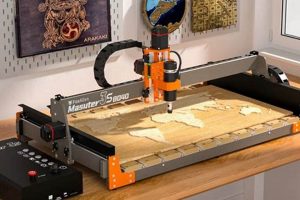
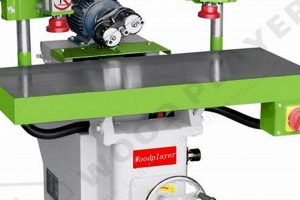
These devices are automated cutting tools used by enthusiasts and small-scale woodworkers. They employ computer numerical control (CNC) to precisely carve, engrave, and shape wood based on digital designs. Examples include compact desktop models suitable for small projects and larger, more robust machines capable of handling bigger stock and intricate designs.
The significance of these tools lies in their ability to produce accurate and repeatable results, significantly reducing manual labor and allowing for complex designs that would be difficult or impossible to achieve by hand. Historically, CNC technology was confined to industrial settings. However, advances in technology and decreasing costs have made it accessible to hobbyists, enabling greater creativity and precision in woodworking projects.
The capabilities described will be further explored in subsequent sections, including machine types, software considerations, material selection, and safety protocols, all vital for successful project completion.
Essential Operation Guidelines
Effective and safe utilization requires adherence to specific guidelines. The following tips are designed to optimize performance and longevity, while minimizing potential hazards.
Tip 1: Prioritize Safety Protocol: Always wear appropriate personal protective equipment, including safety glasses, hearing protection, and a dust mask. Verify the presence and correct functioning of emergency stop mechanisms.
Tip 2: Maintain Tooling Sharpness: Regularly inspect and sharpen cutting tools. Dull bits lead to increased strain on the motors, reduced accuracy, and potential material damage. A dedicated sharpening regimen is crucial.
Tip 3: Employ Appropriate Feeds and Speeds: Consult material-specific guidelines for optimal cutting parameters. Excessive feed rates can result in tool breakage or motor stalling, while insufficient speeds may lead to burning or inefficient cutting.
Tip 4: Secure Material Properly: Ensure the workpiece is rigidly clamped or secured to the machine bed. Vibration or movement during operation will compromise accuracy and potentially damage the cutter or material.
Tip 5: Implement Effective Dust Collection: Utilize a dedicated dust collection system to remove wood particles generated during the cutting process. Excessive dust accumulation can pose a fire hazard and impact machine performance.
Tip 6: Perform Regular Machine Calibration: Regularly calibrate the axes to maintain positional accuracy. This includes verifying and adjusting the steps per millimeter or inch settings, and ensuring proper alignment of the spindle.
Tip 7: Back Up Machine Settings: Save machine configurations and settings in a secure location. In the event of a system failure, this allows for rapid restoration of optimal performance parameters.
These guidelines are pivotal for maximizing efficiency, accuracy, and safety during operation. Strict adherence to these recommendations will contribute to producing high-quality results and extending the lifespan of the equipment.
The upcoming section will delve into the software options available for generating cutting paths and controlling the operation of these machines.
1. Accuracy
Accuracy is a cornerstone of operations involving these automated wood shaping devices. It represents the degree to which the produced part matches the dimensions and geometry specified in the digital design. Inaccurate output negates the advantages of automation, resulting in wasted material, time, and effort. Causes of inaccuracy can stem from several sources, including improperly calibrated axes, loose mechanical components, or inadequate workholding. The effect of these errors manifests as deviations from the intended design, rendering the finished product unusable or requiring significant rework. Consider a scenario where cabinet doors are manufactured using an incorrectly calibrated machine; the resulting doors might exhibit variations in size and shape, preventing proper fitting within the cabinet frame. The absence of precision translates directly into functional impairment.
The importance of accuracy extends beyond simple dimensional conformity. Complex designs, such as intricate carvings or interlocking joinery, rely on precise alignment and fitment. For example, creating a dovetail joint that requires a tight, seamless connection demands a high level of dimensional control. Furthermore, repeatability, a key advantage of CNC technology, is contingent upon accuracy. If the machine cannot consistently reproduce identical parts, the benefits of mass production are severely diminished. The implications of failing to achieve accuracy can lead to higher material costs, increased labor expenses, and a decline in product quality.
In conclusion, accuracy is an indispensable element of effectively using these woodworking tools. Its impact resonates throughout the entire production process, from initial design to final assembly. While challenges related to mechanical precision and calibration exist, understanding and addressing these factors are crucial for realizing the full potential of these tools and achieving consistently high-quality results. The ability to maintain accuracy directly correlates with project success and overall operational efficiency.
2. Material Compatibility

The selection of appropriate materials is critical for successful and efficient use of hobby-level computer numerical control (CNC) woodworking machines. The inherent properties of different wood species and composite materials significantly influence machining parameters, tool selection, and achievable surface finishes. Incompatibility can lead to damaged workpieces, broken tooling, and compromised machine performance.
- Wood Hardness and Density
Variations in wood hardness and density directly affect the required cutting forces and spindle speeds. Softer woods like pine are easily machined at higher speeds and lower feed rates, while hardwoods such as maple or oak necessitate slower speeds and more robust tooling to prevent excessive tool wear and burning. Examples include using high-speed steel (HSS) bits for softwoods and carbide-tipped bits for hardwoods to maximize tool life and cutting efficiency.
- Grain Direction and Orientation
The direction and orientation of wood grain impact the quality of the cut and the potential for tear-out. Cutting against the grain often results in splintering and rough edges, particularly with interlocked or irregular grain patterns. Strategies like climb milling or using specialized spiral upcut/downcut bits can minimize tear-out and produce cleaner edges. For instance, when creating raised panels, careful consideration of grain direction is necessary to prevent chipping during the profiling process.
- Material Stability and Moisture Content
Wood is hygroscopic, meaning its moisture content fluctuates with ambient humidity. This can cause warping, cupping, and dimensional changes, affecting the accuracy of CNC-machined parts. Air-dried or kiln-dried lumber with stable moisture content is preferred to minimize these issues. Composites like MDF and plywood offer greater dimensional stability and are less susceptible to moisture-related deformation, making them suitable for applications where precision is paramount.
- Abrasiveness and Resin Content
The abrasiveness and resin content of certain wood species can accelerate tool wear and necessitate frequent bit changes. For example, teak and some tropical hardwoods contain silica and other abrasive compounds that dull cutting edges quickly. Resinous woods like pine can also clog bits, requiring periodic cleaning to maintain cutting efficiency. The use of specialized coatings on cutting tools can help to reduce friction and extend tool life when machining these materials.
Therefore, a thorough understanding of material properties is essential for optimizing CNC woodworking processes. Appropriate material selection, coupled with careful consideration of machining parameters and tooling, ensures efficient and accurate production of high-quality woodworking projects using these machines. Ignoring these factors can result in suboptimal outcomes and increased costs.
3. Software Proficiency

Software proficiency is a foundational element for effective utilization of these woodworking tools. The connection between software competence and machine performance is direct and undeniable. The capabilities of these machines are ultimately limited by the user’s ability to generate accurate and efficient toolpaths through computer-aided design (CAD) and computer-aided manufacturing (CAM) software. Without adequate software skills, the potential of the machine remains largely untapped, leading to suboptimal results and wasted resources. For example, designing a complex 3D model for a decorative carving requires a solid understanding of CAD principles, while generating the corresponding toolpaths to execute the design necessitates proficiency in CAM software to optimize cutting parameters and minimize material waste.
The impact of software proficiency extends beyond the creation of toolpaths. It encompasses machine control, simulation, and troubleshooting. Many control software packages offer features such as real-time monitoring of machine parameters, error detection, and manual override capabilities. A user with limited software understanding may struggle to interpret error messages or make necessary adjustments during the machining process, potentially leading to machine damage or project failure. Furthermore, simulation tools within CAM software allow users to visualize the cutting process before execution, identifying potential collisions or inefficiencies. This proactive approach, facilitated by software proficiency, is crucial for preventing costly mistakes and optimizing the overall workflow. Consider a scenario where a user unfamiliar with CAM software fails to account for tool clearance; the resulting collision could damage the cutting tool, the workpiece, or even the machine itself.
In summary, software proficiency is not merely an ancillary skill but an integral component of successful woodworking operations involving these machines. From design and toolpath generation to machine control and troubleshooting, software expertise directly influences the accuracy, efficiency, and safety of the entire process. While the hardware provides the physical cutting capabilities, it is the software and the user’s proficiency with it that unlock the true potential of these advanced woodworking tools. The acquisition of software skills, through training or self-study, is a fundamental investment for any individual seeking to maximize the benefits of these machines.
4. Machine Maintenance

The longevity and reliable operation of hobby computer numerical control (CNC) woodworking machines are inextricably linked to consistent and thorough maintenance practices. Neglecting routine maintenance results in diminished accuracy, increased downtime, and ultimately, premature equipment failure. The intricate electromechanical systems inherent in these machines are susceptible to wear, contamination, and misalignment. A direct cause-and-effect relationship exists between adherence to a maintenance schedule and the sustained performance of the device. For example, failure to regularly lubricate linear rails and ball screws leads to increased friction, positional inaccuracies, and accelerated wear of these critical components. The importance of maintenance is paramount; it ensures the machine operates within its designed tolerances, producing consistently high-quality parts and avoiding costly repairs.
Practical application of maintenance procedures includes regular cleaning of the work area to prevent dust accumulation, which can interfere with sensor accuracy and airflow. The spindle, the heart of the cutting process, requires careful attention. Maintaining proper spindle bearing lubrication and regularly checking runout (the wobble of the cutting tool) are vital for extending its service life. Consider a scenario where a woodworking enthusiast neglects to clean the dust collection system. The resulting blockage reduces suction, leading to airborne dust, which can damage the machines electronics and create a hazardous working environment. Similarly, periodic inspection and tightening of belts and pulleys in the drive system are necessary to maintain proper torque transmission and prevent slippage. Software updates for the control system are also a form of maintenance, addressing bugs and improving functionality.
In summary, machine maintenance is not an optional add-on but an integral component of owning and operating a hobby CNC woodworking machine. Consistent attention to lubrication, cleaning, component inspection, and software updates translates directly into enhanced machine performance, reduced operational costs, and extended equipment lifespan. Challenges may include the time commitment required for maintenance and the potential for complex repairs requiring specialized knowledge. However, the proactive approach of consistent upkeep mitigates the risks associated with machine failure and ensures the realization of the machine’s full potential.
5. Safety Protocols
The operation of hobby CNC woodworking machines necessitates strict adherence to defined safety protocols due to the inherent risks associated with high-speed rotating cutting tools and automated machinery. Failure to implement comprehensive safety measures results in a heightened probability of injury, equipment damage, and project failure. The direct correlation between safety protocol adherence and operator well-being underscores its critical importance. For instance, neglecting to wear safety glasses while operating the machine exposes the operator to the potential of eye injuries from flying debris, while the absence of a properly functioning emergency stop mechanism can exacerbate the consequences of a machine malfunction. The significance of safety protocols as an integral component of hobby CNC woodworking machines cannot be overstated; they are not merely suggested guidelines but essential safeguards.
Practical application of safety protocols includes the consistent use of personal protective equipment (PPE) such as hearing protection to mitigate noise-induced hearing loss and dust masks to prevent respiratory irritation from fine wood particles. Implementing lockout/tagout procedures during maintenance or repair operations ensures the machine is de-energized, preventing accidental start-up. A real-life example highlights the practical significance: a woodworker who bypassed the safety interlocks on a machine suffered a severe hand injury when attempting to adjust the workpiece during operation. Furthermore, comprehensive training on safe operating procedures, machine-specific hazards, and emergency response protocols is paramount. Such training should cover topics such as proper workholding techniques, safe tool changing procedures, and the recognition of potential machine malfunctions. Regularly inspecting the machine for worn or damaged components, such as frayed power cords or loose fasteners, is also a critical aspect of preventative safety.
In summary, robust safety protocols are indispensable for the safe and effective operation of hobby CNC woodworking machines. The challenges associated with implementing and maintaining these protocols, such as the perceived inconvenience of wearing PPE or the time investment required for thorough training, are outweighed by the potential for serious injury or equipment damage. Prioritizing safety fosters a responsible and productive woodworking environment, ultimately enhancing the enjoyment and success of hobby-level CNC projects. Consistent application of safety measures ensures that the benefits of automated woodworking are realized without compromising operator well-being or equipment integrity.
Frequently Asked Questions
The following questions address common inquiries concerning hobby CNC woodworking machines. Each answer provides a factual and concise explanation to enhance understanding and inform decision-making.
Question 1: What is the typical cost associated with acquiring a hobby CNC woodworking machine?
The cost varies significantly based on machine size, capabilities, and features. Entry-level machines may range from several hundred to a few thousand dollars, while more advanced models can exceed this range substantially. Budget considerations should also include tooling, software, and material costs.
Question 2: What level of technical expertise is required to operate these machines effectively?
A fundamental understanding of computer-aided design (CAD) and computer-aided manufacturing (CAM) software is beneficial. Familiarity with basic woodworking principles and mechanical aptitude is also advantageous. Many resources, including online tutorials and training courses, are available for skill development.
Question 3: What types of wood are suitable for use with a hobby CNC woodworking machine?
A wide range of wood species, including softwoods and hardwoods, are compatible with these machines. Material selection should consider factors such as hardness, grain pattern, and moisture content. Additionally, composite materials such as MDF and plywood are frequently used due to their stability and consistency.
Question 4: What safety precautions are essential when operating a hobby CNC woodworking machine?
Wearing appropriate personal protective equipment (PPE), including safety glasses, hearing protection, and a dust mask, is crucial. Ensuring the machine is properly grounded and equipped with a functional emergency stop mechanism is also essential. Adherence to established safety protocols is paramount.
Question 5: What are the common maintenance requirements for these machines?
Regular cleaning, lubrication of moving parts, and inspection of belts, pulleys, and bearings are necessary. Tooling should be inspected and sharpened or replaced as needed. Periodic calibration of the machine’s axes is also recommended to maintain accuracy.
Question 6: What software options are available for controlling and programming hobby CNC woodworking machines?
Numerous CAD/CAM software packages cater to hobbyist and professional users. Popular options include Fusion 360, Vectric Aspire, and Easel. Selection should be based on individual needs and budget, considering factors such as ease of use, feature set, and compatibility with the machine’s control system.
These responses provide a general overview of key considerations related to these machines. Further research and consultation with experienced users are encouraged to ensure informed decision-making.
The next section will explore case studies illustrating the diverse applications of these tools in hobbyist woodworking projects.
Conclusion
This article has explored the functionality, operation, and considerations surrounding hobby CNC woodworking machines. The discussion emphasized the importance of accuracy, material compatibility, software proficiency, machine maintenance, and safety protocols as critical factors influencing successful utilization. The interplay between these elements determines the achievable precision, complexity, and efficiency of woodworking projects undertaken with these devices.
The information presented serves as a foundational resource for individuals considering the adoption of hobby CNC woodworking machines. Continued investigation into specific models, software options, and safety practices is encouraged to maximize the potential benefits and ensure responsible operation. The future trajectory of this technology suggests ongoing advancements in ease of use, affordability, and integration with design workflows, further expanding the accessibility and capabilities available to woodworking enthusiasts.