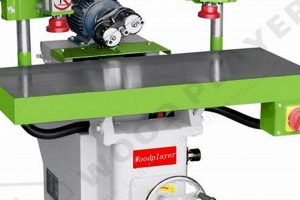
This specific method within woodworking utilizes specialized equipment designed to create precise holes along the horizontal plane of a workpiece. These machines employ rotating cutting tools to bore through wood, creating consistent and accurate openings, often for joinery purposes or hardware installation. An example would be the creation of mortises for mortise-and-tenon joints, or the drilling of pilot holes for dowels within a large cabinet panel.
This approach offers several advantages, including improved accuracy and repeatability when compared to manual methods. The precise control over hole depth, diameter, and alignment leads to stronger and more aesthetically pleasing finished products. Historically, this technique evolved to meet the demands of mass production and the need for consistent quality in furniture manufacturing and construction. The use of such equipment significantly increases efficiency and reduces the potential for errors associated with hand-drilling techniques, making it an essential process in professional woodworking environments.
The following sections will delve into the various types of equipment employed in this technique, discuss specific applications across different woodworking projects, and explore best practices for achieving optimal results. Furthermore, safety considerations and maintenance procedures will be addressed to ensure the longevity and reliable operation of the machinery.
Operational Tips
The following recommendations are intended to optimize the execution and outcomes when employing machinery for horizontal boring in woodworking applications. Adherence to these guidelines will enhance precision, safety, and the lifespan of equipment.
Tip 1: Material Preparation: Ensure workpieces are properly dimensioned and surfaced before initiating the boring process. Consistent material thickness and flatness are critical for achieving uniform hole depths and accurate alignment.
Tip 2: Cutter Selection: Employ the appropriate cutter type and size for the desired hole diameter and material. Dull or improperly sized cutters can lead to tear-out, inaccurate dimensions, and increased machine strain.
Tip 3: Secure Workpiece Clamping: Securely clamp the workpiece to the machine table to prevent movement during the boring operation. Insufficient clamping can result in inaccurate hole placement and potential injury.
Tip 4: Feed Rate Control: Maintain a consistent and appropriate feed rate throughout the boring process. Excessive feed rates can overload the cutter and motor, while insufficient rates can cause burning or polishing of the hole surface.
Tip 5: Depth Stop Adjustment: Accurately adjust the depth stop to ensure consistent hole depths. Precise depth control is crucial for joinery applications and hardware installation. Regularly check the depth stop calibration for accuracy.
Tip 6: Dust Extraction System Integration: Utilize a dust extraction system to effectively remove chips and debris generated during the boring operation. Adequate dust removal improves visibility, prevents chip build-up, and promotes a safer working environment.
Tip 7: Regular Machine Maintenance: Perform routine maintenance on the machinery, including lubrication, cleaning, and inspection of critical components. Regular maintenance ensures optimal performance and extends the lifespan of the equipment.
Tip 8: Pilot Hole Usage: When working with certain hardwoods or when creating deep holes, pre-drilling a pilot hole can reduce the risk of splintering and improve the accuracy of the final bore.
Implementation of these operational strategies will promote precision, efficiency, and safety within a woodworking context. Diligent application of these practices will lead to superior project outcomes and prolonged equipment functionality.
The subsequent section will provide an overview of safety measures when operating horizontal boring machinery, as well as explore preventative maintenance guidelines.
1. Precision Hole Placement
Precision hole placement represents a critical determinant in the efficacy of horizontal boring operations within woodworking. The accuracy with which holes are positioned directly impacts the structural integrity and aesthetic quality of assembled components. Inaccurate hole placement leads to misalignment, weakened joints, and visually unappealing results. For instance, in the construction of frame and panel doors, off-center dowel holes can cause racking and prevent proper alignment of the door within its frame. The use of horizontal boring machines, when calibrated and operated correctly, minimizes such errors through rigid fixturing and precise cutter control.
Horizontal boring machines facilitate precise hole placement through several mechanisms. The use of adjustable fences and stops allows for accurate positioning of the workpiece relative to the cutting tool. Digital readouts, often incorporated into modern machines, provide precise measurements and feedback, enabling repeatable and accurate hole positioning across multiple workpieces. Furthermore, the rigidity of the machine frame and the stability of the cutting head minimize vibration and deflection, contributing to improved hole accuracy. Applications span from high-volume furniture manufacturing, where consistency is paramount, to custom cabinet making, where even minor inaccuracies can compromise the entire project.
Achieving precision hole placement necessitates a comprehensive understanding of machine setup, cutter selection, and material properties. Challenges include compensating for wood movement, ensuring proper cutter alignment, and maintaining machine calibration. The effective integration of these factors results in a demonstrable improvement in the quality and longevity of woodworking projects relying on horizontal boring techniques. Moreover, consistent application of these principles leads to reduced material waste and increased efficiency in the woodworking process.
2. Consistent Bore Diameter

Maintaining a uniform bore diameter is paramount in woodworking applications employing horizontal boring machines. The precision of this diameter directly impacts the strength, stability, and aesthetic quality of joinery. Deviations from the intended diameter compromise the integrity of connections and impede proper assembly, often leading to structural weaknesses and visual defects.
- Joint Strength and Stability
Variations in bore diameter can compromise the integrity of joints relying on dowels, tenons, or other cylindrical connectors. Undersized bores may result in excessively tight fits, potentially causing stress fractures in the wood or connector. Oversized bores lead to loose fits, weakening the joint and reducing its ability to withstand load. Consistent bore diameter ensures optimal friction and adhesive surface area, maximizing joint strength and long-term stability. Examples include furniture construction, where precise dowel alignment and fit are critical for structural support, and cabinet making, where consistent tenon mortise joints determine the longevity of the assembled frame.
- Hardware Compatibility and Functionality
Many woodworking projects incorporate hardware components, such as hinges, screws, and threaded inserts, that require precisely sized bores for proper installation and functionality. Inconsistent bore diameters can prevent hardware from seating correctly, leading to alignment issues, stripped threads, or premature failure. For example, in cabinet construction, hinge installation necessitates accurately sized bores to ensure smooth door operation and proper alignment. Similarly, threaded inserts used for adjustable shelving require consistent bore diameters to maintain consistent holding power and prevent shelf collapse.
- Repeatability and Efficiency in Production
In production environments, consistent bore diameter is crucial for maintaining efficiency and minimizing waste. Inconsistencies necessitate time-consuming adjustments and rework, increasing labor costs and reducing throughput. Moreover, variations in bore diameter can lead to material wastage, as components may need to be scrapped due to unacceptable fit. Consistent bore diameters, achievable through proper machine setup and cutter maintenance, streamline the production process and ensure uniform product quality. A specific scenario is when manufacturing multiple identical chair components that need to align perfectly when assembled.
- Aesthetic Considerations
While often less emphasized than structural aspects, bore diameter consistency contributes to the overall aesthetic appeal of woodworking projects. When exposed, inconsistent bore diameters present a visually jarring effect, detracting from the quality and craftsmanship of the piece. This is particularly relevant when using plugs to conceal screw holes or when dowels are intentionally left exposed as a design element. Proper horizontal boring techniques minimize these inconsistencies, resulting in a more refined and professional appearance.
These interconnected facets highlight the essential role of consistent bore diameter in woodworking projects utilizing horizontal boring machines. Achieving and maintaining this consistency requires attention to machine calibration, cutter selection, and operational technique. The benefits extend beyond structural integrity to encompass improved efficiency, reduced waste, and enhanced aesthetic appeal, ultimately contributing to the production of higher-quality woodworking.
3. Workpiece Material Selection

The selection of appropriate workpiece material profoundly influences the outcome of horizontal boring machine operations in woodworking. The material’s inherent properties dictate the operational parameters required for successful boring, affecting cutter selection, feed rates, and overall precision. Ignoring these properties can lead to suboptimal results, characterized by tear-out, splintering, inaccurate hole dimensions, or even damage to the cutting tools and the machine itself. Hardwoods, for instance, necessitate slower feed rates and sharper cutters compared to softwoods, preventing burning and ensuring clean hole edges. The practical significance of understanding this relationship is evident in furniture manufacturing, where the choice between oak, maple, or pine directly impacts the boring process for joinery and hardware installation.
Further considerations include material density, grain orientation, and moisture content. Denser materials require greater cutting force, potentially necessitating the use of more robust boring machines and specialized cutters. Grain orientation influences the direction of splintering, requiring adjustments to feed direction or the implementation of backing boards to prevent damage. Elevated moisture content can cause swelling after boring, leading to inaccurate hole dimensions and compromised joint integrity. Engineered wood products, such as plywood and MDF, present unique challenges due to their layered construction and varying densities. Specialized cutters designed for these materials minimize delamination and ensure clean, consistent hole diameters. A common application is when constructing speaker boxes with MDF, precise hole dimensions and smooth edges are crucial for mounting speaker drivers and ensuring optimal acoustic performance.
In summary, the successful application of horizontal boring machine techniques hinges on a thorough understanding of the workpiece material’s characteristics. Material selection directly affects cutter selection, feed rate adjustments, and the need for specialized techniques to mitigate potential problems like tear-out or delamination. A proactive approach to material assessment, combined with appropriate operational adjustments, ensures optimal boring results, minimizing waste and maximizing the quality and longevity of the finished woodworking project. Addressing these challenges improves overall workflow and ensures consistency.
4. Machine Setup Rigidity

Machine setup rigidity is a foundational element for achieving precision and repeatability in horizontal boring within woodworking. Inadequate rigidity introduces unwanted vibrations and deflections, directly compromising the accuracy and consistency of the bored holes. This aspect encompasses not only the machine’s structural integrity but also the secure fixturing of the workpiece.
- Frame Stability and Dampening
The machine’s frame serves as the bedrock for all boring operations. A robust and properly leveled frame minimizes vibrations generated by the cutting process. Frame designs incorporating heavy gauge steel or cast iron offer superior dampening characteristics, absorbing vibrations rather than transmitting them to the workpiece or cutting head. For example, a poorly leveled machine frame on an uneven floor will introduce torsional stress, leading to inaccuracies in hole depth and alignment. The dampening ability of a frame determines the tolerance.
- Workpiece Clamping Systems
Securely clamping the workpiece is critical to prevent movement during the boring process. Clamping systems must exert sufficient force to hold the workpiece firmly against the machine table without inducing distortion. Pneumatic clamps, toggle clamps, and vacuum fixtures are commonly employed, each offering varying degrees of holding power and ease of use. For instance, when boring a long, slender component, multiple clamping points are required to prevent bowing or flexing under the cutter’s force. Poor clamping can lead to the workpiece moving and wasting material.
- Cutting Head Support and Alignment
The cutting head, housing the boring tool, must be rigidly supported and accurately aligned with the workpiece. Any play or misalignment in the cutting head support structure will translate directly into inaccuracies in hole placement and diameter. Precision bearings, adjustable gibs, and robust mounting hardware are essential for maintaining cutting head stability and alignment. As an illustration, a worn bearing in the cutting head spindle will result in excessive vibration, producing oversized or out-of-round holes, and diminishing accuracy.
- Tool Holding Mechanisms
The method by which the boring tool is held within the spindle significantly impacts rigidity. Collet systems, offering a concentric clamping force around the tool shank, generally provide superior rigidity compared to setscrew-type tool holders. The use of precision collets, matched to the specific tool shank diameter, minimizes runout and vibration. For instance, using an improperly sized collet can cause the tool to vibrate excessively, resulting in chatter marks on the hole surface and premature tool wear.
These interdependent elements of machine setup rigidity are paramount for achieving consistent and accurate results in horizontal boring machine woodworking. Ensuring a stable frame, secure clamping, properly aligned cutting head, and rigid tool holding mechanism directly translates into improved hole quality, reduced material waste, and enhanced overall efficiency. Failure to address these factors compromises precision, impacting the structural integrity and aesthetic appeal of the finished product.
5. Cutter Bit Integrity

The condition of the cutting tool directly dictates the quality and precision achievable in horizontal boring machine woodworking. Tool integrity encompasses sharpness, material composition, and structural soundness, each exerting a significant influence on the boring process and the resultant workpiece.
- Sharpness and Cutting Efficiency
A sharp cutting edge is essential for efficient material removal and clean hole formation. Dull cutters require increased force to penetrate the wood, leading to burning, tear-out, and inaccurate hole dimensions. Regularly sharpened or replaced cutters minimize these issues and ensure smooth, precise boring. For example, using a dull Forstner bit on hardwood results in excessive heat buildup, scorching the wood, and creating a rough, uneven hole. The sharpness directly affects efficiency and quality.
- Material Composition and Durability
The material from which the cutter is made determines its durability and resistance to wear. High-speed steel (HSS) cutters are suitable for general-purpose woodworking, while carbide-tipped cutters offer superior hardness and longevity, particularly when working with abrasive materials or hardwoods. Selecting a cutter with appropriate material composition ensures consistent performance over extended periods. As an illustration, when boring through engineered wood products containing adhesives, carbide-tipped cutters maintain their edge longer, reducing the frequency of sharpening or replacement.
- Structural Soundness and Geometry
The cutter’s structural integrity and precise geometry are critical for maintaining hole accuracy and preventing breakage. Bent, chipped, or otherwise damaged cutters produce inaccurate hole dimensions, increase the risk of kickback, and can potentially damage the boring machine. Regular inspection and maintenance of cutters are essential for identifying and addressing potential problems. For instance, a chipped brad-point bit will cause splintering and uneven hole edges, compromising the quality of the joint. Geometry dictates the cut precision.
- Runout and Vibration Reduction
Minimizing runout (eccentric rotation) and vibration during the boring process is crucial for achieving clean, accurate holes. Properly balanced cutters and secure tool holding mechanisms reduce runout and vibration, preventing chatter marks and ensuring smooth hole surfaces. The reduction of vibration on the cutting tool ensures higher-quality cuts and reduced wear on the machine over time. As a practical illustration, a cutter with excessive runout will produce an oversized or out-of-round hole, compromising the fit of dowels or other connecting hardware.
These aspects of cutter bit integrity are inextricably linked to the successful application of horizontal boring machine woodworking. Maintaining sharp, structurally sound cutters made from appropriate materials, and minimizing runout and vibration, directly translates into improved hole quality, reduced material waste, and enhanced operator safety. The relationship is very dependent.
6. Safe Operational Procedures

The implementation of rigorous safe operational procedures is not merely an adjunct to horizontal boring machine woodworking; it is an indispensable component directly impacting operator well-being, equipment longevity, and project quality. A causal relationship exists: failure to adhere to established safety protocols elevates the risk of severe injury, machine damage, and compromised workpiece integrity. Neglecting personal protective equipment (PPE), such as safety glasses and hearing protection, increases vulnerability to flying debris and excessive noise levels inherent in the boring process. Moreover, bypassing pre-operational machine inspections amplifies the likelihood of mechanical malfunctions, potentially leading to hazardous situations. As a concrete example, failure to properly secure the workpiece prior to initiating the boring cycle can result in the material being ejected from the machine with considerable force, causing injury to the operator and bystanders.
The practical significance of understanding this connection extends beyond immediate safety concerns. Adherence to safety protocols directly correlates with enhanced productivity and reduced operational costs. A proactive approach to safety minimizes the occurrence of accidents, thereby preventing costly downtime for medical treatment, equipment repairs, and incident investigations. Furthermore, a culture of safety fosters a more engaged and responsible workforce, leading to improved overall performance and a reduction in errors. For instance, implementing a lockout/tagout procedure during cutter changes prevents accidental machine startup, safeguarding the operator and preventing potential damage to the tooling. Regular maintenance and proper adjustment of safety guards and interlocks further reduce the risk of injury and machine malfunction. Clear and concise training on safe operational procedures, coupled with ongoing reinforcement, ensures that all personnel are adequately equipped to identify and mitigate potential hazards.
In summary, safe operational procedures are not discretionary guidelines but essential requirements for the effective and responsible application of horizontal boring machine woodworking. Prioritizing safety not only protects personnel from harm but also enhances productivity, reduces costs, and fosters a culture of excellence within the woodworking environment. Addressing the challenge of maintaining consistent adherence to safety protocols requires ongoing commitment, comprehensive training, and proactive risk management strategies. The integration of these practices is essential for ensuring the sustainable and ethical operation of horizontal boring machinery.
7. Dust Extraction Efficiency

Dust extraction efficiency is a critical consideration within horizontal boring machine woodworking, significantly influencing operator health, machine performance, and the overall quality of the finished product. Effective dust extraction mitigates health hazards associated with airborne wood particles, prevents machine malfunctions caused by dust accumulation, and enhances visibility for precise operation.
- Operator Health and Safety
Airborne wood dust, generated during horizontal boring operations, poses a significant health risk to woodworking personnel. Prolonged exposure can lead to respiratory problems, allergic reactions, and, in some cases, more severe health conditions. Effective dust extraction systems capture and remove these particles at the source, minimizing operator exposure and promoting a safer working environment. For example, continuous use of a horizontal boring machine without adequate dust extraction will result in a visible accumulation of dust on surfaces and in the air, increasing the risk of respiratory irritation and other health problems. Proper systems are essential for worker well-being.
- Machine Performance and Longevity
Accumulated wood dust can infiltrate critical machine components, such as bearings, motors, and electrical connections, leading to premature wear, reduced performance, and potential malfunctions. Effective dust extraction systems prevent this build-up, extending the lifespan of the machinery and reducing the need for costly repairs and replacements. A common scenario involves dust clogging the motor cooling vents, causing overheating and eventual motor failure. Efficient dust extraction systems, therefore, contribute directly to the economic sustainability of woodworking operations.
- Workpiece Quality and Precision
Uncontrolled wood dust can settle on the workpiece, obscuring markings and hindering precise alignment. This can lead to inaccurate hole placement and compromised joint integrity. Effective dust extraction systems maintain a clean working surface, ensuring clear visibility and facilitating accurate execution of the boring process. Specifically, when boring small diameter holes, dust accumulation can obscure the pilot mark, leading to misalignment. Efficient dust control leads to a better end-product.
- Compliance with Regulations
Many jurisdictions have regulations governing airborne dust levels in industrial environments. Implementing effective dust extraction systems helps woodworking businesses comply with these regulations, avoiding potential fines and legal liabilities. These systems demonstrate commitment to workplace safety and environmental responsibility. Consistent and accurate compliance with dust extraction efficiency is a key consideration for the use and maintenance of horizontal boring machines.
The four identified facets highlight the importance of dust extraction efficiency in woodworking. Implementation and maintenance of efficient dust extraction systems are essential for promoting operator safety, ensuring machine longevity, improving workpiece quality, and adhering to regulatory requirements. Horizontal boring machine woodworking requires an effective means of removing dust at all times.
Frequently Asked Questions
The following section addresses common queries regarding the use, application, and maintenance of horizontal boring machines in woodworking contexts. The information provided is intended to clarify operational procedures and address prevalent misconceptions.
Question 1: What distinguishes a horizontal boring machine from a vertical drill press in woodworking applications?
Horizontal boring machines specialize in creating holes parallel to the workpiece surface, whereas vertical drill presses create perpendicular holes. This distinction dictates their respective applications in joinery and hardware installation.
Question 2: What safety precautions are paramount when operating horizontal boring machinery?
Eye protection, hearing protection, and adherence to lockout/tagout procedures during cutter changes are critical for operator safety. Furthermore, ensuring proper workpiece clamping and maintaining machine guards are essential preventative measures.
Question 3: How does material selection influence the horizontal boring process?
Material density, grain orientation, and moisture content significantly impact cutter selection, feed rates, and the potential for tear-out or splintering. Hardwoods typically require slower feed rates and sharper cutters compared to softwoods.
Question 4: What maintenance procedures are essential for preserving the longevity and accuracy of a horizontal boring machine?
Regular lubrication of moving parts, inspection and replacement of worn bearings, and calibration of depth stops and fences are crucial maintenance tasks. Dust extraction systems should be cleaned regularly to prevent dust accumulation.
Question 5: How does cutter selection affect the quality of bored holes?
The cutter’s material composition, sharpness, and geometry directly influence hole accuracy, surface finish, and the potential for burning or tear-out. Carbide-tipped cutters are generally preferred for abrasive materials and hardwoods.
Question 6: What role does dust extraction play in horizontal boring machine woodworking?
Effective dust extraction minimizes operator exposure to airborne wood particles, prevents dust accumulation within the machine, and enhances visibility for precise operation, thereby contributing to a safer and more efficient working environment.
In summary, understanding the operational nuances and safety requirements associated with horizontal boring machines is crucial for achieving optimal results and ensuring a safe working environment. Regular maintenance and adherence to established procedures are essential for preserving the longevity and accuracy of the equipment.
The subsequent section will provide concluding remarks summarizing key considerations for effective horizontal boring machine woodworking.
Conclusion
This exploration of horizontal boring machine woodworking has underscored several critical aspects of the process. Precision, material considerations, machine maintenance, and adherence to safety protocols are paramount. The quality of output is directly proportional to the attention given to these factors. Ignoring these tenets increases the risk of operational inefficiencies, compromised structural integrity, and potential hazards.
Effective horizontal boring machine woodworking demands a commitment to informed practice. Continuous evaluation of techniques, investment in quality equipment, and a dedication to safety education will ensure that this method remains a valuable asset in the pursuit of woodworking excellence. This diligence will support future advancements and sustained progress within the field.