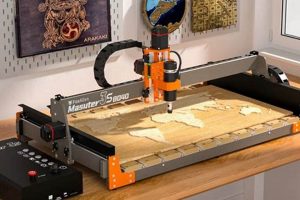
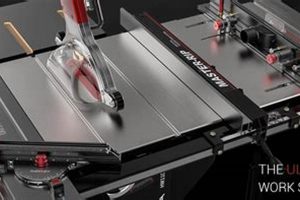
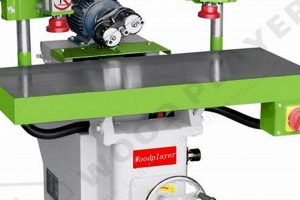
The proficient and safe operation of stationary power tools designed for shaping wood constitutes a critical skill set. This involves a comprehensive understanding of machine functionality, safety protocols, and techniques for achieving desired results. For example, a skilled operator can use a table saw to create precise cuts for joinery or employ a lathe to shape intricate designs with minimal material waste.
Acquiring expertise in this area enhances efficiency, precision, and safety in woodworking projects. Historically, reliance on hand tools demanded significant time and physical effort. Modern power tools, when used correctly, drastically reduce production time and increase the complexity of achievable designs. Furthermore, a deep understanding of these machines mitigates the risk of accidents, leading to a safer working environment and a higher quality finished product.
The following sections will delve into specific types of machinery, covering topics such as optimal setup, blade selection, safety measures, and techniques for producing accurate and consistent results. The goal is to provide a foundational understanding for individuals seeking to improve their woodworking skills and maximize the potential of their power tool investments.
Essential Guidance for Woodworking Machinery Proficiency
The following guidance serves to enhance operational skills and ensure safe and efficient use of stationary woodworking power tools. Adherence to these principles contributes to project quality and minimizes potential hazards.
Tip 1: Machine Calibration and Maintenance: Prior to operation, verify the accuracy of machine settings, including blade alignment and fence parallelism. Regular maintenance, such as lubrication and blade sharpening, is crucial for optimal performance and extending machine lifespan. For example, a misaligned table saw blade can lead to inaccurate cuts and increased risk of kickback.
Tip 2: Material Selection and Preparation: Understanding wood species and their characteristics is essential. Ensure that lumber is properly dried and free from defects such as knots or excessive warping before machining. Feeding warped lumber through a jointer, for example, can result in uneven surfaces and potential machine damage.
Tip 3: Personal Protective Equipment (PPE): Consistent use of appropriate PPE, including safety glasses, hearing protection, and dust masks, is non-negotiable. These measures protect against flying debris, excessive noise, and harmful dust inhalation. Eye injuries and hearing loss are preventable through diligent PPE adherence.
Tip 4: Proper Feed Rate and Control: Maintaining a consistent and controlled feed rate is crucial for achieving clean cuts and preventing machine stalling. Avoid forcing material through the machine, as this can lead to kickback or blade damage. A slow, steady feed rate on a router, for example, yields a cleaner edge than a rapid, uncontrolled pass.
Tip 5: Understanding Grain Direction: Paying attention to wood grain direction minimizes tear-out and ensures a smooth finish. Cutting against the grain can result in splintering, particularly with hardwoods. Careful observation and appropriate feed direction significantly impact the final product’s quality.
Tip 6: Secure Work Holding: Employing appropriate clamps, jigs, and fixtures is essential for securely holding workpieces during machining. This prevents movement and ensures accurate cuts. Failure to secure a workpiece properly on a drill press, for instance, can lead to bit wander and potential injury.
Tip 7: Machine-Specific Techniques: Each machine requires specific operational techniques. Research and understand the recommended methods for each tool to optimize performance and safety. Using a miter saw effectively, for example, requires understanding blade angle adjustments and proper workpiece support.
These guidelines emphasize the importance of meticulous preparation, consistent safety practices, and a thorough understanding of woodworking machinery. Applying these principles contributes to improved project outcomes and a safer, more efficient working environment.
The subsequent sections will explore advanced techniques and strategies for achieving mastery in woodworking, building upon the foundational principles outlined above.
1. Precision Machine Setup

Achieving proficiency in woodworking necessitates a foundational understanding of machine setup. The accuracy and repeatability of woodworking operations are directly contingent upon the meticulous calibration and configuration of the equipment. Precision Machine Setup is therefore indispensable for realizing the benefits associated with mastering woodworking machines.
- Blade Alignment and Tension
Proper alignment of blades on tools such as table saws and bandsaws is critical for accurate cuts and reduced material waste. Incorrect alignment can lead to binding, kickback, and uneven surfaces. Tension, particularly on bandsaw blades, impacts cut quality and blade longevity. For example, inadequate bandsaw blade tension results in wandering cuts and increased vibration, compromising the precision of the machine.
- Fence and Miter Gauge Calibration
The accuracy of fences and miter gauges on saws and routers directly affects the squareness and consistency of cuts. Precise calibration ensures that angles are true and that workpieces are consistently positioned. A misaligned miter gauge on a table saw can lead to inaccuracies in joinery, impacting the structural integrity and aesthetic appeal of the finished product.
- Depth Stop and Height Adjustment
Accurate setting of depth stops and height adjustments on tools like routers and drill presses is essential for consistent results in repetitive operations. Precision in these adjustments ensures uniform mortise depths, consistent dado widths, and accurate hole placement. For example, consistent mortise depths are critical for creating strong and reliable mortise and tenon joints, a staple in fine woodworking.
- Dust Collection System Integration
While not directly related to cut precision, an effective dust collection system is crucial for maintaining a clean and safe working environment, which in turn contributes to improved focus and accuracy. Accumulation of sawdust can obscure layout lines and machine settings, leading to errors. An integrated dust collection system therefore supports overall precision by improving visibility and reducing workplace hazards.
In conclusion, Precision Machine Setup is not merely a preliminary step but an integral component of mastering woodworking machines. By attending to these facets, woodworkers can maximize the potential of their equipment, minimize errors, and achieve consistently high-quality results. The investment in time and effort for accurate setup is recouped through improved efficiency, reduced material waste, and enhanced safety in woodworking operations.
2. Safety Protocol Adherence

Adherence to established safety protocols is a paramount component of proficient and responsible woodworking. The safe operation of machinery necessitates a thorough understanding and consistent application of prescribed guidelines. Mastering woodworking machines cannot be achieved without prioritizing and implementing these safety measures.
- Personal Protective Equipment (PPE) Usage
The consistent and correct utilization of PPE, including safety glasses, hearing protection, and respirators, mitigates the risk of injury from flying debris, excessive noise, and harmful dust inhalation. Neglecting PPE exposes operators to potential hazards that can result in permanent damage. For instance, the failure to wear safety glasses while operating a lathe can lead to severe eye injuries from ejected wood fragments.
- Machine Guarding and Operational Checks
Properly functioning machine guards and pre-operational checks are crucial for preventing accidental contact with moving parts. Guards should be in place and adjusted correctly before initiating any woodworking task. Inspecting machines for loose components, damaged cords, and blade integrity is vital for ensuring safe operation. Disabling or bypassing safety guards significantly increases the likelihood of accidents.
- Emergency Procedures and First Aid Knowledge
Familiarity with emergency shutdown procedures and basic first aid principles is essential for responding effectively in the event of an accident. Operators should know the location of emergency stop buttons and understand how to administer first aid for common woodworking injuries, such as cuts and splinters. The ability to react quickly and appropriately can minimize the severity of injuries and potentially save lives.
- Safe Work Practices and Material Handling
Implementing safe work practices, such as maintaining a clean and organized workspace, avoiding distractions, and using proper material handling techniques, reduces the risk of accidents caused by slips, trips, and falls. Lifting heavy lumber or manipulating large workpieces requires proper techniques to prevent back injuries. Maintaining focus and avoiding rushing can prevent mistakes that lead to accidents.
The interconnectedness of these safety facets reinforces the principle that mastering woodworking machines is inextricably linked to prioritizing safety protocol adherence. A skilled woodworker demonstrates not only proficiency in machine operation but also an unwavering commitment to maintaining a safe working environment. This commitment to safety is not merely a set of rules to be followed but a core component of professional woodworking practice, directly impacting the quality of work and the well-being of the operator.
3. Material Response Awareness

The interaction between woodworking machinery and the material being processed is a critical determinant of project success. Material Response Awarenessthe understanding of how different wood species and other materials react to cutting, shaping, and finishing processesdirectly influences the operator’s ability to achieve desired outcomes while minimizing waste and potential hazards. Failure to account for material properties can lead to tear-out, splintering, burning, and even kickback, compromising both the quality of the finished piece and the safety of the operator. Mastering woodworking machines necessitates a deep understanding of this interaction.
Different wood species exhibit varying densities, grain patterns, and moisture contents, each affecting their response to machining. Hardwoods, such as maple or oak, require slower feed rates and sharper blades to prevent burning and tear-out, whereas softwoods, such as pine or cedar, demand careful handling to avoid crushing or splintering. Grain direction plays a significant role; cutting against the grain can result in significant tear-out, particularly in woods with interlocked grain patterns. Furthermore, the moisture content of the wood influences its stability and workability. Machining excessively dry wood can lead to cracking, while working with green wood can result in warping and distortion as it dries. Selecting appropriate cutting speeds, blade geometries, and feed rates based on the material’s properties is essential for achieving clean, accurate cuts.
In conclusion, Material Response Awareness constitutes an indispensable component of proficient woodworking. This understanding empowers operators to make informed decisions regarding machine settings, tool selection, and cutting techniques, thereby maximizing efficiency, minimizing waste, and ensuring the safe and effective use of woodworking machinery. While achieving a comprehensive understanding requires experience and observation, the principles outlined above provide a solid foundation for developing this critical skill. This contributes directly to effectively mastering woodworking machines and achieving predictable, high-quality results.
4. Technique Refinement Continually

The pursuit of mastery in woodworking machine operation necessitates a sustained commitment to technique refinement. The relationship between continual improvement and proficient machine utilization is causal; consistent evaluation and adjustment of operational methods directly enhance precision, efficiency, and safety. Mastering woodworking machines is not a static achievement but an ongoing process of learning and adaptation. Ineffective or outdated techniques, if left unaddressed, perpetuate errors, increase material waste, and elevate the risk of accidents. The capacity for self-assessment and the willingness to adopt improved methodologies are therefore integral to the development of expertise.
Consider, for instance, the technique of featherboard usage on a table saw. An initial approach might involve a single featherboard positioned haphazardly. Through observation and analysis, a woodworker might recognize that two featherboards, strategically placed both before and after the blade, provide more consistent pressure and minimize blade chatter, leading to smoother, more accurate cuts. Another example is the progressive adjustment of router bit speed and feed rate based on wood density and grain direction. Over time, the operator develops an intuitive understanding of optimal settings, minimizing tear-out and maximizing cut quality. These iterative refinements, driven by consistent evaluation and experimentation, exemplify the practical application of continual technique enhancement.
Ultimately, the dedication to technique refinement represents a critical investment in skill development and professional growth. This commitment can present challenges, requiring the abandonment of familiar, albeit less effective, practices. However, the long-term benefits in terms of enhanced precision, increased efficiency, and improved safety far outweigh the initial discomfort of adopting new methodologies. This continuous improvement cycle is essential in becoming capable of mastering woodworking machines and should be integrated into every woodworking project.
5. Consistent Maintenance Schedules
The ability to operate woodworking machinery proficiently is inextricably linked to the implementation of consistent maintenance schedules. Neglecting regular upkeep diminishes performance, compromises safety, and shortens the lifespan of equipment. Mastering woodworking machines, therefore, necessitates a proactive approach to preventative maintenance, ensuring optimal operational readiness. A direct causal relationship exists: adherence to maintenance schedules results in enhanced precision, reduced downtime, and a safer working environment. For example, a dull saw blade, resulting from infrequent sharpening, requires increased force to achieve a cut, leading to potential kickback and inaccurate results. Regular sharpening, a component of a consistent maintenance schedule, mitigates this risk.
Beyond safety considerations, consistent maintenance directly impacts the quality of finished products. Calibrating fences, lubricating moving parts, and replacing worn components are essential for maintaining accuracy and repeatability. A misaligned jointer fence, resulting from inadequate maintenance, introduces inaccuracies in edge preparation, compounding errors in subsequent operations. Conversely, a well-maintained machine, with properly adjusted components, facilitates precise and efficient woodworking processes. The practical application extends to minimizing material waste; a machine operating within specified tolerances reduces the need for corrective cuts and adjustments, conserving both time and resources.
In summary, consistent maintenance schedules are not merely ancillary tasks but integral components of mastering woodworking machines. The proactive implementation of regular maintenance protocols enhances operational efficiency, ensures a safer working environment, and contributes directly to the production of high-quality woodworking projects. Overlooking these schedules can lead to diminished performance, increased risk, and ultimately, a failure to fully harness the potential of woodworking equipment. The discipline of maintaining equipment aligns directly with the pursuit of mastery in the field of woodworking.
Frequently Asked Questions
The following section addresses common inquiries concerning the proficient and safe operation of stationary woodworking power tools. The information provided aims to clarify prevalent misconceptions and provide practical guidance for woodworkers seeking to enhance their skills.
Question 1: What constitutes “mastering woodworking machines,” and why is it important?
The term refers to the attainment of a comprehensive understanding and practical expertise in the operation, maintenance, and safety protocols associated with stationary woodworking power tools. It is important because it enables woodworkers to achieve precise results, minimize waste, enhance efficiency, and maintain a safe working environment.
Question 2: Is extensive formal training required to achieve proficiency in operating woodworking machines?
While formal training is beneficial, it is not always mandatory. A combination of practical experience, self-directed learning through reputable resources (books, videos, workshops), and mentorship can be equally effective. The key is a commitment to safety, consistent practice, and a willingness to learn from mistakes.
Question 3: What are the most common safety hazards associated with woodworking machines, and how can they be mitigated?
Common hazards include kickback, blade contact, flying debris, and dust inhalation. Mitigation strategies involve using appropriate personal protective equipment (PPE), ensuring machine guards are in place and functioning correctly, implementing safe work practices, and utilizing effective dust collection systems.
Question 4: How does wood species affect the operation of woodworking machines?
Different wood species possess varying densities, grain patterns, and moisture contents, which significantly influence their machinability. Hardwoods typically require slower feed rates and sharper blades to prevent burning and tear-out, whereas softwoods necessitate careful handling to avoid crushing or splintering. Understanding these differences is crucial for optimizing machine settings and techniques.
Question 5: What is the significance of regular machine maintenance, and what tasks are involved?
Regular maintenance is essential for ensuring optimal performance, extending equipment lifespan, and maintaining safety. Maintenance tasks include blade sharpening, lubrication of moving parts, calibration of fences and gauges, inspection of power cords, and replacement of worn components.
Question 6: How can I improve my accuracy and precision when using woodworking machines?
Accuracy and precision can be improved through meticulous machine setup, consistent use of measuring tools, implementing secure work-holding methods, maintaining a controlled feed rate, and continuously refining operational techniques. Practice and attention to detail are paramount.
In summary, successfully navigating the landscape of woodworking machinery relies upon a balanced approach, incorporating safety consciousness, material knowledge, and a constant drive for refining skills through practice and the adherence to consistent maintenance schedules.
The subsequent section will transition into detailing a practical guide for evaluating woodworking projects and machinery.
Conclusion
This article has provided an overview of the essential elements required for achieving proficiency in operating stationary woodworking power tools. Key focal points encompassed precision machine setup, unwavering safety protocol adherence, a comprehensive understanding of material response, continual technique refinement, and the implementation of consistent maintenance schedules. Each of these components contributes directly to a woodworker’s ability to produce accurate, high-quality results while maintaining a safe and efficient working environment. Neglecting any one aspect undermines the overall process and increases the likelihood of errors, accidents, and equipment failure.
The ongoing pursuit of mastering woodworking machines demands diligence, discipline, and a commitment to continuous learning. The information presented serves as a foundation for further exploration and practical application. Further study, hands-on experience, and a dedication to upholding safety standards are crucial for realizing the full potential of woodworking machinery and achieving lasting success in the craft.