



These tools are engineered to securely hold wood pieces together during assembly, gluing, or finishing processes. Constructed from durable materials like steel or iron, they apply pressure to maintain a tight bond between components. An example would be using them to keep cabinet frames aligned while the adhesive cures, ensuring a robust and square structure.
Their significance lies in their ability to provide consistent and unwavering force, leading to more accurate and stronger joints than manual holding. This reliability is paramount in achieving professional-quality results and minimizing errors. Historically, simpler wooden versions existed, but the advent of metal variants brought increased strength, longevity, and adjustability, revolutionizing fabrication techniques.
The following sections will delve into different types of these devices, outlining their specific applications, advantages, and factors to consider when selecting the appropriate tool for a given woodworking task. Discussions will also address maintenance practices and safety protocols to ensure optimal performance and longevity.
Essential Usage Guidelines
Effective use contributes significantly to project quality and user safety. These guidelines emphasize proper selection, application, and maintenance to maximize the benefits derived from these tools.
Tip 1: Select the appropriate type. Consider the size and shape of the workpiece, as well as the necessary clamping force. Bar types are suitable for larger pieces, while spring varieties excel in lighter-duty applications.
Tip 2: Apply even pressure. Distribute the force uniformly to avoid warping or damaging the material. Use cauls or pads between the jaws and the wood to prevent indentations.
Tip 3: Avoid over-tightening. Excessive force can crush wood fibers and weaken joints. Tighten only to the point where the pieces are held securely in place.
Tip 4: Use multiple units for large projects. Distributing the clamping load across a larger area ensures consistent pressure and reduces the risk of misalignment.
Tip 5: Inspect regularly for damage. Check for bent bars, stripped threads, and worn pads. Replace any components that show signs of wear or damage to maintain optimal performance and prevent accidents.
Tip 6: Clean and lubricate threads. Regular cleaning removes debris and prevents corrosion, while lubrication ensures smooth operation and extends the lifespan of the tool.
Tip 7: Store properly when not in use. Store in a dry location to prevent rust and corrosion. Consider using a dedicated storage rack to keep them organized and prevent damage.
Adhering to these tips promotes safe and efficient usage, leading to improved project outcomes and prolonged tool life. Prioritizing correct application techniques protects both the user and the workpiece.
The next section will provide a detailed overview of various types, exploring their specific functionalities and intended applications in greater depth.
1. Clamping Force
Clamping force, the measure of pressure exerted by a metal woodworking clamp, is fundamentally linked to its effectiveness and the integrity of the joint it secures. The primary function of these clamps is to maintain consistent pressure on wood pieces during adhesion or mechanical fastening processes. Inadequate clamping force results in weak bonds, gaps, and potential structural failure. Excessive force, conversely, can damage the wood fibers, leading to indentations or even fracture. Therefore, a nuanced understanding of appropriate clamping force is critical for achieving desired outcomes.
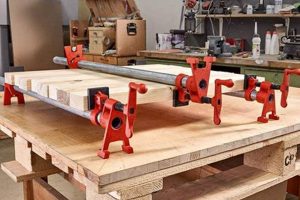
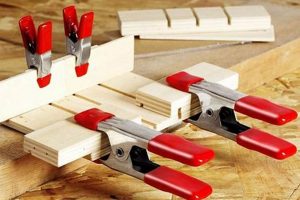
The required clamping force varies depending on several factors, including the type of wood, the adhesive used, and the size and geometry of the joint. Hardwoods typically require greater pressure than softwoods. Modern adhesives often specify minimum clamping pressure for optimal bond strength. A miter joint, for instance, may necessitate gentler, more distributed pressure than a mortise and tenon joint, which benefits from significant force to ensure a tight fit. Selecting the correct type of clamp, capable of delivering and sustaining the required force, is essential. For example, pipe clamps are favored for large assemblies needing substantial pressure, while spring clamps are more suited for lighter tasks where gentler force is sufficient.
In summary, clamping force is not merely a characteristic of metal woodworking clamps; it is an integral component dictating their efficacy. Correctly assessing the pressure needed for a specific task, and then selecting and applying clamps accordingly, directly impacts the strength, aesthetics, and longevity of the woodworking project. The challenge lies in achieving the right balance enough force to ensure a solid joint, but not so much that the material is compromised. This careful consideration is a hallmark of skilled woodworking practice.
2. Jaw Capacity
Jaw capacity, a critical specification of metal woodworking clamps, dictates the maximum thickness of material the tool can accommodate. This dimension directly influences the range of projects for which a particular clamp is suitable. An inadequate jaw capacity renders the clamp unusable for workpieces exceeding its limitations, leading to project delays or the necessity of acquiring additional tooling. The selection of clamps with appropriate jaw capacities is therefore paramount to efficient and effective woodworking.
Consider, for instance, the construction of a tabletop. If the assembled tabletop consists of multiple boards with a combined thickness of three inches, clamps with a jaw capacity of less than three inches would be ineffective. Conversely, utilizing overly large clamps for thin materials can be cumbersome and may not provide the necessary precision. Common woodworking tasks, such as cabinet making, furniture construction, and frame assembly, each demand different jaw capacities. Cabinet doors might require clamps with relatively small jaw capacities, while larger casework often necessitates clamps capable of spanning several inches or even feet. Spring clamps typically offer minimal jaw capacity, suitable for thin materials, while bar clamps and pipe clamps provide significantly greater capacities, enabling the clamping of substantial workpieces.
In summary, understanding jaw capacity is crucial for selecting the appropriate metal woodworking clamps. Matching the clamp’s capacity to the dimensions of the workpiece ensures efficient and accurate assembly. Ignoring this factor can lead to project limitations and compromise the quality of the final product. Consequently, assessing jaw capacity should be a primary consideration when evaluating clamps for any woodworking application, alongside other factors such as clamping force and material strength.
3. Material Strength
The operational effectiveness and longevity of woodworking clamps are inextricably linked to the material strength of their constituent components. The ability of a clamp to reliably apply and maintain pressure on wood pieces is directly dependent on the strength of its frame, jaws, and threaded mechanisms. Inadequate material strength results in deformation, breakage, and ultimately, the failure of the clamp, rendering it unable to perform its intended function. Consequently, the selection of clamps constructed from robust materials is paramount for ensuring project success and user safety. For example, clamps constructed from malleable cast iron are prone to bending under high stress, while those fashioned from hardened steel exhibit greater resistance to deformation, allowing for higher clamping forces and prolonged lifespan.
Consider the application of edge gluing multiple boards to form a wide panel. Substantial clamping force is required to ensure tight joints and prevent gaps. Clamps with weak frames will flex or buckle under this pressure, leading to uneven clamping and compromised glue lines. Conversely, clamps made from high-strength steel will maintain their shape, distributing force evenly and resulting in a superior bond. Similarly, the threads on screw-type clamps are subject to significant stress. If the material used for the threads is too soft, they will strip easily, rendering the clamp useless. Heat-treated steel threads, on the other hand, provide greater resistance to wear and tear, ensuring smooth and reliable operation over time. The selection of appropriate materials, coupled with proper manufacturing processes, is therefore critical for producing clamps that can withstand the rigors of woodworking.
In conclusion, material strength is not merely a desirable attribute of woodworking clamps; it is a fundamental requirement for their safe and effective operation. The choice of materials directly impacts the clamp’s ability to apply and maintain pressure, resist deformation, and withstand wear and tear. Understanding the connection between material strength and clamp performance enables woodworkers to make informed purchasing decisions, select the appropriate clamps for specific tasks, and ensure the longevity of their tools. Addressing this critical aspect results in improved project outcomes and enhanced safety in the workshop.
4. Thread Precision
Thread precision in woodworking clamps defines the accuracy and consistency of the screw mechanism, influencing the clamp’s ability to apply and maintain a specific clamping force. The quality of the threads directly affects the smoothness of operation, the degree of control over pressure application, and the overall durability of the tool. Clamps with poorly manufactured threads are prone to slippage, binding, and premature wear, compromising their effectiveness and potentially damaging the workpiece.
- Smoothness of Adjustment
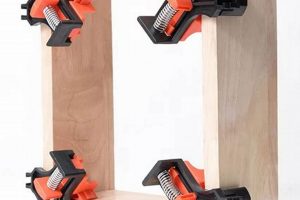
Fine, accurately cut threads allow for smooth and incremental adjustments of the clamping force. This is critical when working with delicate woods or intricate joints where excessive pressure can cause damage. A coarse or poorly formed thread requires greater force to turn and provides less granular control, increasing the risk of over-tightening. For example, adjusting a corner clamp on a delicate frame requires very fine control.
- Holding Power and Stability
Thread precision contributes directly to the clamp’s ability to maintain a consistent holding force over time. Threads with tight tolerances minimize backlash and prevent the screw from loosening under pressure. This stability is essential for glue-ups, where constant, unwavering pressure is required for a strong and lasting bond. Imagine clamping a long table top to allow for the glue to try. Imprecise threads would allow the clamping to weaken and not hold the wood securely.
- Durability and Lifespan
High-precision threads are typically manufactured from durable materials and are less susceptible to wear and damage. This translates to a longer lifespan for the clamp, as the threads are less likely to strip or bind over repeated use. Clamps with poorly formed threads, made from softer metals, are prone to premature failure, requiring frequent replacement. A screw failing is more costly to repair then simply replacing a clamp.
- Repeatability and Accuracy
Consistent thread pitch and form ensure that each rotation of the screw applies a predictable amount of force. This repeatability is valuable when performing repetitive tasks or when precise clamping force is required to avoid distorting the workpiece. This feature allows for more accurate pressure application, particularly essential when working with sensitive materials where consistency is crucial, like aligning multiple small pieces.
In summary, thread precision is a fundamental attribute of quality woodworking clamps. It influences not only the ease of use and the degree of control, but also the longevity and reliability of the tool. Selecting clamps with high-precision threads is therefore a worthwhile investment for any woodworker seeking to achieve consistent, high-quality results. The quality of the thread is essential for longevity, and smooth and consistent performance of metal working clamps.
5. Ergonomic Design
Ergonomic design, when applied to woodworking clamps, directly influences user comfort, reduces fatigue, and mitigates the risk of repetitive strain injuries. Clamps requiring excessive force to operate, or those with uncomfortable handles, increase the likelihood of musculoskeletal problems over extended use. A well-designed clamp minimizes strain on the hands, wrists, and arms, allowing for prolonged periods of focused work. For example, a clamp with a large, easily gripped handle reduces the force required to apply pressure, while a clamp with a quick-release mechanism minimizes repetitive hand movements. These features translate directly into increased productivity and a reduced risk of injury.
Furthermore, ergonomic considerations extend beyond the handle design to encompass the overall weight and balance of the clamp. Heavy, unbalanced clamps require greater effort to position and manipulate, leading to fatigue and decreased precision. Lightweight clamps, constructed from high-strength materials and thoughtfully designed to distribute weight evenly, are easier to handle and reduce the risk of accidental drops. The placement and design of the clamping jaws also contribute to ergonomic efficiency. Clamps with jaws that are easily adjustable and that provide a secure grip on the workpiece minimize the need for awkward postures and excessive force, resulting in smoother and more controlled clamping operations. For example, when gluing together narrow strips of wood for a table top, a clamp with an ergonomic design ensures correct alignment and comfortable use over an extended period.
In summary, ergonomic design is not merely a cosmetic enhancement to woodworking clamps, but a functional imperative. By minimizing physical strain, reducing fatigue, and improving user comfort, ergonomic clamps contribute to enhanced productivity, increased accuracy, and a safer working environment. The benefits of ergonomic design are particularly pronounced in professional woodworking settings, where clamps are used extensively for prolonged periods. Choosing ergonomically designed clamps, therefore, represents a practical investment in user well-being and operational efficiency.
6. Corrosion Resistance

Corrosion resistance is a critical attribute of metal woodworking clamps, directly affecting their lifespan and reliability. The primary function of these clamps involves sustained contact with wood, moisture, and adhesives, all of which can contribute to corrosive processes. Rust formation weakens the metal, reduces clamping force, and can ultimately render the tool unusable. Clamps operating in humid environments or frequently exposed to water-based glues are particularly susceptible to corrosion, necessitating careful consideration of material selection and protective coatings.
The selection of corrosion-resistant materials, such as stainless steel or specific alloys, mitigates the risk of rust formation. Furthermore, protective coatings like zinc plating, powder coating, or specialized paint formulations provide a barrier against moisture and chemicals. For example, a pipe clamp used regularly in a damp workshop will exhibit significantly longer service life if treated with a durable corrosion-resistant coating. Similarly, clamps used in proximity to acidic woods, such as oak, benefit from enhanced corrosion protection to prevent accelerated degradation. Regular cleaning and lubrication further enhance corrosion resistance by removing contaminants and creating a protective layer.
In summary, corrosion resistance is not merely a desirable feature of metal woodworking clamps; it is a fundamental requirement for ensuring their durability and functionality. Selection of appropriate materials, application of protective coatings, and implementation of proper maintenance practices are essential for maximizing the lifespan of these tools and preventing costly replacements. Neglecting corrosion resistance can lead to premature tool failure, compromised project quality, and increased operational expenses. Therefore, prioritizing corrosion protection is a sound investment for any woodworker seeking to maintain a reliable and efficient workshop.
Frequently Asked Questions Regarding Metal Woodworking Clamps
This section addresses common inquiries concerning the selection, application, and maintenance of these essential tools.
Question 1: What clamping force is appropriate for hardwoods versus softwoods?
Hardwoods, owing to their higher density, generally necessitate greater clamping force to ensure a tight bond. Softwoods, being more pliable, require less force to avoid fiber compression and potential damage. The adhesive manufacturer’s specifications should be consulted as a primary reference point.
Question 2: How can damage to the workpiece from clamps be prevented?
The strategic use of cauls protective layers of wood or other suitable material between the clamp jaws and the workpiece distributes pressure evenly, minimizing the risk of indentation or marking. Ensuring clean, smooth clamp surfaces further reduces the potential for surface imperfections.
Question 3: What constitutes proper maintenance for metal woodworking clamps?
Regular cleaning to remove glue residue and debris, followed by lubrication of threaded components with a suitable oil or grease, is essential. Periodic inspection for signs of wear or damage, such as bent bars or stripped threads, allows for timely repairs or replacements.
Question 4: What are the key differences between bar clamps and pipe clamps?
Bar clamps typically feature a fixed length and are suitable for general-purpose applications. Pipe clamps utilize standard threaded pipes, allowing for customizable lengths, particularly advantageous for large-scale projects. Pipe clamps, however, may be more prone to deflection under extreme pressure.
Question 5: How does thread pitch influence clamp performance?
Finer thread pitches offer greater control over clamping force and minimize the risk of over-tightening. Coarser threads allow for faster adjustments but may sacrifice precision. The optimal thread pitch depends on the specific application and the sensitivity of the workpiece.
Question 6: Is corrosion resistance a critical factor in clamp selection?
Yes. Exposure to moisture, adhesives, and certain wood species can accelerate corrosion, compromising the structural integrity of the clamp. Selecting clamps constructed from corrosion-resistant materials, or those treated with protective coatings, prolongs their lifespan and ensures reliable performance.
In summary, proper clamp selection, application, and maintenance practices contribute significantly to the quality and longevity of woodworking projects. Addressing these key areas ensures optimal performance and minimizes the risk of damage or injury.
The following section will address safety protocols and best practices for using these implements effectively.
Metal Woodworking Clamps
This exploration has emphasized the critical characteristics of metal woodworking clamps, encompassing clamping force, jaw capacity, material strength, thread precision, ergonomic design, and corrosion resistance. Each aspect contributes to the tool’s overall effectiveness and suitability for specific woodworking applications. Understanding these factors enables informed selection, promoting project integrity and user safety.
Continued adherence to best practices in clamp selection, usage, and maintenance remains paramount. By prioritizing quality tools and employing proper techniques, woodworkers can ensure optimal results and prolonged tool life, contributing to both the success of individual projects and the advancement of the craft itself. Diligence in these areas underscores a commitment to precision and lasting workmanship.
![Top-Rated: Best Quick Clamps for Woodworking Projects [2024] | Step-by-Step Guides, Tools & Inspiration to Build Beautiful Wooden Decor on a Budget](https://woodfromhome.com/wp-content/uploads/2026/04/th-264-300x200.jpg "Top-Rated: Best Quick Clamps for Woodworking Projects [2024] Step-by-Step Guides, Tools & Inspiration to Build Beautiful Wooden Decor on a Budget")