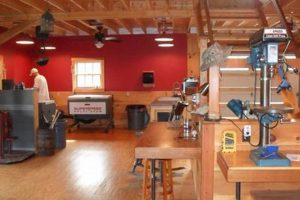
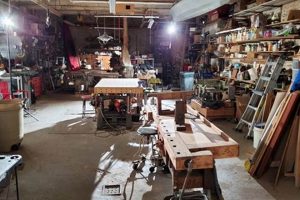
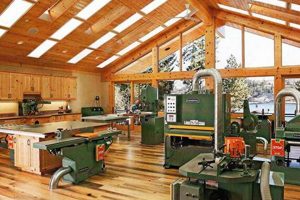
A compact workshop tailored for woodworking activities within the confines of a typical single-vehicle residential garage. This dedicated space is designed to accommodate essential tools, equipment, and materials necessary for constructing various wood-based projects. Example applications range from crafting small decorative items to assembling larger furniture pieces.
The creation of a functional and organized woodworking environment within limited spatial parameters offers significant advantages. It allows hobbyists and professionals to pursue their craft without requiring extensive real estate. Furthermore, it represents a cost-effective solution, repurposing existing structure. Historically, small workshops have been integral to craftsmanship and innovation, enabling skilled artisans to produce high-quality goods.
The following sections will delve into essential aspects of establishing such a workshop. Considerations include space optimization strategies, efficient tool storage solutions, dust management techniques, and power supply requirements. Additionally, safety protocols and equipment selection criteria will be addressed to ensure a productive and secure working environment.
Essential Guidance for the Compact Woodworking Space
Maximizing efficiency and safety within a limited area requires careful planning and execution. The following guidance addresses critical aspects of establishing a practical woodworking facility in a confined setting.
Tip 1: Prioritize Vertical Storage. Utilize wall-mounted shelves, cabinets, and pegboards to store tools and materials, freeing up valuable floor space. For example, construct a French cleat system to hang frequently used hand tools within easy reach.
Tip 2: Implement a Mobile Workstation. A rolling workbench equipped with locking casters provides flexibility and allows for reconfiguration of the workspace as needed. Incorporate drawers and shelves for integrated storage.
Tip 3: Optimize Dust Collection. A dedicated dust collection system is crucial for maintaining air quality and minimizing health risks. Consider a combination of a central dust collector and portable dust extractors for individual power tools.
Tip 4: Employ Multi-Purpose Tools. Where feasible, invest in equipment that performs multiple functions to reduce the overall footprint. A combination belt sander and disc sander is one such example.
Tip 5: Enhance Lighting. Adequate illumination is paramount for precision and safety. Supplement overhead lighting with task-specific lamps to eliminate shadows and improve visibility.
Tip 6: Soundproofing Considerations: Minimize noise pollution by incorporating sound-dampening materials. Acoustic panels on walls and ceiling can significantly reduce noise transmission to adjacent areas.
Tip 7: Optimize Power Distribution: Plan electrical outlets strategically to accommodate all tools and equipment. Consider installing a dedicated subpanel to prevent overloading circuits.
Adhering to these guidelines will create a functional and safe environment, enabling successful completion of woodworking projects within space-constrained quarters.
The subsequent section will explore further refinement and advanced practices for the serious woodworking enthusiast.
1. Space Optimization

Within the context of a single-vehicle residential garage repurposed as a woodworking shop, efficient space optimization becomes paramount. The limited square footage demands strategic planning and execution to accommodate tools, materials, and workflow, all while ensuring a safe and functional environment. The following points address key facets of optimizing space within such a constrained setting.
- Vertical Storage Solutions
Maximizing vertical space is crucial. Utilizing wall-mounted cabinets, shelves, and pegboards for tool and material storage frees up valuable floor area. A well-organized vertical system can significantly increase usable workspace. Examples include custom-built shelving units tailored to specific tool sizes and readily accessible material racks. This minimizes clutter and prevents obstruction of work zones.
- Mobile Workstations
Employing mobile workstations, such as rolling workbenches with integrated storage, provides flexibility. These units allow for easy reconfiguration of the workspace to suit the specific needs of a project. Locking casters ensure stability during use. A mobile miter saw stand, for instance, can be moved out of the way when not in use, creating extra space for assembly or finishing.
- Multi-Purpose Equipment
Selecting tools with multiple functionalities reduces the overall equipment footprint. Combination machines, such as a belt and disc sander or a planer/jointer, consolidate several operations into a single unit. While potentially representing a higher initial investment, these tools conserve valuable space and streamline workflow within the shop.
- Strategic Layout Design
Careful consideration of workflow patterns is essential. Arranging equipment and materials in a logical sequence minimizes unnecessary movement and maximizes efficiency. A dedicated assembly area, separate from the cutting area, prevents sawdust contamination and enhances organization. This strategic layout contributes to a safer and more productive working environment.
Effective space optimization transforms a potentially cramped garage into a functional and productive woodworking area. By employing vertical storage, mobile workstations, multi-purpose equipment, and a strategic layout, the limitations of the space can be mitigated, enabling the successful execution of a wide range of woodworking projects. The principles of organization and efficiency gained in a small workshop also translate to larger settings, fostering a culture of productivity and safety.
2. Tool Storage Solutions

Effective tool storage solutions are fundamentally intertwined with the viability of a woodworking shop housed within a single-vehicle garage. The spatial constraints inherent in such a setting necessitate meticulous organization and resourcefulness in tool management. Inadequate storage directly causes workspace clutter, impeding workflow and posing safety hazards. Conversely, well-planned storage solutions enhance efficiency, promote safety, and maximize the usable area of the limited space. Consider, for example, a wall-mounted French cleat system that allows for secure and accessible storage of hand tools, minimizing their footprint on the workbench and floor. This exemplifies how thoughtful storage becomes an indispensable component of a functional shop within limited square footage.
Practical application extends beyond mere organization. Tool storage can integrate directly into the workflow. A mobile tool cart, customized with specific drawers and compartments for commonly used instruments, allows for easy relocation of essential items to the point of use. Similarly, overhead storage racks can accommodate larger tools or materials that are not frequently accessed, keeping them out of the primary work area. Furthermore, clear labeling and systematic arrangement of tools ensure rapid retrieval and prevent time wasted searching for necessary implements. This streamlined organization enhances productivity and contributes to a more professional working environment.
In summary, tool storage solutions are not merely an accessory within a confined woodworking space, but rather a critical determinant of its functionality and safety. The challenges of limited area demand innovative and adaptable storage strategies. Prioritizing vertical storage, mobile solutions, and integrated organization transforms the garage from a cluttered repository into a productive and efficient workshop. This understanding underscores the practical significance of investing in appropriate storage solutions for maximizing the potential of a woodworking shop within a single-car garage.
3. Dust Management Systems
Effective dust management is not merely an ancillary consideration, but a critical necessity within a woodworking shop contained in a single-vehicle garage. The confined space amplifies the concentration of airborne particulate matter generated during woodworking processes, posing significant health and safety risks. Implementing a comprehensive dust management system mitigates these risks, contributing to a safer and more productive work environment.
- Source Capture Systems
Source capture systems focus on extracting dust directly at the point of generation. This includes attaching dust collection ports to power tools, such as sanders, saws, and routers, and connecting them to a central dust collector or portable dust extractor. Examples include using a flexible hose connected to a table saw’s blade guard or a dedicated shroud for a router. Implementing source capture significantly reduces the amount of airborne dust, minimizing inhalation hazards and surface accumulation.
- Air Filtration Units
Air filtration units, also known as ambient air cleaners, are designed to remove airborne dust particles from the overall shop environment. These units typically consist of a fan and a series of filters that capture fine dust particles. An air filtration unit is particularly useful for capturing dust that escapes source capture systems or is generated during manual operations, such as sanding. Its operation ensures a continuous reduction of airborne contaminants, improving air quality within the enclosed space.
- Dust Collection System Components
A comprehensive dust collection system comprises several essential components, including a dust collector, ductwork, blast gates, and collection bags or canisters. The dust collector provides the suction force to draw dust through the system. Ductwork transports the dust from the source to the collector. Blast gates control airflow to individual machines, maximizing suction where needed. Collection bags or canisters capture the collected dust for disposal. Proper selection and installation of these components are crucial for system effectiveness.
- Respiratory Protection
Even with a well-designed dust management system, respiratory protection remains an important safeguard. Wearing a properly fitted respirator or dust mask provides an additional layer of protection against fine dust particles that may escape capture. The type of respirator required depends on the level of dust exposure and the type of wood being worked. Consistent use of respiratory protection minimizes the risk of respiratory illnesses associated with wood dust inhalation.
The integration of these dust management strategies transforms a potentially hazardous single-car garage woodworking shop into a safer and more sustainable workspace. By prioritizing source capture, implementing air filtration, investing in appropriate dust collection components, and consistently using respiratory protection, the risks associated with wood dust exposure are significantly reduced, promoting the health and well-being of the woodworker.
4. Adequate Power Supply

The reliable provision of electrical power constitutes a foundational requirement for any functional woodworking shop, particularly within the confines of a single-vehicle garage. Insufficient or improperly managed power supply can lead to equipment malfunction, safety hazards, and ultimately, the inability to effectively perform woodworking tasks. The following discussion outlines key facets of ensuring adequate power within this context.
- Circuit Capacity and Load Calculation
Determining the existing circuit capacity of the garage is the first crucial step. This involves identifying the amperage rating of the breaker serving the garage circuit. Subsequently, a meticulous load calculation must be performed, accounting for the power requirements of all woodworking tools and equipment that may be operated simultaneously. This calculation must include both running wattage and starting wattage, as some tools require significantly more power during start-up. Failure to accurately assess and account for electrical load can result in tripped breakers, damaged equipment, and potential fire hazards. For instance, a table saw drawing 15 amps, a dust collector drawing 10 amps, and a shop light drawing 2 amps collectively require at least a 30 amp circuit, allowing for a safety margin.
- Dedicated Circuits and Subpanels
Depending on the load calculation, the installation of dedicated circuits or a subpanel may be necessary. Dedicated circuits provide individual power feeds for high-demand tools, preventing overloading of existing circuits. A subpanel, wired directly to the main electrical panel, allows for the addition of multiple dedicated circuits, providing a comprehensive solution for meeting the power demands of a fully equipped woodworking shop. The implementation of dedicated circuits or a subpanel requires the expertise of a qualified electrician to ensure compliance with electrical codes and safety regulations. A dedicated 20-amp circuit for a power tool like a router, for example, would prevent it from tripping the breaker if other equipment on the same circuit is also in use.
- Wiring and Outlets
The existing wiring within the garage may be inadequate to handle the increased power demands of woodworking equipment. Upgrading the wiring to a heavier gauge can improve safety and prevent voltage drops, which can damage tools. The placement and type of electrical outlets are also critical considerations. Multiple strategically placed outlets, including both standard 120-volt and 240-volt outlets (for larger equipment), provide convenient access to power throughout the shop. Ground fault circuit interrupter (GFCI) outlets are essential in damp or potentially wet environments to protect against electrical shock. For example, installing heavy-gauge wiring and multiple GFCI outlets around the perimeter of the garage ensures safe and convenient power access.
- Safety Measures and Electrical Codes
Adherence to all applicable electrical codes and safety regulations is paramount. This includes proper grounding of equipment, the use of surge protectors to protect against power surges, and regular inspection of wiring and outlets for damage. Understanding local electrical codes is crucial for ensuring that any electrical work is performed safely and legally. Furthermore, maintaining a clear understanding of safe electrical practices, such as never working on live circuits and using appropriate personal protective equipment, is essential for preventing electrical accidents. Prioritizing safety and compliance with electrical codes minimizes the risk of fire, electrical shock, and other hazards associated with inadequate or improperly managed power supply.
In conclusion, securing an adequate power supply for a single-vehicle garage woodworking shop demands meticulous planning, accurate load calculations, and adherence to safety regulations. The investment in appropriate wiring, dedicated circuits, and safety devices not only ensures the reliable operation of woodworking equipment but also safeguards against potential electrical hazards, creating a safe and productive environment for woodworking activities.
5. Safety Protocols

Within the confined setting of a single-vehicle garage converted into a woodworking shop, the strict adherence to comprehensive safety protocols transcends mere regulatory compliance and becomes a critical determinant of personal well-being and operational sustainability. The limited space amplifies inherent risks associated with woodworking machinery and materials, necessitating a proactive and disciplined approach to safety management.
- Personal Protective Equipment (PPE)
The consistent use of appropriate PPE constitutes the first line of defense against potential injuries. Safety glasses or face shields protect against flying debris. Hearing protection mitigates noise-induced hearing loss from loud machinery. Dust masks or respirators safeguard against inhalation of harmful wood dust. Proper footwear, such as steel-toed boots, protects against foot injuries. The selection and consistent use of task-specific PPE are non-negotiable within a compact woodworking environment. For example, operating a table saw without safety glasses exponentially increases the risk of eye injury from kickback.
- Machine Guarding and Operational Procedures
Ensuring that all woodworking machinery is equipped with functional guards and adhering to safe operational procedures minimizes the risk of accidents. Blade guards on saws, safety switches on jointers, and push sticks for feeding stock through machines are essential safety features. Regular inspection and maintenance of these guards are critical. Strict adherence to manufacturer’s operating instructions and established safe work practices prevents operator error and potential injuries. Disconnecting power tools before changing blades or making adjustments, for example, prevents accidental activation.
- Fire Safety and Prevention
Woodworking environments inherently present fire hazards due to the presence of combustible materials and potential ignition sources. Maintaining a clean and organized workspace minimizes the accumulation of sawdust and wood shavings, which are highly flammable. A readily accessible fire extinguisher rated for Class A fires (ordinary combustibles) is essential. Regular inspection of electrical wiring and outlets prevents electrical fires. The proper storage and disposal of flammable liquids, such as finishes and solvents, are crucial. For instance, storing oily rags in a sealed metal container prevents spontaneous combustion.
- Emergency Procedures and First Aid
Having well-defined emergency procedures and a readily available first-aid kit prepares individuals to respond effectively in the event of an accident. Posted emergency contact information and evacuation plans ensure a coordinated response. A comprehensive first-aid kit, stocked with supplies for treating cuts, burns, and eye injuries, enables immediate care. Training in basic first-aid and CPR equips individuals to provide assistance until professional medical help arrives. Knowing how to properly use a tourniquet, for example, could be life-saving in the event of a severe bleeding injury.
The comprehensive implementation of these safety protocols transforms the inherently risky environment of a single-vehicle garage woodworking shop into a safer and more manageable workspace. The commitment to PPE, machine guarding, fire safety, and emergency preparedness demonstrates a proactive approach to risk mitigation. This commitment protects the woodworker from potential injuries and promotes a sustainable and enjoyable woodworking experience within the constraints of a limited space.
6. Equipment Selection
Equipment selection for a woodworking shop housed within a single-car garage necessitates a strategic approach due to spatial limitations. The efficient use of available square footage demands prioritization of multi-functional tools and careful consideration of size and storage requirements.
- Multi-Purpose Machines
The integration of multi-purpose machines serves as a cornerstone of space optimization. A combination jointer/planer, for example, consolidates two essential woodworking operations into a single footprint. Similarly, a lathe with milling capabilities extends its utility beyond turning. Such selections, while potentially representing a higher initial investment, mitigate the need for multiple single-function tools, thereby conserving valuable space. The absence of this strategy frequently results in an overcrowded workspace, hindering both efficiency and safety.
- Compact and Benchtop Models
Where single-function tools are unavoidable, the selection of compact and benchtop models becomes imperative. A benchtop table saw, for instance, offers a reduced footprint compared to a full-size cabinet saw, allowing for efficient utilization of available workbench space. Similarly, a compact bandsaw or drill press can be strategically positioned without dominating the workspace. Such selections directly address the spatial constraints inherent in a single-car garage setting, maximizing usability.
- Mobility and Storage Considerations
The mobility of equipment contributes significantly to the adaptability of the workspace. Tools mounted on mobile bases, such as a rolling miter saw stand or a portable dust collector, can be easily repositioned or stored when not in use. Furthermore, integrated storage features within the tools themselves, such as onboard accessory storage or folding stands, enhance organizational efficiency. The implementation of mobility and storage solutions directly addresses the need for flexible space management within a confined area.
- Power Requirements and Electrical Capacity
The electrical capacity of the garage must be carefully considered when selecting woodworking equipment. High-powered machinery, such as large table saws or dust collection systems, may require dedicated circuits to prevent overloading existing wiring. Selecting tools with lower power consumption or opting for variable-speed models can mitigate electrical strain. Furthermore, the efficient placement of outlets and the use of power strips with overload protection are essential safety measures. Careful consideration of power requirements ensures both the safe and reliable operation of woodworking equipment.
The integration of these equipment selection strategies directly influences the viability of establishing a functional woodworking shop within a single-car garage. Prioritizing multi-functional tools, opting for compact models, incorporating mobility solutions, and managing power requirements effectively transforms a potentially limiting space into a productive woodworking environment.
7. Workflow Design
Effective workflow design is paramount within the spatially constrained environment of a single-vehicle garage woodworking shop. The efficient arrangement of tools, equipment, and materials directly impacts productivity, safety, and overall usability of the limited workspace. A poorly designed workflow can lead to wasted time, increased risk of accidents, and frustration, while a well-optimized workflow maximizes efficiency and minimizes unnecessary movement.
- Spatial Zoning and Task Segregation
Dividing the shop into distinct zones dedicated to specific tasks enhances efficiency. For example, a designated area for rough cutting, separate from an assembly zone, prevents sawdust contamination and streamlines the production process. This zoning strategy also minimizes the risk of cross-contamination between materials and tools, improving overall organization and workflow. A clear demarcation of space facilitates a logical progression through project stages, reducing the need for constant rearrangement and optimization of the limited area.
- Material Flow and Accessibility
Optimizing the flow of materials from storage to processing to assembly minimizes wasted movement and reduces the risk of material damage. Storing commonly used materials within easy reach of the primary work area and arranging tools in a logical sequence based on project needs improves accessibility and streamlines the workflow. This approach, for instance, might involve positioning lumber racks adjacent to the initial cutting station. Careful attention to material flow reduces unnecessary steps and enhances overall efficiency.
- Ergonomics and Operator Positioning
Designing the workflow to promote ergonomic principles reduces fatigue and minimizes the risk of repetitive strain injuries. Adjusting workbench heights to suit the operator, positioning tools within easy reach, and incorporating anti-fatigue mats can enhance comfort and reduce physical strain. Consideration of operator positioning relative to machinery and materials ensures safe and efficient execution of tasks. Ergonomic design maximizes productivity and promotes the long-term health and well-being of the woodworker.
- Cleaning and Waste Management Integration
Integrating cleaning and waste management into the workflow promotes a safer and more organized workspace. Strategically placed dust collection systems and waste receptacles facilitate efficient removal of sawdust and debris. Establishing a routine for regular cleanup prevents the accumulation of clutter and reduces the risk of accidents. A well-integrated cleaning and waste management system contributes to a more professional and efficient working environment.
These facets of workflow design are intrinsically linked within the context of a single-vehicle garage woodworking shop. Efficient spatial zoning, optimized material flow, ergonomic considerations, and integrated cleaning practices collectively transform a potentially cramped and inefficient space into a productive and safe working environment. Thoughtful attention to these details not only enhances the woodworking experience but also maximizes the output achievable within the limited confines of the shop.
Frequently Asked Questions
The following addresses prevalent inquiries regarding the establishment and operation of woodworking facilities within single-vehicle garages. The information provided aims to offer clarity and guidance for individuals considering such an undertaking.
Question 1: What are the primary limitations associated with operating a woodworking shop within a single-vehicle garage?
The most significant constraints involve limited space, restricted power availability, and potential noise pollution affecting neighboring residences. Careful planning and resource management are crucial to mitigate these limitations.
Question 2: Is it feasible to operate large woodworking machinery, such as a cabinet saw or industrial dust collector, within a standard single-car garage?
While technically possible, operating large machinery demands meticulous planning. Power requirements, spatial constraints, and noise mitigation strategies must be thoroughly addressed. Alternatives, such as compact or mobile equipment, may prove more practical.
Question 3: How can adequate dust collection be achieved in a small, enclosed woodworking space?
A combination of source capture systems (connecting dust collectors directly to power tools) and ambient air filtration units is recommended. Regular cleaning and the consistent use of respiratory protection are also essential.
Question 4: What safety precautions should be prioritized in a confined woodworking environment?
Emphasis should be placed on personal protective equipment (PPE), machine guarding, fire safety protocols, and readily accessible first-aid provisions. Space limitations amplify the potential consequences of accidents.
Question 5: How can vertical space be effectively utilized to maximize storage and workflow within a limited garage shop?
Wall-mounted shelving, cabinets, and pegboards offer efficient vertical storage solutions. Strategic placement of tools and materials based on frequency of use optimizes accessibility and minimizes clutter.
Question 6: Are there specific electrical considerations that must be addressed when setting up a woodworking shop in a garage?
Accurate load calculations, dedicated circuits for high-demand equipment, and adherence to electrical codes are paramount. Ground fault circuit interrupter (GFCI) outlets are essential in damp or potentially wet environments.
Effective management of space, power, and safety represents the cornerstone of a successful woodworking operation within a single-vehicle garage. Thorough planning and diligent execution are crucial for mitigating inherent limitations.
The following section will explore case studies of successful single-vehicle garage woodworking shops, providing practical insights and inspiration.
Conclusion
This exploration of the one car garage woodworking shop has illuminated critical factors influencing its viability and functionality. Space optimization, tool storage solutions, dust management systems, adequate power supply, rigorous safety protocols, strategic equipment selection, and efficient workflow design emerge as indispensable elements. The successful integration of these components determines the degree to which a confined garage can be transformed into a productive and safe woodworking environment.
The challenges inherent in establishing a one car garage woodworking shop necessitate careful planning and diligent execution. However, with a commitment to organization, safety, and resourcefulness, this limited space can serve as a viable platform for woodworking pursuits. It is imperative to consistently reassess and refine shop practices to maximize efficiency and mitigate potential hazards. The value of this space is not merely in its dimensions, but in the potential it holds for skilled craftsmanship and creative expression.