The utilization of mechanized instruments significantly enhances efficiency and precision in shaping wood. These implements, driven by electricity or compressed air, facilitate a wide range of tasks, from basic cutting and fastening to intricate carving and surface finishing. A common example includes a circular saw used to accurately dimension lumber.
Adoption of these instruments offers numerous advantages, including reduced labor time, improved accuracy, and the ability to execute complex designs that would be challenging or impossible with manual methods. Their evolution reflects technological advancements and responds to the growing demand for efficient and precise woodworking processes. Historically, woodworking relied solely on manual tools, but the introduction of powered options revolutionized the craft, enabling mass production and intricate designs.
The following sections will explore specific types of these mechanized instruments, examining their function, applications, and safety considerations. This analysis will provide a comprehensive overview of the essential tools utilized in modern woodworking practices.
Essential Guidelines for Utilizing Mechanized Woodworking Instruments
The following guidelines provide essential information for optimizing performance and ensuring safety when working with mechanized woodworking instruments. Proper application and maintenance are crucial for achieving desired results and preventing potential hazards.
Tip 1: Prioritize Safety Equipment: Always wear appropriate personal protective equipment, including safety glasses, hearing protection, and dust masks. These items minimize the risk of injury from debris, noise, and airborne particles. Example: Safety glasses are mandatory when operating a router to prevent wood chips from entering the eyes.
Tip 2: Maintain Sharp Cutting Edges: Dull blades and bits increase the risk of kickback and require more force, leading to fatigue and reduced control. Regularly sharpen or replace cutting tools to ensure optimal performance. Example: Sharpening a planer blade ensures a smooth, even surface without excessive effort.
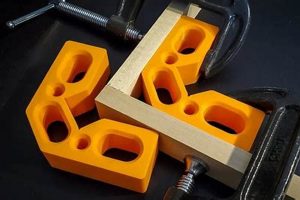
Tip 3: Secure Workpieces Properly: Securely clamp workpieces to prevent movement during operation. Unsecured materials can vibrate or shift, leading to inaccurate cuts and potential injury. Example: Using clamps to hold a board in place when using a jigsaw prevents the board from shifting and reduces the risk of blade binding.
Tip 4: Understand Grain Direction: Working with the grain of the wood minimizes tear-out and produces cleaner cuts. Examine the grain pattern before cutting and adjust the tool accordingly. Example: When routing a decorative edge, routing with the grain prevents splintering and ensures a smooth finish.
Tip 5: Practice Controlled Movements: Avoid forcing the tool through the material. Maintain a steady, controlled pace to ensure accurate cuts and prevent kickback. Example: When using a table saw, feed the wood smoothly and evenly, allowing the blade to do the work without pushing or pulling.
Tip 6: Regularly Inspect and Maintain Equipment: Check power cords, switches, and other components for damage before each use. Lubricate moving parts as needed and clean the tool after use to prevent buildup of sawdust and debris. Example: Regularly cleaning the dust collection system on a sander maintains optimal performance and prevents overheating.
Tip 7: Utilize Dust Collection Systems: Connect tools to a dust collector or vacuum to minimize airborne dust. Reducing dust improves visibility, prevents respiratory irritation, and creates a safer working environment. Example: A dust collector attached to a miter saw captures a significant amount of sawdust, reducing the risk of inhalation.
Adherence to these guidelines promotes safe and efficient utilization of mechanized woodworking instruments, contributing to high-quality results and a safer working environment. Consistent application of these principles is essential for all woodworking projects.
The subsequent sections will delve into advanced techniques and project-specific applications, building upon the foundational knowledge presented here.
1. Precision Cutting

Precision cutting, as a component of woodworking, hinges directly on the capabilities of mechanized instruments. The accuracy and consistency achievable with these instruments significantly surpass manual methods, enabling the creation of complex joinery and intricate designs. A table saw, for example, equipped with a calibrated fence and sharp blade, allows for repeated cuts with deviations of less than a millimeter. This level of precision is essential in cabinetmaking and furniture construction where tight-fitting joints are paramount to structural integrity and aesthetic appeal. The cause-and-effect relationship is evident: a high-quality instrument, properly maintained, directly results in accurate cuts, reducing material waste and assembly time.
Further examples illustrating this connection abound in woodworking practices. A CNC router, a highly specialized type of mechanized woodworking instrument, executes intricate patterns and shapes with computer-controlled precision, facilitating the production of identical components for mass manufacturing. Similarly, a laser cutter, increasingly utilized in model making and fine woodworking, achieves accuracy within fractions of a millimeter, allowing for the creation of delicate and complex designs impossible to realize with manual tools. The use of these instruments not only increases precision but also significantly reduces the time required for complex tasks, thus boosting productivity. The practical significance lies in the ability to create higher quality products in a shorter timeframe, leading to greater efficiency and profitability for woodworking businesses.
In summary, precision cutting in woodworking is intrinsically linked to the proper selection and utilization of mechanized instruments. The benefits of accuracy, repeatability, and efficiency are crucial for both small-scale and large-scale projects. However, challenges such as initial investment costs and the need for specialized training exist. Understanding the connection between precision and mechanized instrumentation is fundamental for any woodworker seeking to improve their craft and achieve professional results. This understanding reinforces the overall theme that strategic adoption of suitable tools enhances woodworking outcomes significantly.
2. Efficient Material Removal
Efficient material removal constitutes a core aspect of woodworking, significantly enhanced through the application of mechanized instruments. The ability to rapidly and precisely remove excess material directly impacts project completion time, material utilization, and the overall quality of the finished product.
- Planing and Thicknessing
Instruments such as planers and thicknessers are indispensable for achieving uniform stock dimensions. A benchtop planer, for instance, quickly reduces a rough-sawn board to a desired thickness, far exceeding the capabilities of manual planing. The consistent thicknessing ensures proper joinery and a professional finish. The implications extend to reduced labor costs and improved material yield, as accurate dimensioning minimizes waste.
- Shaping and Profiling
Routers, with their diverse range of bits, facilitate the creation of complex shapes and profiles. The ability to quickly and accurately replicate decorative edges or intricate patterns provides a significant advantage over manual carving methods. An example is the creation of cabinet door profiles, which, when executed with a router, ensures uniformity and repeatability across multiple doors. This precision contributes directly to the aesthetic consistency and overall value of the finished product.
- Sanding and Surface Preparation
Power sanders, including orbital and belt sanders, accelerate the process of smoothing and preparing wood surfaces for finishing. Manual sanding is a labor-intensive process, particularly when dealing with large surfaces or removing imperfections. An orbital sander efficiently removes scratches and imperfections, creating a smooth, even surface ready for stain or varnish. This efficiency reduces the time required for finishing and enhances the final appearance of the project.
- Waste Reduction and Material Optimization
Efficient material removal inherently contributes to waste reduction. Precise cutting and dimensioning minimize the amount of unusable material. The ability to accurately control the amount of material removed during planing, routing, or sanding translates directly into cost savings. Further, the effective use of dust collection systems connected to these instruments recovers usable material for other project such as wood filler and prevent from inhaling harmful substance. This optimization of material resources contributes to sustainable woodworking practices.
The diverse functionalities of mechanized woodworking instruments for material removal are thus integral to modern woodworking practices. Their contribution to efficiency, precision, and material optimization underscores their indispensability in both professional and hobbyist settings. However, the proper understanding of tool selection and their application is important to achieve the most effective result.
3. Fastening Capabilities

The integration of mechanized fastening instruments significantly enhances woodworking projects. These instruments drive screws, nails, or staples with greater speed and consistency than manual methods, thereby increasing structural integrity and reducing assembly time. A direct cause-and-effect relationship exists: the application of a power screwdriver, for instance, results in a more uniform screw depth and torque compared to manual driving, leading to stronger joints. This consistency is crucial in applications where structural integrity is paramount, such as furniture construction and cabinet making. The importance of these capabilities within the broader context of mechanized woodworking lies in their ability to streamline the assembly process while simultaneously improving the quality and durability of the finished product. Consider the construction of a wooden deck: the use of a pneumatic nail gun ensures that each nail is driven to the correct depth, creating a secure and stable surface. Without such tools, the project would be significantly more time-consuming and potentially less structurally sound. Understanding the role of mechanized fastening instruments is therefore essential for efficient and high-quality woodworking.
Practical applications extend across a wide range of woodworking projects. Framing nailers expedite the construction of walls and partitions. Cordless drills with adjustable clutch settings provide precise control over screw depth, preventing damage to the wood. Biscuit jointers create strong, aligned joints for tabletops and panels. Each instrument offers a unique advantage in terms of speed, precision, and joint strength. The choice of tool depends on the specific application, the type of material being used, and the desired aesthetic. For example, when assembling delicate wooden boxes, a micro pinner is employed to minimize visible nail holes, preserving the beauty of the wood. Conversely, when constructing outdoor furniture, stainless steel screws driven with a power screwdriver provide superior corrosion resistance and long-term durability. These examples illustrate the versatility of mechanized fastening instruments and their ability to adapt to diverse woodworking needs.
In summary, mechanized fastening capabilities represent a critical component of modern woodworking. The benefits of speed, precision, and consistency contribute to increased efficiency, improved structural integrity, and enhanced aesthetic appeal. However, challenges such as the initial investment cost and the learning curve associated with operating various instruments exist. Furthermore, safety considerations, including the proper use of safety glasses and hearing protection, are paramount. Despite these challenges, the integration of mechanized fastening instruments remains an indispensable aspect of contemporary woodworking practices, underscoring their importance in achieving professional-grade results.
4. Shaping and Molding

Shaping and molding, integral processes in woodworking, are significantly enhanced by the utilization of mechanized instruments. The precision and efficiency offered by these instruments facilitate the creation of complex forms and intricate details that would be difficult, if not impossible, to achieve with manual methods alone.
- Router Applications in Edge Profiling
Routers equipped with specialized bits enable the creation of decorative edges, intricate moldings, and precise grooves. A typical application involves shaping the edges of cabinet doors or table tops. The consistent depth and profile achievable with a router enhance the aesthetic appeal and perceived value of the finished product. This precision minimizes errors and reduces the amount of material waste associated with manual shaping.
- Spindle Molder Functionality
Spindle molders, also known as shapers, are used to create complex profiles on larger workpieces. These instruments utilize rotating cutters to remove material and shape the wood. Examples include the creation of intricate moldings for architectural details and furniture components. The ability to quickly reproduce identical profiles makes spindle molders indispensable for high-volume production runs. The consistent shapes achievable are key to aesthetics.
- Lathe Operations for Round Forms
Wood lathes are employed to create cylindrical and conical shapes. These instruments rotate the workpiece while the operator uses specialized tools to remove material and shape the wood. Examples include the turning of table legs, chair spindles, and decorative bowls. The precise control offered by a lathe enables the creation of smooth, symmetrical forms, while allowing for intricate detailing. The consistency is essential for creating matching items.
- Power Carving Tools for Relief Work
Power carving tools, such as rotary tools and angle grinders with carving attachments, facilitate the creation of detailed relief carvings and three-dimensional sculptures. These tools allow for rapid material removal and precise shaping, enabling woodworkers to execute complex designs with greater efficiency. Examples include the creation of decorative panels, sculptural elements, and intricate details on furniture components. Precision is increased, relative to manual carving.
The integration of these shaping and molding applications into woodworking workflows directly impacts project outcomes. By leveraging the capabilities of mechanized instruments, woodworkers can achieve higher levels of precision, efficiency, and aesthetic quality. This, in turn, increases the value and appeal of their finished products. Such tools impact workflows by improving precision, efficiency and quality, which increases value.
5. Surface Preparation

Effective surface preparation is intrinsically linked to the successful application of mechanized instruments in woodworking. The quality of the final finish, whether paint, stain, or varnish, depends heavily on the smoothness and uniformity of the underlying wood surface. Mechanized tools, such as power sanders, are essential for achieving this level of preparation efficiently and consistently. Without proper surface preparation using appropriate implements, imperfections such as scratches, dents, and unevenness become amplified, negatively impacting the aesthetic and functional aspects of the finished piece. A direct cause-and-effect relationship exists between the quality of surface preparation, facilitated by suitable tools, and the final appearance of the woodworking project. Surface preparation is a step that ensures optimal finishing.
Practical applications illustrate the significance of this connection. Consider the preparation of a tabletop for staining. If the surface is not properly sanded, the stain will penetrate unevenly, resulting in blotches and inconsistencies in color. Using an orbital sander with progressively finer grits ensures a smooth, uniform surface, allowing the stain to absorb evenly and produce a rich, consistent color. Similarly, when preparing wood for painting, power sanders efficiently remove imperfections and create a smooth base for the paint to adhere to, preventing chipping and peeling. Scraping with card scrapers is also used by woodworker. These examples demonstrate how correct surface preparation, achieved through the effective use of power tools, directly contributes to the overall quality and durability of woodworking projects.
In summary, surface preparation represents a crucial stage in woodworking, with mechanized tools playing a vital role in achieving optimal results. The benefits of efficient and consistent surface preparation extend to improved finish quality, enhanced aesthetic appeal, and increased durability. While manual methods can be employed, power tools significantly reduce labor time and ensure a higher level of consistency. The connection between appropriate surface preparation and successful woodworking outcomes underscores the importance of integrating these practices for a professional-grade finish. Woodworking outcomes are significantly enhanced through suitable tool usage.
6. Joint Creation
The creation of robust and precise joints stands as a cornerstone of woodworking, fundamentally influenced by the capabilities of mechanized instruments. These instruments facilitate the execution of complex joint designs with accuracy and repeatability unattainable through purely manual means. The employment of a router and dovetail jig, for instance, enables the creation of precise dovetail joints, essential for drawer construction and casework. The resulting strength and aesthetic appeal underscore the integral role of these joints in the overall structural integrity and visual quality of woodworking projects. The cause-and-effect is that when selecting appropriate joinery techniques the selection should consider the application tool.
Consider various joint applications. Mortise-and-tenon joints, often used in furniture construction, benefit from the precision offered by mortising machines or routers. The consistent dimensions achieved with these instruments ensure a snug fit and robust connection. Similarly, biscuit joints, commonly employed in panel alignment, are efficiently created using a biscuit joiner, resulting in accurate and aligned joints that enhance the overall stability of the structure. Miter joints, frequently utilized in picture frames and decorative moldings, can be precisely cut using a miter saw, leading to seamless and aesthetically pleasing corners. These examples serve to show that various types of joints need certain equipment.
In summation, the creation of strong, accurate joints is a critical aspect of woodworking, significantly enabled by mechanized instruments. The efficiency, precision, and repeatability offered by these instruments contribute to improved structural integrity, enhanced aesthetic appeal, and increased project longevity. While manual techniques remain relevant, the integration of mechanized tools into the joint-making process remains indispensable for achieving professional-grade results, highlighting the crucial intersection between technique and instrument. Joint creation remains an essential practice in woodworking as well as using tools.
7. Safety Mechanisms

The integration of safety mechanisms in power tools represents a critical consideration for woodworking. These mechanisms mitigate the inherent risks associated with high-speed cutting, shaping, and fastening operations, contributing directly to user safety and the prevention of workplace accidents. Their functionality depends on engineering designs and user adherence to safety protocols.
- Blade Guards and Shields
Blade guards and shields are physical barriers designed to prevent accidental contact with cutting surfaces. A common example is the retractable blade guard on a circular saw, which automatically covers the blade when the tool is not actively cutting. Their efficacy is linked to their proper installation and maintenance. Failure to utilize these guards increases the risk of severe lacerations and amputations.
- Emergency Stop Systems
Emergency stop systems provide a means to immediately halt the operation of a power tool in the event of an anomaly. These systems typically involve easily accessible switches or buttons that cut power to the motor. The presence of an emergency stop is particularly crucial on larger stationary tools like table saws and jointers. Their functionality can reduce the severity of injuries by quickly stopping the tool.
- Anti-Kickback Mechanisms
Anti-kickback mechanisms are designed to prevent the workpiece from being forcefully ejected during cutting operations. Table saws often incorporate pawls and riving knives that reduce the likelihood of kickback. These mechanisms function by preventing the wood from binding or pinching the blade. The engagement of these tools diminishes the likelihood of the operator losing control of the saw.
- Dust Collection and Respiratory Protection
Dust collection systems and respiratory protection devices mitigate the hazards associated with airborne wood dust. Prolonged exposure to wood dust can lead to respiratory illnesses and allergic reactions. Dust collectors attached to power tools capture fine particles at the source. Respiratory protection, such as dust masks or respirators, provides an additional layer of protection. These mechanisms collectively reduce the risk of occupational respiratory diseases.
The effective implementation of these safety mechanisms is imperative for minimizing risks associated with power tools in woodworking. Regular inspection, maintenance, and adherence to manufacturer’s guidelines are essential for ensuring their proper functionality. The integration of these safety measures underscores a commitment to safety.
Frequently Asked Questions
The following questions address common inquiries regarding the selection, utilization, and maintenance of power tools for woodworking. They aim to provide clarity and ensure safe and effective operation.
Question 1: What constitutes essential safety equipment when operating power tools for woodworking?
Essential safety equipment includes, but is not limited to, safety glasses, hearing protection, and dust masks or respirators. Safety glasses prevent eye injuries from flying debris, hearing protection mitigates noise-induced hearing loss, and respiratory protection minimizes the inhalation of harmful wood dust. The selection of appropriate personal protective equipment is critical for preventing accidents and long-term health issues.
Question 2: How frequently should blades and bits be sharpened for optimal performance and safety?
The frequency of sharpening depends on the type of material being cut, the tool’s usage, and the quality of the cutting edge. As a general guideline, blades and bits should be sharpened when they exhibit signs of dullness, such as increased effort required to make cuts, burning of the wood, or a rough finish. Regular inspection of cutting edges is crucial for maintaining performance and preventing kickback.
Question 3: What are the key considerations when selecting a power tool for a specific woodworking task?
Key considerations include the type of task, the size and type of wood being used, the required precision, and the user’s skill level. Smaller tools for detailed projects, larger instruments for dimensioning lumber. Assess the tools power, speed, and features to ensure it is appropriate for the intended application. The price point needs to be in your budget.
Question 4: How should workpieces be properly secured to prevent movement during operation?
Workpieces should be secured using clamps, vises, or other appropriate holding devices. The choice of securing method depends on the size and shape of the workpiece and the type of operation being performed. Clamps should be positioned to prevent the workpiece from shifting or vibrating during cutting, sanding, or shaping. Securing the workpiece ensures accurate results and minimizes the risk of accidents.
Question 5: What are the recommended practices for maintaining power tools in optimal working condition?
Recommended maintenance practices include regular cleaning, lubrication of moving parts, inspection of power cords and switches, and sharpening or replacement of blades and bits. Follow the manufacturer’s instructions for specific maintenance procedures. Proper maintenance extends the lifespan of power tools and ensures safe and efficient operation.
Question 6: How can dust collection systems improve the safety and efficiency of woodworking operations?
Dust collection systems remove airborne wood dust, improving visibility, reducing respiratory irritation, and preventing the buildup of dust on equipment and surfaces. A dust collector connected to a power tool captures fine particles at the source, creating a cleaner and healthier working environment. Efficient dust collection also minimizes the risk of fire and explosions associated with combustible wood dust.
Adhering to these guidelines and recommendations ensures safe and effective use of power tools, promoting quality in all woodworking projects.
The following sections will explore advanced techniques and project-specific applications, building upon the foundational knowledge presented here.
Concluding Remarks on Power Tools for Woodworking
This exploration has illuminated the indispensable role of power tools for woodworking across diverse facets of the craft. From enabling precision cutting and efficient material removal to facilitating complex joint creation and ensuring worker safety, these implements represent a fundamental element of modern woodworking practice. Strategic selection, proper maintenance, and consistent adherence to safety protocols remain paramount for maximizing the benefits and mitigating the inherent risks associated with their operation.
Continued advancements in power tool technology promise to further enhance woodworking efficiency and precision. Understanding these tools, their capabilities, and their limitations is essential for those seeking to produce high-quality work and contribute meaningfully to the evolving landscape of woodworking. The informed application of these instruments, paired with a steadfast commitment to safety, will shape the future of woodworking.