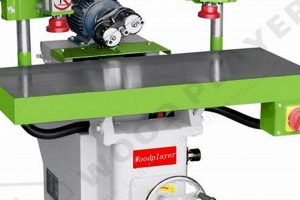
Equipment from Robland encompasses a range of combination woodworking machinery designed for tasks such as sawing, planing, jointing, and mortising. These machines are primarily targeted toward professional woodworkers and serious hobbyists requiring versatile and space-saving solutions. A typical example would be a Robland NXSD 410, which combines a saw, shaper, planer, and jointer into a single unit.
The value proposition of these combined machines resides in their ability to consolidate multiple functions into a single footprint, making them suitable for workshops with limited space. Their construction often emphasizes robust design and precision, which contributes to accuracy and longevity. Historically, Robland has established a reputation for producing reliable machinery, contributing to efficiency and productivity in woodworking operations.
The following sections will delve deeper into specific models, features, maintenance considerations, and common applications relevant to users seeking to enhance their woodworking capabilities. Subsequent discussion points will address factors to consider when selecting the most appropriate machine for a given workshop’s needs and operational requirements.
Essential Usage Tips
Effective operation of Robland woodworking machines requires adherence to safety protocols and an understanding of the equipment’s capabilities. The following tips are designed to optimize performance and ensure longevity.
Tip 1: Precise Setup and Calibration: Accurate adjustments are paramount. Verify the squareness of the fence to the saw blade, the coplanarity of jointer tables, and the alignment of shaper spindles. Use precision measuring tools and follow the manufacturer’s instructions meticulously.
Tip 2: Regular Blade and Cutter Maintenance: Sharp cutting edges are crucial for clean cuts and efficient material removal. Sharpen saw blades, planer knives, and shaper cutters regularly. Dull blades increase the load on the motor and reduce the quality of the finish.
Tip 3: Dust Collection Integration: Wood dust is a significant health hazard and can impair machine functionality. Implement a robust dust collection system connected to all dust ports on the machine. Regularly empty dust collectors to maintain optimal airflow.
Tip 4: Proper Lubrication: Moving parts require adequate lubrication to minimize friction and wear. Consult the machine’s manual for recommended lubricants and lubrication schedules. Neglecting lubrication can lead to premature component failure.
Tip 5: Feed Rate Control: Adjust feed rates according to the type of wood and the depth of cut. For hardwoods or large stock removal, reduce the feed rate to prevent motor overload and maintain consistent results.
Tip 6: Consistent Safety Practices: Always use appropriate safety gear, including eye protection, hearing protection, and dust masks. Ensure that safety guards are in place and functioning correctly before operating the machine. Never bypass safety devices.
Tip 7: Adherence to Manufacturer’s Guidelines: The owner’s manual is the primary resource for operation and maintenance. Consult it for specific instructions, troubleshooting tips, and recommended replacement parts. Deviating from manufacturer’s recommendations can void warranties and compromise safety.
Consistent application of these practices promotes safe and efficient operation, contributing to both the quality of finished work and the extended lifespan of the equipment.
The subsequent section will address common troubleshooting scenarios and advanced techniques for maximizing the utility of these woodworking machines.
1. Versatile Combination Machinery

Robland woodworking machines are fundamentally defined by their versatile combination machinery design. This characteristic is not merely an added feature; it represents the core engineering principle that dictates the form and function of the equipment. The integration of multiple woodworking operations typically sawing, planing, jointing, shaping, and sometimes mortising into a single unit directly addresses the needs of workshops where space is a constraint. This versatility allows for a streamlined workflow, minimizing setup time between operations and improving overall efficiency. A direct consequence of this multi-functionality is a reduction in the capital expenditure required to equip a workshop with comparable individual machines.
The practical significance of understanding this connection lies in recognizing the trade-offs involved. While Robland machines offer space-saving convenience, their performance in any single operation may not always match that of a dedicated, specialized machine. For instance, while the saw table on a combination machine is functional, a dedicated cabinet saw might offer superior precision and dust collection. The ability to quickly switch between functions, however, compensates for some of these limitations in many applications. Furthermore, the design requires careful maintenance and setup procedures to ensure accuracy across all operations. A misaligned jointer bed, for example, will impact the quality of all subsequent operations.
In summary, the link between Robland machines and versatile combination machinery is intrinsic and causal. The inherent benefits of space efficiency and multi-functionality are balanced by the need for careful setup and potential compromises in the absolute performance of individual operations. Understanding this relationship is crucial for making informed purchasing decisions and maximizing the utility of Robland equipment within the context of specific workshop requirements and woodworking projects.
2. Compact Footprint Solution

The association between Robland woodworking machines and the concept of a compact footprint solution is direct and fundamental. Robland machines, by design, integrate multiple woodworking functions into a single unit, inherently minimizing the required floor space compared to acquiring individual machines for each task. This design consideration addresses the practical challenges faced by workshops with limited square footage, whether due to spatial constraints or economic factors associated with larger facilities. The integration reduces clutter and optimizes workflow within the available area. For example, a small professional cabinet shop or a serious hobbyist’s garage workshop can perform sawing, planing, jointing, and shaping operations using a single Robland machine, effectively utilizing space that would otherwise require four or more separate pieces of equipment.
The importance of a compact footprint extends beyond mere space savings. It influences operational efficiency and safety. A more condensed workspace reduces unnecessary movement, minimizing the risk of accidents and streamlining the production process. Consider a scenario where a woodworker needs to transition from planing to sawing; with a Robland machine, this transition occurs within a confined area, eliminating the need to move material across the workshop. This enhanced efficiency translates to increased productivity and reduced labor costs. Furthermore, the consolidation of dust collection points into a single machine simplifies dust management, contributing to a cleaner and healthier working environment. The initial investment in a multi-functional Robland machine can prove more economical than acquiring and maintaining several individual units, particularly when factoring in the cost of additional floor space.
In conclusion, the compact footprint offered by Robland woodworking machines is not simply a desirable attribute; it is a core design principle that directly impacts operational efficiency, workspace safety, and overall cost-effectiveness. The space-saving nature of these machines addresses critical limitations in many workshops, enabling woodworkers to maximize their output within a confined area. Understanding the link between Robland machinery and spatial optimization is crucial for making informed decisions about workshop layout and equipment selection, ultimately influencing the productivity and profitability of woodworking operations.
3. Precision Engineering

Precision engineering constitutes a foundational element in the design and manufacture of Robland woodworking machines. This emphasis on accuracy is not merely an aesthetic consideration; it directly impacts the operational efficiency, workpiece quality, and overall longevity of the equipment. The close tolerances maintained in the machining of critical components, such as saw arbors, planer beds, and shaper spindles, are fundamental to achieving consistent and repeatable results. For example, a planer with inaccurately aligned cutterheads will invariably produce uneven surfaces, requiring additional processing and increasing material waste. Similarly, a saw with excessive arbor runout will generate inaccurate cuts, compromising the integrity of joinery.
The application of precision engineering principles extends beyond the initial manufacturing process. It necessitates the use of high-quality materials and stringent quality control procedures throughout the production cycle. Robland machines typically incorporate cast iron components, known for their dimensional stability and vibration damping characteristics, further contributing to accuracy. The design considerations must also account for thermal expansion and contraction, ensuring that machine settings remain consistent under varying environmental conditions. Precision-engineered adjustment mechanisms, such as micro-adjustable fences and depth stops, provide users with the means to fine-tune machine settings and achieve exacting results. A practical demonstration of this is evident in the ability to consistently produce identical tenons on a mortise and tenon joint, where even slight deviations can compromise the structural integrity of the assembly.
In summary, the link between precision engineering and Robland woodworking machines is inextricably tied to performance and reliability. The commitment to accurate machining, high-quality materials, and robust quality control translates directly into enhanced workpiece quality, improved operational efficiency, and extended machine lifespan. While the initial cost of precision-engineered equipment may be higher, the long-term benefits in terms of reduced waste, improved accuracy, and minimized downtime typically outweigh the upfront investment. Understanding this relationship is crucial for making informed purchasing decisions and maximizing the potential of Robland woodworking equipment in professional and demanding woodworking applications.
4. Robust Construction Quality
Robust construction quality is a defining characteristic of Robland woodworking machines and a significant factor in their performance and longevity. The design philosophy emphasizes the use of heavy-duty materials, particularly cast iron, in critical components such as machine tables, frames, and fences. This construction approach provides substantial mass, which dampens vibrations and enhances stability during operation. The result is improved accuracy in cutting, planing, and shaping operations, minimizing the potential for workpiece defects. A machine constructed with lesser materials may flex or vibrate excessively, leading to inaccuracies and reduced workpiece quality. The direct effect of robust construction is improved accuracy and a higher quality finished product.
The importance of robust construction extends to the machine’s lifespan and maintenance requirements. Robland machines are designed to withstand the rigors of daily use in professional woodworking environments. The use of durable materials and precision machining reduces the likelihood of component failure and minimizes the need for frequent repairs. For instance, the cast iron tables are less prone to warping or distortion compared to tables made from thinner steel or aluminum. This durability translates to lower operating costs over the machine’s lifespan and reduces the need for downtime. This durability makes them a worthwhile investment for any serious woodworking shop.
In summary, the robust construction quality of Robland woodworking machines directly correlates with their accuracy, durability, and long-term performance. The investment in heavy-duty materials and precision engineering provides users with equipment capable of delivering consistent results and enduring demanding operational conditions. While robust construction contributes to a higher initial cost, the benefits in terms of reduced maintenance, improved accuracy, and extended lifespan make it a worthwhile investment for woodworking professionals and serious hobbyists alike. Neglecting to consider the construction quality during machine selection can lead to increased maintenance costs, reduced accuracy, and a shorter machine lifespan.
5. Operator Safety Features

Operator safety features form an integral component of Robland woodworking machines, directly influencing user well-being and mitigating the risk of workplace accidents. The inclusion of such features is not merely a regulatory compliance issue but a fundamental design consideration reflecting an understanding of the potential hazards associated with woodworking machinery. These features function as engineered safeguards, designed to prevent or minimize injury during operation. For instance, blade guards on saws and shapers shield operators from direct contact with moving cutting tools, reducing the likelihood of lacerations or amputations. Similarly, emergency stop buttons provide a readily accessible means to halt machine operation in the event of an unforeseen incident, preventing further escalation of a dangerous situation.
The effectiveness of operator safety features relies not only on their physical presence but also on their proper implementation and consistent use. Many Robland machines incorporate interlock systems that prevent operation unless safety guards are correctly positioned. This design feature ensures that operators cannot bypass safety mechanisms inadvertently. Furthermore, clearly visible warning labels and comprehensive operator manuals provide essential information regarding potential hazards and safe operating procedures. Consider the example of a jointer equipped with a bridge guard; this guard prevents the operator’s hands from coming into contact with the rotating cutterhead during planing operations. Consistent use of this guard, coupled with adherence to recommended operating practices, significantly reduces the risk of injury. However, defeating or removing safety features renders the machine inherently dangerous and negates the intended protection.
In conclusion, the presence and proper utilization of operator safety features are essential for safe operation of Robland woodworking machines. These features represent a proactive approach to risk mitigation, designed to protect operators from potential hazards. While safety features provide a valuable layer of protection, they do not eliminate the need for diligent adherence to safe operating practices and comprehensive operator training. Understanding the function and limitations of these features is crucial for promoting a safe and productive woodworking environment. Continual emphasis on safety awareness and responsible machine operation is paramount in preventing accidents and ensuring the well-being of woodworking professionals and hobbyists alike.
6. Maintenance Requirements

The longevity and operational effectiveness of Robland woodworking machines are intrinsically linked to adherence to a comprehensive maintenance schedule. Regular upkeep is not merely preventative; it is essential for sustaining accuracy, minimizing downtime, and ensuring operator safety. Neglecting maintenance protocols can lead to premature component failure, compromised workpiece quality, and potentially hazardous operating conditions.
- Lubrication of Moving Parts
Consistent lubrication of bearings, lead screws, and other moving components is crucial for reducing friction and preventing wear. Insufficient lubrication can result in increased power consumption, overheating, and eventual seizure of moving parts. Manufacturers typically specify recommended lubricants and lubrication intervals; deviations from these recommendations can shorten component lifespan and impact machine performance. For example, failure to lubricate the saw arbor bearings can lead to excessive runout, compromising cut quality and potentially damaging the saw motor.
- Blade and Cutter Maintenance
Sharp cutting tools are fundamental for efficient and accurate woodworking. Regular sharpening of saw blades, planer knives, and shaper cutters is essential for maintaining optimal performance. Dull cutting edges increase the load on the motor, generate excessive heat, and produce rough, splintered surfaces. Proper blade and cutter maintenance includes not only sharpening but also cleaning and inspection for damage. Bent or cracked blades and cutters should be replaced immediately to prevent potential injury.
- Dust Collection System Maintenance
Effective dust collection is critical for maintaining a clean and safe working environment and for preventing dust buildup within the machine itself. Clogged dust collection ports and filters can reduce airflow, leading to overheating and potential motor damage. Regular cleaning and inspection of dust collection systems are necessary to ensure optimal performance. Furthermore, dust accumulation on machine components can interfere with accurate adjustments and increase the risk of fire. Emptying dust collectors frequently will help maintain the airflow needed for efficient material removal.
- Calibration and Adjustment
Woodworking machines require periodic calibration and adjustment to maintain accuracy and alignment. Over time, vibration and normal wear can cause components to shift out of alignment, leading to inaccurate cuts and reduced workpiece quality. Regular checks of table flatness, fence squareness, and spindle alignment are essential. Micro-adjustments should be made as necessary to compensate for any deviations from factory specifications. Neglecting these adjustments can result in cumulative errors that significantly impact the accuracy of finished products.
The facets described above illustrate that proper maintenance is not simply a matter of convenience but a prerequisite for realizing the full potential of Robland woodworking machines. Consistent adherence to a well-defined maintenance schedule will not only prolong the lifespan of the equipment but also ensure consistent performance, promote operator safety, and contribute to the production of high-quality woodworking projects. A proactive approach to maintenance is an investment in the long-term productivity and profitability of any woodworking operation utilizing Robland machinery.
7. Cutting Capabilities
The cutting capabilities inherent in Robland woodworking machines are fundamental to their utility and represent a primary consideration for prospective users. These machines, designed as combination units, offer a range of cutting functionalities, typically encompassing sawing, shaping, and sometimes mortising operations. The quality and precision of these cuts directly influence the accuracy and finish of the resulting workpieces. A Robland machine’s saw, for example, must deliver clean, square cuts to facilitate accurate joinery and minimize material waste. Similarly, the shaper must provide smooth, consistent profiles to achieve desired aesthetic outcomes. The effectiveness of these cutting operations hinges on factors such as blade quality, motor power, and the rigidity of the machine’s frame and table.
The interrelationship between cutting capabilities and Robland machines is evident in various practical applications. Consider the construction of cabinet doors, a common woodworking task. A Robland machine equipped with a quality saw blade can accurately cut the stiles and rails to the required dimensions. The shaper, fitted with appropriate cutters, can then create the profiles and joinery needed for assembly. The ability to perform these operations on a single machine streamlines the workflow and reduces the need for multiple setups. However, it is crucial to acknowledge that the cutting capabilities of a combination machine may not always match those of dedicated, specialized equipment. A cabinet shop specializing solely in door production may opt for a dedicated CNC router for shaping, which can offer greater precision and repeatability than a combination machine. Nevertheless, Robland machines provide a versatile and space-saving solution for workshops with diverse cutting needs.
In conclusion, the cutting capabilities of Robland woodworking machines represent a critical component of their overall value proposition. The ability to perform a variety of cutting operations on a single machine offers significant advantages in terms of space savings and workflow efficiency. However, users must carefully consider their specific cutting requirements and the limitations of combination machinery when making purchasing decisions. Regular maintenance of blades and cutters, along with proper machine setup and adjustment, is essential for maximizing the cutting performance and ensuring the long-term reliability of Robland machines. The ultimate challenge lies in balancing versatility with precision to achieve optimal woodworking outcomes.
Frequently Asked Questions About Robland Woodworking Machines
This section addresses common inquiries regarding Robland woodworking machines, providing informative answers to assist potential and current users.
Question 1: What is the typical lifespan of a Robland woodworking machine?
The lifespan of a Robland machine is contingent upon usage intensity, adherence to maintenance schedules, and operational environment. With proper care, a well-maintained machine can provide reliable service for several decades.
Question 2: Can Robland woodworking machines be used for professional-grade production?
Many Robland machines are designed for professional use, offering the precision and durability required for demanding woodworking tasks. However, the suitability for large-scale production depends on the specific model and the volume of work.
Question 3: What are the most common maintenance requirements for Robland machines?
Common maintenance tasks include regular lubrication of moving parts, sharpening or replacement of blades and cutters, cleaning of dust collection systems, and periodic calibration of machine settings.
Question 4: Where can replacement parts be obtained for Robland woodworking machines?
Replacement parts are typically available through authorized Robland dealers and distributors. It is advisable to use genuine Robland parts to ensure proper fit and performance.
Question 5: What safety precautions should be observed when operating a Robland woodworking machine?
Operators should always wear appropriate safety gear, including eye protection, hearing protection, and dust masks. Ensure that all safety guards are in place and functioning correctly. Never bypass safety devices or operate the machine while fatigued.
Question 6: What is the recommended method for cleaning a Robland woodworking machine?
Machines should be cleaned regularly using a soft cloth or brush to remove dust and debris. Avoid using harsh chemicals or abrasive cleaners that could damage the machine’s finish or components. Compressed air can be used to clean hard-to-reach areas.
These FAQs provide a general overview of Robland woodworking machines. Users are encouraged to consult the machine’s owner’s manual for specific instructions and recommendations.
The following section will explore advanced techniques and customization options for Robland woodworking equipment.
Conclusion
The preceding discussion has presented a comprehensive overview of Robland woodworking machines, encompassing their operational characteristics, maintenance requirements, and inherent capabilities. The combination of versatile functionality, compact design, and robust construction distinguishes these machines as a viable option for diverse woodworking applications. Consistent adherence to safety protocols and diligent maintenance practices are paramount to ensuring optimal performance and extending equipment lifespan.
The informed selection and responsible operation of Robland woodworking machines contribute to enhanced productivity, improved workpiece quality, and a safer working environment. Further research into specific models and accessories, coupled with ongoing operator training, will maximize the potential of this equipment and support the continued advancement of woodworking practices.