Implements employed in the shaping, cutting, joining, and finishing of wood are essential for various projects. These instruments encompass a wide range, from hand-operated devices like saws and chisels to power-driven equipment such as drills and planers. Their utilization allows for the transformation of raw timber into functional objects and artistic creations. Examples of their application include the construction of furniture, building of structures, and crafting of intricate decorative pieces.
The efficacy of these instruments is paramount to achieving precision and efficiency in wood-related tasks. Proper selection and maintenance contribute significantly to the quality and longevity of the finished product. Historically, advancements in the design and manufacturing of these implements have directly influenced the evolution of woodworking techniques and the sophistication of resulting artifacts, enabling complex joinery and intricate detailing previously unattainable.
The subsequent sections will delve into the diverse categories of these essential implements, examining their specific functions, appropriate applications, and considerations for optimal use and upkeep. This exploration aims to provide a thorough understanding of the elements necessary for successful and safe manipulation of timber in diverse contexts.
Essential Guidance for Woodworking Implements
Effective utilization and maintenance of woodworking implements are crucial for achieving quality results and ensuring operator safety. The following guidelines offer valuable insights for maximizing the performance and extending the lifespan of these vital assets.
Tip 1: Implement Selection Based on Task: Choose implements specifically designed for the intended task. Employing the correct instrument ensures precision and minimizes the risk of damage to both the material and the tool. For instance, using a dovetail saw for creating dovetail joints is essential for accurate results.
Tip 2: Regular Sharpening is Paramount: Maintain sharp cutting edges on all implements. Dull edges require greater force, increasing the likelihood of errors and potential injury. Chisels, planes, and saws benefit from routine sharpening to maintain optimal performance.
Tip 3: Proper Storage Prevents Damage: Store implements in a clean, dry environment to prevent rust and corrosion. Utilize dedicated storage solutions such as toolboxes or wall-mounted racks to protect them from physical damage and maintain organization.
Tip 4: Cleaning After Each Use Extends Lifespan: Remove sawdust, resin, and other debris from implements after each use. This prevents buildup that can hinder performance and accelerate wear. A brush and appropriate solvent, if necessary, should be used.
Tip 5: Lubrication Reduces Friction: Apply a light coating of oil to metal surfaces to prevent rust and reduce friction during use. This is particularly important for implements with moving parts, such as planes and saws.
Tip 6: Understanding Grain Direction is Critical: Recognize the grain direction of the wood being worked. Cutting against the grain can result in tear-out and splintering. Adjusting the angle of the implement to work with the grain ensures a clean and professional finish.
Tip 7: Employ Safety Equipment Consistently: Always wear appropriate safety gear, including eye protection, hearing protection, and dust masks. This minimizes the risk of injury from flying debris, loud noises, and airborne particles.
Tip 8: Routine Inspection for Damage: Regularly inspect implements for signs of damage, such as cracks, loose handles, or chipped blades. Damaged implements should be repaired or replaced to prevent accidents and ensure accurate results.
Adherence to these recommendations promotes efficiency, safety, and longevity in woodworking endeavors. Proper care and maintenance are indispensable for realizing the full potential of these invaluable implements.
The concluding section will address advanced techniques and specialized applications, building upon the foundational knowledge presented herein.
1. Precision Cutting

Precision cutting, a cornerstone of woodworking, relies directly on the quality and application of appropriate implements. The effectiveness of joinery, the aesthetic appeal of finished surfaces, and the structural integrity of a project are all contingent upon the ability to execute accurate cuts. The selection of saws, chisels, and planes, along with their proper maintenance and skillful manipulation, directly determines the accuracy attainable. Improperly sharpened blades, unsteady hands, or the incorrect choice of sawing technique can result in deviations from intended dimensions, gaps in joints, and uneven surfaces. For instance, constructing a mortise and tenon joint for a table leg demands precise cuts; a millimeter of inaccuracy can compromise the joint’s strength and the table’s stability.
The cause-and-effect relationship between cutting implements and finished results underscores the importance of training and experience. Skilled artisans understand how different wood species react to various cutting edges and adapt their techniques accordingly. Hardwoods require sharper blades and greater control, while softer woods may demand careful handling to prevent splintering. Similarly, achieving smooth, accurate cuts in end grain presents a distinct challenge, often necessitating specialized implements such as a shoulder plane. In cabinetmaking, precise cuts are paramount for flush-fitting doors and drawers; discrepancies lead to functional problems and detract from the overall aesthetic.
In summary, precision cutting is an indispensable element of quality woodworking, directly influenced by the selection, condition, and skillful application of implements. Challenges arise from material variability, the complexity of certain joinery techniques, and the need for constant vigilance in maintaining tool sharpness and accuracy. Mastering precision cutting, therefore, represents a fundamental step towards producing durable, functional, and visually appealing wooden objects.
2. Efficient Shaping
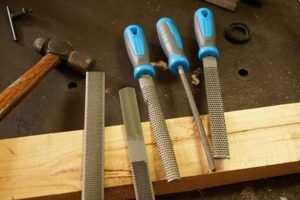
Efficient shaping, a critical aspect of woodworking, is inextricably linked to the proper selection and employment of implements. The capacity to remove material accurately and swiftly determines the overall productivity and quality of woodworking endeavors. Hand tools, such as planes, rasps, and spokeshaves, facilitate controlled removal of wood, allowing for the creation of curved surfaces, complex profiles, and refined details. Conversely, power tools, including routers, planers, and sanders, offer increased speed and efficiency when processing large volumes of material or achieving consistent dimensions across multiple components. The choice between hand and power implements, or a combination thereof, directly impacts the time required to complete a project and the precision attainable in the final form. For example, creating a cabriole leg for a piece of furniture requires a combination of sawing to establish the initial form, spokeshaves to refine the curves, and rasps or files to achieve a smooth, flowing transition between surfaces. Inefficient shaping can lead to wasted material, increased labor costs, and diminished aesthetic appeal.
The relationship between shaping implements and the characteristics of the wood being worked is also paramount. Hardwoods, such as oak and maple, necessitate sharper cutting edges and more robust implements to prevent tear-out and ensure clean cuts. Softwoods, such as pine and cedar, are more susceptible to damage and may require gentler techniques and finer-toothed implements. Understanding the grain direction of the wood is equally important, as cutting against the grain can result in splintering and uneven surfaces. Skilled artisans utilize their knowledge of wood properties to select the appropriate shaping implements and techniques, thereby optimizing efficiency and minimizing material waste. The manufacture of musical instruments, such as guitars and violins, exemplify the importance of efficient shaping, where precise contours and smooth surfaces are essential for acoustic performance and aesthetic appeal.
In summary, efficient shaping in woodworking relies heavily on the judicious selection and skillful application of implements tailored to the specific task and material. Challenges arise from the inherent variability of wood, the complexity of certain designs, and the need for constant attention to tool maintenance and sharpness. Mastery of efficient shaping techniques represents a significant milestone in the development of woodworking proficiency, enabling the creation of functional and aesthetically pleasing objects with minimal effort and maximum precision. This principle ties directly back to the overall theme, where having the right tools woodworking is essential to achieve the desired outcome.
3. Secure Joinery

Secure joinery, the art of connecting wood pieces robustly and reliably, forms a fundamental pillar of woodworking. The stability, longevity, and overall integrity of any wooden structure hinge upon the effectiveness of its joints. The selection and proper application of appropriate implements are integral to achieving secure and lasting connections. The relationship between the implements and the quality of joinery is causal; substandard implements or incorrect application invariably compromise joint strength.
- Precision Measurement and Marking
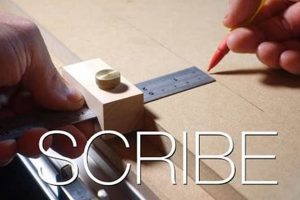
Accurate measurements and markings are the preliminary steps to sound joinery. Marking gauges, rulers, and squares ensure that the wood is prepared to exact specifications before any cutting or shaping occurs. Implement calibration is vital; inaccurate measurements translate directly into ill-fitting joints, diminishing their structural integrity. The precision obtained through careful measurement directly influences the ultimate strength and durability of the joint.
- Cutting and Shaping Implements
Saws, chisels, and planes facilitate the creation of joinery components. The selection of appropriate saws, for example, determines the cleanliness and accuracy of cuts for dovetails or mortise-and-tenon joints. The sharpness of chisels dictates the precision with which mortises are formed or tenons are shaped. A dull chisel or an inappropriate saw can result in ragged edges and imprecise dimensions, weakening the joint and increasing the likelihood of failure under stress.
- Clamping Mechanisms
Clamps are essential for applying pressure during the glue-up phase of joinery. Adequate clamping force ensures tight bonds between wood surfaces, maximizing the strength of the adhesive. Different clamp designs are suited to various joint types; pipe clamps, bar clamps, and hand screws exert varying degrees of pressure and accommodate different joint geometries. Insufficient or uneven clamping pressure can lead to weak bonds, resulting in joint separation over time.
- Adhesives and Fasteners
Adhesives, in conjunction with mechanical fasteners such as screws or dowels, contribute to the overall strength of the joint. Modern woodworking adhesives provide exceptional bond strength and durability. The selection of the correct adhesive for the wood species and joint type is crucial for achieving a secure and lasting connection. Similarly, appropriately sized and placed screws or dowels reinforce the joint, preventing movement and distributing stress.
The facets detailed above demonstrate the interplay between secure joinery and the implements employed in its execution. From initial measurement to final assembly, the quality of the implement and its application directly influence the strength and longevity of the joint. Superior joinery is realized through the careful selection, meticulous maintenance, and skillful application of tools woodworking, producing structures capable of withstanding the test of time and use. The choice of appropriate instruments enables the transition from raw materials to refined forms, ensuring the stability of structural compositions and functional constructs.
4. Smooth Finishing
Smooth finishing, the final stage in woodworking, directly reflects the quality and precision of implements utilized throughout the construction process. The objective is to create a surface free from imperfections, ready for the application of protective coatings or decorative elements. Achieving a flawless finish requires a sequence of operations, each dependent on specific devices. Scrapers, planes, and sanding tools are employed to refine surfaces, removing irregularities and preparing the wood for subsequent treatments. The effectiveness of these instruments dictates the ultimate quality of the finish; dull blades, worn abrasives, or improper techniques can result in scratches, uneven textures, and visible imperfections. For example, in the creation of high-end furniture, meticulous sanding with progressively finer grits of sandpaper is essential to achieving a mirror-like finish. A single coarse scratch left unaddressed will compromise the entire surface, negating the value of subsequent finishing coats.
The relationship between finishing implements and the type of wood being worked is also crucial. Dense hardwoods require sharper, more aggressive tools to achieve a smooth surface, whereas softer woods necessitate a gentler approach to prevent tearing or fuzzing. The grain direction of the wood significantly influences the choice of finishing techniques. Sanding against the grain can result in unsightly scratches and uneven surfaces, whereas planing or scraping with the grain promotes a smoother, more consistent finish. Furthermore, the application of stains, sealers, and topcoats relies on specialized applicators, such as brushes, spray guns, and pads. The selection of the appropriate applicator, along with the proper technique, ensures even coverage and minimizes the risk of runs, drips, or air bubbles. Consider the finishing of a musical instrument like a guitar. A smooth, even finish is essential not only for aesthetic appeal but also for the instrument’s acoustic properties; imperfections in the finish can dampen vibrations and affect the sound quality.
In summary, smooth finishing in woodworking is inextricably linked to the implements selected and the skill with which they are employed. The absence of proper implements or the use of flawed techniques can undermine the entire project. The skill of woodworking can be exemplified through the appropriate understanding for smooth finishing techniques. Challenges arise from material variability, the complexity of certain finishing processes, and the need for constant attention to detail. Achieving a flawless finish requires a deep understanding of wood properties, implement characteristics, and the intricacies of various finishing techniques. Mastering the element represents the culmination of woodworking proficiency, resulting in objects that are both visually appealing and structurally sound.
5. Material Suitability
The selection of appropriate wood species for a given project is intrinsically linked to the choice and application of woodworking implements. “Material Suitability” dictates the tools necessary for efficient and effective manipulation, impacting both the construction process and the longevity of the final product. The interplay between material characteristics and tool capabilities is a key determinant of success in woodworking endeavors.
- Hardwood Implement Requirements
Dense hardwoods, such as maple or oak, necessitate implements with hardened cutting edges and robust construction. Chisels and planes used on these materials must maintain sharpness to prevent tear-out and ensure clean cuts. Power tools, like routers and jointers, require higher horsepower and durable components to withstand the increased resistance encountered when shaping hardwoods. The failure to employ appropriate, heavy-duty implements when working with hardwoods can result in tool damage, reduced efficiency, and compromised project quality.
- Softwood Implement Considerations
Softwoods, including pine and cedar, present a different set of challenges. While requiring less force to cut, softwoods are prone to splintering and crushing. Fine-toothed saws and sharp, well-tuned planes are essential for achieving smooth surfaces and precise joinery. Power tools must be used with caution, as excessive speed or pressure can damage the material. Selecting implements designed for delicate work is crucial when utilizing softwoods to minimize waste and achieve the desired results.
- Exotic Wood Variability
Exotic woods, such as ebony or teak, often possess unique characteristics that demand specialized tools and techniques. Some exotic woods are highly abrasive and can rapidly dull cutting edges, necessitating frequent sharpening or the use of carbide-tipped implements. Others contain natural oils that interfere with adhesives, requiring specific preparation and specialized glues. Understanding the properties of exotic woods and selecting implements accordingly is essential for successful woodworking projects.
- Engineered Wood Applications
Engineered wood products, such as plywood and MDF, present a different set of challenges. Plywood requires sharp blades to prevent splintering of the veneer layers, while MDF generates significant dust and necessitates effective dust collection systems. Specialized router bits and saw blades are often designed specifically for use with engineered wood products, ensuring clean cuts and minimizing edge chipping. Proper ventilation and respiratory protection are essential when working with these materials due to the potential for formaldehyde exposure.
The facets discussed reveal how “Material Suitability” profoundly influences the selection and application of woodworking implements. The characteristics of each wood species dictate the requirements for effective cutting, shaping, and joining. Careful consideration of material properties and the appropriate tool selection are thus essential for achieving successful outcomes in woodworking projects. Whether working with delicate softwoods or challenging hardwoods, the right tools, correctly applied, unlock the potential of the material.
6. Operator Safety

Operator Safety is of paramount importance within woodworking practices. The nature of woodworking involves implements capable of inflicting serious injury if mishandled or improperly maintained. A comprehensive understanding of safe operating procedures, appropriate personal protective equipment, and proper tool maintenance is essential for minimizing risks and ensuring a safe working environment.
- Personal Protective Equipment (PPE)
Personal Protective Equipment, including safety glasses, hearing protection, and respiratory protection, serves as the first line of defense against potential hazards. Safety glasses protect against flying debris, such as wood chips and dust, which can cause eye injuries. Hearing protection mitigates the risk of noise-induced hearing loss associated with power tools. Respiratory protection, in the form of dust masks or respirators, prevents the inhalation of fine wood dust, which can lead to respiratory problems. Consistent use of appropriate PPE is non-negotiable for safeguarding operator health and well-being.
- Tool Guarding and Safety Features
Tool guarding and safety features are integral components of woodworking implements designed to prevent accidental contact with moving parts. Saw blades, router bits, and planer knives are typically equipped with guards that shield the operator from direct exposure. Additionally, many power tools feature safety switches and interlocks that prevent unintentional activation. Proper use and maintenance of these safety features are crucial for minimizing the risk of cuts, lacerations, and amputations. Tampering with or disabling safety features is a dangerous practice that significantly increases the likelihood of injury.
- Safe Operating Procedures
Safe operating procedures encompass a set of best practices for using woodworking implements in a manner that minimizes risks. These procedures include maintaining a clear workspace, securing workpieces firmly, using appropriate push sticks or feather boards, and avoiding distractions. It is imperative to read and understand the manufacturer’s instructions before operating any woodworking tool. Furthermore, operators must exercise caution when working with power tools, avoiding loose clothing, jewelry, and other potential entanglement hazards.
- Tool Maintenance and Inspection
Regular tool maintenance and inspection are essential for ensuring that woodworking implements are in safe working condition. Sharp blades and bits are less likely to kick back or cause splintering, reducing the risk of injury. Damaged or worn components should be repaired or replaced promptly. Power cords must be inspected for fraying or damage, and electrical connections should be secure. Properly maintained tools operate more efficiently and safely, contributing to a reduced risk of accidents.
The preceding facets underscore the critical role of operator safety in woodworking. By adhering to established safety protocols, utilizing appropriate personal protective equipment, maintaining tools in optimal condition, and exercising caution at all times, operators can significantly reduce the risk of injury. A commitment to safety is not merely a regulatory requirement but a moral imperative for all involved in woodworking activities. Continuous improvement, adherence to all of the outlined recommendations, and vigilance help to minimize injury when choosing tools woodworking.
Frequently Asked Questions About Tools Woodworking
This section addresses common inquiries regarding instruments used in the shaping, cutting, joining, and finishing of wood. The information provided aims to clarify misconceptions and offer practical guidance for woodworkers of all skill levels.
Question 1: What is the minimum set of implements needed for a beginner in woodworking?
A foundational set should include a combination square, a hand saw (crosscut and rip), a set of chisels, a sharpening stone, a block plane, a measuring tape, and a selection of clamps. This basic assemblage allows for fundamental woodworking tasks such as cutting lumber to size, creating basic joints, and smoothing surfaces.
Question 2: How often should cutting blades be sharpened?
Sharpening frequency depends on the type of wood being worked and the extent of implement usage. Cutting blades should be sharpened when resistance increases noticeably or when the quality of the cut diminishes. Regular honing with a fine sharpening stone can extend the intervals between full sharpenings.
Question 3: What safety precautions are essential when operating power-driven implements?
Adherence to safety protocols is paramount. Operators must wear safety glasses, hearing protection, and respiratory protection. Implements should be used with appropriate guards in place, and manufacturers’ instructions should be followed meticulously. A clear and uncluttered workspace is also essential to prevent accidents.
Question 4: What are the key differences between hand planes and power planers?
Hand planes offer greater control and precision, making them suitable for delicate work and fine adjustments. Power planers provide efficiency for removing large amounts of material and achieving consistent thicknesses across broader surfaces. The selection depends on the task requirements and desired level of control.
Question 5: How does the type of wood influence implement selection?
Hardwoods necessitate implements with hardened cutting edges and robust construction to prevent tear-out. Softwoods require finer-toothed saws and gentler techniques to minimize splintering. Exotic woods may demand specialized implements due to their unique density or abrasive properties.
Question 6: What are the best practices for storing implements to prevent corrosion?
Implements should be stored in a dry environment to prevent rust and corrosion. Applying a light coat of oil to metal surfaces can provide added protection. Storage solutions should include toolboxes or wall-mounted racks to keep implements organized and protected from physical damage.
These responses offer a general overview of essential considerations for the implements involved in woodworking. Further research and experimentation are encouraged to expand upon this foundational knowledge.
The subsequent section will focus on advanced techniques and specialized applications within the field of woodworking. The proper selection, maintenance, and safe practices of these tools are essential for bringing your creative vision to life.
Tools Woodworking
This exploration has illuminated the critical role instruments play in the transformation of wood. The appropriate selection, meticulous maintenance, and skillful application of these items are paramount to achieving precision, efficiency, and safety in woodworking endeavors. From the initial rough shaping to the final delicate finishing, each stage relies upon implements designed for specific tasks, materials, and desired outcomes. The relationship between these instruments and the qualities of the finished product is undeniable. A lack of proper tools woodworking will inherently lead to reduced quality and efficiency.
Mastery of these instruments is a continuous pursuit, demanding a commitment to ongoing learning, experimentation, and adherence to safety protocols. The future of woodworking hinges not only on technological advancements in equipment design but also on the preservation of traditional skills and the cultivation of a deep understanding of wood properties. Ongoing investment in quality implements and comprehensive training is vital for ensuring both individual success and the continued evolution of this enduring craft.