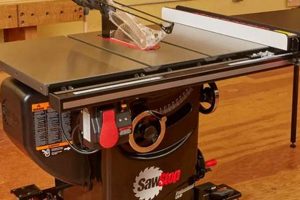
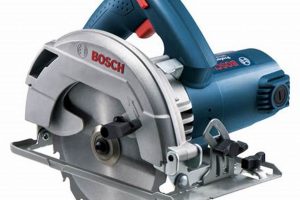
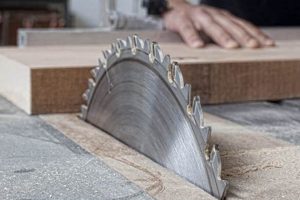
These power tools, designed primarily for cutting sheet goods, feature a saw that rides along a guiding rail. This mechanism provides a straight, splinter-free cut, especially crucial when working with materials like plywood, MDF, and melamine. Unlike traditional circular saws, the integrated track system ensures consistent accuracy and stability during operation.
The inherent precision reduces waste, improves project quality, and minimizes the need for extensive post-cut finishing. Their ability to create clean, accurate cuts makes them valuable assets in cabinet making, furniture construction, and installation projects. The guiding rail system allows for cuts that would be difficult or impossible to achieve with conventional methods. Historically, achieving similar results required large, stationary table saws, making these portable cutting solutions a significant advancement.
The following sections will delve into the key features to consider when selecting the right tool for specific woodworking applications, examining blade types, motor power, track length, and safety features. Furthermore, the article will explore common uses, maintenance procedures, and best practices to maximize the tool’s performance and lifespan. Finally, this article will touch on advanced techniques and accessories that further enhance their capabilities.
Tips for Optimizing Performance
Proper application and maintenance are crucial for maximizing the effectiveness and longevity of this specialized cutting equipment. Adhering to the following tips will enhance the precision and safety of woodworking projects.
Tip 1: Secure the Track. Prior to initiating any cut, ensure the guiding rail is firmly secured to the workpiece. Utilize clamps, when necessary, to prevent movement and maintain accuracy throughout the cutting process.
Tip 2: Select the Appropriate Blade. Different materials necessitate different blade types. Employ fine-tooth blades for plywood and melamine to minimize splintering, and coarser blades for thicker hardwood applications.
Tip 3: Maintain a Consistent Feed Rate. Avoid forcing the saw through the material. A slow, steady feed rate produces cleaner cuts and reduces strain on the motor.
Tip 4: Inspect the Track Regularly. Ensure the guiding rail is free from debris and damage. Any imperfections can compromise the accuracy of the cut.
Tip 5: Utilize Anti-Chip Strips. Replace or adjust the anti-chip strips on the guiding rail as needed. These strips minimize tear-out and ensure clean edges, especially on delicate materials.
Tip 6: Lubricate the Track. Apply a dry lubricant to the track to facilitate smooth movement of the saw base. This reduces friction and improves cutting efficiency.
Tip 7: Prioritize Safety Equipment. Always wear appropriate safety glasses and hearing protection when operating the equipment. Dust collection systems are also recommended to maintain a clean and safe working environment.
Implementing these recommendations will not only improve the quality of cuts but also contribute to a safer and more efficient woodworking process. Proper technique and maintenance extend the lifespan of the tool, ensuring consistent performance over time.
The following section provides a detailed analysis of common issues and troubleshooting techniques associated with this type of woodworking equipment.
1. Accuracy

Accuracy is a paramount attribute in woodworking, directly impacting the quality and precision of finished projects. When integrated with a track saw system, the potential for achieving accurate cuts is significantly enhanced, making it a critical consideration for woodworkers.
- Guided Cutting System
The defining feature that contributes to accuracy is the guided cutting system. The saw’s base plate interfaces directly with a track, eliminating freehand operation. This constrained movement prevents deviation from the intended cut line. Real-world examples include repeatable, precise cuts for cabinet doors and drawer fronts, where even slight inaccuracies are unacceptable. The implication is a reduction in material waste and a more refined finished product.
- Minimal Blade Runout
Blade runout, the deviation of the blade from its true rotational path, can compromise cut accuracy. Quality systems are engineered to minimize blade runout, often employing robust motor designs and precision-machined components. This translates to cleaner cuts with less splintering, especially noticeable when working with fragile materials like veneered plywood. Minimizing runout is essential for creating tight, seamless joints in furniture construction.
- Consistent Cutting Depth
Maintaining a consistent cutting depth is vital for accurate results, particularly when creating dados or rabbets. These saws often feature micro-adjustment mechanisms that allow for precise control over the depth of cut. This consistency ensures that grooves are uniform, leading to stronger and more aesthetically pleasing joinery. For example, in building a bookcase, consistently sized dados are crucial for securely housing the shelves.
- Angle Precision
Many models include features for bevel cutting with accuracy. Clear, easily adjustable angle scales allow for setting precise bevel angles for miters and other angled cuts. The accuracy of these angle settings directly impacts the tightness and appearance of mitered corners in picture frames or architectural moldings. The ability to consistently replicate angle cuts is a significant advantage.
The integration of these features underscores the strong correlation between accuracy and these saws. The guided system, reduced blade runout, consistent cutting depth, and angle precision work synergistically to provide a level of accuracy unattainable with conventional circular saws. This enhanced precision ultimately leads to improved project outcomes, reduced waste, and increased efficiency in the woodworking process.
2. Portability

Portability significantly expands the utility of track saws in woodworking, moving precision cutting beyond the confines of a stationary workshop. The design allows for bringing the tool to the material, rather than the other way around, which is particularly advantageous when working with large sheet goods or during on-site installations. This characteristic directly addresses the limitations of traditional table saws, which, while accurate, are often immobile and space-intensive.
The ability to transport and set up this type of saw in various locations offers considerable benefits. For instance, a contractor installing custom cabinetry in a home can make precise cuts directly on-site, minimizing the need for pre-cutting in a workshop and reducing the risk of damage during transport. Similarly, a furniture maker working in a small studio can efficiently break down large panels without requiring a large, dedicated space for a bulky table saw. The relatively lightweight design and the modular track system enhance ease of transport and setup.
The practical significance of portability extends to cost savings and increased efficiency. By enabling on-site cutting, it reduces material handling, minimizes transportation expenses, and allows for immediate adjustments during installation. While track saws may involve an initial investment, their portability translates to long-term value by increasing project versatility and streamlining workflow. This characteristic solidifies their position as a valuable tool for both professional woodworkers and serious hobbyists.
3. Splinter-Free Cuts

Achieving cuts devoid of splintering is a primary objective in woodworking, particularly when processing veneered or laminated materials. The design and functionality of track saws directly address this need, making them a tool of choice where a clean edge is paramount.
- The Guiding Track as a Zero-Clearance System
The track itself acts as a zero-clearance guide, supporting the material directly adjacent to the blade. This close proximity minimizes the space into which the wood fibers can tear, thus reducing splintering. A common example is the clean edge achieved on melamine boards when cutting cabinet components, eliminating the need for edge banding. The implication is a significant reduction in post-processing time and a higher quality finished product.
- Scoring Blade Functionality
Some models incorporate a scoring blade, which precedes the main blade and makes a shallow cut to pre-score the material. This pre-cut severs the surface fibers, preventing them from being pulled up by the main blade. An instance where this is particularly useful is when cutting delicate veneers, as it virtually eliminates tear-out. The scoring blade dramatically improves the surface finish and precision of the cut.
- Blade Sharpness and Tooth Geometry
The type and sharpness of the blade contribute significantly to the quality of the cut. Blades designed specifically for track saws often feature a high tooth count and specialized tooth geometry to minimize splintering. A sharp blade, combined with the appropriate tooth configuration, ensures a clean cut through the material, preventing the wood fibers from being torn or damaged. Regularly maintaining blade sharpness is vital for maintaining these results.
- Controlled Cutting Speed
The operator’s control over the cutting speed also influences the quality of the cut. A slower, more controlled feed rate allows the blade to slice cleanly through the material, minimizing the chance of splintering. This is especially important when working with brittle materials or against the grain. A deliberate, steady pace is essential for achieving optimal results in splinter-sensitive applications.
The combination of the guiding track, optional scoring blade, specialized blade design, and operator control facilitates cuts with minimal to no splintering. This capability enhances the efficiency and quality of woodworking projects, particularly those requiring precise and aesthetically pleasing edges. Eliminating the need for extensive sanding or repair work significantly improves project turnaround time and reduces material waste.
4. Dust Collection

Effective dust collection is an indispensable element in woodworking, and its integration with track saws presents significant advantages for both user health and project quality. Track saws, designed to minimize splintering and enhance accuracy, generate a substantial amount of fine dust during operation. This dust, if not properly managed, poses respiratory hazards to the operator and can compromise the precision of subsequent cuts. The inherent design of track saws, often incorporating enclosed blade guards and dedicated dust ports, facilitates efficient dust extraction when connected to a suitable vacuum system. The immediate capture of sawdust at the source minimizes airborne particles and maintains a cleaner work environment. Consider, for example, a woodworker cutting MDF panels for shelving. Without proper dust collection, the fine MDF dust quickly becomes airborne, obscuring the cut line and irritating the respiratory system. A track saw connected to a vacuum, however, effectively removes this dust, providing a clear view of the cut and safeguarding the operator’s health.
The practical application of dust collection in track saw operations extends beyond basic health and safety. Consistent dust extraction prevents the build-up of sawdust on the track and workpiece, ensuring smooth and accurate saw movement. Accumulated dust can impede the saw’s travel along the track, leading to uneven cuts and potential damage to the material. Furthermore, a clean work surface allows for better visibility of markings and reference lines, contributing to greater precision in intricate projects. Integrating a high-efficiency particulate air (HEPA) filter vacuum is particularly beneficial when working with treated lumber or materials containing potentially harmful substances. In such cases, the HEPA filter ensures the capture of even the finest particles, providing an added layer of protection.
In summary, the connection between dust collection and track saws transcends mere accessory status; it is a symbiotic relationship that directly impacts user well-being, project accuracy, and overall efficiency. While track saws offer inherent advantages in precision cutting, the effectiveness of these advantages is amplified through a robust dust collection system. Challenges remain in selecting the appropriate vacuum system with sufficient airflow and filtration capacity. However, the benefits of a well-integrated system, including improved respiratory health, enhanced cut accuracy, and a cleaner work environment, far outweigh the initial investment and underscore the importance of prioritizing dust collection when utilizing track saws for woodworking.
5. Plunge Cutting
Plunge cutting represents a significant capability afforded by track saws, distinguishing them from conventional circular saws. This function permits the blade to be lowered directly into the material at a specific point along the track, rather than requiring a start from the edge. This functionality expands the range of applications achievable with these saws.
- Controlled Entry Point
The defining characteristic of plunge cutting is the ability to initiate a cut at any location on the workpiece. This is achieved by designing the saw with a spring-loaded blade guard that retracts as the saw is advanced along the track, allowing the blade to gradually penetrate the material. This controlled entry is essential for creating features such as dados, grooves, or cutouts in the middle of a panel, tasks that would be difficult or impossible with a standard circular saw. For example, a cabinet maker can precisely cut a rectangular opening for a recessed handle on a cabinet door without needing to start from an edge.
- Enclosed Blade Housing
The plunge-cutting mechanism typically incorporates an enclosed blade housing that provides enhanced safety. The blade remains shielded until the operator activates the plunge function, minimizing the risk of accidental contact with the rotating blade. This feature is particularly valuable when working in confined spaces or with intricate designs. This enclosed design contributes to a safer operating environment and reduces the potential for injury.
- Depth Stop Mechanism
Precise control over the cutting depth is crucial in plunge cutting applications. These saws commonly feature an adjustable depth stop mechanism that allows the operator to set the exact depth of cut. This mechanism ensures consistent results when creating repetitive features, such as dados for shelving or rabbets for joinery. The ability to accurately control the depth of cut enhances precision and minimizes the risk of overcutting.
- Combined with Track System Accuracy
The combination of plunge-cutting capability with the inherent accuracy of the track system results in highly precise and repeatable cuts. The track guides the saw along the intended path, while the plunge function allows for controlled entry and exit points. This synergy is particularly advantageous when creating complex patterns or shapes, such as inlays or curved cutouts. The precision afforded by this combination enables woodworkers to achieve intricate designs with minimal waste and maximum accuracy.
The plunge-cutting function, therefore, broadens the scope of track saws beyond simple edge trimming, making them versatile tools for a wide array of woodworking applications. The controlled entry, enhanced safety, precise depth control, and synergistic relationship with the track system contribute to increased efficiency, accuracy, and design flexibility.
6. Safety Features

The integration of safety features within track saws constitutes a critical aspect of their design and operation. Given the inherent risks associated with power tools, manufacturers prioritize safety mechanisms to mitigate potential hazards and promote user well-being. The cause-and-effect relationship is direct: the presence of robust safety features reduces the likelihood of accidents, resulting in fewer injuries and a safer working environment. For instance, blade guards, designed to shield the user from accidental contact with the rotating blade, are a standard safety feature. These guards automatically retract during operation and immediately cover the blade when the saw is lifted from the workpiece, minimizing the risk of cuts. This exemplifies the practical significance of safety features in preventing common woodworking injuries.
Furthermore, anti-kickback systems are often incorporated into the track saw design to prevent the workpiece from being ejected back towards the operator, a dangerous situation that can occur when the blade binds. These systems typically employ a riving knife or splitter that maintains separation between the two sides of the cut, reducing the risk of pinching and kickback. Another vital safety component is the soft-start motor, which gradually increases the blade’s rotational speed, reducing the sudden torque that can cause the saw to jump or lurch during startup. This feature improves control and stability, particularly beneficial for novice users. In addition, track saws are often equipped with overload protection circuitry that automatically shuts off the motor in the event of excessive load, preventing motor damage and reducing the risk of fire.
In summary, the incorporation of safety features within track saws is not merely an add-on but an integral design consideration that directly impacts user safety and operational efficiency. Blade guards, anti-kickback mechanisms, soft-start motors, and overload protection systems work in concert to minimize potential hazards and promote a safer woodworking experience. While user training and adherence to safety guidelines remain paramount, the presence of these built-in safety features provides an essential layer of protection and contributes to the overall value and usability of track saws. Challenges may arise in ensuring the proper functioning and maintenance of these safety mechanisms, but the benefits derived from their reliable operation are undeniable. The ultimate goal is to cultivate a safe working environment and prevent avoidable accidents, thereby enhancing the enjoyment and productivity of woodworking.
Frequently Asked Questions
This section addresses common inquiries regarding track saws in woodworking, offering concise and informative responses to enhance understanding and promote informed decision-making.
Question 1: What are the primary advantages of utilizing track saws compared to traditional circular saws?
Track saws offer enhanced precision due to the guiding track system, which allows for straight, splinter-free cuts. This is particularly advantageous when working with sheet goods such as plywood and melamine. Traditional circular saws, lacking a guiding system, are more susceptible to deviations and splintering.
Question 2: Is specialized training required to operate a track saw safely and effectively?
While not mandatory, proper training is strongly recommended. Familiarization with the tool’s features, safety mechanisms, and appropriate cutting techniques is essential for preventing accidents and maximizing performance. Manufacturers often provide instructional materials, and woodworking courses can offer comprehensive training.
Question 3: What factors should be considered when selecting a track saw for specific woodworking applications?
Key considerations include motor power, blade size, track length, dust collection capabilities, and safety features. Higher motor power is beneficial for cutting thicker materials, while longer tracks are necessary for larger sheet goods. Dust collection systems are crucial for maintaining a clean and safe work environment.
Question 4: How can the lifespan of a track saw be extended?
Regular maintenance, including blade sharpening, track cleaning, and inspection of moving parts, is essential. Proper storage in a dry environment also helps prevent corrosion and damage. Adhering to the manufacturer’s recommended usage guidelines is crucial for optimal performance and longevity.
Question 5: What types of blades are best suited for different materials when using a track saw?
Fine-tooth blades are generally recommended for plywood, melamine, and other materials prone to splintering. Coarser-tooth blades are suitable for solid wood and thicker stock. Blade selection should be based on the material being cut to achieve the desired finish and minimize tear-out.
Question 6: Can track saws be used for angled or bevel cuts?
Yes, many track saws feature adjustable bevel settings that allow for angled cuts. The precision of the track system ensures accurate and consistent bevels. Refer to the manufacturer’s instructions for specific details on adjusting and utilizing the bevel cutting function.
These FAQs provide a foundational understanding of track saws, addressing critical aspects ranging from their advantages and operation to maintenance and material-specific applications. Proper utilization and adherence to safety guidelines are paramount for achieving optimal results and ensuring a safe working environment.
The following section will provide a comparative analysis of different track saw models available in the market.
Conclusion
The preceding examination of “track saws for woodworking” has illuminated the tool’s capabilities within a range of applications. The precision, portability, and dust-collection integration represent distinct advantages over traditional sawing methods. Proper understanding of operational techniques and safety protocols remains crucial for maximizing the tool’s utility and mitigating potential hazards.
Ultimately, the decision to integrate a track saw into a woodworking practice necessitates a careful evaluation of project requirements and workflow dynamics. Informed selection and diligent maintenance will determine the longevity and effectiveness of this investment. Continued adherence to industry best practices and safety guidelines will ensure both optimal performance and user well-being in the utilization of “track saws for woodworking”.