



Clamps, in the context of woodworking, are tools designed to hold workpieces securely together. They apply pressure to ensure proper adhesion when gluing, to maintain position during fastening, or to prevent movement during shaping operations. Consider, for example, the use of bar clamps to assemble a tabletop from individual boards, holding them tightly until the adhesive cures.
The selection of appropriate clamping devices is crucial for achieving strong and accurate woodworking joints. Historically, basic wooden clamps were used, but modern advancements have yielded a diverse range of designs, each offering specific advantages in terms of pressure, reach, and application. Proper clamping ensures structural integrity, prevents gaps or misalignments, and ultimately contributes to the quality and longevity of a finished project.
Therefore, an examination of various types, their features, and suitable applications is essential. This analysis will consider the strengths and weaknesses of common clamping mechanisms, facilitating informed decisions for optimal performance in diverse woodworking scenarios. This will encompass discussion on parallel clamps, spring clamps, hand screw clamps, and miter clamps.
Clamping Strategy
Effective clamping is essential for high-quality woodworking. This section provides guidance on optimizing clamping techniques and clamp selection to ensure superior results.
Tip 1: Even Pressure Distribution: Avoid concentrated force by using cauls or pads between the clamp jaws and the workpiece. This distributes pressure evenly, preventing indentations or damage to the wood surface. For instance, when clamping delicate veneers, use softwood cauls to spread the clamping force.
Tip 2: Clamp Placement Strategy: Position clamps strategically to counteract any potential movement during glue-up. Stagger clamp placement and alternate pressure points to prevent bowing or shifting of the workpiece. Example: When gluing long boards edge-to-edge, alternate clamp placement above and below the joint line.
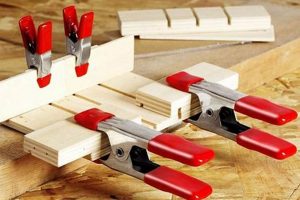
Tip 3: Selecting Appropriate Clamp Type: Different clamps serve different purposes. Use parallel clamps for ensuring perfectly aligned surfaces during glue-ups, spring clamps for quick, light-duty holding, and pipe clamps for long assemblies. Consider the specific requirements of the task to select the most suitable tool.
Tip 4: Avoiding Over-Tightening: Excessive clamp pressure can starve the joint of glue, leading to a weak bond, or even damage the wood fibers. Apply only enough pressure to close the joint firmly and evenly. Wipe away any excess glue squeeze-out promptly.
Tip 5: Checking for Squareness: Before the glue sets, verify that the assembled workpiece is square. Use measuring tools to ensure accuracy. Apply additional clamps as needed to correct any deviations from squareness. An example includes using corner clamps for assembling drawers or boxes.
Tip 6: Maintaining Clamp Condition: Keep clamp threads clean and lubricated for smooth operation. Inspect clamp jaws for damage or wear that could compromise their effectiveness. Regularly clean any dried glue off the clamping faces of your tools.
Tip 7: Consider Material Compatibility: Be mindful of the compatibility of clamp jaw materials with the wood being worked. For instance, some metal clamp jaws can stain certain woods if they come into direct contact, necessitating the use of protective pads.
Adhering to these best practices optimizes clamping performance, resulting in stronger, more accurate, and aesthetically pleasing woodworking projects. Consistent application of these principles enhances the overall quality of finished work.
The next section will delve into the selection process for acquiring clamping equipment, focusing on factors such as budget, frequency of use, and project scope.
1. Pressure

Clamping pressure, the force exerted by a clamp on the workpiece, is a critical determinant in achieving strong and lasting woodworking joints. Insufficient pressure results in weak bonds due to inadequate contact between adhesive surfaces. Conversely, excessive pressure can starve the joint of glue, leading to a similar outcome, or even damage the wood fibers. The correct level of pressure is thus paramount.
The selection of clamping devices should be guided by the required pressure for the specific joint and materials involved. Softer woods, like pine or cedar, require less pressure than hardwoods such as oak or maple. Different clamp types offer varying degrees of pressure. Bar clamps and pipe clamps are capable of generating significant force, making them suitable for large assemblies or thicker materials. Spring clamps and hand screw clamps, with their more limited pressure, are better suited for smaller, more delicate projects. Precise application of clamping pressure is a function of the clamp’s mechanical design and the operator’s judgement.
Understanding the relationship between clamping pressure and joint integrity is fundamental to successful woodworking. The ability to select and use clamping devices that provide the appropriate level of pressure ensures strong, durable, and aesthetically pleasing finished projects. Determining the optimal pressure needed for specific materials and joint configurations remains a key challenge in woodworking, requiring experience and careful observation of results. The importance of clamping pressure must be assessed during the selection of what are the best clamps for woodworking.
2. Reach

Reach, in the context of woodworking clamps, denotes the maximum distance between the clamp’s jaws, effectively limiting the size of the workpiece it can accommodate. The selection of “what are the best clamps for woodworking” is intrinsically linked to this parameter; a clamp with insufficient reach is simply unsuitable, regardless of its other merits. For instance, assembling a large tabletop necessitates clamps with significant reach, such as long bar clamps or pipe clamps. Conversely, for smaller projects like assembling drawers, clamps with shorter reach, such as hand screws or spring clamps, may suffice. Therefore, the physical dimensions of the intended woodworking project dictate the minimum reach requirement for appropriate clamping devices.
The implications of inadequate reach extend beyond mere inconvenience. Attempting to clamp a workpiece exceeding a clamp’s capacity can result in uneven pressure distribution, compromised joint integrity, or even damage to the clamp itself. Consider the scenario of constructing a cabinet frame. If the chosen clamps lack the necessary reach to span the full width of the frame, the resulting glue-up may exhibit gaps, misalignments, or structural weaknesses. Proper evaluation of project dimensions and subsequent selection of clamps with adequate reach mitigates these risks, ensuring optimal clamping performance.
In summary, reach represents a fundamental constraint in clamp selection, directly impacting the feasibility and quality of woodworking projects. Prioritizing reach during the decision-making process ensures that the chosen clamping devices are physically capable of performing the intended function. Failing to account for reach can lead to compromised joint strength, project delays, and unnecessary expense. Therefore, when evaluating “what are the best clamps for woodworking,” careful consideration of reach is paramount to project success.
3. Jaw type

The configuration of a clamp’s jaws significantly influences its suitability for specific woodworking tasks. The jaw type dictates the clamp’s ability to grip the workpiece securely, distribute pressure effectively, and avoid damage to the material surface. Therefore, understanding the various jaw types and their respective advantages and disadvantages is crucial in determining “what are the best clamps for woodworking” for a particular application.
- Smooth Jaws
Smooth jaws provide a broad, even clamping surface, minimizing the risk of indentations on softer woods. These jaws are ideal for applications where surface protection is paramount, such as gluing delicate veneers or assembling finished surfaces. However, their lack of texture may result in slippage when clamping slick or uneven materials. Their consideration is key when choosing what are the best clamps for woodworking.
- Textured Jaws
Textured jaws feature a pattern or material designed to increase friction, providing a more secure grip. This is particularly beneficial when working with hardwoods or materials that are prone to slipping under pressure. The enhanced grip can, however, increase the risk of marring softer woods, necessitating the use of protective cauls or pads. Their consideration is key when choosing what are the best clamps for woodworking.
- Pivoting Jaws
Pivoting jaws adapt to the angle of the workpiece, ensuring even pressure distribution on irregular surfaces. This feature is particularly useful when clamping non-parallel surfaces or when assembling complex shapes. The pivoting action prevents stress concentrations that can lead to joint failure or material damage. Their consideration is key when choosing what are the best clamps for woodworking.
- Specialty Jaws
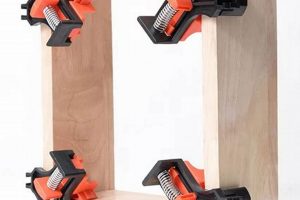
Specialty jaws are designed for specific applications, such as corner clamps with 90-degree angles for assembling frames or miter clamps with angled jaws for joining mitered edges. These specialized jaws provide precise alignment and secure clamping, streamlining specific woodworking tasks. The choice of specialty clamps is highly dependent on the types of projects undertaken. Their consideration is key when choosing what are the best clamps for woodworking.
The optimal selection of jaw type hinges on a comprehensive evaluation of the workpiece material, the clamping task, and the desired level of surface protection. By carefully considering these factors, woodworkers can choose “what are the best clamps for woodworking” with appropriate jaw configurations, ensuring strong, accurate, and aesthetically pleasing results. Failure to account for jaw type can lead to compromised joint integrity, material damage, and inefficient use of clamping force. Thus, an informed decision regarding jaw type is a critical component of successful woodworking.
4. Durability
Durability, in the context of woodworking clamps, represents the capacity to withstand repeated use, resist wear and tear, and maintain functionality over an extended lifespan. The link between durability and “what are the best clamps for woodworking” is direct; a clamp’s inherent durability dictates its long-term value and effectiveness in a demanding workshop environment.
- Material Composition
The materials used in clamp construction directly influence its durability. Clamps fabricated from high-strength steel or ductile iron exhibit superior resistance to deformation and fracture compared to those constructed from less robust materials. For example, a clamp with a malleable cast iron frame will withstand higher clamping forces and resist bending under stress compared to an aluminum clamp. Material selection represents a fundamental factor in determining a clamp’s longevity.
- Construction Quality
The manufacturing processes employed in clamp assembly play a critical role in its overall durability. Precision machining, robust welding, and the use of high-quality fasteners contribute to a clamp’s ability to withstand sustained use and resist component failure. A clamp with poorly threaded screws or improperly aligned jaws will be prone to slippage and premature wear. Precise contruction must be an integral consideration in assessing what are the best clamps for woodworking.
- Finish and Corrosion Resistance
The application of protective coatings, such as powder coating or zinc plating, enhances a clamp’s resistance to corrosion and environmental degradation. Clamps exposed to moisture or humidity are susceptible to rust, which can compromise their structural integrity and functionality. A clamp with a durable, corrosion-resistant finish will maintain its performance and appearance over time, extending its service life. In some cases, preventative maintenance such as waxing the threads will help prevent corrosion.
- Thread Quality and Mechanism Design
The quality of the threads on the spindle and the design of the clamping mechanism significantly impact durability. Smooth, precisely cut threads facilitate easy adjustment and prevent binding or stripping. A robust mechanism design, featuring reinforced components and minimal play, ensures consistent and reliable clamping force over repeated use. High thread quality and robust mechanisms must be considered when determining what are the best clamps for woodworking.
In summation, durability is a multifaceted characteristic determined by material composition, construction quality, finish, and mechanism design. Woodworkers seeking “what are the best clamps for woodworking” must prioritize durability to ensure a long-term investment that delivers consistent performance and withstands the rigors of demanding workshop environments. Choosing clamps based on durability enhances efficiency, reduces replacement costs, and contributes to the overall quality of woodworking projects.
5. Application
The selection of appropriate clamping devices is inextricably linked to the intended application within woodworking. Each woodworking task imposes distinct demands on clamping equipment, necessitating a nuanced understanding of how specific clamp characteristics align with project requirements. Therefore, determining “what are the best clamps for woodworking” fundamentally involves a thorough assessment of the intended use.
- Glue-Ups of Large Panels
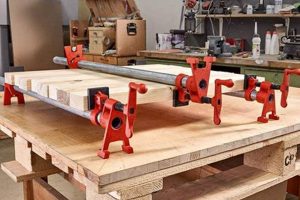
For assembling large panels, such as tabletops or cabinet sides, clamps with significant reach and the ability to exert even pressure are paramount. Parallel clamps and pipe clamps are well-suited for this application, providing the necessary span and force to ensure flat, gap-free joints. Their extended reach and capacity for high clamping pressure make them ideal for large-scale glue-ups, significantly contributing to the structural integrity and aesthetic quality of the final product.
- Assembling Frames and Miter Joints
The assembly of frames and miter joints requires clamps that provide precise alignment and secure corner clamping. Corner clamps and miter clamps, specifically designed for this purpose, hold workpieces at precise angles, ensuring accurate and square corners. Spring clamps can provide additional temporary hold while the glue is drying. Choosing the appropriate clamp ensures tight, well-aligned joints that contribute to the overall strength and appearance of the framed structure.
- Edge Banding and Veneering
Edge banding and veneering require clamps that apply consistent and even pressure across the entire surface area. Specialized veneer presses or vacuum clamping systems offer optimal pressure distribution for bonding thin materials to substrates. Alternatively, using cauls with bar clamps will provide adequate surface pressure. The selection of the right clamping method is critical to prevent air pockets, warping, and delamination, resulting in a smooth and durable finish.
- Shaping and Carving Operations
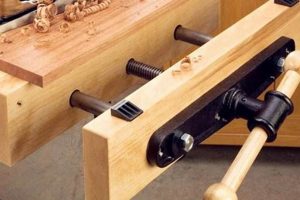
During shaping and carving operations, clamps are employed to secure the workpiece firmly to a workbench or jig. Bench vises and quick-action clamps provide stable support, allowing for precise control and reducing the risk of workpiece movement. This stability is essential for safety and accuracy, enabling the woodworker to execute intricate cuts and achieve desired forms. Clamping during these processes ensures consistent results and minimizes the potential for errors.
These diverse applications underscore the importance of matching clamp characteristics to specific woodworking tasks. There is no universal “best” clamp; rather, the optimal choice depends on the project’s scale, complexity, and material properties. Skillful selection and application of clamping devices tailored to the task at hand are crucial for achieving high-quality results and maximizing efficiency in woodworking projects.
6. Cost

The financial outlay associated with acquiring clamping equipment is a primary consideration in determining suitability. Cost is not solely a function of initial purchase price, but also encompasses factors such as longevity, versatility, and the potential for long-term value. The relationship between cost and “what are the best clamps for woodworking” is complex, necessitating a nuanced evaluation of needs versus expenditure.
- Initial Investment vs. Long-Term Value
While seemingly economical, inexpensive clamps constructed from inferior materials may exhibit premature failure, requiring frequent replacement. Conversely, clamps with a higher initial cost, fabricated from robust materials and featuring precision engineering, can offer decades of reliable service. Investing in quality translates to reduced long-term expenditure and enhanced performance, justifying the higher upfront price. Example: A set of high-quality parallel clamps, though expensive initially, can serve for numerous projects over many years, ultimately proving more cost-effective than repeatedly replacing cheaper alternatives.
- Frequency of Use and Project Scope
The frequency with which clamps are utilized and the scope of woodworking projects undertaken directly influence the optimal price point. A hobbyist engaging in occasional small-scale projects may find that a set of basic, affordable clamps adequately meets their needs. However, a professional woodworker undertaking frequent, large-scale projects requires higher-quality, more durable clamps, justifying a greater investment. Aligning clamp selection with usage patterns ensures efficient resource allocation and maximizes value.
- Versatility vs. Specialization
Certain clamps, such as bar clamps and pipe clamps, offer a high degree of versatility, adaptable to a wide range of clamping tasks. Specialized clamps, such as corner clamps or miter clamps, are designed for specific applications, providing superior performance in those niche areas. Determining whether to prioritize versatility or specialization impacts cost; a smaller number of versatile clamps may suffice for general woodworking, while specialized clamps require a greater overall investment. The purchase choice must be considered when assessing what are the best clamps for woodworking.
- Brand Reputation and Warranty Coverage
Established clamp manufacturers often offer superior build quality, innovative features, and comprehensive warranty coverage. While branded clamps may command a premium price, the assurance of quality and the availability of after-sales support can mitigate the risk of premature failure and associated replacement costs. Selecting clamps from reputable brands represents a form of risk management, potentially saving money in the long run through reduced downtime and extended product lifespan. Brand and warranty must be considered when assessing what are the best clamps for woodworking.
Ultimately, the determination of “what are the best clamps for woodworking” in relation to cost necessitates a comprehensive evaluation of individual needs, project scope, and budget constraints. Prioritizing quality, durability, and versatility can often result in long-term cost savings and enhanced performance, justifying a greater initial investment. Balancing financial considerations with performance requirements is essential for making informed clamp selection decisions that maximize value and contribute to successful woodworking outcomes. Therefore, the value for money question must be assessed during the selection of what are the best clamps for woodworking.
Frequently Asked Questions
The following addresses common inquiries regarding the selection and application of clamps in woodworking. The information provided aims to offer clarity and informed guidance.
Question 1: What clamping pressure is generally sufficient for glue-ups?
The required clamping pressure depends on the wood species and the adhesive used. Softwoods generally require less pressure than hardwoods. Follow the adhesive manufacturer’s recommendations for optimal clamping pressure, avoiding over-tightening, which can starve the joint of glue.
Question 2: How does clamp reach impact project feasibility?
Clamp reach dictates the maximum workpiece dimensions a clamp can accommodate. Projects exceeding a clamp’s reach cannot be properly secured, compromising joint integrity and potentially damaging the clamp. Assess project dimensions prior to clamp selection to ensure adequate reach.
Question 3: Are expensive clamps necessarily superior to budget-friendly options?
Higher-priced clamps typically exhibit superior material quality, construction precision, and durability, leading to enhanced performance and longevity. However, for infrequent use on small-scale projects, budget-friendly clamps may suffice. Consider frequency of use and project demands when balancing cost and quality.
Question 4: How should clamp jaw type influence clamp selection?
Clamp jaw type directly impacts grip security and the potential for workpiece damage. Smooth jaws are suitable for delicate materials, while textured jaws provide enhanced grip for hardwoods. Select jaw types based on material properties and desired level of surface protection.
Question 5: What maintenance practices prolong clamp lifespan?
Regular cleaning of clamp threads and jaws prevents buildup of glue and debris. Lubricating threads ensures smooth operation and prevents corrosion. Inspect clamps for wear or damage, replacing components as needed. These practices maximize clamp lifespan and maintain performance.
Question 6: Can a single clamp type adequately address all woodworking needs?
A single clamp type rarely suffices for all woodworking tasks. Different projects require varying clamping pressures, reach, and jaw configurations. A diverse clamp collection, encompassing bar clamps, pipe clamps, hand screws, and spring clamps, provides the necessary versatility to address diverse woodworking challenges.
Selecting the appropriate clamping devices requires careful consideration of project requirements, material properties, and budget constraints. Informed decision-making maximizes the effectiveness of clamping techniques and contributes to superior woodworking outcomes.
The following section delves into storage and maintenance of tools, highlighting practices for the longevity of clamps.
Conclusion
The preceding exploration has dissected the multifaceted considerations essential for determining what are the best clamps for woodworking. Clamping pressure, reach, jaw type, durability, application, and cost constitute critical parameters that must be carefully evaluated in relation to specific project needs and workshop practices. A universal solution does not exist; rather, the optimal choice hinges on a nuanced understanding of individual requirements and the informed application of selection criteria.
Effective woodworking relies not solely on possessing a collection of clamps, but on the judicious selection and deployment of those tools. Prioritizing quality, durability, and suitability for the task at hand ensures reliable performance and contributes to the successful execution of projects. Continued diligence in evaluating clamp options and refining clamping techniques remains paramount for achieving consistently high-quality results. Seeking continued improvements in woodworking knowledge serves as foundation in future projects.
![Top-Rated: Best Quick Clamps for Woodworking Projects [2024] | Step-by-Step Guides, Tools & Inspiration to Build Beautiful Wooden Decor on a Budget](https://woodfromhome.com/wp-content/uploads/2026/04/th-264-300x200.jpg "Top-Rated: Best Quick Clamps for Woodworking Projects [2024] Step-by-Step Guides, Tools & Inspiration to Build Beautiful Wooden Decor on a Budget")