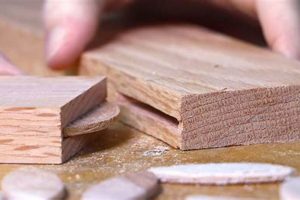
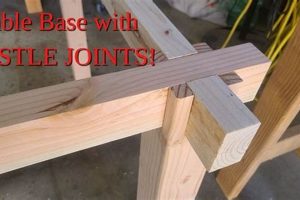
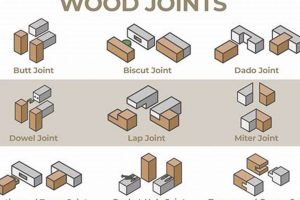
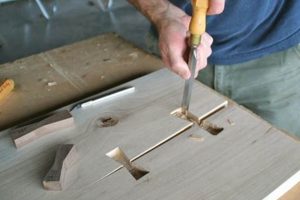
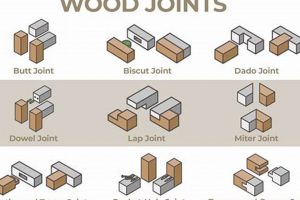
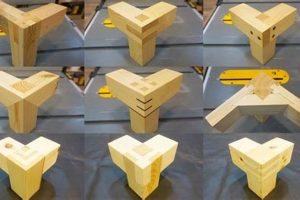
A juncture in woodworking is a connection that unites two or more pieces of timber to create a unified structure. These connections are fundamental to the strength, stability, and aesthetics of wooden constructions, ranging from simple boxes to intricate furniture and complex architectural elements. A common example involves interlocking two boards at a right angle to form a corner.
The integrity of a wooden project hinges upon the quality of its junctures. Strong, well-executed unions enhance durability, preventing structural failure under stress. Furthermore, these connections play a vital role in the visual appeal of the finished product. Historically, the evolution of these techniques mirrors advancements in tool technology and reflects regional variations in woodworking traditions, underscoring its enduring significance in craftsmanship.
The following sections will delve into specific types, examining their construction, applications, and relative strengths and weaknesses. The exploration will cover methods ranging from basic butt connections to more complex dovetail arrangements, providing a detailed overview of the principles and practices involved in creating reliable and visually pleasing wooden assemblies.
Woodworking Joint Best Practices
Effective implementation of structural connections is paramount for achieving long-lasting and visually appealing woodworking projects. Adhering to specific principles during construction will significantly improve the final result.
Tip 1: Proper Wood Selection: Choose timber that is appropriately seasoned and free from defects such as knots or warping in the immediate vicinity of the joining area. The material’s inherent stability will influence the connection’s longevity.
Tip 2: Accurate Measurement and Cutting: Precise measurements and cuts are crucial for achieving tight-fitting and strong unions. Employ accurate measuring tools and cutting techniques to minimize gaps and ensure proper alignment.
Tip 3: Surface Preparation: Ensure surfaces are clean, smooth, and free of any debris before applying adhesives or assembling the joint. Proper surface preparation enhances glue adhesion and promotes a stronger bond.
Tip 4: Glue Selection and Application: Select an adhesive appropriate for the specific wood species and application. Apply glue evenly and in sufficient quantity to ensure full coverage of the joining surfaces. Clamp firmly to maintain pressure during the curing process.
Tip 5: Clamping Techniques: Utilize appropriate clamps to apply even pressure across the surfaces during adhesive curing. Ensure the connected components remain properly aligned throughout the clamping process.
Tip 6: Reinforcement Strategies: Consider incorporating reinforcing elements, such as screws, dowels, or biscuits, to enhance the strength and stability, particularly in high-stress applications.
Tip 7: Dry Fitting: Always dry-fit the assembly before applying adhesive to verify the accuracy of the cuts and the proper fit of the components. This step allows for adjustments and corrections before committing to the final assembly.
By consistently applying these best practices, woodworkers can significantly enhance the structural integrity and aesthetic quality of their creations. These techniques contribute to the creation of robust and enduring timber constructions.
The subsequent sections will address specific challenges and advanced techniques related to the fabrication of specialized assemblies, providing a deeper understanding of the art and science of woodworking.
1. Strength

Strength is a paramount consideration when selecting or designing a woodworking juncture. The ability of a connection to withstand applied forces directly impacts the overall structural integrity and lifespan of a wooden object. A weak connection can lead to premature failure, rendering the object unusable or even dangerous. Consequently, the anticipated load and stress on the connection must be carefully evaluated during the design phase.
The effectiveness of a given wooden juncture in resisting force varies significantly depending on its design and construction. For instance, a mortise-and-tenon arrangement, characterized by an interlocking projection (tenon) inserted into a corresponding recess (mortise), offers superior tensile and shear strength compared to a simple butt, wherein two pieces are simply joined end-to-end. The latter relies solely on adhesive or mechanical fasteners, which can be prone to failure under substantial stress. Consider a basic bookcase: shelves supported only by butt connections will likely sag or detach over time due to the weight of the books. Conversely, shelves joined with dadoes (grooves cut into the sides of the bookcase to receive the shelves) will exhibit greater resistance to deflection and separation, thereby preserving the bookcase’s structural soundness and functionality. This is the difference between a weak and strong joint. Thus strength is an important factor in deciding on what woodwork joint to use.
In summary, the concept of “strength” is inextricably linked to the understanding and application of woodworking junctures. Prioritizing connection integrity by selecting appropriate techniques and employing meticulous construction practices is essential for creating durable and reliable wooden structures. The strength of the connection is directly related to the purpose and life of the project.
2. Aesthetics

Aesthetics is an indispensable element within woodworking, inextricably linked to connection selection and execution. Visual appeal significantly influences the perception and value of a wooden creation. The chosen method must not only provide structural integrity but also contribute to the overall beauty and design coherence.
- Exposed vs. Concealed Connections
The decision to showcase or hide a wooden juncture fundamentally impacts the aesthetic. Exposed connections, such as dovetails or intricate joinery patterns, can serve as decorative elements, highlighting craftsmanship. Conversely, concealed connections, such as those achieved with pocket screws or biscuits, prioritize a clean, seamless surface. A craftsman might choose a visible dovetail on a drawer front to showcase skill, while opting for hidden screws on the back to maintain a minimalist aesthetic.
- Grain Matching and Continuity
Careful matching of wood grain across a juncture enhances visual flow and creates a more unified appearance. When joining two boards, aligning the grain patterns seamlessly minimizes the visual disruption at the joint line. For example, in crafting a tabletop, matching the grain across multiple boards will result in a more continuous and visually pleasing surface compared to randomly joining boards with mismatched grains.
- Joint Detailing and Refinement
The precision and refinement of a wooden juncture directly contribute to its aesthetic appeal. Clean, crisp lines, tight fits, and smooth surfaces elevate the overall quality and visual impact. A meticulously crafted mortise-and-tenon connection, with perfectly aligned surfaces and flush transitions, demonstrates attention to detail and enhances the perceived value of the piece.
- Contrast and Texture
The strategic use of contrasting wood species or textures at a juncture can create visual interest and highlight the connection as a design feature. Inlaying a strip of darker wood into a lighter background or incorporating a textured surface near the connection point can draw attention and add visual depth. For example, a dark walnut spline used in a mitered corner of a maple frame can provide a striking contrast and enhance the aesthetic appeal of the piece.
In essence, the aesthetic dimension of woodworking junctures goes beyond mere functionality. The skillful integration of design principles, material selection, and construction techniques transforms a structural requirement into an opportunity for artistic expression. The aesthetic value derived from carefully considered and executed methods elevates the status of the finished product, transforming utilitarian objects into works of art.
3. Stability

The dimensional constancy of a finished woodworking piece over time directly correlates with the selection and execution of its structural connections. Wood is a hygroscopic material, meaning it absorbs and releases moisture from its environment. This moisture exchange causes wood to swell and shrink, placing stress on connections. A well-designed and executed structure must accommodate these natural wood movements to maintain its structural integrity and aesthetic quality.
- Joint Geometry and Wood Movement
The geometry of a structural connection significantly influences its ability to withstand wood movement. Interlocking configurations, such as dovetails or mortise-and-tenon arrangements, provide mechanical resistance to separation, even as wood expands and contracts. Conversely, simple butt connections, relying solely on adhesive or fasteners, are more susceptible to failure due to the lack of mechanical interlock. The orientation of wood grain within a connection is also critical. For instance, a frame-and-panel construction allows the panel to expand and contract within the frame without stressing the frame itself, preserving dimensional of the overall structure.
- Material Selection and Compatibility
The choice of wood species and their compatibility within a structural connection can influence long-term dimensional stability. Different wood species exhibit varying degrees of moisture movement. Combining species with significantly different expansion coefficients can lead to stress and eventual failure of the structure. For example, pairing a highly stable species like mahogany with a less stable species like pine in a constrained connection can result in warping or cracking. Careful consideration of species characteristics and their interaction is essential for creating stable and durable wooden objects.
- Adhesive Properties and Flexibility
The adhesive used in a structural connection must possess sufficient strength and flexibility to accommodate wood movement. Rigid adhesives can create a brittle connection that is prone to cracking under stress. Flexible adhesives, such as polyurethane glues, can absorb some of the wood’s movement without compromising the strength of the bond. The selection of an appropriate adhesive is critical for maintaining structural stability, particularly in environments with significant humidity fluctuations.
- Environmental Factors and Mitigation Strategies
Environmental factors, such as temperature and humidity, directly impact wood movement and the long-term of structural connections. Exposure to extreme conditions can accelerate wood expansion and contraction, leading to premature failure. Implementing mitigation strategies, such as applying protective finishes or controlling the environment through climate control systems, can help minimize wood movement and prolong the life of structures. For example, sealing exposed wood surfaces with a moisture-resistant finish can reduce the rate of moisture absorption and minimize dimensional changes.
These aspects are vital for maintaining a wooden construction through the fluctuations in its environment. The appropriate selection of method, combined with careful attention to material compatibility, adhesive properties, and environmental control, ensures that woodworking projects maintain structural integrity and visual appeal over extended periods, demonstrating the interplay between technique and long-term performance.
4. Complexity

The level of intricacy inherent in a structural connection significantly influences its selection, construction, and suitability for a given woodworking project. This element encompasses the number of individual steps involved in fabrication, the precision required for accurate execution, and the specialized tools or equipment necessary for completion. The more intricate a configuration, the greater the skill and time investment demanded from the woodworker. This directly affects project feasibility and cost. For instance, crafting a basic butt requires minimal tools and skills, making it suitable for simple, utilitarian assemblies. Conversely, executing a complex dovetail necessitates meticulous layout, precise cutting, and refined fitting, making it a more appropriate choice for high-value furniture or decorative elements.
The relationship between intricacy and utility is not always linear. While a complex method may offer superior strength or aesthetic appeal, its complexity can also introduce potential failure points if not executed flawlessly. A poorly cut mortise-and-tenon, despite its inherently strong design, will provide less structural integrity than a well-executed, simpler arrangement. Furthermore, the aesthetic benefits of a complex connection are negated by visible imperfections or sloppy craftsmanship. For example, consider two cabinets: one constructed with simple rabbet and glue joints, the other with meticulously hand-cut dovetails. If the dovetails on the second cabinet are uneven, gapped, or poorly fitted, the first cabinet may be visually preferable, despite the inferiority of its connections from a purely structural standpoint. The consideration of intricacy is therefore a balance between desired performance characteristics and the woodworker’s skill and resources.
The determination of an appropriate juncture intricacy necessitates careful evaluation of project requirements, available resources, and the woodworker’s capabilities. While ambitious designs may be tempting, prioritizing accuracy and execution over complexity is crucial for achieving a successful and lasting outcome. Overly complex connections, poorly executed, can undermine the entire project, while simpler, well-crafted configurations offer a robust and visually appealing solution. Ultimately, the wise woodworker selects methods that align with their skill set and project needs, ensuring a balance between structural performance, aesthetic appeal, and the practicalities of fabrication.
5. Application
The intended use of a woodworking project exerts a considerable influence on the selection of structural connection. The forces, stresses, and environmental conditions anticipated during the object’s service life dictate the strength, stability, and durability required of its component methods. Therefore, understanding the specific application is paramount when determining the appropriate techniques for a given woodworking endeavor.
- Furniture Construction
Furniture, ranging from chairs to cabinets, demands connections capable of withstanding various loads and stresses. Chairs require robust connections that can endure repeated weight-bearing and movement, often achieved through mortise-and-tenon arrangements reinforced with mechanical fasteners. Cabinets necessitate connections that provide both structural support and aesthetic appeal, where techniques such as dovetails or dadoes are employed for drawer construction and shelf support. The specific design and intended use of each furniture piece dictate the optimal choice of connection.
- Structural Carpentry
Structural carpentry, encompassing framing and timber framing, demands connections of exceptional strength and longevity. Timber framing, in particular, relies on complex mortise-and-tenon configurations secured with wooden pegs to create rigid and durable structures. The size and spacing of these connections are carefully calculated to distribute loads effectively and ensure the overall stability of the building. These methods must withstand significant environmental stresses, including wind, snow, and seismic activity, requiring a high degree of precision and craftsmanship.
- Decorative Woodworking
Decorative woodworking, including carving and inlay, prioritizes aesthetic considerations alongside structural integrity. Connections in decorative pieces may be less stressed than those in functional objects, allowing for greater emphasis on visual appeal. Techniques such as dovetails or miters can be employed to create seamless transitions and highlight intricate designs. The choice of connection is often driven by the desire to showcase craftsmanship and enhance the artistic value of the piece.
- Outdoor Applications
Woodworking projects intended for outdoor use require connections that can withstand exposure to moisture, sunlight, and temperature fluctuations. Techniques utilizing weather-resistant adhesives and corrosion-resistant fasteners are essential for preventing premature degradation. Joinery methods that allow for wood movement, such as tongue-and-groove or shiplap, are preferred for siding and decking applications. The long-term performance of outdoor woodworking projects depends on the careful selection of materials and construction methods designed to resist environmental stresses.
The diverse requirements of various woodworking applications necessitate a thorough understanding of the properties and limitations of different structural connections. By carefully considering the intended use, anticipated stresses, and environmental conditions, woodworkers can select techniques that ensure structural integrity, aesthetic appeal, and long-term durability. The functional purpose is therefore a central determinant in the successful creation of durable and visually pleasing wooden structures.
Frequently Asked Questions about Woodwork Joints
This section addresses common inquiries regarding structural connections, providing concise and informative answers to enhance understanding of their principles and applications.
Question 1: What is the primary purpose of a wooden juncture?
The fundamental role is to unite two or more pieces of timber, creating a cohesive structure. These connections are essential for imparting strength, stability, and shape to wooden objects, ranging from simple boxes to complex furniture and architectural elements.
Question 2: How does one determine the appropriate choice for a specific project?
Selecting the right is dependent on the intended use of the project, the anticipated loads and stresses, aesthetic considerations, and the woodworker’s skill level. Factors such as strength requirements, desired appearance, and environmental conditions must be carefully evaluated.
Question 3: What are the key factors affecting the strength of a woodworking juncture?
The strength is influenced by several factors, including the type of selected, the quality of the materials used, the precision of the cuts, the effectiveness of the adhesive (if used), and the presence of any mechanical reinforcements such as screws or dowels.
Question 4: How does wood movement affect the long-term stability of structural connections?
Wood is a hygroscopic material that expands and contracts with changes in moisture content. These dimensional changes can stress the unions, leading to weakening or failure over time. Designing connections that accommodate wood movement is crucial for ensuring long-term stability.
Question 5: Can a weaker style be reinforced to increase its strength?
Yes, weaker arrangements can often be strengthened through various reinforcement techniques. These may include the use of mechanical fasteners (screws, nails), supplementary adhesives, or the incorporation of additional structural elements such as splines or gussets.
Question 6: Are there specific safety precautions to consider when creating woodworking joints?
Safety is paramount when working with woodworking tools and materials. Proper eye and ear protection should be worn at all times. Secure workpieces firmly to prevent movement during cutting operations. Use sharp tools and maintain a safe working environment, free from clutter and distractions.
In summary, the understanding and application of structural connections are fundamental to successful woodworking. Careful consideration of factors such as strength, stability, aesthetics, and application is essential for creating durable, visually appealing, and long-lasting wooden objects.
The subsequent section will provide a glossary of common terms related to woodworking, further enhancing comprehension of the subject.
What is Woodwork Joint
The preceding exploration has elucidated the multifaceted nature of what is woodwork joint. The analysis extended beyond mere definition, encompassing strength, aesthetics, stability, complexity, and application. Each of these elements contributes significantly to the overall integrity and longevity of wooden structures. Proper joint selection, meticulous execution, and informed material choices are essential for achieving successful outcomes in woodworking endeavors.
The understanding of these principles enables woodworkers to create durable and visually appealing objects. Continued investigation and experimentation with new and traditional techniques are encouraged to further refine skills and broaden the possibilities within this craft. Mastery of these junctures remains central to the creation of enduring and aesthetically pleasing wooden artifacts, demonstrating their lasting importance in both functional and artistic applications.