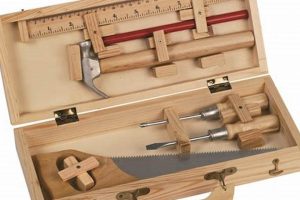
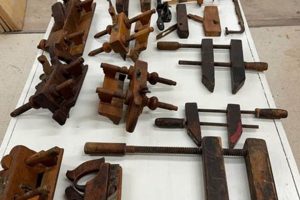
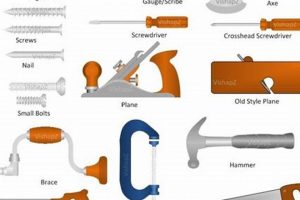
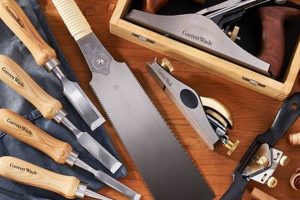
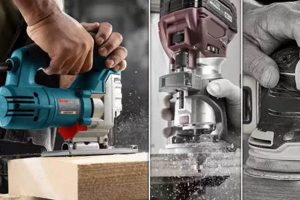
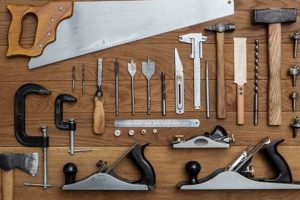
Essential implements for shaping wood are instruments, either hand-operated or powered, designed for cutting, joining, shaping, and finishing wooden materials. An example includes a hand saw for cutting lumber, a chisel for shaping details, a drill for creating holes, and sandpaper for smoothing surfaces.
Acquiring the appropriate set of these implements allows for the creation of various projects, from simple furniture to intricate carvings. Historically, these items were handcrafted and passed down through generations. Today, mass production makes them more accessible, yet understanding their purpose and proper usage remains paramount for achieving desired outcomes.
The subsequent sections will elaborate on specific categories of implements, differentiating between essential and specialized items. The discussion will also encompass safety considerations and provide guidance on selecting quality equipment for various skill levels and project types.
Guidance on Acquiring Woodworking Equipment
The selection of implements for manipulating wood requires careful consideration. Prioritize quality and suitability to project needs to ensure optimal results and longevity of the equipment.
Tip 1: Begin with essential hand tools. A well-chosen handsaw, chisels of varying sizes, a smoothing plane, a measuring tape, and a combination square constitute a foundational set.
Tip 2: Invest in quality over quantity. While a comprehensive set may seem appealing, superior performance and durability are more beneficial in the long run. Select tools from reputable manufacturers.
Tip 3: Prioritize safety equipment. Safety glasses, hearing protection, and a dust mask are indispensable. Proper safety gear mitigates risks associated with woodworking operations.
Tip 4: Consider power tools as skill progresses. A drill, circular saw, and sander can significantly increase efficiency and broaden the scope of potential projects. Choose models with variable speed settings for versatility.
Tip 5: Maintain implements diligently. Regular cleaning, sharpening, and lubrication are essential for preserving performance and extending the lifespan of equipment. A well-maintained tool is a safe and effective tool.
Tip 6: Explore specialized items based on project requirements. A router, joiner, or lathe may be warranted for specific applications. Thorough research and evaluation are necessary before acquiring such specialized equipment.
Tip 7: Organize implements effectively. A dedicated workspace with appropriate storage solutions promotes efficiency and safety. A well-organized shop reduces the risk of accidents and facilitates project workflow.
Selecting and maintaining appropriate instruments are fundamental to achieving success in woodworking. Strategic investment and diligent care translate to high-quality results and enhanced safety.
The subsequent section will delve into specific implement categories, offering detailed recommendations for various skill levels and project types.
1. Measuring implements

Measuring implements are foundational to woodworking. The accuracy and precision achieved in a project are directly proportional to the quality and proper use of measuring devices. Inaccurate measurements result in misaligned joints, improperly sized components, and ultimately, a flawed finished product. This makes measuring instruments a necessity in “what tools do I need for woodworking.”
Examples of essential measuring implements include measuring tapes, rulers, combination squares, and marking gauges. A measuring tape facilitates the accurate assessment of larger dimensions, crucial for overall project size. A ruler provides precise measurements for smaller components. A combination square serves multiple functions, including verifying right angles and marking straight lines. A marking gauge ensures consistent parallel lines, essential for joinery. The absence of these implements compromises dimensional control, leading to costly errors and material waste.
Therefore, the integration of accurate measuring instruments into a woodworking setup is indispensable. Consistent and precise measurements are not simply desirable, they are crucial for achieving functional, structurally sound, and aesthetically pleasing woodworking projects. The selection of appropriate measuring implements and the development of skill in their use represent a fundamental aspect of woodworking practice. Overlooking this area can severely limit the potential for success.
2. Cutting instruments
Cutting instruments are fundamental to woodworking, enabling the shaping and dimensioning of raw materials into desired forms. The precision and efficiency of woodworking operations are directly dependent on the selection and proper utilization of appropriate cutting tools. Choosing suitable tools constitutes a critical step in determining “what tools do I need for woodworking”.
- Hand Saws: Precision and Control
Hand saws offer control and accuracy in cutting lumber. Crosscut saws are designed for cutting perpendicular to the wood grain, while rip saws are optimized for cutting parallel to the grain. The kerf, or the width of the cut, influences the amount of material removed. A well-maintained hand saw allows for intricate cuts and precise joinery, minimizing material waste and ensuring a snug fit in assembly.
- Power Saws: Efficiency and Speed
Power saws, such as circular saws, jigsaws, and table saws, enhance speed and efficiency in cutting operations. Circular saws are suitable for straight cuts in sheet goods and lumber. Jigsaws enable curved cuts and intricate shapes. Table saws provide precision in ripping and crosscutting lumber. The correct use of power saws significantly reduces the time required for material preparation, increasing project throughput.
- Chisels: Shaping and Refining
Chisels are essential for refining cuts, shaping joints, and removing small amounts of material. Beveled-edge chisels allow for precise paring and detail work. Mortise chisels are designed for creating mortises for mortise-and-tenon joints. The sharpness and quality of a chisel directly impact the cleanliness and accuracy of cuts, influencing the overall quality of the finished piece.
- Planes: Smoothing and Thicknessing
Planes serve to smooth surfaces and reduce the thickness of lumber. Smoothing planes create a refined surface finish. Block planes are useful for end-grain work and chamfering edges. Bench planes are versatile for general shaping and smoothing tasks. The precise adjustment of plane blades allows for controlled material removal, resulting in flat, even surfaces ready for finishing.
The selection of cutting instruments depends on the nature of the woodworking project, the type of wood being used, and the desired level of precision. Integrating a diverse range of cutting tools into the workshop enables a wider range of operations, increasing design flexibility and enhancing the quality of finished products. The consideration of cutting instruments is, therefore, an integral part of the question: “what tools do I need for woodworking”.
3. Shaping implements
Shaping implements represent a critical subset when considering “what tools do I need for woodworking.” The attainment of desired forms and profiles necessitates specific instruments designed for material removal beyond basic cutting and dimensioning. Failure to incorporate these implements limits the complexity and refinement of woodworking projects, directly impacting aesthetic and functional outcomes. Examples include rasps, files, spoke shaves, and specialized carving tools.
The cause-and-effect relationship is evident: utilizing appropriate shaping implements facilitates the creation of curves, contours, and intricate details, whereas their absence restricts project possibilities to primarily rectilinear forms. For instance, constructing a cabriole leg for a chair requires a spoke shave or similar shaping tool to achieve the characteristic curve. Similarly, carving decorative elements demands a selection of specialized gouges and chisels. The ability to effectively shape wood translates directly into greater design freedom and the capacity to produce more sophisticated and visually appealing pieces. A woodworker’s tool selection should be made with an awareness of “what tools do I need for woodworking” to avoid constraints.
In summation, shaping implements are indispensable for woodworkers aiming to progress beyond basic constructions. Their inclusion expands the scope of achievable projects, enabling the creation of intricate and aesthetically refined pieces. A comprehensive understanding of shaping techniques, coupled with the acquisition of appropriate implements, constitutes a vital element in advanced woodworking practice. Recognizing this need is paramount when evaluating “what tools do I need for woodworking,” as omitting these tools restricts the potential for realizing complex and visually compelling designs.
4. Fastening devices

Securely joining wooden components is paramount in woodworking. The selection of appropriate fastening devices directly influences the structural integrity and longevity of a project, making it a critical consideration in “what tools do I need for woodworking”. A deficient choice can lead to structural failures and aesthetic compromises.
- Screws: Strength and Versatility
Screws offer a robust and versatile fastening method. They provide significant holding power and allow for disassembly if required. Various screw types, such as wood screws, drywall screws, and self-tapping screws, cater to different materials and applications. The selection of the correct screw type, length, and gauge ensures a secure and durable joint, an essential consideration when addressing “what tools do I need for woodworking”. For example, constructing a cabinet framework relies heavily on the proper selection and installation of screws for lasting stability.
- Nails: Speed and Simplicity
Nails provide a rapid and economical fastening solution. While offering less holding power than screws, they are suitable for applications where speed and simplicity are prioritized. Various nail types, including common nails, finishing nails, and brad nails, serve different purposes. Common nails are used for general construction, finishing nails are designed to be concealed, and brad nails are used for delicate trim work. Their integration into projects highlights an important choice in “what tools do I need for woodworking”, particularly for simpler assemblies.
- Adhesives: Bonding and Sealing
Adhesives offer a seamless and often invisible fastening method. Wood glues, such as polyvinyl acetate (PVA) and polyurethane glues, provide strong bonds between wooden surfaces. Epoxy resins offer exceptional strength and gap-filling capabilities. The selection of an appropriate adhesive depends on the type of wood, the joint configuration, and the environmental conditions. Their application in projects showcases the breadth of solutions when addressing “what tools do I need for woodworking” and achieving strong, clean joints.
- Joinery Techniques: Traditional Strength
Traditional joinery techniques, such as mortise-and-tenon joints, dovetail joints, and rabbet joints, provide robust and aesthetically pleasing connections. These methods rely on precise cuts and interlocking shapes rather than external fasteners. Implementing these techniques requires skill and specialized tools, but results in exceptionally strong and durable joints. Selecting the correct joinery method showcases an advanced awareness when evaluating “what tools do I need for woodworking” for maximum structural strength.
The optimal selection of fastening devices depends on the specific demands of the woodworking project. Factors to consider include the type of wood, the load-bearing requirements, the aesthetic preferences, and the skill level of the woodworker. A thorough understanding of the properties and applications of various fastening methods is essential for achieving safe, durable, and visually appealing results. These decisions are crucial for making informed choices when answering “what tools do I need for woodworking”, particularly for achieving both strength and a professional finish.
5. Finishing materials

The selection and application of appropriate finishing materials are integral to woodworking projects. While often considered separate from the initial construction phase, finishing materials directly influence the aesthetic appeal, durability, and protective qualities of the finished piece. Therefore, their consideration forms an essential component when determining “what tools do I need for woodworking”.
- Surface Preparation Tools
Achieving a flawless finish hinges on meticulous surface preparation. This necessitates tools for sanding, scraping, and cleaning the wood surface. Sandpaper of varying grits, sanding blocks, and power sanders are essential for removing imperfections and creating a smooth substrate. Scrapers allow for precise leveling and removal of blemishes. Tack cloths and compressed air ensure a clean surface free of dust and debris, optimizing adhesion and preventing blemishes in the final finish. The range of tools for surface preparation is a notable aspect of “what tools do I need for woodworking” if a professional-grade finish is desired.
- Application Implements
The application of finishing materials requires specific implements to ensure even coverage and prevent imperfections. Brushes, rollers, and spray guns are commonly employed, each suited for different types of finishes and project scales. High-quality brushes with natural or synthetic bristles provide smooth application of varnishes and paints. Rollers are ideal for applying sealers and coatings to large, flat surfaces. Spray guns offer efficient and uniform coverage for lacquers and stains, particularly on intricate or curved surfaces. Selection and proper use of these application tools greatly impact the quality of the final finish and must be considered when assessing “what tools do I need for woodworking”.
- Protective Gear and Ventilation
Working with finishing materials often involves exposure to potentially harmful chemicals and fumes. Adequate protective gear and ventilation are, therefore, essential for safety. Respirators safeguard against inhalation of harmful vapors, while gloves protect skin from irritation and absorption of chemicals. A well-ventilated workspace ensures the dispersion of fumes and reduces the risk of respiratory issues. Consideration of these safety measures is indispensable when determining “what tools do I need for woodworking,” as safety is paramount.
- Curing and Rubbing Out Tools
Achieving a durable and aesthetically pleasing finish often involves a curing process followed by rubbing out or polishing. Curing racks or dust-free environments facilitate the proper drying and hardening of the finish. Abrasive compounds, polishing cloths, and rubbing blocks are used to level the finish, remove imperfections, and achieve the desired sheen. These tools are critical for realizing the full potential of finishing materials and should be included in evaluations of “what tools do I need for woodworking” for those seeking a truly professional result.
In conclusion, finishing materials and the tools required for their application are inseparable from the broader woodworking process. A comprehensive consideration of “what tools do I need for woodworking” must include not only the implements for shaping and joining wood but also those necessary for achieving a durable, protective, and aesthetically pleasing final finish. Omission of these elements compromises the overall quality and longevity of the finished product. Properly accounting for finishing materials is integral to the success of any woodworking endeavor.
6. Safety equipment

The realm of woodworking necessitates a thorough understanding of both material manipulation and personal safety. Safety equipment, therefore, is not an optional addendum but rather a fundamental component when determining “what tools do I need for woodworking”. Its omission constitutes a significant compromise to well-being and responsible workshop practice.
- Eye Protection: Mitigating Projectile Hazards
Woodworking inherently involves the generation of airborne particles, including sawdust, wood chips, and splinters. Eye protection, such as safety glasses or goggles, serves as a critical barrier against these projectiles, preventing potential eye injuries. During sawing, routing, or sanding operations, the risk of debris impacting the eyes is substantial. Failure to wear appropriate eye protection can result in corneal abrasions, embedded foreign objects, and in severe cases, permanent vision impairment. The consistent use of eye protection is, therefore, a non-negotiable aspect of safe woodworking practice and a vital element when addressing “what tools do I need for woodworking”.
- Hearing Protection: Preserving Auditory Function
Many woodworking tools, particularly power tools such as routers, planers, and sanders, generate high noise levels that can lead to gradual or immediate hearing loss. Hearing protection, in the form of earplugs or earmuffs, attenuates these noise levels, reducing the risk of auditory damage. Prolonged exposure to high decibel levels can cause tinnitus, hyperacusis, and irreversible hearing impairment. Consistent use of hearing protection is crucial for maintaining auditory health throughout a woodworking career, making it an essential consideration when contemplating “what tools do I need for woodworking”.
- Respiratory Protection: Shielding Against Inhalation Hazards
Woodworking activities, particularly sanding, sawing, and finishing, generate dust and fumes that can pose significant respiratory hazards. Dust masks or respirators provide a barrier against the inhalation of these particles and vapors, preventing respiratory irritation and long-term health problems. Exposure to wood dust can cause allergic reactions, asthma, and in some cases, nasal cancer. Finishes often contain volatile organic compounds (VOCs) that can cause respiratory distress and neurological effects. Appropriate respiratory protection is paramount for safeguarding respiratory health and is, therefore, a key element in evaluating “what tools do I need for woodworking”.
- Personal Protective Equipment (PPE): Minimizing Physical Risks
Beyond eye, ear, and respiratory protection, additional PPE minimizes the risk of physical injuries. Gloves protect hands from cuts, abrasions, and chemical exposure. Aprons or shop coats shield clothing and skin from dust, splinters, and spills. Safety footwear provides protection against dropped objects and slippery surfaces. Consideration of these items should not be omitted when discussing “what tools do I need for woodworking” for minimizing risk.
The incorporation of safety equipment into a woodworking setup is not merely a matter of compliance but a fundamental commitment to personal well-being. The long-term health benefits of using appropriate safety gear far outweigh the perceived inconvenience. Consequently, a comprehensive assessment of “what tools do I need for woodworking” must prioritize safety equipment alongside cutting, shaping, and fastening implements.
7. Sharpening tools

The relationship between sharpening tools and “what tools do I need for woodworking” is symbiotic; one cannot realize the full potential of woodworking implements without the consistent ability to maintain their cutting edges. Sharpness dictates efficiency, precision, and safety. A dull tool requires more force, increasing the risk of slippage and injury. Furthermore, a dull edge tears wood fibers rather than cleanly severing them, resulting in rough surfaces and compromised joinery. Therefore, a strategic answer to “what tools do I need for woodworking” must inherently include sharpening implements and the knowledge to employ them.
Examples of essential sharpening tools include whetstones (both natural and synthetic), diamond stones, honing steels, and sharpening jigs. Whetstones, used with honing oil or water, gradually refine the cutting edge. Diamond stones offer a faster cutting action and are suitable for harder steels. Honing steels realign the cutting edge on knives and chisels between sharpenings. Sharpening jigs assist in maintaining consistent angles, crucial for achieving optimal sharpness. The specific choice of sharpening tools depends on the type of steel, the geometry of the cutting edge, and the user’s skill level. Neglecting sharpening practices ultimately renders even the most expensive woodworking tools ineffective.
In summation, integrating sharpening tools into a woodworking setup is not an optional consideration but a fundamental necessity. The ability to consistently maintain sharp edges directly impacts the quality, efficiency, and safety of woodworking operations. Failure to prioritize sharpening practices undermines the investment in woodworking tools and compromises the potential for achieving professional-grade results. The effective incorporation of sharpening tools and skills is a key determinant of success in any woodworking endeavor, answering “what tools do I need for woodworking” completely.
Frequently Asked Questions
The subsequent questions address common inquiries regarding the acquisition of appropriate woodworking implements. Answers provided aim to clarify misconceptions and offer guidance on tool selection.
Question 1: Is an extensive collection of implements necessary to begin woodworking?
An exhaustive inventory of implements is not initially required. A foundational set, comprising a handsaw, chisels, a measuring tape, and a combination square, suffices for introductory projects. Subsequent acquisitions should align with specific project requirements.
Question 2: Are inexpensive, mass-produced implements suitable for woodworking?
While budget-friendly options exist, prioritizing quality over cost is advisable. Superior implements offer enhanced performance, durability, and safety. Investing in reputable brands yields long-term benefits.
Question 3: Is powered equipment essential for efficient woodworking?
Powered implements, such as drills and saws, augment efficiency and broaden the scope of potential projects. However, proficiency with hand tools is fundamental. Powered equipment should be introduced gradually as skill progresses.
Question 4: What safety implements are indispensable for woodworking?
Safety glasses, hearing protection, and a dust mask constitute essential safety equipment. These implements mitigate risks associated with airborne particles, noise exposure, and chemical hazards.
Question 5: How frequently should woodworking implements be maintained?
Regular maintenance is crucial for preserving performance and extending implement lifespan. Cleaning, sharpening, and lubrication should be performed routinely.
Question 6: Are specialized implements necessary for intricate woodworking projects?
Specialized implements, such as routers and joiners, may be warranted for specific applications. However, thorough research and evaluation are necessary before acquiring such equipment.
Strategic implement selection and diligent maintenance are fundamental to achieving success in woodworking. Careful investment and consistent care translate to high-quality results and enhanced safety.
The subsequent section will address essential woodworking techniques to improve skill and craftsmanship.
Conclusion
This exploration has delineated the essential implements required for woodworking. The considerations extend beyond mere acquisition, encompassing quality assessment, maintenance practices, and a comprehensive understanding of safety protocols. Successfully navigating the woodworking landscape demands a deliberate and informed approach to tool selection.
The diligent application of these guidelines enables the practitioner to realize both functional and aesthetic objectives. Mastery of technique, coupled with judicious equipment investment, forms the cornerstone of enduring craftsmanship. Continued learning and refinement are essential for achieving excellence within this discipline.