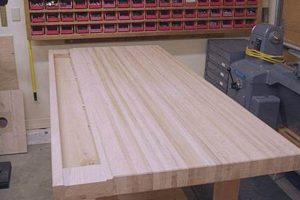
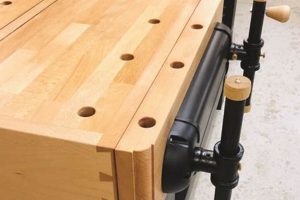
These essential tools are mechanical devices affixed to a workbench, designed to securely hold workpieces during woodworking operations. They typically feature two jaws, one fixed and one movable, that clamp the material in place through a screw mechanism. This clamping action provides stability for tasks such as sawing, planing, chiseling, and joinery.
The utility of these holding mechanisms lies in their ability to free the user’s hands, enhancing precision and safety. Historically, they have evolved from simple wooden clamps to sophisticated metal designs, reflecting advancements in materials and manufacturing techniques. Their presence significantly improves the efficiency and accuracy of woodworking projects.
The following sections will delve into the diverse types available, factors to consider when selecting one, and proper maintenance procedures to ensure longevity and optimal performance within a woodworking shop environment.
Essential Usage Guidelines
Effective utilization of these tools maximizes their potential and ensures secure workpiece manipulation during woodworking tasks.
Tip 1: Jaw Alignment is Crucial: Verify that the jaws align perfectly before clamping. Misalignment can damage both the workpiece and the apparatus itself. Utilize shims if necessary to achieve proper parallelism.
Tip 2: Appropriate Clamping Pressure: Avoid overtightening. Excessive force can deform the material or strip the screw threads. Apply only sufficient pressure to hold the piece firmly.
Tip 3: Protect Delicate Surfaces: When working with softwoods or finished pieces, employ sacrificial wooden pads between the jaws and the workpiece to prevent indentations or scratches.
Tip 4: Distribute Clamping Force: For larger workpieces, consider using multiple holding mechanisms or incorporating spreaders to evenly distribute the clamping pressure and prevent warping.
Tip 5: Regular Maintenance is Essential: Periodically lubricate the screw mechanism with a suitable grease or oil to ensure smooth operation and prevent corrosion. Remove accumulated debris from the threads.
Tip 6: Consider Jaw Capacity: Before undertaking a project, confirm that the jaw opening is sufficient to accommodate the thickness of the material. Exceeding the capacity risks damaging the tool.
Tip 7: Utilize Quick-Release Mechanisms Judiciously: On models equipped with a quick-release lever, engage and disengage it carefully to avoid jarring the workpiece and compromising stability.
Tip 8: Select Appropriate Jaw Faces: Certain models offer interchangeable jaw faces. Opt for faces with textured surfaces for enhanced grip or smooth faces for delicate work.
Adherence to these guidelines will not only prolong the lifespan of the holding apparatus but also enhance the quality and precision of woodworking endeavors.
The subsequent sections will explore common troubleshooting scenarios and advanced techniques for utilizing these tools in specialized applications.
1. Clamping Force
Clamping force, the measure of pressure exerted by a woodworking bench vice upon a workpiece, is a paramount factor influencing the success and precision of woodworking tasks. Insufficient or excessive clamping force can compromise stability, damage materials, and hinder the execution of joinery and shaping operations.
- Secure Workholding
Adequate clamping force ensures the workpiece remains stationary during sawing, planing, chiseling, and other operations. Without sufficient force, the material may shift or vibrate, resulting in inaccurate cuts, uneven surfaces, and potentially dangerous working conditions. The required clamping force varies depending on the material’s density and the type of operation being performed.
- Joinery Precision
Precise joinery, such as mortise and tenon or dovetail joints, necessitates consistent and reliable clamping force. During glue-up, clamping force must be sufficient to close gaps and ensure tight-fitting joints without crushing the wood fibers. Even distribution of clamping force across the joint is critical for structural integrity.
- Material Integrity
Excessive clamping force can deform or damage the workpiece, particularly with softer woods. Over-tightening can crush fibers, leaving unsightly marks or compromising structural strength. Adjusting clamping force according to the material’s properties is essential for preserving its integrity.
- Vice Mechanism and Design
The design and mechanism of the woodworking bench vice directly influence the available clamping force. Vices with robust screws and solid jaws can generate greater clamping force than lighter-duty models. The screw pitch, handle length, and jaw construction all contribute to the tool’s overall clamping capacity.
Therefore, the selection of a woodworking bench vice must consider the anticipated clamping force requirements of typical projects. The ability to control and modulate clamping force is a key characteristic of a high-quality vice, directly impacting the precision, safety, and overall success of woodworking endeavors.
2. Jaw Capacity
Jaw capacity, a critical specification of woodworking bench vices, dictates the maximum thickness of material the tool can securely hold. Inadequate jaw capacity renders the device unsuitable for handling larger stock, directly limiting the scope of potential projects. Conversely, an excessive capacity may complicate the secure clamping of thinner workpieces, potentially compromising stability and precision. The selection of a tool with appropriate jaw capacity is therefore directly linked to the typical dimensions of materials used in a woodworking shop.
The practical implications of jaw capacity are readily apparent in various woodworking scenarios. For instance, constructing large furniture pieces often necessitates working with thick timbers, requiring a vice with substantial jaw opening. Conversely, crafting delicate inlays or fine joinery may involve thin veneers or small components, where a smaller jaw capacity, coupled with appropriate shims, provides greater control and minimizes the risk of damage. The inability to accommodate the material dimension effectively negates the utility of the tool, regardless of other features.
Understanding jaw capacity’s role in the functionality of these tools is essential for informed decision-making. Challenges arise when project requirements exceed the vice’s limitations, leading to unsafe workarounds or project abandonment. The effective integration of this understanding is a core element of successful woodworking practice, ensuring the tool complements, rather than hinders, the creative process.
3. Material Durability

Material durability in woodworking bench vices is a primary determinant of the tool’s lifespan and its ability to consistently perform under stress. The vice body, jaws, screw mechanism, and handle are all subject to significant forces during clamping operations. The choice of materials directly impacts the vice’s resistance to wear, deformation, and corrosion, thus influencing its long-term reliability. For instance, a vice constructed from high-quality cast iron is significantly less prone to cracking or bending under pressure compared to one made from lower-grade steel. Similarly, a hardened steel screw will resist thread stripping better than a softer metal.
The practical significance of material durability is readily apparent in demanding woodworking environments. A professional woodworker relying on the vice daily will place a greater emphasis on robust construction materials than a hobbyist with infrequent usage. Consider a scenario where a large timber is being clamped for mortise and tenon joinery. A vice with inadequate material strength may flex, leading to misalignment and imprecise cuts. Furthermore, environmental factors, such as humidity and exposure to wood finishes, can accelerate corrosion in vices with less durable materials, impacting performance and requiring frequent maintenance.
In conclusion, the material durability of a woodworking bench vice is not merely a desirable attribute but a functional requirement for ensuring consistent performance and longevity. The initial investment in a vice constructed from high-quality materials ultimately translates to reduced maintenance costs, enhanced precision, and increased user safety. The selection process must therefore prioritize material specifications to align with the anticipated demands and environmental conditions of the woodworking environment.
4. Mounting Stability

Mounting stability represents a foundational requirement for the effective utilization of woodworking bench vices. It refers to the secure and unwavering attachment of the vice to the workbench, preventing movement or vibration during operation. Compromised mounting stability undermines precision, increases the risk of workpiece damage, and poses potential safety hazards.
- The Role of Bench Design
The design and construction of the workbench itself directly impact mounting stability. A robust and rigid bench, constructed from solid wood or reinforced with metal bracing, provides a stable platform for the vice. The thickness and material of the benchtop are critical factors, as they determine the vice’s ability to resist torque and shear forces. Inadequate bench construction can lead to flexing or movement, even with a properly mounted vice.
- Fastener Selection and Placement
The type and placement of fasteners used to secure the vice to the bench are crucial. Lag screws, through bolts with washers, and specialized mounting hardware are commonly employed. The size and number of fasteners must be appropriate for the vice’s size and the anticipated clamping forces. Strategic placement of fasteners, distributing the load evenly across the mounting surface, is essential for preventing localized stress and potential failure.
- Impact of Vice Location
The location of the vice on the workbench influences mounting stability. Mounting the vice near a bench leg or apron provides additional support and reduces the likelihood of flexing. Positioning the vice too far from structural elements can create a lever effect, amplifying the forces exerted on the mounting hardware. Careful consideration of the vice’s intended use and the workbench’s structural characteristics is necessary for optimal placement.
- Consequences of Instability
A lack of mounting stability manifests in several ways, including vibration during sawing, inaccurate planing, and difficulty in executing precise joinery. Workpieces may shift or slip under pressure, leading to errors and potentially damaging the material. Furthermore, a loose or unstable vice poses a safety risk, as it can unexpectedly detach from the bench during use. Addressing mounting stability issues promptly is crucial for maintaining a safe and productive woodworking environment.
In summary, mounting stability is not merely a mechanical consideration but an integral component of effective woodworking practice. A securely mounted woodworking bench vice provides a stable and reliable platform for a wide range of operations, enhancing precision, safety, and overall project quality. The integration of appropriate bench design, fastener selection, vice location, and routine inspection protocols ensures a consistently stable and productive working environment.
5. Jaw Alignment

Jaw alignment, referring to the coplanarity and parallelism of the clamping surfaces in woodworking bench vices, significantly influences the precision and quality of woodworking operations. Deviation from proper alignment introduces inaccuracies, increases the risk of workpiece damage, and compromises the overall effectiveness of the tool. Achieving and maintaining correct jaw alignment is therefore a critical aspect of woodworking practice.
- Ensuring Uniform Clamping Pressure
Properly aligned jaws distribute clamping pressure evenly across the workpiece surface. Misalignment concentrates force on specific points, potentially causing indentations or crushing softer materials. This is particularly critical when working with delicate woods or thin veneers, where even slight pressure variations can lead to irreparable damage. Uniform pressure ensures secure holding without compromising the integrity of the material.
- Facilitating Accurate Joinery
Precise joinery, such as dovetails or mortise and tenons, demands consistent alignment throughout the process. Misaligned jaws introduce subtle variations in the clamping angle, leading to gaps, misfits, or weakened joints. During glue-up, proper alignment ensures that the joint is fully closed and that adhesive is distributed evenly. A vice with true jaw alignment is essential for achieving professional-quality joinery.
- Mitigating Workpiece Distortion
When clamping thin or flexible materials, misaligned jaws can induce bending or twisting. This distortion compromises the accuracy of cuts, planing operations, and shaping tasks. By ensuring that the jaws are parallel and coplanar, the workpiece is held securely without being subjected to undue stress. This is particularly relevant when working with large panels or delicate components.
- Extending Tool Lifespan
Consistent use of a vice with misaligned jaws places undue stress on the screw mechanism and other components. Over time, this can lead to premature wear, thread stripping, or structural damage. Maintaining proper jaw alignment reduces stress, prolongs the vice’s lifespan, and ensures continued reliable performance. Regular inspection and adjustment are essential for preventing alignment-related issues.
In summary, jaw alignment is not merely a cosmetic consideration but a fundamental factor influencing the performance and longevity of woodworking bench vices. From ensuring uniform clamping pressure to facilitating accurate joinery and mitigating workpiece distortion, proper alignment contributes directly to the precision, quality, and safety of woodworking operations. Regular maintenance and adjustment are essential for preserving alignment and maximizing the tool’s effectiveness.
6. Operating Smoothness

Operating smoothness, a key attribute of woodworking bench vices, directly influences user efficiency, precision, and overall experience. A vice that operates smoothly reduces physical strain, minimizes the risk of workpiece movement during adjustment, and enhances control over clamping force. The following details elucidate the facets contributing to operating smoothness and its significance in woodworking tasks.
- Screw Mechanism Precision
The screw mechanism is the core component determining operating smoothness. Finely machined threads, tight tolerances, and proper lubrication minimize friction, resulting in effortless rotation and precise control over jaw movement. A poorly manufactured or maintained screw mechanism introduces binding, requiring excessive force to tighten or loosen the jaws and increasing the likelihood of sudden, jerky movements that disrupt the workpiece. Vices employing Acme threads often exhibit superior smoothness compared to those with standard V-threads.
- Handle Design and Ergonomics
The design and ergonomics of the handle contribute significantly to the overall operating smoothness. A handle with a comfortable grip and sufficient length provides ample leverage, reducing the effort required to generate clamping force. Smoothly rotating handles, free from wobbling or binding, further enhance user comfort and control. Ergonomic considerations, such as handle material and shape, minimize hand fatigue during prolonged use.
- Jaw Slide and Guiding System
The jaw slide and guiding system ensure that the movable jaw travels smoothly and linearly, maintaining proper alignment with the fixed jaw. Precision-machined slides, often incorporating dovetail or tongue-and-groove designs, minimize play and prevent binding. The presence of smooth, low-friction surfaces between the sliding components further contributes to operating smoothness. Improperly fitted or poorly maintained slides introduce friction and resistance, hindering smooth operation.
- Lubrication and Maintenance Regimen
Consistent lubrication is essential for maintaining operating smoothness. Applying a suitable lubricant to the screw mechanism, jaw slides, and other moving parts reduces friction, prevents corrosion, and ensures effortless operation. A regular maintenance regimen, including cleaning and lubrication, prolongs the life of the vice and preserves its operating smoothness. Neglecting lubrication leads to increased friction, binding, and ultimately, premature wear and failure.
These factors collectively determine the operating smoothness of woodworking bench vices. A vice characterized by a precise screw mechanism, ergonomic handle design, smooth jaw slide, and consistent lubrication facilitates efficient and controlled clamping, enhancing the quality and precision of woodworking projects. Neglecting these aspects results in increased user fatigue, compromised accuracy, and reduced tool longevity.
Frequently Asked Questions About Woodworking Bench Vices
The following section addresses common inquiries regarding the selection, use, and maintenance of woodworking bench vices. It aims to provide concise and informative answers to enhance understanding and optimize performance.
Question 1: What clamping force is optimal for general woodworking applications?
The required clamping force varies based on the workpiece material and task. However, a clamping force sufficient to securely hold the material without causing deformation is generally optimal. Overtightening is a common error that can damage both the material and the vice.
Question 2: How frequently should a woodworking bench vice be lubricated?
Lubrication frequency depends on usage intensity and environmental conditions. For regular use, lubricating the screw mechanism every three to six months with a suitable grease or oil is recommended. More frequent lubrication may be necessary in humid or dusty environments.
Question 3: What are the indications that a woodworking bench vice requires repair or replacement?
Signs indicating the need for repair or replacement include stripped screw threads, cracked jaws, excessive play in the mechanism, or inability to generate sufficient clamping force. Attempting to use a damaged vice can be hazardous and may compromise project quality.
Question 4: Can woodworking bench vices be adapted for use with metalworking applications?
While some woodworking bench vices may be suitable for light-duty metalworking, specialized metalworking vices are generally recommended for more demanding applications. Woodworking vices lack the hardened jaws and robust construction necessary for heavy-duty metal fabrication.
Question 5: What considerations are crucial when selecting a woodworking bench vice for a small workshop?
In small workshops, space efficiency is paramount. Consider models with compact designs and versatile mounting options. Prioritize essential features such as adequate jaw capacity and clamping force, while minimizing overall footprint.
Question 6: How does jaw width impact the versatility of a woodworking bench vice?
Wider jaws provide a larger clamping surface area, enhancing stability when working with large or irregularly shaped workpieces. However, excessively wide jaws can be cumbersome for smaller projects. The optimal jaw width depends on the typical dimensions of materials used in the woodworking shop.
This FAQ section provides essential knowledge for those looking to further improve their woodworking techniques. Selecting and using woodworking bench vices require careful consideration and proper maintenance.
The subsequent section will focus on advanced techniques and alternative work holding solutions.
Woodworking Bench Vices
This exploration has underscored the critical role that woodworking bench vices play in achieving precision, stability, and safety across diverse woodworking tasks. Key aspects such as clamping force, jaw capacity, material durability, mounting stability, jaw alignment, and operating smoothness have been examined in detail, revealing their direct influence on project outcomes and tool longevity. Effective selection, proper utilization, and consistent maintenance are crucial for maximizing the benefits these essential tools provide.
As woodworking practices evolve, a thorough understanding of woodworking bench vices remains fundamental for both novice and experienced craftspeople. Continued attention to innovation and best practices in their design and application will ensure that these work holding devices remain indispensable assets in the pursuit of woodworking excellence.
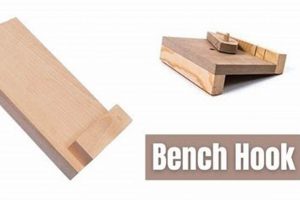
![Build A Roman Woodworking Bench [DIY Guide] | Step-by-Step Guides, Tools & Inspiration to Build Beautiful Wooden Decor on a Budget](https://woodfromhome.com/wp-content/uploads/2026/05/th-207-300x200.jpg "Build A Roman Woodworking Bench [DIY Guide] Step-by-Step Guides, Tools & Inspiration to Build Beautiful Wooden Decor on a Budget")