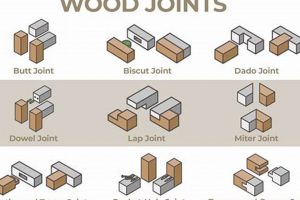
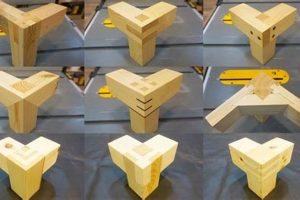
A specialized apparatus facilitates the creation of strong, interlocking corner joints in woodworking projects. This device guides the precise cutting of alternating slots and fingers in two pieces of wood, which then intermesh to form a robust connection. Examples of its application include constructing drawers, boxes, and other right-angled assemblies where durability and visual appeal are desired.
The use of this tool provides several advantages, including increased joint strength compared to simple butt joints and an aesthetically pleasing, handcrafted appearance. Historically, crafting these types of joints was a time-consuming and complex process involving hand tools. This apparatus streamlines the procedure, enabling woodworkers to produce accurate and consistent results more efficiently. Its adoption has significantly impacted furniture making and other woodworking disciplines, allowing for greater precision and repeatability.
The following sections will detail the various types of these devices available, explore essential considerations for their selection, and provide practical guidance on their effective use in creating durable and visually appealing joined structures.
Crafting Excellence
The following tips offer guidance for optimizing the use of a specialized apparatus to produce precise and robust corner joinery in woodworking projects.
Tip 1: Material Selection is Paramount: Employ consistently dimensioned stock. Variations in thickness can compromise joint integrity and aesthetic quality.
Tip 2: Router Bit Selection and Maintenance: Use a high-quality, sharp router bit specifically designed for box joints. Regularly inspect the bit for wear and sharpen or replace as needed to ensure clean cuts.
Tip 3: Precision Setup and Calibration: Accurate jig setup is crucial. Meticulously align the jig and workpiece, and calibrate the bit depth to match the material thickness for optimal joint fit.
Tip 4: Test Cuts Are Essential: Before committing to the final project pieces, perform test cuts on scrap material of the same type and thickness. This allows for fine-tuning and minimizes potential errors.
Tip 5: Consistent Feed Rate: Maintain a steady and controlled feed rate during routing. Avoid forcing the router, as this can lead to tear-out or inaccurate cuts.
Tip 6: Secure Workpiece Clamping: Ensure the workpiece is firmly secured to the jig. Movement during routing can result in imprecise joints and potential safety hazards.
Tip 7: Dust Collection is Critical: Implement effective dust collection to maintain visibility of the cutting path and prevent dust buildup that can affect accuracy.
Adherence to these practices promotes accuracy, efficiency, and high-quality results when utilizing this joinery technique. Mastering these aspects elevates the craftsmanship and structural integrity of woodworking projects.
The subsequent section will explore common problems encountered when using these devices and effective troubleshooting strategies.
1. Accuracy

Accuracy is paramount in woodworking, particularly when employing a device to create interlocking corner joints. The precision with which this tool is used directly influences the strength, appearance, and overall quality of the finished piece. Deviations, however slight, can compromise the integrity of the joint and the aesthetic appeal of the project.
- Jig Calibration and Setup
Precise calibration and setup of the apparatus are fundamental. This involves ensuring the fence is square to the router bit, the indexing pin is accurately positioned, and all components are tightly secured. Misalignment or slippage can lead to variations in finger width and spacing, resulting in a weak or ill-fitting joint. For instance, if the indexing pin is off by even a fraction of a millimeter, the cumulative error across multiple fingers can become significant, affecting the overall joint tightness.
- Material Thickness Consistency
Variations in material thickness directly impact the accuracy of the resulting joint. If the wood stock is not consistently dimensioned, the fingers and slots will not align properly, leading to gaps or an overly tight fit. Woodworkers must ensure the thickness of the material is uniform using a planer or thickness sander before proceeding with joint creation. An example includes a drawer front; if the front’s thickness differs, it may not sit square to the drawer’s sides, compromising its function and look.
- Router Bit Selection and Condition
The router bit used in conjunction with the guide has a crucial role. A dull or damaged bit will produce inaccurate cuts, resulting in splintering, tear-out, and inconsistent finger profiles. Furthermore, the bit’s diameter must be precisely matched to the jig’s specifications for proper alignment. Regularly inspecting and maintaining the router bit is essential for maintaining accuracy. A worn-out bit, for example, might cause the fingers to be slightly rounded instead of square, affecting joint strength and appearance.
- Feed Rate Control
Maintaining a consistent feed rate during routing is critical for accuracy. A feed rate that is too fast can cause the router bit to deflect or chatter, resulting in uneven cuts. Conversely, a feed rate that is too slow can lead to burning or scorching of the wood. A smooth, controlled feed rate allows the router bit to efficiently remove material, resulting in clean, precise cuts. In cases of creating larger boxes or casework, maintaining this uniform pace guarantees an alignment consistency from one finger to the next.
In summary, accuracy when using a woodworking box joint jig is achieved through careful calibration, consistent material dimensions, proper router bit selection and maintenance, and controlled feed rates. Neglecting any of these facets will diminish the quality of the joint and potentially compromise the integrity of the project. Success relies on a meticulous and methodical approach, prioritizing precision at every step.
2. Durability

The longevity of a woodworking project is intrinsically linked to the strength and stability of its joinery. When employing a specialized apparatus for creating interlocking corner joints, durability becomes a paramount consideration, influencing the overall lifespan and resilience of the constructed piece.
- Wood Species Selection
The choice of wood species directly impacts the joint’s ability to withstand stress and environmental factors. Hardwoods, such as oak, maple, or walnut, generally offer greater resistance to wear and tear compared to softwoods like pine or fir. Selecting a wood species appropriate for the intended use and anticipated stresses is crucial. For example, a box intended for heavy tools will benefit from the inherent strength of a hardwood, ensuring the joints resist separation under load. This selection protects against joint failure by resisting cracking under force.
- Joint Geometry and Glue Surface
The interlocking nature of the joints created by this tool provides a significantly larger glue surface area compared to simpler joint types. This increased surface area allows for a stronger bond between the wood pieces. The geometry of the fingers and slots mechanically resists pulling forces, enhancing the joint’s resistance to racking and shear stresses. Constructing drawers for kitchen cabinets illustrates this benefit; the interlocking fingers and ample glue surface withstand the repeated push and pull of daily use, preserving alignment over time.
- Adhesive Selection and Application
The type of adhesive used profoundly affects the durability of the joint. High-quality wood glues, such as PVA or epoxy, provide a strong, lasting bond that resists moisture and temperature fluctuations. Proper application of the adhesive, ensuring complete coverage of the joint surfaces, is essential for maximizing its strength. Imagine a humid environment; a poorly glued joint will weaken, whereas the appropriate choice can protect it from external weather influences.
- Jig Construction and Tolerances
The jig itself plays a critical role in the durability equation. A well-constructed jig, made from rigid materials and with tight tolerances, ensures consistent and accurate cuts. This consistency minimizes gaps and imperfections in the joint, which can weaken the overall structure. Furthermore, a durable jig will maintain its accuracy over time, ensuring the joints remain strong and reliable throughout the project’s lifespan. Think of commercial operations that need high-quality tools; the durability is extremely important for the long-term costs of operations.
In conclusion, the durability of a woodworking project utilizing interlocking corner joints is a function of several interconnected factors. The judicious selection of materials, coupled with meticulous construction techniques and appropriate adhesive application, contribute significantly to the creation of strong, resilient joints that enhance the longevity and value of the finished piece.
3. Material Compatibility

The selection of appropriate materials constitutes a critical factor in the effective utilization of apparatus for creating interlocking corner joints. Material characteristics dictate the precision and longevity of the joint, necessitating careful consideration of various wood properties.
- Wood Hardness and Density
The hardness and density of wood directly influence the ease and quality of cuts produced by a router bit in conjunction with the jig. Softer woods, while easier to machine, may be prone to tear-out or splintering, resulting in a less precise joint. Denser hardwoods, while requiring more power and potentially causing greater wear on router bits, often yield cleaner, more defined edges. For instance, attempting to create interlocking joints in balsa wood would likely result in crushing and splintering, whereas a hardwood like maple would provide a crisp, clean cut. This choice of material influences the joint’s structural integrity.
- Grain Orientation and Stability
The direction of the wood grain and its inherent stability are pivotal considerations. Changes in moisture content can cause wood to expand or contract, potentially compromising the joint’s integrity. Paying attention to grain orientation and employing stabilized wood, such as kiln-dried lumber, mitigates this risk. Employing quartersawn lumber, which exhibits minimal expansion and contraction along its width, would be preferable for applications where dimensional stability is paramount. This is especially critical when constructing boxes or drawers intended for use in environments with fluctuating humidity.
- Wood Figure and Aesthetic Considerations
The figure and aesthetic properties of the wood also play a role, particularly in projects where visual appeal is important. Matching wood with similar grain patterns and coloration enhances the overall aesthetic cohesiveness of the finished piece. In cases where contrasting woods are desired, understanding their respective properties and how they will interact with each other over time is essential. For example, using a darker wood for the fingers and a lighter wood for the box sides can create an appealing visual contrast, but the differential movement of the two wood species must be accounted for in the design.
- Resin Content and Router Bit Performance
The resin content present in certain wood species can significantly impact the performance of router bits. Woods with high resin content, such as pine or redwood, tend to gum up router bits, reducing their cutting efficiency and potentially leading to burning or scorching of the wood. Regular cleaning and maintenance of router bits are essential when working with resinous woods. In such cases, using router bits with specialized coatings designed to reduce friction and heat buildup can further improve performance and extend bit life.
In summation, selecting materials based on hardness, density, grain orientation, stability, and aesthetic properties is indispensable for successfully implementing this jointing technique. In summary, proper material selection optimizes joint performance and ensures the final piece meets functional and aesthetic requirements.
4. Router Selection
The choice of router significantly influences the quality and efficiency of creating interlocking corner joints. The router serves as the engine driving the cutting bit, and its capabilities directly impact the precision and smoothness of the resulting joint. Therefore, careful consideration must be given to router selection when employing this apparatus.
- Power and Motor Speed
Sufficient power is essential for efficiently removing material, particularly when working with hardwoods. A router with insufficient power may struggle to maintain consistent speed, resulting in uneven cuts and increased risk of tear-out. Variable speed control allows for adjusting the router’s RPM to match the wood species and bit size, optimizing cut quality and minimizing burning. For example, a high-powered router with variable speed control is advantageous when cutting joints in dense hardwoods such as maple or oak. The correct motor speed prevents burning the wood or damaging the router bit.
- Base Type and Stability
The base of the router provides stability and support during the cutting process. A stable, well-balanced router base ensures consistent contact with the jig, minimizing vibration and improving cut accuracy. Plunge routers, with their ability to precisely control the depth of cut, are often preferred for creating interlocking joints. Their fixed bases maintain consistent contact with the jig, which is especially useful when working on tight, detailed woodworking projects.
- Bit Collet Size and Compatibility
The router’s collet size dictates the diameter of router bits that can be used. Ensuring compatibility between the router’s collet and the desired router bits is crucial for achieving the desired joint profile. Smaller collet sizes may limit the availability of specialized bits designed for creating intricate joints. If you want a wide range of jointing options, choose one that accepts multiple collet sizes.
- Dust Collection Capability
Effective dust collection is essential for maintaining visibility of the cutting path and preventing dust buildup that can affect accuracy. Routers with integrated dust collection ports allow for connecting to a vacuum system, minimizing airborne dust and improving overall safety and working conditions. A clean workspace will ultimately assist in creating more precise joints.
In summary, selecting the appropriate router involves considering power, base type, collet size, and dust collection capabilities. A router that meets these criteria will contribute significantly to the accuracy, efficiency, and overall quality of woodworking projects utilizing this specialized joinery technique. The combination of a quality tool and accurate method can lead to high-quality and beautiful woodworking joints.
5. Jig Construction

The efficacy of a woodworking box joint jig is directly proportional to the precision and robustness of its construction. The jig serves as a template, guiding the router bit to create accurate and repeatable cuts necessary for interlocking joints. Inadequate jig construction results in dimensional inaccuracies, leading to weak or ill-fitting joints and negating the benefits of this sophisticated joinery technique. For example, if the fence of the jig is not perfectly perpendicular to the router bit’s path, the resulting fingers will be angled, preventing a tight, square connection. This cause-and-effect relationship underscores the critical importance of meticulous jig building.
Material selection for jig construction significantly influences its durability and long-term accuracy. High-density materials, such as Baltic birch plywood or acrylic, provide a stable and warp-resistant platform for the router to follow. The indexing mechanism, responsible for accurately spacing the fingers, must be constructed with precision-machined components and securely fastened to the jig body. Any play or slop in the indexing mechanism will introduce cumulative errors across multiple fingers, weakening the joint. Consider a scenario where a jig constructed from low-quality plywood experiences warping over time. The resulting inconsistencies in finger spacing would render the jig unusable, highlighting the practical significance of robust construction.
In conclusion, jig construction is not merely a preliminary step but an integral component directly dictating the quality and repeatability of woodworking box joints. A well-constructed jig ensures accuracy, stability, and longevity, enabling the woodworker to consistently produce strong and aesthetically pleasing joints. The challenges associated with imprecise jig building necessitate a focus on high-quality materials, accurate machining, and meticulous assembly. Understanding this fundamental connection enhances the craftsman’s ability to harness the full potential of this joinery method.
6. Safety
The operation of a woodworking apparatus for creating interlocking corner joints presents inherent risks that necessitate strict adherence to established safety protocols. The convergence of high-speed rotating cutters and close-quarters manipulation of workpieces demands vigilance to prevent injury and ensure a safe working environment.
- Eye Protection and Respiratory Safety
The ejection of wood chips and dust particles during routing poses a significant hazard to eyesight and respiratory health. Consistent use of approved safety glasses or a face shield is imperative to protect against flying debris. Similarly, wearing a respirator or dust mask minimizes the inhalation of fine dust particles, preventing respiratory irritation and long-term health problems. Consider the implications of repeated exposure without protection, which includes vision damage and other health issues.
- Router Bit Selection and Inspection
The selection of appropriate router bits, coupled with regular inspection for damage or wear, is critical for safe operation. Using dull or damaged bits increases the risk of kickback, where the router is forcefully ejected from the workpiece. Always inspect the router bit, to prevent injury or damage. Ensuring the router bit is securely fastened in the collet and is appropriate for the wood being cut minimizes the risk of bit failure or ejection during operation.
- Workpiece Securing and Stability
Properly securing the workpiece to the jig prevents movement during routing, which can lead to inaccurate cuts and potential kickback. Employing clamps or other fastening devices ensures the workpiece remains stable and controlled throughout the cutting process. A secure clamp can be the difference between a successfully completed project and a shop accident.
- Safe Operating Procedures and Awareness
Adhering to established safe operating procedures, including maintaining a firm grip on the router, keeping hands clear of the cutting path, and avoiding distractions, is paramount for preventing accidents. Maintaining awareness of the router’s operation, anticipating potential hazards, and exercising caution at all times minimizes the risk of injury. With proper woodworking, following the safety procedures prevents the majority of potential accidents.
The integration of safety protocols into every aspect of operating a tool to create interlocking corner joints is not merely a recommendation but a necessity. Diligence in adhering to these practices protects the woodworker from potential harm, fostering a safe and productive working environment. These precautions are essential and are integral to responsible woodworking practice.
Frequently Asked Questions About Woodworking Box Joint Jigs
This section addresses common queries and misconceptions regarding the use of a specialized apparatus to create interlocking corner joints in woodworking.
Question 1: What are the primary advantages of utilizing this apparatus compared to other jointing methods?
This tool facilitates the creation of mechanically strong joints with increased glue surface area compared to butt joints or rabbets. The resulting interlocking fingers resist racking and shear forces, providing greater durability. Moreover, it enables consistent and repeatable results, enhancing efficiency in production settings.
Question 2: Which router bit types are most suitable for use with these devices?
Straight router bits are generally preferred for creating box joints. The bit diameter should precisely match the specifications of the jig being used. Spiral upcut bits can also be employed, particularly when working with hardwoods, as they tend to produce cleaner cuts with less tear-out. Maintaining a sharp bit is crucial for optimal performance and safety.
Question 3: How does material thickness affect the setup and use of these devices?
Material thickness is a critical factor in jig setup. The depth of the router bit must be precisely adjusted to match the thickness of the wood being joined. Inaccurate bit depth settings result in either an overly tight or loose-fitting joint. Consistent material thickness is also essential for achieving uniform finger alignment.
Question 4: What steps can be taken to minimize tear-out when routing box joints, especially in softer woods?
Employing a backing board or sacrificial fence can significantly reduce tear-out. Ensure the router bit is sharp and feed the router slowly and steadily. Using a spiral upcut bit, as mentioned previously, also helps to lift the wood fibers cleanly, minimizing splintering. Consider making multiple shallow passes rather than a single deep cut.
Question 5: What maintenance procedures are recommended to ensure the longevity and accuracy of the jig?
Regular cleaning to remove dust and debris is essential. Periodically inspect the jig for any signs of wear or damage, particularly to the indexing pin and fence. Apply a lubricant to moving parts to ensure smooth operation. Store the jig in a dry environment to prevent warping or corrosion.
Question 6: Can these jigs be used with materials other than wood, such as acrylic or composite boards?
While primarily designed for use with wood, certain apparatus may be adapted for use with acrylic or composite boards. However, caution must be exercised, as these materials may require different router bit types and feed rates. Consult the jig manufacturer’s recommendations and conduct test cuts on scrap material before proceeding with a final project.
In essence, understanding the nuances of material compatibility, router bit selection, and precise setup is key to successfully utilizing a woodworking box joint jig. Careful maintenance and adherence to safety guidelines further ensure its longevity and accuracy.
The subsequent section will delve into troubleshooting common problems encountered while using this apparatus.
Conclusion
This exploration has provided a comprehensive overview of the woodworking box joint jig, encompassing its function, benefits, optimal utilization techniques, critical considerations, and frequently encountered challenges. From material selection and router selection to jig construction and safety protocols, each aspect contributes to the successful creation of strong, visually appealing corner joints.
Mastery of this tool requires diligent attention to detail and a commitment to precision. By understanding the principles outlined herein, woodworkers can elevate their craftsmanship and produce joinery of enduring quality and aesthetic merit. Continued exploration and refinement of technique will unlock the full potential of the woodworking box joint jig, contributing to both functional and artistic woodworking endeavors.