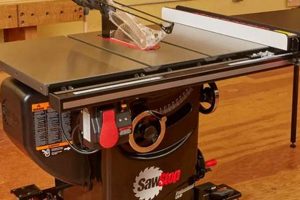
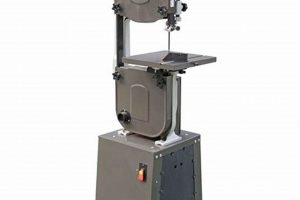
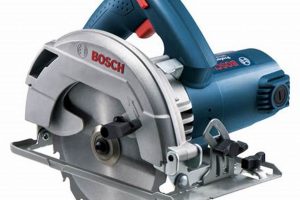
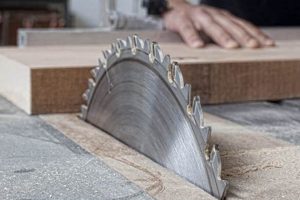
A specialized power tool employed in woodworking, this device is designed for making accurate crosscuts in lumber and other materials. It features a circular blade mounted on a pivoting arm, allowing the operator to bring the spinning blade down onto the workpiece positioned against a fence. Common applications include cutting trim, molding, and framing components to precise lengths and angles.
The tool’s significance in woodworking stems from its ability to produce consistent, repeatable cuts quickly and efficiently. This contributes to time savings and improved accuracy in projects ranging from small-scale crafts to large construction endeavors. Earlier iterations of this type of saw relied on manual operation, while contemporary models feature electric motors and advanced features such as laser guides and digital angle readouts, further enhancing precision and ease of use.
The following sections will delve into the specific types available, crucial safety considerations for operation, techniques for achieving optimal cutting performance, and maintenance procedures to ensure longevity and accuracy.
Essential Usage Guidelines
The following guidelines promote safe and efficient operation, extending the lifespan and optimizing the performance of the equipment.
Tip 1: Secure Workpiece Clamping: Prior to initiating any cut, ensure the material is firmly secured against the fence. Movement during operation compromises accuracy and introduces potential hazards.
Tip 2: Blade Selection Based on Material: Employ appropriate blades designed for the specific material being cut. Utilizing an incorrect blade will yield suboptimal results, increase the risk of splintering, and potentially damage the equipment.
Tip 3: Controlled Cutting Speed: A slow, deliberate cutting speed reduces stress on the motor and blade while producing cleaner, more precise cuts. Forcing the blade through the material accelerates wear and degrades cut quality.
Tip 4: Regular Blade Inspection: Routinely examine the blade for signs of wear, damage, or resin buildup. Damaged blades compromise safety and cut quality. Resin accumulation diminishes cutting efficiency.
Tip 5: Dust Collection Implementation: Integrate a dust collection system to mitigate airborne particulate matter. This minimizes respiratory hazards and enhances visibility during operation.
Tip 6: Appropriate Personal Protective Equipment (PPE): Always wear safety glasses or a face shield to protect eyes from flying debris. Hearing protection should also be used, especially during extended use.
Tip 7: Miter and Bevel Angle Verification: Prior to cutting, meticulously verify the miter and bevel angles are set correctly. This ensures accuracy and minimizes material waste.
Adherence to these guidelines not only ensures accurate and clean cuts but also significantly reduces the risk of injury, maximizing the tool’s utility and longevity.
The subsequent sections will explore common troubleshooting issues and advanced cutting techniques.
1. Accuracy

Accuracy is paramount in woodworking, and this power tool’s design directly addresses the need for precise cuts. The tools fixed fence and blade alignment systems provide a stable reference point, enabling repeatable cuts to within a fraction of an inch. Deviation from perfect accuracy can lead to misaligned joints, structurally unsound assemblies, and wasted material. For example, in constructing a picture frame, even a slight inaccuracy in mitered corners results in visible gaps and an unprofessional finish.
The implementation of features such as laser guides and digital angle readouts further enhances accuracy. Laser guides project a line onto the material, indicating the exact cutting path of the blade. Digital angle readouts provide precise measurements of the miter and bevel angles, eliminating the guesswork associated with manual angle adjustments. A practical application of this is in cabinetmaking, where precise angle cuts are necessary for creating tight-fitting door and drawer frames. Without accuracy, these components would require extensive adjustment, increasing production time and material waste.
In summary, the accuracy afforded by this specific type of saw is not merely a desirable attribute but a fundamental requirement for quality woodworking. While user skill and proper maintenance play a role, the inherent design features of the tool contribute significantly to achieving precise and repeatable results. The consequences of neglecting accuracy range from aesthetic imperfections to structural deficiencies, underscoring its indispensable role in a wide array of woodworking projects.
2. Blade Selection

Blade selection is a critical determinant of the quality and efficiency of cuts produced by woodworking chop saws. The appropriate blade choice ensures clean cuts, minimizes material waste, and maximizes the lifespan of both the tool and the blades themselves.
- Tooth Count and Material Type
The number of teeth on a blade, along with the material from which the teeth are constructed (e.g., carbide-tipped vs. high-speed steel), directly influences the type of cut achieved. Blades with a higher tooth count generally produce smoother cuts in hardwoods and fine materials, such as trim or molding. Lower tooth count blades are more suitable for thicker stock and softer woods, prioritizing speed over finish quality. For instance, cutting delicate veneer requires a high tooth count blade to prevent splintering, while a lower tooth count blade can efficiently rip through framing lumber.
- Blade Diameter and Arbor Size
The diameter of the blade must match the specifications of the saw to ensure proper clearance and safe operation. Similarly, the arbor size (the central hole of the blade) must correspond to the saw’s arbor for secure mounting. Using an incorrectly sized blade can lead to vibration, inaccurate cuts, and potential damage to the saw’s motor or spindle. For example, attempting to use a blade with a smaller arbor size than the saw’s spindle is a hazardous practice that can result in the blade detaching during operation.
- Tooth Geometry and Grind
The shape and angle of the blade’s teeth (tooth geometry) and the way the teeth are sharpened (grind) affect the cutting action and the type of material the blade is best suited for. Alternate Top Bevel (ATB) blades are commonly used for crosscutting, while Flat Top Grind (FTG) blades are preferred for ripping. Incorrect geometry can result in tear-out, excessive splintering, or inefficient cutting. For example, using an FTG blade for crosscutting hardwoods often produces a rough, splintered edge.
- Kerf Width and Material Waste
The kerf, or the width of the cut made by the blade, influences the amount of material removed during each pass. Thinner kerf blades minimize material waste and reduce the load on the saw’s motor, while thicker kerf blades may be necessary for cutting dense materials or for creating wider grooves. In cabinetmaking, using a thin kerf blade can significantly reduce material waste when cutting multiple pieces of lumber to specific dimensions.
The interplay of these factors dictates the ultimate performance of the woodworking chop saw. A judicious selection process, based on material type, desired cut quality, and safety considerations, is essential for optimizing results and extending the service life of both the blade and the tool itself. Consistent evaluation and replacement of worn or damaged blades further ensures continued accuracy and safety in woodworking applications.
3. Safety Mechanisms

The integration of safety mechanisms into the design and operation of woodworking chop saws is paramount, mitigating risks inherent in utilizing high-speed rotating blades. These mechanisms function to protect the operator from injury and to prevent damage to the tool itself, ensuring a safer and more controlled woodworking environment.
- Blade Guards
Blade guards are physical barriers designed to shield the operator from direct contact with the rotating blade. Typically constructed from durable plastic or metal, they automatically retract as the saw is engaged and return to their protective position when the cut is complete. An example of its effectiveness is preventing accidental contact during blade deceleration.
- Electric Brakes
Electric brakes rapidly decelerate the blade’s rotation upon release of the trigger, significantly reducing the time it takes for the blade to come to a complete stop. This feature minimizes the risk of injury from a coasting blade after the cut is finished. In practical terms, this can prevent potential accidents caused by reaching for the workpiece immediately after the cut, unaware that the blade is still spinning.
- Lockout Switches
Lockout switches prevent accidental activation of the saw, particularly during blade changes or maintenance procedures. These switches require a deliberate action to disengage, thereby preventing unintended operation. A common scenario where this is crucial is when replacing the blade; the lockout ensures the saw cannot be accidentally powered on.
- Material Clamps
Material clamps securely hold the workpiece in place during the cutting process, preventing movement that could lead to inaccurate cuts or kickback. Stable material reduces the chances of the material being thrown from the saw, a primary cause of injury. For instance, when cutting small pieces of trim, clamps ensure a secure hold, maintaining consistent contact with the fence.
The effectiveness of these safety mechanisms relies on proper maintenance and adherence to manufacturer guidelines. Compromised or disabled safety features negate their protective function, significantly increasing the risk of injury. Consistent inspection and timely repair of these mechanisms are integral to safe and efficient operation. Diligence in ensuring the functionality of these features reinforces the safe usage of woodworking chop saws in various cutting operations.
4. Angle Adjustment

Angle adjustment constitutes a fundamental capability of woodworking chop saws, enabling the creation of angled cuts essential for a wide range of woodworking applications. This functionality centers on two primary adjustment mechanisms: miter angle adjustment and bevel angle adjustment. Miter adjustment allows the saw blade to pivot horizontally relative to the fence, enabling cuts at angles other than 90 degrees. Bevel adjustment allows the saw blade to tilt vertically, creating angled cuts through the thickness of the material. Without accurate and reliable angle adjustment, the versatility of the chop saw is severely limited, restricting its utility to basic crosscuts.
The accuracy of angle adjustment directly impacts the quality and precision of finished woodworking projects. For example, in creating mitered corners for picture frames or cabinetry, precise angle adjustments are crucial for achieving seamless joints. Imprecise angle settings result in gaps, misalignments, and an overall reduction in the aesthetic appeal and structural integrity of the finished product. Similarly, bevel cuts are often employed in creating decorative moldings or angled edges on furniture components. Accurate bevel angle adjustment ensures that these elements fit together correctly, contributing to the overall design and functionality of the piece.
In conclusion, angle adjustment is not merely an ancillary feature of woodworking chop saws but rather an indispensable component that determines the tool’s ability to execute complex and precise cuts. The availability of accurate miter and bevel adjustments expands the range of possible woodworking projects, allowing for the creation of intricate designs and seamless joinery. Deficiencies in angle adjustment mechanisms compromise the saw’s functionality and undermine the quality of the final product, highlighting the practical significance of understanding and maintaining this crucial aspect of the tool.
5. Motor Power

Motor power represents a critical specification determining the capabilities and limitations of a woodworking chop saw. Insufficient power hinders performance and compromises the quality of cuts, while excessive power can lead to unnecessary wear and increased operational hazards. Selecting a chop saw with appropriate motor power tailored to intended applications is paramount for efficient and safe woodworking.
- Cutting Capacity and Material Density
Motor power directly dictates the saw’s ability to efficiently cut through materials of varying thickness and density. Higher horsepower or amperage ratings enable the saw to handle hardwoods, thick lumber, and composite materials with greater ease and less strain. A motor with insufficient power will struggle to maintain blade speed, resulting in rough cuts, motor overheating, and potential damage to the saw. For instance, consistently cutting dense hardwoods like maple or oak requires a motor with significantly more power than cutting softer woods like pine or fir.
- Blade Speed and Cutting Efficiency
Motor power influences the saw blade’s rotational speed, measured in revolutions per minute (RPM). Optimal cutting efficiency relies on maintaining a consistent blade speed under load. Insufficient power causes the blade to slow down as it encounters resistance, leading to uneven cuts, increased splintering, and potential kickback. A motor with adequate power maintains blade speed, ensuring clean, precise cuts. Cutting aluminum or other non-ferrous metals requires specific blade types and controlled speeds, which are power-dependent.
- Duty Cycle and Longevity
The motor’s power rating affects the chop saw’s duty cycle, or the amount of time it can operate continuously without overheating. Higher-powered motors typically possess more robust cooling systems and can withstand longer periods of use. Overloading a motor beyond its capacity leads to premature wear, reduced performance, and a shortened lifespan. Professional-grade chop saws designed for continuous use on job sites invariably feature higher-powered motors and more durable components.
- Corded vs. Cordless Power Considerations
Corded woodworking chop saws typically offer higher and more consistent motor power than their cordless counterparts. Cordless models, while offering portability, are limited by battery capacity and voltage, potentially affecting cutting performance, especially with demanding materials. The trade-off between portability and power must be carefully considered based on the intended applications. A corded model is generally preferable for stationary workshop use and heavy-duty cutting, while a cordless model may be more suitable for light-duty tasks and remote job sites.
The relationship between motor power and the woodworking chop saw is multifaceted, affecting cutting capacity, blade speed, duty cycle, and overall longevity. Selecting a saw with motor power appropriate for the intended applications is a crucial decision, impacting both the quality of work and the lifespan of the tool. Understanding the nuances of this relationship empowers woodworkers to make informed decisions that optimize their woodworking endeavors.
6. Material Support
Adequate material support is an indispensable element in the effective and safe operation of a woodworking chop saw. The design and implementation of support systems directly affect cut accuracy, operator safety, and the overall quality of the finished workpiece. Without proper support, workpieces can shift or vibrate during the cutting process, leading to inaccurate cuts, increased risk of blade binding, and potential kickback hazards.
Material support typically manifests in the form of extension wings, rollers, or stands positioned adjacent to the chop saw’s base. These systems provide a level and stable surface for the workpiece, preventing it from sagging or tilting as the blade makes contact. Consider the scenario of cutting a long piece of molding; without support, the unsupported end can droop, causing the cut to deviate from the intended angle. Furthermore, effective support is crucial when dealing with heavier materials such as dimensional lumber, which can easily overwhelm the saw’s built-in fence and table. Implementing outfeed support rollers helps to maintain consistent alignment, improving the precision of repeated cuts and mitigating strain on the operator.
In summary, material support for a woodworking chop saw is not an optional accessory but an essential component. It directly impacts the accuracy, safety, and efficiency of cutting operations. Neglecting this aspect can result in compromised cut quality, increased risk of injury, and reduced tool lifespan. By implementing appropriate support systems, woodworkers can maximize the potential of their chop saw and achieve professional-grade results consistently.
Frequently Asked Questions
The following section addresses common inquiries and concerns regarding the operation, maintenance, and selection of woodworking chop saws.
Question 1: What is the appropriate blade speed for cutting aluminum with a woodworking chop saw?
Cutting aluminum requires a specialized non-ferrous metal cutting blade and a significantly reduced blade speed compared to cutting wood. Excessive speed generates heat, leading to blade damage and potential workpiece distortion. Consult the blade manufacturer’s specifications for recommended speed settings.
Question 2: How often should the blade be replaced on a woodworking chop saw?
Blade replacement frequency depends on usage intensity, materials cut, and blade quality. Indications for replacement include chipped or missing teeth, excessive vibration during operation, and a noticeable decline in cutting performance. Regular inspection is crucial.
Question 3: What safety precautions must be observed when operating a woodworking chop saw?
Mandatory safety measures include wearing appropriate eye and ear protection, securing the workpiece with clamps, ensuring proper blade guard functionality, and maintaining a safe distance from the blade’s path during operation. Never override or disable safety mechanisms.
Question 4: What is the ideal method for cleaning a woodworking chop saw?
Regular cleaning involves removing sawdust and debris from the saw’s components using compressed air or a brush. Periodically, the blade can be cleaned with a specialized resin remover to maintain cutting efficiency. Disconnect the power source before initiating any cleaning procedures.
Question 5: What factors should be considered when selecting a woodworking chop saw?
Crucial selection criteria include motor power, blade size, cutting capacity, miter and bevel angle adjustment ranges, safety features, and the overall build quality. Consider the type and scale of projects planned for the tool.
Question 6: How can kickback be prevented while using a woodworking chop saw?
Kickback is mitigated by ensuring the workpiece is firmly secured, using sharp blades, feeding the saw smoothly through the material, and avoiding excessive force. Never attempt to cut materials beyond the saw’s capacity, and maintain a stable stance during operation.
Understanding these FAQs and adhering to recommended practices contribute to the safe and efficient use of the tool.
The final section explores advanced cutting techniques.
Conclusion
This exploration has illuminated the multifaceted aspects of the device, underscoring its pivotal role in woodworking. From blade selection and angle adjustment to safety mechanisms and material support, each element contributes significantly to the tool’s overall utility and operational integrity. The selection of an appropriate model, coupled with adherence to safety guidelines, remains paramount for achieving accurate and safe cutting operations.
Continued advancements in design and technology will likely further enhance its precision and ease of use. Therefore, a thorough understanding of its capabilities and limitations empowers woodworkers to maximize its potential and produce high-quality results consistently. Careful consideration of the tool’s specifications and operational procedures is not merely a matter of best practice but a prerequisite for responsible and effective woodworking.