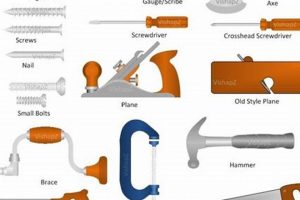
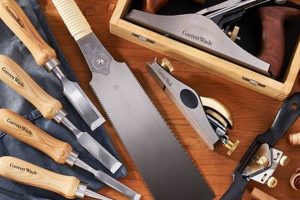
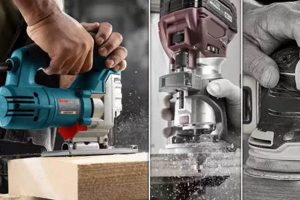
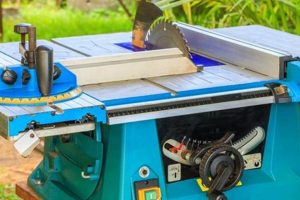
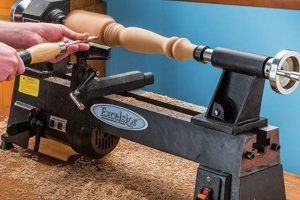
Implements employed to shape, cut, join, and finish wood are essential for a range of construction and artistic endeavors. These instruments vary greatly, encompassing both manual and power-driven varieties, each designed for specific tasks such as creating precise cuts, smoothing surfaces, or securely fastening components. A handsaw, for instance, facilitates manual cutting of wood, while a power drill enables efficient hole boring and screw driving.
The mastery and application of these instruments are fundamental to successful woodworking projects. Competent use yields structurally sound and aesthetically pleasing results, whether constructing furniture, building structures, or producing intricate carvings. Throughout history, their development has mirrored technological advancements, resulting in increased efficiency, precision, and capabilities for artisans and builders alike.
The following sections will delve into a classification of common implements, examining their individual function, appropriate application, and safety considerations. Understanding these facets will equip the reader with a foundation for executing diverse projects effectively and safely, ensuring optimal outcomes in the realm of woodworking.
Woodworking Implement Application
Maximizing the efficacy and longevity of woodworking implements necessitates adherence to established practices. The following points outline key considerations for their use, maintenance, and storage.
Tip 1: Tool Selection: Selection of the appropriate implement is paramount. Employ a chisel for precise paring tasks rather than attempting to use it for rough stock removal, which is better suited for a hand plane or saw.
Tip 2: Sharpening Regimen: Maintain sharp cutting edges. Dull blades require more force, increasing the risk of slippage and material damage. Regular sharpening, utilizing whetstones or powered sharpening systems, is crucial.
Tip 3: Secure Workpiece Clamping: Stabilize the workpiece. Secure clamping prevents movement during operations, ensuring accurate cuts and minimizing potential injury. Bench vises, clamps, and jigs are essential aids.
Tip 4: Dust Mitigation Practices: Implement dust control measures. Fine wood dust is a health hazard. Utilize dust collection systems attached to power tools and wear appropriate respiratory protection.
Tip 5: Implement Storage Protocols: Store implements in a dry environment. Humidity promotes rust formation on metal components. Employ tool chests or cabinets designed for organization and protection.
Tip 6: Protective Gear Usage: Always wear appropriate personal protective equipment. Safety glasses protect against flying debris, while hearing protection mitigates noise exposure from power tools.
Tip 7: Pre-Operation Inspection Routine: Inspect implements before each use. Check for loose parts, frayed cords (on power tools), or other signs of wear. Address any issues before commencing work.
Adherence to these recommendations promotes safety, precision, and the extended service life of valuable woodworking assets. Diligence in these areas contributes to superior craftsmanship and a secure working environment.
The following sections will address specific implement categories in greater detail, exploring advanced techniques and considerations for their effective utilization.
1. Precision

The operational effectiveness of implements is inextricably linked to the concept of accuracy. Deviations from precise measurements and cuts propagate errors throughout a project, potentially compromising structural integrity and aesthetic appeal. The accuracy of measurement, marking, and cutting is paramount, because, an inadequately measured piece of wood will affect the subsequent steps like joinery and assembly. The selection of appropriate instruments and the refinement of technique both contribute to achieving the requisite degree of accuracy. A poorly calibrated miter saw, for instance, will consistently produce inaccurate angled cuts, leading to misaligned joinery and a structurally weakened final product.
The pursuit of accuracy necessitates adherence to established best practices and a commitment to maintaining tools in optimal condition. Calibrating instruments, such as squares and levels, ensures reliable reference points. Sharp cutting edges minimize material tear-out and promote clean, precise cuts. Furthermore, operator skill in tool handling is a critical determinant of accuracy. Skilled artisans develop a tactile understanding of their tools, enabling them to achieve tolerances that would be unattainable by less experienced individuals. Consider the creation of dovetail joints; precision is indispensable to interlock properly. Inaccurate cuts lead to gaps, weak joinery, and a compromised end product.
In conclusion, the achievement of high-quality woodworking outcomes depends heavily on the principle of accuracy. Accuracy is achieved through careful tool selection, rigorous maintenance, and refined user technique, minimizing project errors. Accuracy is not merely a desirable attribute but a fundamental requirement for successful woodworking endeavors.
2. Material Compatibility

Effective woodworking necessitates a thorough understanding of the interaction between implements and the materials being shaped. The suitability of a given implement for a specific wood species directly affects the quality of the finished product, the longevity of the implement, and the safety of the operator. An improper match can result in material damage, inefficient cutting, and increased risk of tool failure.
- Wood Hardness and Implement Selection
The hardness of the wood species directly dictates the type of cutting edge required. Softer woods, such as pine or cedar, can be readily worked with general-purpose implements. Conversely, denser hardwoods, like maple or oak, necessitate implements with hardened steel blades to resist wear and maintain sharpness. Attempting to use a soft steel blade on a dense hardwood will rapidly dull the edge, leading to increased cutting effort and a greater chance of tear-out. The selection of appropriate implement based on wood hardness prevents premature tool wear and promotes efficient material removal.
- Grain Orientation and Cutting Techniques
The direction of wood grain significantly influences the optimal cutting technique. Cutting against the grain, particularly with dull implements, can result in splintering or chipping. Implementing sharp implements and controlled cutting motions are crucial, especially when working with woods prone to tear-out. Additionally, specialized implements, such as skew chisels, are designed to mitigate tear-out when working against the grain, allowing for cleaner and more precise cuts. Understanding grain orientation, allows to minimize imperfections in the workpiece.
- Moisture Content and Implement Performance
The moisture content of wood significantly impacts its workability. Wet or green wood is generally easier to cut but can deform or warp as it dries, potentially affecting the accuracy of joinery. Kiln-dried wood, with a lower moisture content, is more stable but can be more difficult to cut cleanly. Implements with aggressive cutting angles may be required for dry hardwoods. Furthermore, using improperly dried wood in conjunction with certain adhesives can lead to joint failure over time. Addressing the moisture content in the wood is key for overall project lifespan.
- Abrasives in Wood and Implement Durability
Some wood species contain abrasive minerals that can accelerate the wear of cutting edges. Teak, for example, contains silica, which can rapidly dull steel blades. When working with abrasive woods, utilizing implements with carbide-tipped blades is recommended. Carbide is significantly harder than steel and offers superior wear resistance, extending the life of the implement and maintaining cutting efficiency. In such cases, using high-speed steel rather than carbon steel improves implement lifetime. When abrasive woods are used, this will also improve the quality of the workmanship and the safety of the work.
These facets demonstrate the importance of considering material properties when selecting and employing instruments. Neglecting material compatibility can lead to compromised project outcomes, premature implement failure, and increased safety risks. A comprehensive understanding of the interplay between material characteristics and implement performance is therefore indispensable for the successful execution of any woodworking endeavor.
3. Safety Protocols
The inherent risks associated with implements necessitate strict adherence to established safety protocols. These guidelines mitigate the potential for injury and promote a safe working environment. Compliance with safety protocols is an integral component of responsible woodworking practice.
- Eye Protection Implementation
Woodworking operations invariably produce airborne particulate matter, posing a significant threat to ocular health. Implementation of appropriate eye protection, specifically safety glasses or face shields, is mandatory. These barriers shield the eyes from flying debris, such as wood chips, dust, and splinters, preventing potentially serious injuries. Furthermore, when handling chemicals or applying finishes, chemical-resistant goggles offer protection against corrosive substances. Eye protection acts as the primary defense against preventable vision impairment in the woodworking environment.
- Respiratory Protection Application
The inhalation of wood dust poses a chronic health hazard, potentially leading to respiratory illnesses and allergic reactions. Application of appropriate respiratory protection, such as dust masks or respirators, is essential for mitigating this risk. The selection of respiratory protection should be based on the type and concentration of dust generated. Dust masks provide basic filtration for larger particles, while respirators equipped with appropriate filters offer more comprehensive protection against finer dust and volatile organic compounds released from finishes. Proper respiratory protection safeguards long-term respiratory health for woodworking practitioners.
- Hearing Protection Utilization
Prolonged exposure to high decibel levels generated by power tools can result in irreversible hearing damage. Utilization of hearing protection, such as earplugs or earmuffs, is crucial for preserving auditory health. The level of noise reduction provided by hearing protection should be commensurate with the noise levels produced by the tools being used. Regular and consistent utilization of hearing protection minimizes the risk of noise-induced hearing loss among woodworking professionals and hobbyists.
- Machine Guarding Adherence
Power tools are equipped with machine guards designed to prevent accidental contact with moving parts. Adherence to machine guarding guidelines is paramount for minimizing the risk of injuries, such as cuts, amputations, and entanglement. Machine guards should be properly installed, maintained, and never bypassed or removed. Operators must be thoroughly familiar with the function and limitations of machine guards to ensure safe operation. Strict adherence to machine guarding principles prevents avoidable accidents and protects the operator from the hazards associated with power tools.
These facets underscore the critical role of safety protocols in the utilization of implements. Diligent application of protective measures, including eye, respiratory, and hearing protection, coupled with strict adherence to machine guarding guidelines, minimizes the risk of injury and promotes a safe and healthy woodworking environment. The practice of safety is an indispensable element of competent and responsible woodworking.
4. Maintenance Schedules
The operational lifespan and performance efficiency of implements are directly correlated with consistent adherence to well-defined maintenance schedules. Regular maintenance mitigates wear, prevents malfunctions, and ensures the continued accuracy and safety of these implements. Neglecting maintenance can lead to diminished performance, increased risk of injury, and premature implement failure. A proactive approach to maintenance is essential for maximizing the investment in implements.
- Blade Sharpening Frequency
Cutting implements, such as saws, chisels, and planes, require periodic sharpening to maintain optimal cutting performance. The frequency of sharpening depends on the type of implement, the hardness of the wood being worked, and the intensity of use. Regular sharpening prevents excessive force application, reduces the risk of tear-out, and ensures clean, precise cuts. A dull blade increases the likelihood of accidents and compromises the quality of the finished product. A defined sharpening schedule is therefore crucial.
- Lubrication of Moving Parts
Power tools and implements with moving parts require periodic lubrication to reduce friction, prevent corrosion, and ensure smooth operation. Lubrication schedules should be based on manufacturer recommendations and the intensity of use. Neglecting lubrication can lead to increased wear, overheating, and eventual component failure. Applying appropriate lubricants to bearings, gears, and other moving parts extends the lifespan of implements and maintains their operational efficiency. A consistent lubrication schedule is vital for preventing mechanical breakdowns.
- Calibration and Adjustment Intervals
Implements that rely on precise measurements or angles, such as squares, levels, and miter saws, require periodic calibration and adjustment to ensure accuracy. These implements can drift out of alignment over time due to wear, impact, or environmental factors. Regular calibration ensures that measurements and cuts are accurate, preventing errors that can propagate throughout a project. Calibration intervals should be based on the implement’s sensitivity and the frequency of use. Periodic calibration safeguards the integrity of woodworking projects.
- Cleaning and Storage Protocols
Implements should be cleaned after each use to remove dust, debris, and resin buildup. Accumulated contaminants can interfere with proper function, accelerate corrosion, and compromise cutting performance. Cleaning protocols should include wiping down blades and surfaces with a clean cloth, removing dust from crevices, and applying protective coatings to prevent rust. Implements should be stored in a dry, organized environment to prevent damage and ensure easy access. Proper cleaning and storage prolong the life of implements and maintain their readiness for use.
These facets highlight the importance of establishing and adhering to comprehensive maintenance schedules. Routine maintenance not only extends the operational lifespan of valuable woodworking implements but also contributes to a safer, more efficient, and more accurate woodworking practice. A proactive maintenance strategy is an investment in the quality and longevity of woodworking projects.
5. Ergonomic Design
The integration of ergonomic design principles into the construction and selection of implements directly impacts operator comfort, efficiency, and long-term physical well-being. Attention to these principles minimizes strain, reduces the risk of musculoskeletal disorders, and enhances the overall woodworking experience.
- Grip Configuration and Force Reduction
The configuration of an implement’s grip significantly influences the force required for operation. Ergonomically designed handles, often incorporating contoured shapes and non-slip materials, distribute pressure evenly across the hand, reducing localized stress points. A power drill with an ergonomically designed grip, for example, allows for more controlled handling and reduces fatigue compared to a drill with a cylindrical grip, especially during extended use. This reduction in force requirements translates to improved accuracy and reduced risk of repetitive strain injuries.
- Weight Distribution and Balance
The distribution of weight within an implement affects its balance and maneuverability. Ergonomic designs strive for optimal weight distribution to minimize strain on the operator’s wrist and arm. A well-balanced hand plane, for instance, requires less effort to maintain a consistent cutting angle, reducing fatigue and improving the quality of the finished surface. Uneven weight distribution can lead to muscle imbalances and increase the risk of developing musculoskeletal disorders. A properly balanced implement allows for greater control and precision, particularly during intricate tasks.
- Vibration Dampening and Fatigue Mitigation
Power tools generate vibrations that can transmit to the operator’s hands and arms, leading to fatigue, numbness, and potential nerve damage. Ergonomic designs incorporate vibration-dampening materials and mechanisms to minimize these effects. A chainsaw with an effective vibration-dampening system, for example, significantly reduces the risk of developing hand-arm vibration syndrome (HAVS) compared to a chainsaw without such features. The implementation of vibration dampening technologies enhances operator comfort and protects against long-term health risks.
- Adjustability and Customization
Ergonomic designs often incorporate adjustability features to accommodate individual user preferences and physical characteristics. Adjustable-height workbenches, for example, allow operators to maintain a comfortable posture, reducing strain on the back and shoulders. Similarly, implements with adjustable handles or blade angles can be customized to optimize grip and cutting efficiency for individual users. Adjustability promotes a personalized working environment and reduces the risk of developing musculoskeletal disorders associated with prolonged awkward postures.
These elements collectively illustrate the profound impact of ergonomic design on implement utility. By prioritizing operator comfort, reducing strain, and minimizing the risk of injury, ergonomic principles contribute to a more efficient, sustainable, and enjoyable woodworking experience. The integration of these principles into implement design represents a commitment to the long-term health and well-being of woodworking practitioners.
6. Task Specificity

The effectiveness of any woodworking endeavor hinges on the correct application of instruments tailored to precise operations. The selection of an inappropriate implement for a given task invariably leads to suboptimal results, increased effort, and potential damage to the material or the implement itself. The principle of task specificity is therefore paramount.
- Jointing Operations
The creation of strong and accurate joints necessitates specialized instruments designed for precise material removal and surface preparation. Mortise chisels, with their robust construction and rectangular cross-section, are specifically designed for creating mortises, while dovetail saws, characterized by their fine teeth and stiff backs, facilitate the cutting of intricate dovetail joints. Attempting to create these joints with general-purpose instruments would result in inaccurate dimensions, weakened joinery, and increased material waste. The selection of jointing instruments should therefore align with the specific requirements of the intended joint type.
- Surface Preparation Procedures
Achieving a smooth and consistent surface finish requires implements designed for controlled material removal and surface leveling. Hand planes, available in various types such as smoothing planes and jack planes, are specifically designed for these tasks. Smoothing planes, with their fine-set blades, remove minimal material and produce a glass-like surface. Jack planes, with their coarser blades, are used for initial flattening and stock removal. Substituting these implements with sandpaper or scrapers alone would be less efficient and produce a less consistent surface. Surface preparation involves proper implement choice.
- Shaping and Carving Applications
Creating curved profiles and intricate carvings requires implements designed for controlled shaping and detail work. Spoke shaves, with their adjustable blades and curved soles, are specifically designed for shaping curved surfaces, such as chair spindles or table legs. Carving chisels, available in various shapes and sizes, are used for removing small amounts of material to create intricate details. The selection of shaping and carving instruments should align with the complexity of the design and the type of wood being worked. Carving demands tools that can shape wood in very particular directions.
- Fastening Processes
Securing woodworking components requires implements designed for precise drilling, driving, and clamping. Drill bits, available in various sizes and types, are used for creating pilot holes and fastener recesses. Screwdrivers and impact drivers are used for driving screws and other fasteners. Clamps, available in various styles such as bar clamps and pipe clamps, are used for holding components together during glue-up. The selection of fastening instruments should align with the type and size of the fasteners being used and the nature of the joint being secured. Fastening strength requires selecting correct screw and drill bit size.
These illustrative examples underscore the importance of task specificity in the realm of woodworking. A comprehensive understanding of implement functionality and the specific demands of each task enables practitioners to achieve superior results, minimize waste, and maximize the efficiency of their woodworking efforts. The adherence to task-specific instrument selection is thus a cornerstone of competent woodworking practice.
7. Historical Context

The evolution of woodworking implements is inextricably linked to historical technological advancements, the availability of materials, and societal needs. The implements employed in ancient Egypt, crafted from bronze and stone, reflect the limited metallurgical capabilities of the era, necessitating laborious techniques for felling trees and shaping wood. Conversely, the introduction of iron and, subsequently, steel during the Iron Age and Medieval periods ushered in more durable and efficient cutting edges, enabling the creation of more complex structures and refined joinery. The historical context, therefore, dictates the constraints and possibilities of woodworking practices at any given time.
The development of specific implements can be traced to the demands of particular historical periods. The shipwright’s axe, essential for shipbuilding during the age of exploration, demonstrates how naval expansion drove innovation in implement design to facilitate the construction of large wooden vessels. Similarly, the advent of powered machinery during the Industrial Revolution transformed woodworking processes, enabling mass production of furniture and building components. Analyzing the historical context, including socio-economic factors and technological developments, provides insight into the purpose, design, and application of implements throughout history, this informs contemporary practice.
Consideration of historical context is essential for understanding the limitations and advantages of various woodworking techniques and the value of older implements. Appreciating the historical significance of hand tools, for instance, allows for a nuanced understanding of craftsmanship and the potential for efficiency and precision that can be attained with careful technique and sharp tools. The trajectory of this craft through history continues to inform modern implementations, and is the reason for some of the processes, techniques and approaches we have today. A knowledge of history allows for an assessment of the value and application of modern implementations.
Frequently Asked Questions
The following addresses common inquiries regarding implements and their application.
Question 1: What is the essential difference between a rip saw and a crosscut saw?
A rip saw is designed to cut along the grain of wood, featuring teeth configured to act like a series of small chisels that slice the wood fibers. A crosscut saw, conversely, is designed to cut across the grain, with teeth that sever the fibers. The distinct tooth geometry optimizes each saw for its specific cutting direction.
Question 2: How frequently should plane irons be sharpened?
The sharpening frequency of plane irons is contingent upon usage and the type of wood being worked. Plane irons should be sharpened when resistance increases during planing or when the quality of the surface finish diminishes. Regular honing between sharpenings helps to maintain a sharp cutting edge.
Question 3: What are the safety considerations when operating a router?
Operating a router necessitates several safety precautions. Securely clamp the workpiece, wear appropriate eye and ear protection, and use push sticks or push blocks to keep hands away from the cutting bit. Ensure the router is properly grounded and that the bit is securely tightened. Never attempt to change bits while the router is plugged in.
Question 4: What is the purpose of a marking gauge?
A marking gauge is employed to scribe a line parallel to the edge of a workpiece. This is useful for marking consistent depths for joinery or for establishing reference lines. The gauge ensures accuracy and consistency in marking operations.
Question 5: How does one select the appropriate type of clamp for a given woodworking project?
Selecting the appropriate clamp depends on the size and shape of the workpiece, as well as the clamping pressure required. Bar clamps are suitable for larger assemblies, while pipe clamps offer versatility in length. Spring clamps provide quick, light pressure, while hand screw clamps offer precise control over clamping force.
Question 6: What are the benefits of using hand planes versus power sanders for surface preparation?
Hand planes, when properly sharpened and used, produce a superior surface finish with minimal dust. Hand planing maintains the integrity of the wood grain and creates a unique tactile quality. Power sanders, while efficient for removing material, can obscure the grain and generate significant dust.
In summary, proper utilization relies on understanding the function, limitations, and safety considerations associated with each implement. Consistent maintenance and adherence to established protocols are essential for optimal performance and longevity.
The subsequent section will explore advanced woodworking techniques.
Conclusion
This exploration of woodworking tools and their uses has highlighted essential aspects of implement selection, maintenance, and safe operation. Precision, material compatibility, safety protocols, maintenance schedules, ergonomic design, and task specificity are indispensable considerations for any woodworking endeavor. Understanding the historical context provides valuable insights into the evolution of practices and technologies.
Proficient application of woodworking tools and their uses requires ongoing learning and disciplined practice. Mastery of these techniques yields structurally sound and aesthetically pleasing outcomes, contributing to both functional and artistic woodworking endeavors. The continued advancement of woodworking practices relies upon an informed and skilled community of practitioners.