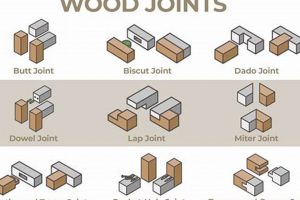
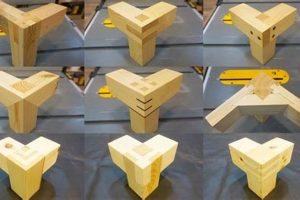
A pivotal connection in woodworking allows for rotational movement between two or more components around a single, fixed point. This type of joint enables connected pieces to swing, turn, or pivot relative to one another. A familiar example includes the hinge on a cabinet door, facilitating its opening and closing motion.
This constructive element provides functionality in designs requiring mobility and adjustability. Its implementation reduces stress concentration compared to rigid connections, extending the lifespan of the project. Throughout history, this mechanism has been employed in diverse applications, ranging from simple furniture construction to complex mechanical devices.
The subsequent sections will detail various methods for creating such connections, discuss suitable material selection, and offer guidance on ensuring structural integrity and smooth operation of these critical components within woodworking projects.
Practical Considerations for Pivotal Wood Connections
Achieving robust and functional rotational articulations in woodwork demands meticulous planning and execution. The following points offer key insights for constructing durable and effective assemblies.
Tip 1: Material Selection: Choose materials with appropriate strength and wear resistance for the intended application. Hardwoods such as oak or maple are preferable for high-stress applications, while softer woods may suffice for decorative or light-duty uses.
Tip 2: Precise Hole Alignment: Accurate drilling is paramount. Employ jigs or drill presses to ensure holes for pivot pins are perfectly aligned across mating components. Misalignment introduces friction and premature wear.
Tip 3: Pin Diameter and Fit: Select a pin diameter appropriate for the load requirements. The pin should fit snugly within the drilled holes, minimizing play, but allowing for smooth rotation. Consider using bushings if necessary.
Tip 4: Lubrication: Apply appropriate lubricants to reduce friction and wear. Wood-specific lubricants or dry lubricants are generally preferred over petroleum-based products to avoid staining or swelling the wood.
Tip 5: Reinforcement Strategies: For high-stress applications, reinforce the surrounding wood with metal plates or bushings to prevent tear-out or deformation over time. Mortise-and-tenon joinery can be incorporated to add significant strength.
Tip 6: Finish Application: Before assembly, apply a finish to all components. This protects the wood from moisture and enhances its durability. Ensure the finish does not impede the rotation of the joint.
Tip 7: Regular Inspection: Periodically inspect for signs of wear, such as loose pins, cracked wood, or excessive play. Promptly address any issues to prevent further damage and maintain functionality.
Implementing these strategies maximizes the performance and longevity of rotationally connected wooden components. These critical construction elements will retain integrity under intended operating conditions.
The subsequent section will transition into a comprehensive overview of various design considerations.
1. Rotation

Rotation is the defining characteristic and primary function enabled by a pivotal articulation in woodworking. The joint’s design directly dictates the extent, smoothness, and stability of this rotational movement. Without controlled rotation, the essential purpose of the pivotal connection is nullified. A well-executed example of this can be found in the classic Windsor chair, where the legs are often connected to the seat using a pivoting wedge, allowing for slight adjustments during assembly and stress distribution during use. This rotation, even if minimal after final construction, is critical to the chair’s structural integrity.
The relationship between the components directly determines the quality of rotation. Factors such as pin diameter, material selection, and the presence of lubrication influence friction and, consequently, the ease and consistency of the rotation. In gate hinges, for instance, improper alignment or insufficient lubrication can lead to stiff or jerky rotation, accelerating wear and potentially causing structural failure. The degree of allowed rotation also dictates the design. A simple pivot may allow 360-degree movement, while others restrict it to a limited arc, based on their intended function.
In summary, rotation is not merely a consequence of a well-made pivotal wood component; it is its fundamental purpose and driving design principle. Understanding this direct link between the construction’s design and achieved rotational movement allows for creating efficient, durable, and functional woodworking projects. The precision of the joinery directly translates to performance in its design.
2. Alignment

Alignment is a fundamental prerequisite for the functionality and longevity of rotational articulations in woodworking. Its role extends beyond mere aesthetics, directly impacting the smoothness of operation, stress distribution, and overall structural integrity of the assembly.
- Hole Collinearity
The drilled or bored holes intended to receive the pivot pin must exhibit perfect collinearity across all connected components. Deviation from this ideal introduces binding and increases frictional forces, hindering rotation. This is particularly crucial in applications involving long pivot pins spanning multiple elements. Misalignment in these scenarios can induce significant bending stresses on the pin, leading to premature failure.
- Surface Coplanarity
Surfaces adjacent to the rotation axis must be coplanar to avoid interference. When elements are not properly aligned, the surfaces can rub against each other, causing friction and hindering rotation. The surfaces must align perfectly or be slightly relieved to prevent undue wear and tear on the joint and maintain its smooth operation.
- Pin Perpendicularity
The axis of the pivot pin must be perpendicular to the surfaces of the connected components. An angled pin introduces a lever arm, amplifying forces and potentially causing deformation or cracking of the wood surrounding the hole. This is especially critical when handling heavy loads or dynamic forces.
- Concentricity of Components
For mechanisms involving multiple rotating parts around a central axis, such as a rotating tabletop extension, the components must maintain perfect concentricity. Deviation from concentricity introduces vibrations and imbalances, resulting in uneven wear and reduced stability. Precise measurements and careful assembly are essential to achieve proper concentricity.
In conclusion, precise alignment is not merely a desirable attribute but an indispensable element. Neglecting this aspect compromises the integrity of the assembly, negating the benefits of carefully selected materials and sophisticated joinery techniques. Proper alignment of pivot joints, through careful planning, is central to the success of any woodworking project involving rotation.
3. Friction

Friction is an inherent force within any rotational articulation, directly impacting the ease of movement, energy expenditure, and lifespan of a woodworking pivotal articulation. Generated by the interaction of surfaces during rotation, it resists motion and converts kinetic energy into heat. In the context of woodworking joints, uncontrolled friction can manifest as stiffness, wear, and eventual failure of the joint. Minimizing this force is therefore crucial for ensuring smooth, efficient, and durable operation.
The nature of the materials in contact significantly influences the magnitude of friction. Wood-on-wood contact typically exhibits a relatively high coefficient of friction. Surface finishes, such as wax or oil, can reduce this coefficient, promoting smoother movement. Bushings, often made of brass or nylon, provide a low-friction interface between the pin and the wood, further reducing wear. In applications like a tilting mechanism for a drafting table, consistent and low friction is vital for maintaining the desired angle and preventing sudden drops. Proper design and lubrication are imperative to manage this force.
In conclusion, understanding friction is paramount in designing effective woodworking joints. Reducing the force of friction enhances the functionality, prolongs the lifespan of the component, and ultimately improves the overall quality of the woodworking project. Challenges in friction management include selecting appropriate materials, applying suitable lubricants, and ensuring precise construction to minimize surface contact. The interplay between material properties, surface treatments, and joint design determines the level of friction and, consequently, the performance of the rotational articulation.
4. Material

Material selection exerts a profound influence on the performance and longevity of pivotal wood components. The physical properties of the chosen material directly dictate the joint’s strength, wear resistance, and susceptibility to environmental factors. For example, utilizing a softwood such as pine in a high-stress application, like the swivel base of a chair, will inevitably lead to premature wear and potential failure due to the wood’s inherent lack of density and resistance to compression. Conversely, employing a hardwood like oak or maple increases the joint’s load-bearing capacity and resistance to deformation.
The choice of material also impacts the joint’s frictional characteristics. Wood-on-wood contact generates a significant degree of friction, which can be mitigated through the introduction of alternative materials. Brass or bronze bushings, inserted between the rotating components, provide a smoother, lower-friction interface, reducing wear and enhancing the joint’s overall efficiency. Similarly, the pivot pin itself must be constructed from a material possessing sufficient shear strength to withstand the applied loads without bending or breaking. Steel is a common choice for pivot pins in heavy-duty applications, while brass or aluminum may suffice for lighter loads.
In summary, material selection is a critical decision in the design and construction of pivotal wood connections. Careful consideration of the material’s strength, wear resistance, frictional properties, and compatibility with the intended application is essential for ensuring a robust and durable joint. The selection of appropriate materials directly contributes to the functional effectiveness and long-term reliability of the component, impacting factors such as load capacity and the life span of the joint. The materials must also be selected considering the environmental conditions where the completed project will exist.
5. Reinforcement

Reinforcement strategies are critical to the structural integrity and longevity of any articulation in woodworking, particularly pivotal wood elements. These strategies address inherent weaknesses in wood, such as its susceptibility to splitting and wear under stress, ensuring the joint maintains its intended function over time.
- Metal Bushings and Sleeves
The insertion of metal bushings or sleeves into the pivot point distributes load and reduces friction. These components, typically crafted from brass, bronze, or steel, prevent direct wood-on-wood contact, thereby minimizing wear and preventing enlargement of the pivot hole under repeated use. This application is commonly observed in heavy-duty furniture and machinery.
- Reinforcement Plates and Straps
Metal plates or straps can be affixed to the wood surrounding the articulation point to bolster its resistance to shear and tensile forces. These elements, often fabricated from steel, are secured with screws or bolts, effectively distributing stress over a larger area of the wood. This method is frequently employed in outdoor structures, such as gates and pergolas, where exposure to environmental elements exacerbates stress.
- Fiber Reinforcement
Embedding carbon fiber or fiberglass within the wood matrix surrounding the articulation significantly enhances its strength and stiffness. This technique involves impregnating the wood with resin containing reinforcing fibers, creating a composite material with superior mechanical properties. Such reinforcement is typically reserved for high-performance applications where weight is a critical factor.
- Lamination and Cross-Graining
Constructing the joint from laminated layers of wood with alternating grain directions provides enhanced dimensional stability and resistance to splitting. This technique mitigates the effects of wood movement due to changes in humidity and distributes stress more evenly throughout the joint. This is particularly beneficial in applications subject to fluctuating environmental conditions, such as exterior doors.
Employing these reinforcement techniques mitigates potential failure points and extends the lifespan of pivotal wood connections. The selection of the most appropriate reinforcement method depends on the specific application, the expected load conditions, and the environmental factors to which the joint will be exposed. Judicious implementation of these strategies ensures the creation of robust and durable woodworking projects.
6. Maintenance

Sustained functionality and longevity of woodworking pivotal joints are intrinsically linked to diligent maintenance practices. Neglecting these practices precipitates premature wear, compromised performance, and eventual structural failure. Regular maintenance ensures the joints operate smoothly, efficiently, and safely throughout their intended lifespan.
- Lubrication Regimen
Periodic application of appropriate lubricants to the articulating surfaces minimizes friction and reduces wear. The selection of lubricant is contingent upon the materials involved and the operating environment. Dry lubricants, such as graphite, are preferable for wood-on-wood contact in dry conditions, while oil-based lubricants may be suitable for metal-on-metal interfaces. A routine lubrication schedule, tailored to the specific application, preserves optimal performance and prevents seizing. Consider the pivot points of a rocking chair, where consistent lubrication prevents squeaking and ensures smooth motion.
- Hardware Inspection and Tightening
Pivot joints frequently incorporate fasteners, such as screws or bolts, to secure the components. Regular inspection of these fasteners is essential to detect loosening, corrosion, or other forms of degradation. Loose fasteners compromise the joint’s structural integrity and can lead to excessive play or misalignment. Periodic tightening of fasteners, following manufacturer’s recommendations, maintains the joint’s stability and prevents catastrophic failure. An example includes inspecting and tightening the bolts on a gate hinge to prevent sagging and ensure proper closure.
- Surface Protection and Preservation
The exposed surfaces of pivotal wood articulations are susceptible to environmental degradation, including moisture absorption, UV damage, and insect infestation. Application of protective coatings, such as varnish, paint, or wood preservatives, mitigates these effects and extends the lifespan of the joint. Regular cleaning to remove dirt and debris prevents the accumulation of moisture and reduces the risk of fungal growth. Properly sealed pivot joints on outdoor furniture, for instance, resist water damage and maintain their structural integrity for extended periods.
- Wear Assessment and Component Replacement
Over time, the articulating surfaces of a woodworking joint will inevitably exhibit signs of wear, such as abrasion, erosion, or deformation. Regular assessment of these surfaces allows for early detection of potential problems and facilitates timely intervention. Replacement of worn components, such as pivot pins or bushings, restores the joint’s functionality and prevents further damage. Overhauling a well-used drawbridge mechanism, for example, might involve replacing worn pivot pins to ensure safe and reliable operation.
These multifaceted maintenance strategies, when implemented consistently, safeguard the structural integrity and operational efficiency of woodworking pivotal components. The cumulative effect of these actions is a substantial increase in the joint’s lifespan, a reduction in the risk of failure, and a sustained level of performance consistent with the original design specifications. The longevity of heritage woodworking projects is evidence of this.
7. Precision
Precision is paramount in the design and execution of woodworking pivotal articulations. Deviations from prescribed dimensions and alignments directly compromise the joint’s functionality, structural integrity, and aesthetic appeal. Each facet of construction demands meticulous attention to detail to ensure optimal performance.
- Accurate Measurement and Marking
Precise measurement and marking are foundational to constructing a functional rotational component. Inaccurate measurements translate into misaligned components, leading to binding and friction. A difference of even a fraction of a millimeter can significantly impact the joint’s smoothness and stability. Consider the construction of a precisely fitted wooden gear mechanism, where any inaccuracy impairs its functionality. Such errors accumulate, leading to unacceptable operational results.
- Precise Hole Drilling and Alignment
The drilling of holes for pivot pins demands exacting accuracy. Hole diameters must conform precisely to the pin dimensions to minimize play and prevent excessive friction. Collinearity of the holes across multiple components is essential for smooth rotation. Misaligned holes induce stress on the pin and surrounding wood, leading to premature wear and potential failure. The hinges of a cabinet door exemplify this need, where accurate hole placement and alignment ensures smooth operation and prevents the door from binding or sagging.
- Consistent Material Removal
Achieving uniform material removal during shaping and fitting is crucial for maintaining consistent dimensions and smooth surfaces. Variations in material removal can introduce irregularities that impede rotation and generate excessive friction. The creation of a mortise and tenon joint, for example, requires consistent material removal to ensure a snug fit and prevent racking or wobbling. A consistent finish should also be planned.
- Proper Assembly Techniques
Even with precise measurements and component fabrication, improper assembly techniques can compromise the joint’s integrity. Secure and accurate positioning of components during assembly is essential for maintaining alignment and preventing stress concentration. The application of appropriate clamping forces ensures that joints are fully seated and that adhesives, if used, bond effectively. Careful attention to assembly details, such as the orientation of grain direction, contributes to the joint’s overall strength and stability.
The synthesis of accurate measurements, precise hole drilling, consistent material removal, and meticulous assembly techniques are the cornerstones of a high-performance pivotal wood component. Neglecting any of these facets compromises the joint’s functionality and reduces its service life. Woodworking pivotal articulations demonstrate the need for precise execution in woodworking to achieve optimal performance.
Frequently Asked Questions
The following section addresses common inquiries regarding the design, construction, and maintenance of pivotal articulations in woodworking. The information presented aims to clarify misconceptions and provide practical guidance for achieving robust and functional designs.
Question 1: What distinguishes a pivotal joint from other woodworking joints?
A pivotal joint is uniquely characterized by its capacity to facilitate rotational movement between connected components around a fixed point. Unlike rigid joints, such as mortise-and-tenon or dovetail joints, pivotal designs prioritize mobility and adjustability. They allow connected pieces to swing, turn, or pivot relative to one another. The design emphasis is on controlled movement rather than absolute immobility.
Question 2: What are the primary considerations when selecting materials for such connections?
Material selection depends on the intended application and load requirements. Hardwoods, such as oak or maple, offer superior strength and wear resistance for high-stress applications. Softwoods may suffice for decorative or light-duty uses. Consideration should also be given to the material’s frictional properties and compatibility with lubricants. The pivot pin material requires sufficient shear strength to withstand applied loads without deformation.
Question 3: How can friction be minimized in pivotal wood designs?
Friction is a significant factor affecting joint performance. Minimization strategies include the application of appropriate lubricants, the use of bushings made of low-friction materials (e.g., brass or nylon), and ensuring precise alignment of components. Surface finishes, such as wax, can also reduce friction between wood surfaces. Regular maintenance, including lubrication, is essential for sustained smooth operation.
Question 4: What role does alignment play in the functionality of rotational wood connections?
Alignment is critical for smooth operation and long-term durability. Accurate hole drilling and alignment of pivot pins are paramount. Misalignment introduces binding, increases friction, and can lead to premature wear or failure. Surfaces adjacent to the rotation axis should be coplanar to avoid interference. Proper alignment ensures even stress distribution and prevents undue strain on the joint components.
Question 5: How can wood pivot joints be reinforced to withstand heavy loads or repeated use?
Reinforcement strategies include the use of metal plates or straps to distribute stress, the insertion of bushings to reduce wear on the wood surrounding the pivot point, and lamination techniques to increase the wood’s overall strength. Metal components help distribute stress. Consideration should be given to using fiber reinforcement.
Question 6: What are the key indicators of wear or potential failure in such connection, and how should they be addressed?
Signs of wear include loose pins, cracked wood, excessive play, and squeaking or binding during rotation. Promptly addressing these issues prevents further damage and maintains functionality. Loose fasteners should be tightened, worn components replaced, and lubrication applied as needed. Neglecting these indicators will accelerate deterioration and potentially lead to catastrophic failure. Replacing a pivot pin is an economical way to prolong the life of the project.
Understanding these common concerns and applying the appropriate solutions will enhance the reliability and performance of pivotal wood construction techniques.
The following section will transition into practical examples and case studies showcasing the application of these design principles in real-world scenarios.
Conclusion
This exploration has elucidated the fundamental principles governing effective “woodworking pivot joint” design and construction. Key points emphasized include material selection, precision alignment, friction mitigation, and reinforcement strategies. Adherence to these principles is paramount in achieving robust and durable rotational articulations.
Successful implementation of “woodworking pivot joint” techniques requires diligence and a thorough understanding of mechanical forces. Continued innovation and rigorous testing will further refine these methodologies, expanding the potential applications of rotational components in woodworking. Further research into engineered materials will add to the future outlook for such connections.