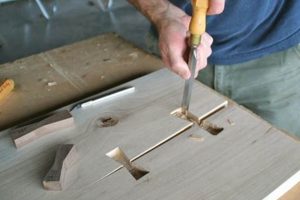
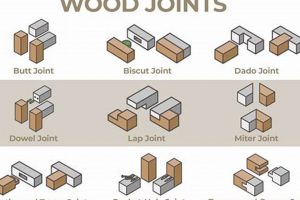
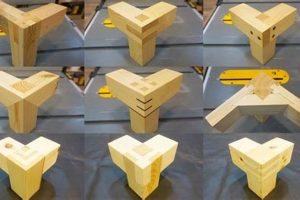
The implements employed in creating interlocking connections between pieces of lumber are essential for constructing durable and aesthetically pleasing wooden structures. These implements facilitate the creation of strong bonds via mechanical means, adhesives, or a combination thereof. A chisel, for instance, can be used to create mortises for mortise and tenon joinery, while a dovetail saw assists in producing the intricate cuts necessary for dovetail joints.
The proper selection and skillful use of these instruments are critical for ensuring the structural integrity and longevity of woodworking projects. Historical examples of expertly crafted joinery demonstrate the enduring strength achievable through precise cuts and well-fitted connections. Accurate execution minimizes stress on the wood fibers, prevents premature failure, and enhances the overall appearance of the finished item.
The following discussion will delve into specific types of equipment utilized in creating various forms of joinery, examining their functionality and application in diverse woodworking scenarios. Subsequent sections will outline best practices for maintaining these instruments to ensure optimal performance and extend their operational lifespan, as well as safety considerations when operating the equipment.
Essential Guidance for Woodworking Joint Implements
Effective utilization and diligent maintenance of woodworking joint implements are paramount for achieving superior results and ensuring safety in the workshop. Adherence to the following guidance will optimize the performance and extend the lifespan of these crucial tools.
Tip 1: Prioritize Sharpness: Maintain optimal cutting edges on all implements. Dull blades require excessive force, leading to inaccurate cuts and increased risk of injury. Regularly sharpen chisels, planes, and saws using appropriate honing techniques.
Tip 2: Select Appropriate Implements: Choose instruments specifically designed for the task at hand. Employ a dovetail saw for creating dovetail joints, and a mortise chisel for mortise and tenon joinery. Using the incorrect item can compromise joint strength and precision.
Tip 3: Practice Safe Operation: Always wear appropriate personal protective equipment, including eye protection and hearing protection. Ensure a stable work surface and utilize clamping mechanisms to secure workpieces during the joinery process.
Tip 4: Understand Wood Properties: Different wood species possess varying hardness and grain characteristics. Adjust cutting techniques and tool selection accordingly. Softer woods may require sharper implements and more delicate handling.
Tip 5: Employ Precision Measurement: Accurate measurement is essential for creating tight-fitting joints. Utilize precision measuring tools, such as calipers and combination squares, to ensure accuracy and minimize gaps.
Tip 6: Regular Maintenance is Key: Clean and lubricate instruments regularly to prevent rust and maintain smooth operation. Store implements in a dry environment to minimize corrosion and extend their usable life.
Tip 7: Master Hand Tool Techniques: Invest time in developing proficiency with hand operated implements. Accurate handwork allows for a superior level of control when compared to powered machinery, which results in a higher quality joint.
By prioritizing sharpness, employing proper implements and measurement techniques, practicing safe operation, and understanding wood properties, woodworkers can maximize the effectiveness of their instruments and consistently produce high-quality, durable joints.
The following section will address specific concerns related to the usage of powered instruments for cutting joinery features.
1. Precision

Precision is an inherent component in the effective application of woodworking joint instruments. Deviation from precise measurements and cuts directly correlates with weakened joint integrity and diminished structural stability. Minute inaccuracies in the creation of a mortise, for example, will result in a loose-fitting tenon, compromising the load-bearing capacity of the joint and increasing its susceptibility to failure under stress. Conversely, overly tight fits, resulting from a tenon that is too large, can induce excessive stress on the surrounding wood fibers, potentially leading to splitting or warping over time. The selection and skillful use of accurately calibrated instruments is crucial for achieving properly fitted joinery.
The implementation of precise woodworking techniques requires meticulous attention to detail throughout the entire process. Initial measurements must be taken with calibrated instruments, such as precision squares and measuring tapes, to ensure dimensional accuracy. Subsequent cuts should be executed with controlled movements and sharp implements, minimizing the risk of chipping, tearing, or other imperfections that could compromise the joint’s fit. Real-world examples of furniture construction demonstrate the consequence of the absence of accurate fit: misalignment of components, unsightly gaps, and reduced overall durability. Professional cabinetmakers achieve precision by employing jigs and fixtures designed to guide cutting implements and maintain consistent dimensions.
The inherent challenge in woodworking lies in the organic nature of wood. Its variable density and grain patterns can subtly influence the behavior of cutting instruments. Achieving consistently precise results, therefore, requires not only accurate implements but also a thorough understanding of the specific wood species being used. Furthermore, variations in humidity and temperature can cause wood to expand or contract, necessitating allowances for these dimensional changes during the joinery process. Ultimately, the pursuit of precision in woodworking joint creation is paramount to the production of high-quality, long-lasting structures.
2. Material Compatibility

Material compatibility is a critical consideration when selecting and utilizing implements for creating woodworking joints. The physical properties of the wood species significantly influence the choice of tools and techniques required to achieve strong and lasting connections. Ignoring material compatibility can result in weak joints, premature failure, and compromised structural integrity.
- Hardness and Density
Wood species exhibit a wide range of hardness and density. Hardwoods, such as maple and oak, necessitate implements with sharper cutting edges and greater durability compared to those used for softer woods like pine or cedar. Using a dull chisel on hardwood can lead to crushing or tearing of the wood fibers, rather than a clean cut, which weakens the joint. The selection of steel quality is an integral component of hardwood joinery.
- Grain Orientation
The grain orientation of wood significantly affects its splitting tendency. Tools should be selected and used to cut with the grain, minimizing the risk of splitting along the grain lines. Examples include using a paring chisel with the bevel facing up when removing thin shavings along the grain to avoid tear-out. Awareness of grain direction informs appropriate tool selection for optimal results.
- Resin Content
Wood species with high resin content, such as pine, can present challenges when working with cutting implements. The resin can clog tools, reduce their cutting efficiency, and affect the adhesion of glues. Regular cleaning of implements and the use of specialized lubricants can mitigate these issues. In some instances, the selection of a different wood species may be more practical.
- Moisture Content
Wood’s moisture content is not a permanent property, wood will expand or contract with changing moisture conditions. Joinery should be executed when the wood has reached a stable moisture content to minimize dimensional changes that could stress the joint. Using kiln-dried lumber helps to prevent issues related to moisture fluctuation. Precise selection allows for a durable bond.
The interplay between implement characteristics and wood properties necessitates careful planning and informed tool selection. Adhering to best practices regarding material compatibility is essential for achieving strong, durable, and aesthetically pleasing woodworking joints.
3. Joint Specificity

Joint specificity, in the context of woodworking, refers to the principle that certain implements are optimally designed and suited for the creation of particular types of joints. This is not merely a matter of convenience; it directly impacts the strength, precision, and aesthetic quality of the resulting connection. Employing the appropriate instrument for a designated joint is a critical determinant of the joint’s structural integrity and longevity. A dovetail saw, for example, is specifically engineered to produce the intricate cuts necessary for creating dovetail joints. Its fine teeth and angled blade facilitate the precise removal of material required for interlocking the joint’s components. Attempting to create dovetail joints with a general-purpose saw would likely result in imprecise cuts, leading to a weak and aesthetically unappealing joint. The cause-and-effect relationship is clear: inappropriate implements lead to compromised results.
The importance of joint specificity is further highlighted when considering the diverse range of joint types and their respective demands. Mortise and tenon joints, commonly used for constructing sturdy frames, require implements capable of creating clean, accurate mortises (the recesses) and tenons (the projecting elements). A mortise chisel, characterized by its robust blade and rectangular shape, is specifically designed for this purpose. Its ability to remove substantial amounts of material efficiently and create square corners is essential for achieving a tight-fitting and structurally sound joint. Similarly, creating mitre joints for picture frames or boxes necessitates the use of specialized mitre saws or shooting boards, ensuring that the pieces are cut at precise angles for seamless alignment. Ignoring joint specificity leads to increased construction time, material wastage, and compromised structural soundness.
In summary, the connection between joint specificity and the selection of woodworking implements is intrinsic and consequential. Using the correct instrument for a particular joint is fundamental to achieving professional-quality results, ensuring both structural integrity and aesthetic appeal. Challenges arise when woodworkers attempt to substitute implements or employ makeshift solutions, often leading to suboptimal outcomes. Recognizing and adhering to the principle of joint specificity is a hallmark of skilled craftsmanship and is indispensable for producing durable and aesthetically pleasing woodworking projects.
4. Sharpening Frequency

Sharpening frequency is inextricably linked to the effective application of woodworking joint implements. The sharpness of cutting edges directly influences the precision and quality of joinery cuts. Dull implements necessitate increased force, leading to inaccurate cuts, torn wood fibers, and an elevated risk of workpiece slippage or implement malfunction. A sharp chisel, for example, allows for clean, controlled paring of wood fibers when fitting a mortise and tenon joint, achieving a tight and structurally sound connection. Conversely, a dull chisel will crush the wood fibers, resulting in a loose fit and a weakened joint. The periodicity of sharpening is, therefore, a determinant of the overall efficacy of cutting instruments.
The optimal sharpening frequency is contingent upon factors such as the type of wood being worked, the intensity of implement use, and the quality of the cutting edge. Hardwoods, abrasive materials, and prolonged use necessitate more frequent sharpening interventions. Professional woodworkers often hone their implements daily or even multiple times per day to maintain peak performance. The absence of regular sharpening not only compromises the quality of the joint but also increases the physical exertion required, leading to fatigue and a higher probability of errors. For example, a dull saw requires increased force to cut a dovetail joint, increasing the likelihood of inaccurate cuts and operator injury. Real-world case studies show that businesses with implemented regular sharpening schedules reported fewer injuries and reduced material waste.
In conclusion, a structured approach to implement sharpening is a key component of high-quality joinery. Sharp implements reduce the required operational force, allowing for superior control, enhanced precision, and a lower incidence of material defects. Neglecting proper edge maintenance increases the probability of compromised joint integrity and elevates the risk of injury. Integration of a consistent sharpening regimen directly enhances the performance and extends the usable life of woodworking joint implements, providing enhanced efficiency. Ultimately, a commitment to sharpening practices ensures a higher quality end product.
5. Ergonomic Design
Ergonomic design is a salient factor in the development and application of implements employed in creating woodworking joints. The relationship between the tool and the user is a primary consideration; poorly designed tools increase operator fatigue, impede precision, and elevate the risk of musculoskeletal injury. The curvature and material composition of a chisel handle, for example, significantly impact the user’s grip strength and comfort during extended periods of use. An ergonomically designed handle allows for a more secure and controlled grip, reducing the force required to apply the chisel and minimizing the risk of slippage. A cause-and-effect relationship exists between the instrument’s design and the operator’s ability to perform the task safely and efficiently.
The importance of ergonomic design is further amplified when considering repetitive tasks, such as the creation of multiple mortise and tenon joints. Tools with poorly designed handles or excessive weight can lead to cumulative trauma disorders, such as carpal tunnel syndrome or tendonitis. Ergonomically optimized tools, on the other hand, distribute force more evenly across the hand and wrist, reducing stress and preventing injury. Real-world examples in professional woodworking workshops demonstrate that implementing ergonomically designed instruments significantly reduces the incidence of work-related injuries and improves overall productivity. Practical application of ergonomic principles translates into reduced downtime and improved worker satisfaction. The effects of ergonomic design are magnified over time.
In summary, ergonomic design constitutes a crucial component of woodworking joint implements. Its influence extends beyond mere comfort, directly impacting safety, precision, and productivity. The challenge lies in balancing ergonomic considerations with the functional requirements of the tool and the need for durability. Prioritizing ergonomic design in the selection and use of woodworking joint implements represents a proactive approach to promoting worker well-being and ensuring the sustainable practice of this craft. Further research could address the specific ergonomic needs of diverse user populations, considering factors such as hand size, grip strength, and physical limitations.
Frequently Asked Questions
The following addresses prevalent inquiries regarding the selection, application, and maintenance of implements utilized in the creation of woodworking joints. The information provided is intended to clarify common misunderstandings and offer practical guidance for optimizing their use.
Question 1: What constitutes the most crucial attribute of a woodworking chisel?
The sharpness of the cutting edge is of primary importance. A dull implement necessitates excessive force, leading to imprecise cuts and potential injury. Consistent honing is essential for maintaining optimal performance.
Question 2: Is it acceptable to utilize a single implement for creating all joint types?
No, joint specificity dictates the need for specialized instruments. Attempting to create a dovetail joint with a general-purpose saw, for instance, will likely result in a weak and inaccurate connection.
Question 3: How frequently should cutting implements be sharpened?
The optimal sharpening frequency depends on the wood species, intensity of use, and quality of the steel. Professional woodworkers may sharpen their implements daily to maintain peak performance.
Question 4: What role does ergonomic design play in the selection of woodworking instruments?
Ergonomic design minimizes operator fatigue, enhances precision, and reduces the risk of musculoskeletal injury. Instruments with comfortable handles and balanced weight distribution are preferable.
Question 5: Is material compatibility a significant factor when selecting woodworking instruments?
Yes, the hardness, grain orientation, and resin content of the wood influence the choice of implement. Hardwoods necessitate instruments with sharper cutting edges and greater durability.
Question 6: What safety precautions should be observed when utilizing woodworking joint implements?
Appropriate personal protective equipment, including eye and hearing protection, is essential. A stable work surface and secure clamping mechanisms are also necessary for preventing accidents.
In summary, the proper selection, maintenance, and safe operation of implements directly contribute to the creation of durable, aesthetically pleasing, and structurally sound woodworking joints. Neglecting these considerations compromises both the quality of the finished product and the well-being of the craftsman.
The following section will delve into specific case studies illustrating the practical application of these principles in diverse woodworking scenarios.
Woodworking Joints Tools
This exploration has highlighted the critical role of precisely selected and maintained woodworking joints tools in achieving structural integrity and aesthetic excellence. Implement sharpness, joint specificity, material compatibility, and ergonomic design were all emphasized as essential considerations in the creation of durable and well-fitted joints. The significance of proper maintenance and adherence to safety protocols were underscored to ensure both quality and operational safety.
Mastery of woodworking relies on a thorough understanding of woodworking joints tools and their application. Continuing education, skill development, and a commitment to best practices are vital for all practitioners. Only through knowledge and skillful application can lasting and structurally sound wooden structures be crafted, ensuring the longevity and value of the woodworking tradition.