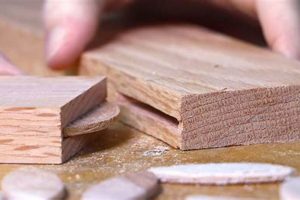
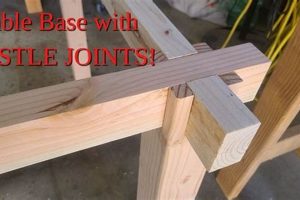
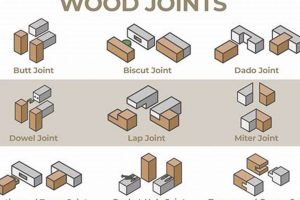
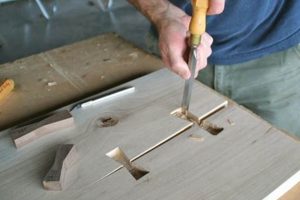
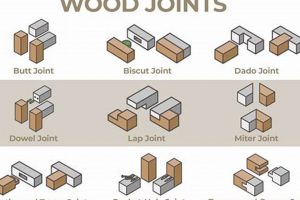
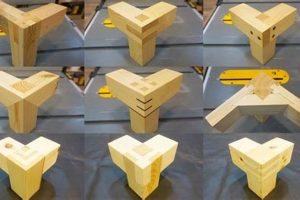
The intersection where two pieces of wood meet to form a corner presents a fundamental challenge in woodworking. Numerous techniques have been developed to create strong, aesthetically pleasing, and durable connections at these junctures. Examples include the miter joint, butt joint, dovetail joint, and mortise and tenon joint, each offering distinct properties and visual characteristics.
Securely connecting wooden components at corners is critical for structural integrity, aesthetic appeal, and overall longevity of the finished piece. Strong corner connections prevent racking, maintain dimensional stability, and contribute to the visual refinement of the project. Historically, the evolution of corner connection methods has reflected advancements in tool technology and evolving design aesthetics, influencing furniture construction and architectural woodworking for centuries.
The following sections will delve into a detailed examination of various methods for achieving robust and visually appropriate corner connections in woodworking. This includes a thorough review of the joinery techniques themselves, the tools required for their execution, and considerations for material selection to ensure optimal results.
Essential Considerations for Effective Corner Connections
Achieving robust and visually appealing corner connections in woodworking demands careful attention to detail and a thorough understanding of available techniques. The following guidelines offer insights into best practices for creating durable and aesthetically pleasing results.
Tip 1: Material Selection is Paramount: Employ compatible wood species for optimal glue adhesion and minimal differential expansion or contraction. Hardwoods generally provide greater strength and durability, while softwoods may be suitable for less demanding applications.
Tip 2: Precision in Cutting is Non-Negotiable: Accurate cuts are crucial for tight-fitting joints. Invest in high-quality measuring tools and sawing equipment to ensure dimensional accuracy and minimize gaps.
Tip 3: Glue Selection Matters: Choose an appropriate adhesive based on the wood species and the intended use of the joint. Consider factors such as open time, clamping pressure, and water resistance.
Tip 4: Clamping Pressure: Apply sufficient clamping pressure to ensure complete contact between surfaces during glue curing. Over-clamping can starve the joint of adhesive, weakening the bond.
Tip 5: Reinforcement Strategies: Consider mechanical reinforcement, such as screws or dowels, for joints subjected to significant stress. This provides additional strength and prevents joint failure.
Tip 6: Surface Preparation: Ensure surfaces are clean, dry, and free of contaminants before applying adhesive. Lightly sanding the surfaces can improve glue adhesion.
Tip 7: Dry-Fitting is Essential: Always dry-fit the joint before applying glue to verify proper alignment and fit. This allows for corrections and prevents irreversible mistakes.
Implementing these strategies enhances the structural integrity and aesthetic quality of woodwork projects. By prioritizing precision, material compatibility, and appropriate joinery techniques, a craftsman ensures lasting results.
These tips offer a foundation for successfully navigating the intricacies of corner construction. The subsequent segments of this discussion will explore diverse connection methods in greater detail.
1. Strength

The ability of a joined corner to resist force, or its strength, is a paramount consideration in woodwork. The intended use of the piece dictates the required joint strength. A bookcase intended to hold heavy volumes necessitates significantly stronger corner connections than a decorative box designed for light objects. The choice of joint directly affects the piece’s structural integrity and longevity. Insufficient joint strength leads to racking, separation, and eventual failure of the construction.
The dovetail joint, for example, is renowned for its exceptional strength due to its interlocking design, effectively resisting tensile forces. This makes it ideal for drawer construction and case goods where significant loads are anticipated. Conversely, a simple butt joint, relying primarily on adhesive, is generally unsuitable for applications demanding high strength. Selecting the appropriate joint based on anticipated stress levels is crucial. Incorrect choice compromises the structural integrity of the item.
Understanding the relationship between joint design and strength is essential for successful woodworking. Factors such as wood species, adhesive type, and construction technique all contribute to the overall strength of the joint. While achieving adequate strength is essential, it must be balanced with considerations of aesthetics, cost, and skill level. The effective balance of these factors contributes to a product of appropriate utility, value, and craftsmanship.
2. Appearance

The visual character of a woodwork project is significantly influenced by the design and execution of its corner connections. The aesthetic impact of these junctures extends beyond mere structural necessity, contributing significantly to the overall perceived quality and design intent.
- Joint Visibility and Concealment
The decision to highlight or conceal corner connections dictates the aesthetic direction of a piece. Exposed dovetails, for instance, are often celebrated as hallmarks of craftsmanship, while miter joints are frequently employed when a seamless, uninterrupted surface is desired. The choice reflects a deliberate aesthetic preference. Examples include handcrafted furniture featuring proud dovetails and minimalist cabinets employing concealed miter joints for a sleek appearance.
- Grain Matching and Continuity
The strategic alignment of wood grain at corner connections enhances visual harmony and continuity. Careful selection and orientation of wood pieces enable the grain patterns to flow seamlessly across the joint, creating an impression of a single, continuous form. Mitered corners on picture frames exemplify this technique, showcasing the continuous grain pattern to accentuate the artwork.
- Joint Cleanliness and Precision
The precision and cleanliness of a corner connection directly impact its perceived quality. Gaps, misalignments, or visible glue lines detract from the overall aesthetic appeal. Tight-fitting joints achieved through accurate cutting and careful assembly demonstrate a commitment to craftsmanship, as seen in meticulously crafted boxes with flawless mitered corners.
- Surface Finishing and Treatment
The finishing applied to a woodwork piece accentuates or diminishes the visual impact of corner connections. Clear finishes highlight the natural wood grain and joint construction, while opaque finishes conceal the underlying joinery. Thoughtful selection of finishes allows for customization of the aesthetic effect. For example, a clear coat emphasizes the beauty of exposed dovetails, whereas paint can create a uniform surface across a miter joint.
These considerations collectively illustrate the pivotal role of corner connections in shaping the visual character of woodworking projects. The intentional manipulation of joint visibility, grain matching, precision, and finishing treatments contributes to a cohesive aesthetic that aligns with the desired design outcome.
3. Alignment

Proper alignment is a critical factor in the successful creation of robust and aesthetically pleasing corner connections in woodwork. Misalignment at the joint compromises the structural integrity of the assembly, creating stress points and weakening the overall construction. The resulting gaps or uneven surfaces detract from the visual appeal, diminishing the quality of the finished piece. For instance, a cabinet door with misaligned corners will not only function poorly but will also exhibit an unprofessional appearance. The relationship between precise alignment and the success of a joinery technique is direct; any deviation from the intended angle or plane undermines the effort invested in material selection and joinery execution.
The impact of alignment extends beyond the immediate joint area, influencing the stability and squareness of the entire structure. A frame constructed with misaligned corners, even if individually strong, will be prone to racking and distortion over time. The cumulative effect of minor misalignments can lead to significant structural problems, especially in larger pieces of furniture or architectural woodwork. Achieving accurate alignment requires careful measurement, precise cutting, and meticulous assembly. The use of jigs, fixtures, and clamping systems is often necessary to maintain the correct position of components during glue-up. Consider the construction of a table; if the legs are not aligned correctly at the apron corners, the table will be unstable and wobble.
In summary, achieving accurate alignment in woodwork corner joints is not merely a cosmetic concern; it is fundamental to the structural stability and aesthetic quality of the finished product. The challenges associated with maintaining precise alignment highlight the importance of skilled craftsmanship, attention to detail, and the use of appropriate tools and techniques. Understanding the direct correlation between alignment and the longevity and functionality of a woodworking project allows artisans to mitigate potential structural weaknesses and elevate the caliber of their craftsmanship, and provides a framework for understanding its relationship to the broader subject.
4. Accuracy

The precision with which components are fashioned and assembled directly dictates the quality and structural integrity of corner connections in woodworking. Accuracy transcends mere dimensional conformity; it encompasses angular precision, surface flatness, and the conformity of mating parts. Neglecting precision in these aspects can lead to weakened joints, visual imperfections, and a diminished lifespan for the finished piece.
- Dimensional Precision in Component Fabrication
Accurate measurement and cutting of the individual pieces forming the corner are fundamental. Deviations from the intended dimensions accumulate, resulting in gaps, misalignments, and compromised joint strength. For example, an error of even 1/32 of an inch in the length of a mitered component translates to a noticeable gap and a weakened corner. Accurate joinery relies on precise cutting tools, careful layout, and a meticulous approach to fabrication.
- Angular Precision in Joinery Execution
Specific joining techniques, such as miter joints and dovetail joints, demand precise angular cuts. Inaccurate angles lead to gaps, stresses within the joint, and a reduction in glue surface area. A miter joint cut at 46 degrees instead of 45, for instance, will not close properly, resulting in a visible seam and a weakened bond. Accurate execution requires specialized tools like miter saws, dovetail jigs, and precise measuring instruments.
- Surface Flatness and Mating Surface Conformity
The surfaces that come into contact within a corner joint must be flat and free of imperfections to ensure optimal glue adhesion and structural integrity. Warped or uneven surfaces create voids, reducing the bond strength and increasing the likelihood of joint failure. Preparation of mating surfaces typically involves planing, sanding, or jointing to achieve the required flatness and conformity. A mortise and tenon joint with an uneven tenon shoulder will exhibit gaps and a compromised connection.
- Accurate Assembly and Clamping Procedures
Even with accurately fabricated components, improper assembly can negate the benefits of precise cuts. Misalignment during glue-up, inadequate clamping pressure, or movement during the curing process can introduce stresses and weaken the joint. Jigs, fixtures, and clamps play a crucial role in maintaining alignment and applying uniform pressure during assembly. A picture frame assembled without proper corner clamps will likely exhibit misaligned corners and a compromised aesthetic.
These facets of accuracy, when diligently addressed, contribute directly to the creation of strong, visually appealing, and durable corner connections. While achieving perfect accuracy is an ideal, striving for it through careful technique, appropriate tools, and attention to detail significantly elevates the quality and longevity of woodwork projects. The application of these principles forms the bedrock of sound woodworking practice.
5. Material

The selection of material exerts a profound influence on the integrity, longevity, and aesthetic qualities of corner connections in woodworking. The inherent properties of the chosen wood species, such as its density, grain structure, and moisture content, directly impact the strength and stability of the resultant joint. For example, hardwoods like oak or maple, with their tighter grain and greater density, typically yield stronger and more durable corner connections compared to softwoods like pine or fir. The cause-and-effect relationship is clear: denser wood offers greater resistance to stress and deformation at the joint. The practical significance of this understanding lies in selecting materials appropriate for the intended application of the piece; high-stress applications demand robust materials, while less critical applications allow for greater material flexibility. The suitability of a given species dictates the effectiveness of the chosen corner joint; a dovetail joint in balsa wood will offer significantly less strength than the same joint in walnut.
Beyond wood species, the dimensional stability of the material is paramount. Wood is a hygroscopic material, meaning it absorbs and releases moisture from the surrounding environment. This moisture exchange causes dimensional changes, which can induce stress within a corner joint, leading to cracking, warping, or joint failure. Proper seasoning and acclimatization of the wood to its environment are therefore crucial. For instance, constructing a frame with unseasoned lumber will inevitably result in joint instability as the wood dries and shrinks. Consideration must also be given to material compatibility; joining woods with significantly different expansion coefficients can create stresses that compromise the integrity of the corner. Combining cherry and pine in a frame without accommodating their differential movement will likely result in joint failure over time. Adhesives must also be carefully matched to the chosen material to ensure adequate bonding strength.
In summary, material selection is an indispensable component of robust and aesthetically pleasing corner connections in woodwork. The inherent properties and dimensional stability of the chosen wood, coupled with appropriate adhesive selection, directly determine the strength, durability, and visual appeal of the joint. Challenges arise in matching material properties to joint requirements, but careful consideration of these factors allows craftsmen to create woodwork pieces that withstand the test of time and maintain their aesthetic integrity. A comprehensive understanding of material behavior is essential for mitigating risks, ensuring long-term performance, and enhancing the overall quality of woodworking projects.
6. Technique

The effectiveness of corner connections in woodworking hinges directly on the employed technique. The chosen method dictates the joint’s structural integrity, aesthetic appeal, and long-term durability. Mastery of various techniques allows for the creation of joints tailored to specific functional and design requirements.
- Precision in Measurement and Marking
Accurate measurements and precise marking form the foundation of any successful corner connection. Even slight discrepancies in dimensions can lead to weakened joints and visible imperfections. For instance, the execution of a mortise and tenon joint requires meticulous marking of the mortise location and the tenon dimensions to ensure a tight and square fit. Inaccuracy at this stage compromises the entire joint, regardless of subsequent efforts.
- Appropriate Tool Selection and Application
The choice and skillful application of tools are critical for achieving clean, accurate cuts and tight-fitting joints. A dull chisel or an improperly set saw can result in ragged edges, misaligned surfaces, and weakened connections. Examples include using a sharp shoulder plane to refine tenon cheeks for a perfect fit or employing a precisely calibrated miter saw for flawless miter joints. Selection of the proper tool for the specific task is as important as the skill in using it.
- Adhesive Application and Clamping Methods
Correct application of adhesive and appropriate clamping techniques are essential for achieving a strong, permanent bond. Insufficient adhesive or inadequate clamping pressure can lead to starved joints with reduced strength. Conversely, excessive adhesive can create squeeze-out that interferes with finishing. Applying even pressure across the entire joint surface during clamping is crucial. The process of gluing a dovetail joint requires even and firm clamping to ensure complete surface contact, and a weak connection can be expected if the proper methods are not followed.
- Finishing and Refinement Techniques
The final appearance of a corner joint is significantly influenced by finishing and refinement techniques. Careful sanding, planing, and the application of appropriate finishes enhance the visual appeal and protect the joint from environmental factors. Poorly executed finishing can accentuate imperfections and detract from the overall quality of the piece. The meticulous sanding of a miter joint before finishing ensures a seamless transition between the two pieces of wood, resulting in a visually pleasing corner. The quality of the finish reflects the expertise of the craftsman.
These facets of technique, when diligently applied, elevate the strength, aesthetic appeal, and longevity of corner connections in woodwork. Skillful execution, attention to detail, and a thorough understanding of the properties of wood and adhesives are paramount for achieving exceptional results. The mastery of diverse techniques empowers woodworkers to create corner connections tailored to specific functional and design considerations.
Frequently Asked Questions
The following section addresses common inquiries and clarifies pertinent information regarding corner connections in woodworking. The information presented aims to provide a comprehensive understanding of this fundamental aspect of woodworking.
Question 1: What are the primary factors influencing the strength of corner connections?
The strength of a corner connection is contingent upon several key factors, including the chosen joinery technique, the properties of the wood species, the quality of the adhesive, and the precision of the assembly. A dovetail joint, for instance, inherently offers greater strength than a simple butt joint. Similarly, hardwoods typically provide superior joint strength compared to softwoods. Precise execution and proper clamping techniques further contribute to a robust corner connection.
Question 2: Which corner joint is best suited for heavy-duty applications?
For applications requiring exceptional strength and resistance to racking forces, the dovetail joint is often considered the optimal choice. Its interlocking design provides a mechanical advantage, preventing the joint from pulling apart under stress. Mortise and tenon joints also offer substantial strength and are commonly employed in furniture construction. The selection of the most suitable joint, however, always depends on the specific demands of the project.
Question 3: How does wood movement affect corner joints?
Wood’s natural tendency to expand and contract with changes in humidity can exert considerable stress on corner joints. If the joint is rigidly constructed without accommodating this movement, cracking, warping, or joint failure can occur. Employing joinery techniques that allow for some degree of movement, such as floating tenons or mortise and tenon joints with elongated mortises, can mitigate these risks. Proper seasoning and acclimatization of the wood are also crucial.
Question 4: What role does adhesive play in corner joint strength?
Adhesive serves as a critical component in many corner joints, providing a strong bond between the mating surfaces. The selection of an appropriate adhesive is paramount. Different adhesives offer varying degrees of strength, water resistance, and gap-filling capabilities. For general woodworking applications, PVA (polyvinyl acetate) glues are commonly used. For exterior applications or joints requiring exceptional strength, epoxy or polyurethane adhesives may be preferred. Proper application and clamping are essential for maximizing adhesive effectiveness.
Question 5: How can gaps in corner joints be minimized?
Gaps in corner joints can compromise both their strength and aesthetic appeal. Minimizing gaps requires precise cutting, accurate layout, and careful assembly. The use of sharp tools, jigs, and fixtures can facilitate accurate cuts and ensure proper alignment. Before applying adhesive, dry-fitting the joint is recommended to identify and correct any discrepancies. The type of wood is key. Working with a wood such as cherry is easier as it is generally known to hold well.
Question 6: Are there specific tools recommended for creating corner joints?
Several tools are particularly useful for creating precise and strong corner joints. These include a miter saw for accurate angle cuts, a dovetail saw and chisels for crafting dovetail joints, a mortise chisel and marking gauge for mortise and tenon joints, and various clamps for applying even pressure during glue-up. Investing in high-quality tools and mastering their proper use enhances the precision and efficiency of joint construction.
In summary, successful corner connections hinge on a comprehensive understanding of material properties, joinery techniques, adhesive selection, and precise execution. The principles outlined in these FAQs provide a foundation for creating strong, durable, and visually appealing woodworking projects.
The subsequent section will provide a glossary of corner joint terminology, clarifying essential concepts and definitions.
Conclusion
The preceding discussion has explored the multifaceted nature of woodwork corner joints, emphasizing their critical role in the structural integrity and aesthetic quality of woodworking projects. The careful selection of joinery techniques, appropriate materials, and meticulous execution are paramount for achieving durable and visually appealing results. The principles of strength, appearance, alignment, accuracy, material selection, and technique have been examined in detail, providing a framework for informed decision-making in corner joint design and construction.
Mastery of corner connection methods remains a cornerstone of skilled woodworking. Continued exploration, experimentation, and adherence to established best practices will ensure the creation of enduring and aesthetically pleasing woodwork for generations to come. The pursuit of excellence in corner joinery reflects a commitment to quality craftsmanship and a deep appreciation for the enduring properties of wood.