



These specialized tools are designed to apply even pressure across the surface of wood panels during glue-up operations. They secure boards edge-to-edge, ensuring tight joints and preventing warping while adhesives cure. An example includes using bar clamps in conjunction with cauls to distribute force and keep a large tabletop flat as it dries.
Proper use of these clamping mechanisms is essential for achieving strong, aesthetically pleasing results in cabinetry, furniture construction, and other woodworking projects. Their application reduces the likelihood of gaps or misalignments, leading to improved structural integrity and a professional finish. Historically, woodworkers have relied on various methods to achieve similar results, but modern iterations offer increased precision and efficiency.
The subsequent sections will explore different types of these tools, best practices for their application, and factors to consider when selecting the appropriate tool for a specific task.
Effective Usage Strategies
The following guidelines provide practical advice for optimizing the application of these tools, ensuring superior results in woodworking projects.
Tip 1: Ensuring Parallel Alignment: Prior to applying pressure, meticulously check that the clamping surfaces are parallel to the wood panels. Misalignment can induce stress and distort the final assembly.
Tip 2: Employing Protective Cauls: Utilize wooden cauls between the clamping jaws and the workpieces. These buffer strips distribute pressure evenly, preventing indentation or marring of the wood surface.
Tip 3: Strategic Placement for Uniform Pressure: Position these tools at regular intervals along the panel edges. Consistent spacing is crucial for guaranteeing uniform pressure distribution and preventing bowing.
Tip 4: Gradual Pressure Application: Avoid over-tightening. Increase pressure incrementally, observing the glue line for excessive squeeze-out. Over-clamping can starve the joint of adhesive and weaken the bond.
Tip 5: Monitoring for Panel Flatness: While tightening, periodically check the panel for flatness using a straightedge or winding sticks. Adjust clamp placement as needed to correct any deviations.
Tip 6: Allowing Adequate Cure Time: Adhere to the adhesive manufacturer’s recommended cure time before removing the tools. Premature removal can compromise the joint’s integrity.
Tip 7: Cleaning Adhesive Squeeze-Out: Promptly remove excess adhesive squeeze-out with a chisel or scraper while it is still pliable. This minimizes sanding requirements and prevents staining.
Adhering to these techniques maximizes the effectiveness of these clamping systems, resulting in stronger, more aesthetically pleasing woodworking projects. Proper application minimizes warping, ensures tight joints, and contributes to a professional finish.
The subsequent section provides a summary of considerations when selecting the right tool for specific woodworking applications, ensuring informed decision-making.
1. Even Pressure Distribution

Even pressure distribution is a cornerstone of successful panel assembly within woodworking. It directly impacts joint integrity, panel flatness, and overall structural stability. Utilizing appropriate clamping strategies ensures that forces are applied uniformly across the wood surface, mitigating potential defects.
- Minimizing Warping and Bowing
Uneven pressure during glue-up can induce internal stresses within the wood panel. These stresses often manifest as warping or bowing as the adhesive cures. Proper clamping techniques, such as using cauls and strategically placed clamps, counteract these forces, resulting in a flat, stable panel. For example, inadequate clamping pressure on the edges of a wide panel can lead to cupping, rendering the panel unusable for its intended purpose.
- Optimizing Glue Line Strength
Consistent pressure along the glue line promotes optimal adhesive bonding. Insufficient pressure can lead to starved joints, characterized by a weak or incomplete bond. Conversely, excessive pressure can squeeze out too much adhesive, also weakening the joint. The goal is to apply enough pressure to ensure full contact between the wood surfaces without depleting the adhesive. A practical example is observing a visible, even bead of glue squeeze-out along the joint, indicating adequate pressure.
- Preventing Joint Gaps
Inadequate or uneven pressure can result in visible gaps along the joint lines. These gaps compromise both the aesthetic appeal and structural integrity of the panel. Applying consistent pressure ensures that the wood surfaces remain in close contact throughout the curing process, creating a seamless joint. For instance, using parallel clamps or bar clamps that are not properly adjusted can lead to gaps that require filling or rework.
- Importance of Caul Application
Cauls, which are typically straight and rigid pieces of wood, play a vital role in distributing pressure evenly. When positioned between the clamp jaws and the panel surface, cauls prevent localized pressure points that can cause indentations or unevenness. They act as a buffer, spreading the clamping force over a wider area. An example is using slightly curved cauls to counteract the natural tendency of a panel to bow upwards during clamping.
The principles of even pressure distribution are fundamental to achieving professional-quality results in woodworking. By understanding and applying these concepts, woodworkers can produce panels that are not only visually appealing but also structurally sound and durable. Therefore, the selection and application of appropriate clamping mechanisms are critical steps in panel construction.
2. Joint Alignment Precision

Joint alignment precision is a critical aspect of panel construction, directly impacting the structural integrity and aesthetic quality of finished woodworking projects. The application of specialized clamping mechanisms plays a fundamental role in achieving and maintaining this precision throughout the assembly process.
- Minimizing Offset and Stepping
Panel clamps, when properly employed, counteract the tendency for individual boards to offset or “step” relative to one another during glue-up. Such misalignments create uneven surfaces that require extensive sanding, compromising both the appearance and material thickness of the finished panel. The use of clamping systems that apply consistent, lateral pressure ensures that boards remain flush during adhesive curing. An example is using parallel clamps, which are specifically designed to exert even pressure across the entire joint surface, preventing unwanted vertical displacement.
- Ensuring Coplanarity
Coplanarity refers to the state of multiple surfaces lying within the same plane. Achieving coplanarity in a panel is essential for creating a smooth, uniform surface suitable for subsequent finishing or use. Panel clamps facilitate this by forcing individual boards into a shared plane as the adhesive sets. This is particularly important when working with boards of varying thicknesses or those exhibiting minor warpage. For instance, bar clamps, combined with strategically placed shims, can be used to coax slightly warped boards into a coplanar configuration during clamping.
- Facilitating Strong Glue Bonds
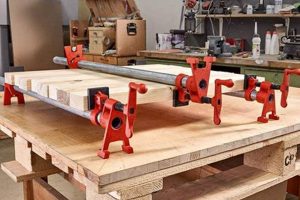
Precise joint alignment maximizes the surface area available for adhesive bonding. When boards are perfectly aligned, the glue can form a continuous, unbroken bond between adjacent surfaces, resulting in a stronger and more durable panel. Misaligned joints, on the other hand, create voids or gaps that weaken the bond and increase the risk of failure. Clamping systems that provide consistent pressure and maintain alignment during the curing process promote optimal adhesive penetration and bonding. An example includes using pipe clamps with multiple supports to prevent sagging and maintain a tight, gap-free glue line.
- Reducing Post-Assembly Work
Accurate joint alignment during panel construction significantly reduces the need for extensive post-assembly corrections. Panels assembled with precision require less sanding, planing, and filling to achieve a smooth, uniform surface. This not only saves time and effort but also minimizes the risk of damaging the wood or altering its dimensions. By investing in quality panel clamps and employing proper clamping techniques, woodworkers can streamline the assembly process and produce panels that are ready for finishing with minimal additional work. For example, using edge-banding clamps ensures precise alignment of edge-banding material, eliminating the need for extensive trimming and sanding after adhesive curing.
The ability to achieve precise joint alignment is directly correlated with the selection and proper application of panel clamps. By understanding the principles of alignment and employing appropriate clamping techniques, woodworkers can ensure that their panels are not only aesthetically pleasing but also structurally sound and durable. The investment in quality clamping systems and the development of effective clamping strategies are essential for producing high-quality woodworking projects.
3. Material Compatibility
Material compatibility is a paramount consideration when employing clamping mechanisms in woodworking panel construction. The interaction between the clamping surfaces, the wood species, and the selected adhesive can significantly influence the outcome of the assembly process, potentially impacting joint strength and the aesthetic quality of the finished product.
- Wood Species and Clamp Surface Interactions
Different wood species exhibit varying degrees of hardness and susceptibility to compression. Using clamps with excessively hard or textured clamping surfaces on softer woods can result in indentation or marring. Conversely, clamping softer materials may require the use of cauls or protective pads to distribute pressure and prevent damage. For instance, clamping a softwood like pine with uncoated metal clamp jaws can leave visible marks, necessitating additional sanding. The use of hardwood cauls, cork, or felt pads provides a buffer, mitigating the risk of surface damage. Appropriate clamp selection, based on the wood’s characteristics, is essential.
- Adhesive Type and Clamping Pressure
The type of adhesive employed dictates the optimal clamping pressure required for a strong bond. Certain adhesives, such as epoxy, require minimal clamping pressure to ensure proper wetting of the wood fibers. Over-clamping can starve the joint of adhesive and weaken the bond. Conversely, other adhesives, like polyvinyl acetate (PVA), may require moderate clamping pressure to achieve a tight, gap-free joint. Applying excessive force with these adhesives can also be detrimental. The manufacturer’s specifications for the chosen adhesive should always be consulted to determine the appropriate clamping pressure. Failing to do so can lead to joint failure or compromised structural integrity.
- Moisture Content and Wood Movement
Wood is a hygroscopic material, meaning it expands and contracts with changes in moisture content. During panel assembly, it is crucial to consider the moisture content of the wood and the potential for future movement. Clamping a panel constructed from wood with varying moisture content can result in stress and distortion as the wood acclimates to its environment. Applying excessive clamping pressure to restrict this natural movement can lead to cracking or joint failure. Ideally, wood should be acclimated to its final environment before assembly. When using clamps, pressure should be sufficient to ensure a tight bond but not so excessive as to inhibit natural wood movement. Flexible clamping systems that allow for slight movement can be advantageous.
- Dissimilar Materials and Chemical Reactions
When combining wood with dissimilar materials, such as metal or plastic, potential chemical reactions and galvanic corrosion must be considered. Some adhesives can react with certain metals, leading to corrosion and weakening of the bond. Similarly, direct contact between dissimilar metals in a moist environment can result in galvanic corrosion, compromising the integrity of the joint. Using appropriate adhesives that are compatible with all materials is crucial. In some cases, it may be necessary to isolate dissimilar materials with a barrier or coating to prevent unwanted chemical reactions. Failing to consider these factors can lead to premature failure of the panel assembly.
The interplay between these factors highlights the importance of carefully considering material compatibility when employing clamps in woodworking panel construction. Informed decisions regarding wood species, adhesive selection, moisture content, and potential chemical reactions are essential for achieving strong, durable, and aesthetically pleasing results. A thorough understanding of these principles empowers woodworkers to mitigate risks and ensure the longevity of their projects.
4. Clamp Type Selection

The selection of appropriate clamping mechanisms is a critical determinant of success in panel construction. The type of clamp employed directly influences the uniformity of pressure distribution, joint alignment precision, and overall structural integrity of the finished panel. Inadequate clamp selection can lead to warping, joint gaps, or even panel failure. For example, using light-duty spring clamps on a large tabletop glue-up is insufficient to provide the necessary clamping force, resulting in uneven joints and potential warping during the adhesive curing process. Conversely, employing heavy-duty bar clamps without proper cauls on delicate wood can leave indentation marks, compromising the aesthetic quality of the panel. Therefore, a thorough understanding of the characteristics and limitations of various clamp types is essential for achieving optimal results.
Practical application requires careful consideration of the panel size, wood species, and adhesive type. Larger panels necessitate clamps with extended reach and substantial clamping force, such as bar clamps or pipe clamps. Softer wood species demand the use of clamps with cushioned jaws or the incorporation of cauls to distribute pressure evenly. Different adhesives may require varying levels of clamping pressure; therefore, the manufacturer’s recommendations should always be consulted. For instance, constructing a wide butcher block countertop requires several long bar clamps spaced strategically along the length of the panel to ensure uniform pressure distribution and prevent bowing. Similarly, assembling a delicate marquetry panel necessitates the use of gentler clamps with adjustable pressure settings to avoid damaging the intricate wood veneer.
In summary, the correct selection of clamping mechanisms is not merely a matter of convenience but a fundamental element of successful panel construction. A thoughtful approach, guided by an understanding of panel size, wood species, adhesive type, and the specific characteristics of each clamp type, will contribute significantly to the quality and longevity of finished woodworking projects. Challenges such as workpiece accessibility and potential for clamp interference must also be considered. The appropriate tools, coupled with sound technique, are essential for achieving consistent and professional results in panel construction.
5. Cure Time Adherence
Adherence to adhesive cure times represents a critical, often underestimated, aspect of successful panel construction. Failure to respect the specified cure period can negate the benefits of even the most sophisticated clamping systems, resulting in weakened joints and compromised structural integrity.
- Achieving Maximum Bond Strength
Adhesives undergo a chemical process during curing, developing their ultimate bond strength over a specified period. Premature removal of clamping pressure interrupts this process, preventing the adhesive from reaching its full potential. For example, removing clamps from a panel glued with PVA adhesive before the recommended 24-hour cure time can result in a significantly weaker joint, prone to failure under stress. Following the manufacturer’s guidelines ensures the adhesive achieves maximum bonding capability.
- Minimizing Stress-Induced Deformations
Wood panels are subject to internal stresses, particularly during and after glue-up. Clamps maintain alignment and resist these forces while the adhesive cures. Removing clamps too soon allows these stresses to manifest as warping, bowing, or twisting. Consider a large tabletop panel; if clamps are removed before the adhesive fully cures, residual stresses can cause the panel to distort, rendering it unsuitable for its intended use. Extended clamping, adhering to the recommended cure time, allows the adhesive to stabilize the panel against these forces.
- Preventing Joint Creep
Joint creep refers to the gradual deformation of a joint under sustained load. Insufficiently cured adhesive is more susceptible to creep, especially under environmental fluctuations. Leaving clamps in place for the duration of the recommended cure time ensures the adhesive achieves sufficient cross-linking to resist long-term deformation. A common example is a bookshelf panel; if clamps are removed prematurely, the weight of the books can cause the shelves to sag over time due to joint creep. Full cure time allows the adhesive to provide long-term stability.
- Optimizing Long-Term Durability
Properly cured adhesive contributes significantly to the long-term durability of a wood panel. A fully cured joint is more resistant to moisture, temperature changes, and physical stress. Conversely, a partially cured joint is vulnerable to degradation over time. For instance, an exterior door panel requires complete adhesive curing to withstand exposure to the elements. Premature clamp removal can lead to delamination and eventual failure of the door. Adequate cure time is, therefore, an investment in the longevity of the project.
In conclusion, adherence to adhesive cure times is not merely a procedural formality but a fundamental requirement for achieving durable and structurally sound wood panels. It complements the benefits of proper clamping techniques, ensuring that the adhesive can fully develop its bonding properties and resist the forces that can compromise joint integrity over time. Ignoring cure time recommendations undermines the entire panel construction process, leading to potential failures and diminished long-term performance.
Frequently Asked Questions
This section addresses common inquiries regarding panel clamps, providing clarity on their usage, selection, and impact on woodworking projects.
Question 1: What constitutes appropriate clamping pressure for panel glue-ups?
Appropriate clamping pressure is dictated by the adhesive type and wood species. Excessive pressure can starve the joint of adhesive, while insufficient pressure results in a weak bond. Adhesive manufacturers’ recommendations should be consulted to determine the optimal clamping force.
Question 2: How can warping during panel glue-up be prevented?
Warping can be minimized by ensuring uniform clamping pressure, using cauls to distribute force, and acclimating the wood to its final environment prior to assembly. Strategic clamp placement is also crucial to counteract potential bending forces.
Question 3: Are specialized panel clamps necessary, or can standard clamps suffice?
While standard clamps can be used, specialized panel clamps, such as parallel clamps or bar clamps with long reaches, are designed to distribute pressure evenly across wider surfaces, leading to more consistent results. The choice depends on panel size and the desired level of precision.
Question 4: What is the ideal spacing between clamps during panel assembly?
Clamp spacing depends on panel thickness and wood species. Generally, clamps should be spaced no more than 6-12 inches apart to ensure adequate pressure distribution. Thicker panels and denser woods may require closer spacing.
Question 5: How does wood moisture content affect panel glue-ups?
Wood moisture content significantly impacts panel stability. Assembled panels should be constructed from wood with a consistent moisture content to minimize dimensional changes and prevent warping or cracking. Acclimation to the final environment is crucial.
Question 6: Can clamps be over-tightened, damaging the wood or joints?
Yes, clamps can be over-tightened. Excessive pressure can compress the wood fibers, potentially creating indentations or starving the joint of adhesive. A gradual increase in pressure, monitored for adhesive squeeze-out, is recommended to avoid damage.
Panel clamps, when used correctly, contribute significantly to the quality and longevity of woodworking projects. Careful consideration of clamping pressure, wood properties, and adhesive characteristics is essential for optimal outcomes.
The subsequent section addresses troubleshooting common issues encountered during panel clamping.
Panel Clamps Woodworking
This exploration has underscored the significance of proper selection and application of “panel clamps woodworking” techniques. Key factors impacting panel integrity, including uniform pressure distribution, precise joint alignment, material compatibility, appropriate clamp type, and adherence to adhesive cure times, have been thoroughly examined. These elements are not independent; rather, they represent an interconnected system influencing the final quality and durability of woodworking projects.
Mastery of “panel clamps woodworking” is essential for achieving professional-grade results. Continued refinement of technique, coupled with informed material selection, ensures consistent output and longevity of crafted pieces. The principles discussed herein serve as a foundation for ongoing skill development and a commitment to excellence within the craft.
![Top-Rated: Best Quick Clamps for Woodworking Projects [2024] | Step-by-Step Guides, Tools & Inspiration to Build Beautiful Wooden Decor on a Budget](https://woodfromhome.com/wp-content/uploads/2026/04/th-264-300x200.jpg "Top-Rated: Best Quick Clamps for Woodworking Projects [2024] Step-by-Step Guides, Tools & Inspiration to Build Beautiful Wooden Decor on a Budget")