



Devices that apply pressure to hold workpieces together during woodworking projects are offered commercially. These tools are essential for assembling components, allowing adhesives to cure properly, and ensuring accurate alignment. Examples include bar clamps, pipe clamps, and spring clamps, each designed for specific applications and materials.
The availability of these holding mechanisms is crucial for efficient and precise woodworking. They enable stronger joints, prevent movement during fastening, and significantly improve the quality and durability of finished products. Historically, these tools have evolved from simple hand-operated devices to more sophisticated, mechanically advantaged systems, reflecting advancements in materials and manufacturing techniques.
A thorough understanding of the different types, their proper usage, and the factors influencing their selection is vital for both hobbyist woodworkers and professional cabinetmakers. Subsequent sections will detail these aspects, providing a comprehensive guide to choosing the optimal tool for various woodworking tasks.
Essential Considerations for Acquiring Woodworking Holding Mechanisms
This section provides essential guidance for those considering the acquisition of pressure application devices for woodworking. Careful attention to these points will ensure optimal performance and project success.
Tip 1: Select the Appropriate Type: Consider the specific requirements of each woodworking task. Bar clamps are suitable for larger panels, while spring clamps are better for light-duty applications. Pipe clamps offer versatility in length.
Tip 2: Evaluate Clamping Force: The required clamping force depends on the wood species and adhesive used. Softwoods generally require less force than hardwoods. Ensure the selected device can provide adequate pressure without damaging the workpiece.
Tip 3: Inspect Jaw Quality: The jaws should be parallel and free of defects. Jaws made from non-marring materials prevent indentation and staining of the wood surface.
Tip 4: Consider Throat Depth: Throat depth determines the distance from the edge of the workpiece to the clamping point. Choose devices with sufficient throat depth to accommodate the project’s dimensions.
Tip 5: Assess Ease of Use: The mechanism should be easy to adjust and secure. Quick-release mechanisms can improve efficiency, particularly for complex assemblies.
Tip 6: Check for Durability: The devices should be constructed from durable materials, such as steel or cast iron. Examine the threads and joints for signs of wear or weakness.
Tip 7: Consider Budgetary Constraints: Prices vary significantly depending on type, size, and brand. Establish a budget and prioritize features based on project needs.
The implementation of these considerations promotes project success and enhances the quality of woodworking endeavors by guaranteeing the proper selection and application of woodworking pressure application devices.
The subsequent section will address common errors encountered when employing these mechanisms and how to prevent them.
1. Type

The classification of holding mechanisms significantly influences the selection process when acquiring these tools for woodworking projects. Different woodworking applications necessitate specific types of devices, each designed with unique characteristics and functionalities. The availability of various types is directly linked to woodworking’s diverse demands, as reflected in the range offered for commercial acquisition. For instance, edge clamps are specifically designed to apply pressure along the edges of boards, ensuring a flush joint. In contrast, F-style clamps offer versatile clamping for various shapes and sizes. Choosing an unsuitable type can lead to inadequate pressure distribution, misalignment, and compromised joint strength, directly impacting the final product’s structural integrity.
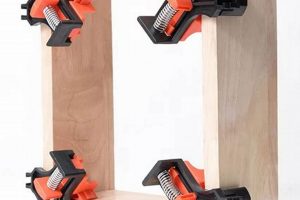
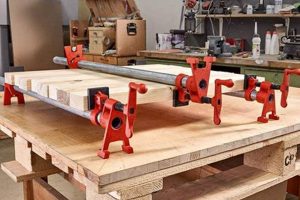
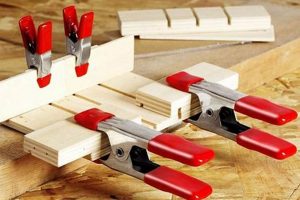
The market offers an array of options: bar, pipe, hand screw, spring, miter, and specialty clamps. Each type caters to distinct needs within woodworking. Bar clamps, with their long reach, are useful for assembling large panels. Pipe clamps provide flexibility in length using standard piping, while hand screw clamps distribute pressure evenly across delicate surfaces. Spring clamps offer quick, light-duty holding. Miter clamps are specialized for assembling angled joints, and specialty clamps, such as band clamps, accommodate irregular shapes. When acquiring “woodworking clamps for sale”, understanding these distinctions allows for an informed decision aligned with project requirements, ensuring the appropriate tool is used for each specific operation.
In summary, the importance of ‘type’ in the selection of holding mechanisms cannot be overstated. This understanding prevents mismatched applications, ensures optimal clamping performance, and ultimately contributes to the successful execution of woodworking projects. Selecting the correct mechanism from those “for sale” is vital in ensuring structural stability, aesthetic correctness, and the longevity of the finished product.
2. Size
The dimension of holding mechanisms represents a crucial parameter when evaluating those “for sale,” significantly impacting usability and effectiveness across various woodworking applications. This consideration necessitates a thorough assessment to ensure optimal tool selection for specific project requirements.
- Maximum Opening Capacity
The maximum opening capacity dictates the largest workpiece that a device can accommodate. Insufficient opening capacity renders the tool unsuitable for the project, while excessive capacity may lead to instability. For example, a small picture frame may only require a 6-inch opening, whereas assembling a large tabletop may necessitate clamps with a 36-inch or greater capacity. Evaluating project dimensions against the advertised opening capacity is essential during the purchasing process.
- Throat Depth
Throat depth determines the distance from the clamping bar to the deepest point of the jaw. This dimension is critical when clamping workpieces away from the edges. A shallow throat depth may limit the clamping area, especially on wider boards or panels. For instance, when applying edge banding to a thick tabletop, a device with adequate throat depth ensures the banding is firmly pressed against the substrate throughout the curing process.
- Overall Length
The overall length of the mechanism influences maneuverability and storage. Extended lengths are advantageous for large assemblies but may prove cumbersome in confined spaces. Shorter lengths offer greater control in intricate work but may lack the reach for larger components. The available workspace and the anticipated size of typical projects should inform the choice of overall length.
- Weight
The weight of the device can affect user fatigue during prolonged use. Lighter options are easier to handle but may compromise clamping force or durability. Heavier, more robust devices offer greater stability and force but can lead to operator strain, especially during repetitive tasks. The balance between weight and performance is a critical consideration, particularly for professionals who use these tools extensively.
Ultimately, a comprehensive understanding of dimensional parameters is crucial when considering “woodworking clamps for sale.” Correctly evaluating these aspects ensures that the selected mechanism is appropriately sized for the intended tasks, promoting efficiency, accuracy, and the successful completion of woodworking projects. Disregarding size considerations can lead to project delays, compromised structural integrity, and unnecessary expenses.
3. Clamping Force
Clamping force, the amount of pressure exerted by a holding mechanism, is a critical specification when evaluating “woodworking clamps for sale”. Insufficient clamping force results in weak joints, misalignment, and potential project failure. Conversely, excessive force can damage the wood, leaving indentations or causing structural compromise. The selection of the appropriate force is therefore paramount.
The relationship between clamping force and “woodworking clamps for sale” is a cause-and-effect dynamic. The design and construction of these devices determine the force they can apply. For example, a heavy-duty bar clamp constructed of steel can generate significantly more force than a small spring clamp made of plastic. Consequently, understanding the intended application is essential. Joining two pieces of softwood with wood glue typically requires less force than edge-gluing hardwood panels for a tabletop. The “for sale” marketplace offers a range of options that address these varying needs.
Ultimately, a focus on clamping force when selecting “woodworking clamps for sale” contributes directly to project success. Accurately matching the tool’s capabilities to the material and adhesive properties minimizes the risk of joint failure and ensures the desired aesthetic and structural integrity. Properly applied pressure facilitates optimal adhesive bond formation, creating durable and aesthetically pleasing woodworking projects. This highlights the practical significance of understanding clamping force as an integral component when acquiring such mechanisms.
4. Jaw Material
The composition of holding mechanism jaws is a critical determinant of performance and workpiece protection when considering “woodworking clamps for sale”. The jaw material directly influences the potential for marring, staining, and overall effectiveness in securely holding wood components.
- Hardwood Facing
Some holding mechanisms incorporate hardwood facings on their jaws. These facings, often made of maple or beech, distribute clamping pressure evenly, reducing the risk of indentation on softer wood species. This is particularly relevant when working with expensive hardwoods or delicate veneers where surface imperfections are unacceptable. Devices “for sale” with hardwood facings are frequently favored for fine woodworking and instrument making.
- Soft Plastic or Rubber Overmolds
Certain “woodworking clamps for sale” feature jaws with overmolded soft plastic or rubber. This construction provides a high degree of grip while minimizing the potential for damage. These materials conform to the contours of the workpiece, distributing pressure over a larger area and preventing slippage. This is particularly useful when clamping irregularly shaped objects or when working with finished surfaces that are susceptible to scratching.
- Bare Metal Jaws
While some “woodworking clamps for sale” have bare metal jaws, their direct contact with wood is generally discouraged. Metal jaws, especially those with sharp edges or imperfections, can easily mar or stain the wood, particularly if the clamping pressure is excessive. When using devices with metal jaws, it is advisable to employ protective shims or cauls between the jaws and the workpiece to prevent damage. Careful application of masking tape or thin pieces of wood can act as barriers, minimizing the direct contact of metal on the wood’s surface.
- Cork Facing
A less common, but still effective, jaw material for “woodworking clamps for sale” is cork. Cork provides a compliant surface that conforms to the shape of the workpiece, distributing pressure evenly and preventing slippage. It also offers a degree of cushioning, reducing the risk of indentation. Cork facings are typically adhered to the jaws of the mechanism and can be replaced as they wear or become damaged. They are particularly well-suited for clamping delicate or intricately carved pieces.
The choice of jaw material is an essential consideration when selecting “woodworking clamps for sale”. The appropriate material ensures secure holding while minimizing the risk of damage to the workpiece, contributing to the overall quality and success of woodworking projects. By evaluating the various options available, users can choose the ideal device for their specific needs and materials.
5. Durability
The lifespan and operational effectiveness of woodworking holding mechanisms directly correlate with their construction, materials, and overall durability. When considering “woodworking clamps for sale,” durability constitutes a primary factor influencing purchase decisions. A robust, well-constructed tool resists wear and tear, maintains clamping force over extended use, and withstands the stresses inherent in woodworking environments. Inferior durability results in premature failure, reduced precision, and potential safety hazards.
The link between durability and “woodworking clamps for sale” is causal: the design and materials employed during manufacturing dictate the tool’s capacity to endure repeated use and exposure to environmental factors. For instance, a bar clamp fabricated from high-carbon steel exhibits greater resistance to bending and deformation under pressure compared to one made from less robust materials. Similarly, devices with hardened threads and reinforced joints maintain clamping force and prevent slippage over time. Selecting for durability mitigates the need for frequent replacements, thereby reducing long-term costs and minimizing project disruptions. A concrete example is a professional cabinetmaker who relies on his equipment daily; his choice to invest in durable, high-quality options significantly reduces downtime and ensures consistent results compared to a hobbyist who may opt for less robust, lower-cost alternatives.
In summary, evaluating durability when considering “woodworking clamps for sale” is not merely a matter of cost savings; it is a strategic investment in efficiency, safety, and project quality. By prioritizing the tool’s inherent ability to withstand the demands of woodworking applications, users can ensure reliable performance, extend the tool’s service life, and ultimately achieve superior woodworking outcomes. Failure to account for this consideration inevitably leads to increased expenses and compromised project integrity.
6. Price
The monetary cost significantly influences decisions regarding “woodworking clamps for sale”. This factor necessitates a balanced assessment of features, durability, and intended usage to optimize value.
- Entry-Level Options
Lower-priced woodworking holding mechanisms often utilize less robust materials and simpler designs. These options suit occasional use and lighter-duty applications. For example, spring clamps and smaller hand screw clamps frequently fall into this price category. While budget-friendly, these devices may exhibit reduced clamping force and longevity compared to higher-priced alternatives. Their suitability depends on the frequency and intensity of use.
- Mid-Range Choices
Devices in this category typically balance affordability with enhanced features and durability. Pipe clamps and standard bar clamps often occupy this price point. These tools are constructed from more durable materials and offer increased clamping force, making them suitable for a wider range of woodworking projects. This range represents a compromise between cost and performance.
- Professional-Grade Investments
High-end woodworking holding mechanisms are characterized by superior materials, precision engineering, and extended lifespan. Premium bar clamps, specialized miter clamps, and heavy-duty F-clamps exemplify this tier. While representing a greater initial investment, these devices offer unparalleled clamping force, durability, and user comfort. Professionals and serious hobbyists often prioritize these options for their reliability and performance.
- The Value Equation
Ultimately, the “price” of “woodworking clamps for sale” must be considered within a value equation. The intended frequency of use, the materials being worked with, and the required precision all influence the appropriate price point. A low-cost option may suffice for occasional tasks, while a more substantial investment is warranted for frequent, demanding applications. Assessing these factors ensures optimal tool selection and maximizes long-term value.
The diverse pricing landscape of woodworking holding mechanisms reflects a spectrum of quality, features, and intended usage. Effective decision-making necessitates a holistic assessment of these factors to achieve optimal value and ensure project success.
7. Availability

The ease with which holding mechanisms can be acquired constitutes a significant aspect of the “woodworking clamps for sale” market. Limited stock, geographical restrictions, and protracted delivery times can hinder project timelines and impact overall woodworking productivity. The readily accessible supply of various holding mechanism types, sizes, and clamping force capacities directly influences the efficiency of woodworking operations. For example, a sudden need for a specialized edge clamp during a time-sensitive project is severely hampered if the tool is unavailable from local suppliers and necessitates a lengthy online order.
The availability of these tools impacts project planning and execution. Woodworkers often adjust designs or postpone tasks due to the unavailability of specific holding devices. A common scenario involves substituting readily available pipe clamps for preferred bar clamps, potentially affecting the quality and stability of the finished product. Furthermore, the presence of multiple supply channels, including local hardware stores, online retailers, and specialty woodworking suppliers, enhances the likelihood of finding the necessary holding mechanism when needed, thus promoting project flexibility. The recent supply chain disruptions have underscored the importance of diversifying procurement strategies to mitigate risks associated with limited availability.
In summary, the ease and speed with which holding mechanisms are obtainable directly influences woodworking efficiency and project success. Addressing availability challenges requires proactive planning, diversified sourcing, and a thorough understanding of local and global supply dynamics. While price and features remain crucial, accessibility often dictates the feasibility of implementing specific woodworking techniques and achieving desired outcomes. A clear recognition of this parameter enables informed purchasing decisions and proactive resource management within woodworking practices.
Frequently Asked Questions
This section addresses common inquiries and concerns related to acquiring woodworking holding mechanisms, providing clear and concise answers to facilitate informed purchasing decisions.
Question 1: What factors determine the appropriate type of clamp for a woodworking project?
The type of clamp is dictated by the project’s dimensions, the shape of the workpiece, and the required clamping force. Bar clamps are suitable for large panels, while pipe clamps offer length versatility. Miter clamps are designed for angled joints, and spring clamps provide quick, light-duty holding. Select the clamp that best matches the specific requirements of the task.
Question 2: How does clamping force affect the outcome of a woodworking project?
Insufficient clamping force results in weak joints and potential misalignment, while excessive force can damage the wood. The optimal force depends on the wood species, adhesive type, and joint configuration. Ensure the clamp can provide adequate pressure without causing indentation or crushing the fibers.
Question 3: What materials are commonly used for clamp jaws, and how do they impact the workpiece?
Common jaw materials include hardwood, soft plastic, rubber, and bare metal. Hardwood and soft plastic facings distribute pressure evenly and minimize the risk of marring the wood. Metal jaws can cause indentation and staining if used without protective shims or cauls.
Question 4: How can the durability of a woodworking clamp be assessed before purchase?
Examine the clamp’s construction materials, joint integrity, and thread quality. Clamps made from high-carbon steel or cast iron are generally more durable. Inspect the mechanism for signs of wear or weakness. Consider the manufacturer’s reputation and warranty terms.
Question 5: What is the significance of throat depth when selecting a woodworking clamp?
Throat depth determines the distance from the clamping bar to the deepest point of the jaw. It dictates the clamping area, particularly on wider boards or panels. Select a clamp with sufficient throat depth to accommodate the project’s dimensions and ensure adequate pressure distribution.
Question 6: How does the price of a woodworking clamp correlate with its quality and performance?
Lower-priced clamps often utilize less robust materials and simpler designs, while higher-priced options offer superior materials, precision engineering, and extended lifespan. The optimal price point depends on the frequency of use, the materials being worked with, and the required precision. Consider the value equation when making a purchase decision.
Understanding these frequently asked questions enhances informed decision-making when acquiring woodworking holding mechanisms.
The subsequent section will provide an overview of best practices for clamp maintenance and storage.
Conclusion
The examination of “woodworking clamps for sale” reveals a multifaceted selection process crucial for woodworking endeavors. Factors such as type, size, clamping force, jaw material, durability, price, and availability each play a significant role in determining the suitability of a given holding mechanism for a particular task. Failure to adequately consider these elements can lead to compromised project quality, increased costs, and potential safety risks.
The responsible acquisition and utilization of appropriate clamping devices remains a cornerstone of sound woodworking practice. Ongoing evaluation of holding mechanism technologies and a commitment to informed purchasing decisions are essential for achieving consistent, reliable, and safe results. The industry professional and hobbyist alike benefit from continuous education and diligence in this critical aspect of the craft.
![Top-Rated: Best Quick Clamps for Woodworking Projects [2024] | Step-by-Step Guides, Tools & Inspiration to Build Beautiful Wooden Decor on a Budget](https://woodfromhome.com/wp-content/uploads/2026/04/th-264-300x200.jpg "Top-Rated: Best Quick Clamps for Woodworking Projects [2024] Step-by-Step Guides, Tools & Inspiration to Build Beautiful Wooden Decor on a Budget")