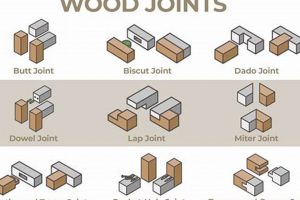
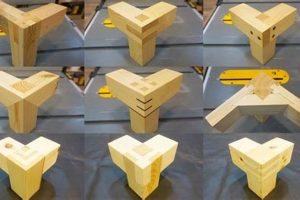
The practice of shaping and joining wood components to create functional or decorative objects in the absence of specialized flattening machinery is a constraint-driven approach. For example, building a small box using only hand tools like saws, chisels, and hand planes to achieve flat surfaces and square edges exemplifies this method.
This approach fosters resourcefulness, develops hand skills, and often results in unique, character-rich pieces. Historically, woodworking predates the widespread availability of power tools. The necessity of achieving accurate results using only manual techniques honed craftsmanship and emphasized careful material selection.
The subsequent sections will delve into various methods for achieving flatness and squareness, explore suitable wood choices and project designs, and detail essential hand tools and techniques applicable when a jointer and planer are unavailable.
Strategies for Dimensioning Lumber Without Power Flattening Tools
Achieving flat, square stock is fundamental to successful woodworking. When specialized machinery is unavailable, alternative techniques and careful practices are necessary to ensure accurate and aesthetically pleasing results.
Tip 1: Select Dimensionally Stable Wood: The choice of wood species is critical. Opt for hardwoods known for minimal warping and cupping, such as cherry, walnut, or mahogany. Proper drying and acclimatization to the workshop environment are also essential.
Tip 2: Utilize Hand Planes Methodically: Hand planes, such as a jack plane and a smoothing plane, become essential tools. Employ the jack plane to remove significant material and flatten the surface, followed by the smoother for refinement. Avoid excessive pressure and maintain a sharp blade.
Tip 3: Employ Accurate Measuring Tools: A precision square, ruler, and marking gauge are essential for accurate layout and assessment of flatness. Regularly check for squareness and winding using these tools, making adjustments as needed.
Tip 4: Employ the Winding Sticks Method: Winding sticks are invaluable for detecting twist in a board. By placing them at either end of the board and sighting across their tops, deviations from a flat plane become readily apparent. Adjust planing to eliminate the twist.
Tip 5: Consider Hand Sawing Techniques: Skillful hand sawing close to the desired dimensions minimizes the amount of material that needs to be removed by hand planing. Practice accurate sawing techniques, such as sawing to a line, to reduce waste and effort.
Tip 6: Flatten Reference Surfaces: Create one perfectly flat face and one square edge. All subsequent measurements and operations should be referenced from these surfaces. This establishes a reliable baseline for ensuring overall accuracy.
Tip 7: Embrace Gradual Adjustments: Avoid aggressive material removal. Small, incremental adjustments are more controllable and less prone to error. Frequent checks for flatness and squareness are crucial throughout the process.
Mastering these methods enables the creation of high-quality woodworking projects, even without the assistance of a jointer and planer. Patience, meticulousness, and a thorough understanding of hand tool techniques are paramount.
The following sections will explore specific project ideas suitable for this approach, along with advanced techniques for refining hand-dimensioned lumber.
1. Wood Selection

In woodworking practiced without a jointer or planer, wood selection assumes heightened importance. The absence of machinery capable of efficiently correcting dimensional inconsistencies necessitates a more discerning approach to material acquisition. Wood that exhibits inherent stability, minimal internal stresses, and a predictable response to environmental fluctuations directly mitigates the challenges associated with achieving flat, square, and true surfaces using only hand tools. For example, employing air-dried hardwoods known for stability, such as quartersawn white oak, reduces the likelihood of warping or twisting during the construction of furniture, thereby simplifying the dimensioning process.
Conversely, using wood with significant internal stresses or irregular grain patterns substantially increases the difficulty of achieving the desired dimensions by hand. Softwoods, or improperly dried lumber are more prone to distortion, requiring more extensive hand work to flatten and square. This translates to increased labor, material waste, and a greater chance of dimensional inaccuracy. Careful inspection for defects, an understanding of grain orientation, and a knowledge of the species’ inherent stability are crucial to minimize these challenges.
Therefore, the selection of wood becomes a fundamental determinant of success. Prioritizing dimensionally stable species, proper drying techniques, and meticulous inspection substantially reduces the labor required and enhances the final outcome. The inability to rely on machinery to correct flaws places a greater onus on thoughtful material selection, thereby maximizing the potential for a successful project completed without the aid of a jointer or planer.
2. Hand Tool Mastery

Hand tool mastery constitutes a foundational pillar of woodworking when jointing and planing machinery are unavailable. Proficiency with manual tools transforms from a desirable skill into an indispensable necessity for achieving dimensional accuracy and desired surface finishes.
- Sharpening and Maintenance
The ability to consistently sharpen and maintain the cutting edges of hand planes, chisels, and saws is paramount. A dull tool necessitates increased force, leading to inaccuracies and fatigue. For example, a precisely sharpened hand plane enables the removal of thin, consistent shavings, contributing to a flat and smooth surface unattainable with a dull blade. Consistent edge maintenance is crucial for efficient and accurate material removal.
- Planing Techniques
Mastery of hand planing techniques extends beyond simply pushing a plane across a board. Proper body positioning, blade angle adjustment, and stroke control are crucial for achieving a consistently flat surface. Skewing the plane, overlapping strokes, and understanding grain direction are examples of refined planing techniques essential when machinery is absent. These nuances minimize tear-out and promote efficient material removal.
- Sawing Accuracy
Accurate hand sawing minimizes the amount of material requiring removal via hand planing. Skillful sawing to a marked line, consistent blade tracking, and the selection of appropriate saw types for specific cuts are essential skills. For instance, employing a dovetail saw with precision for joinery reduces the need for extensive cleanup and ensures tight-fitting joints. Precision sawing saves material and time.
- Chisel Control
Precise chisel control is vital for refining joinery, cleaning up saw cuts, and creating decorative details. Mastering various chiseling techniques, such as paring, chopping, and splitting, allows for accurate material removal and the creation of intricate shapes. For example, accurately paring a tenon shoulder ensures a seamless fit within a mortise, contributing to the structural integrity and aesthetic appeal of the joint.
These interconnected facets of hand tool mastery are not merely isolated skills but rather a synergistic system. Proficient sharpening enables effective planing, accurate sawing minimizes planing requirements, and precise chiseling refines joinery. The absence of jointing and planing machinery necessitates a holistic understanding and application of these skills to produce high-quality woodworking projects. The ability to skillfully use and maintain hand tools becomes the defining characteristic of a woodworker operating without access to power tools.
3. Accurate Measurement

In woodworking conducted without a jointer or planer, accurate measurement transcends its conventional role; it becomes a critical determinant of project viability. The absence of machinery to rectify dimensional errors places an amplified emphasis on precision from the outset. Inaccurate measurements cascade through the entire project, compounding errors and leading to misaligned joinery, ill-fitting components, and compromised structural integrity. For instance, if a table leg is cut even slightly shorter than specified, the resulting instability cannot be readily corrected, unlike in situations where planing or jointing could compensate for minor discrepancies. Consequently, meticulous measurement is not merely a preliminary step but an ongoing discipline throughout the entire construction process.
The practical application of this principle manifests in several forms. The use of high-quality measuring tools, such as precision squares, marking gauges, and finely graduated rulers, becomes paramount. Furthermore, establishing and adhering to a consistent reference point for all measurements is essential to minimize cumulative error. For example, using a single, known-square edge as the reference point for all subsequent measurements ensures that any minor deviations are consistent and predictable, allowing for adjustments. The systematic application of measurement techniques, such as double-checking dimensions and employing marking knives to create crisp, accurate lines, is imperative for mitigating the impact of human error. This systematic approach minimizes the compounding effect of even small inaccuracies.
Ultimately, the connection between accurate measurement and woodworking without a jointer or planer is one of necessity. It is a foundational element upon which the success of the project is built. The challenges associated with achieving dimensional accuracy solely through hand tools underscore the vital role of precise measurement in ensuring a project’s structural integrity, aesthetic appeal, and overall functionality. Understanding and implementing meticulous measurement practices is, therefore, not merely advisable, but essential for achieving successful outcomes.
4. Reference Surfaces

The establishment and utilization of reference surfaces are fundamental to accurate woodworking, particularly when a jointer and planer are unavailable. The absence of these machines, typically used to create flat, square stock, necessitates alternative methods for achieving dimensional accuracy. A reference surface serves as a known, true plane from which all subsequent measurements, cuts, and joinery operations are derived. Without it, the cumulative effect of minor inaccuracies during each step of the process can lead to a finished piece that is out of square, twisted, or otherwise dimensionally compromised. For example, in constructing a cabinet door, one face of the stiles and rails must be meticulously flattened. This face then becomes the reference surface for planing the remaining faces, cutting the mortises and tenons, and ensuring the door’s overall squareness.
The creation of a reliable reference surface typically involves a combination of hand tool techniques and precise measurement. A common approach involves using winding sticks to detect twist in a board. Hand planes are then employed to gradually remove material until the winding sticks indicate a flat plane. One edge of the board is subsequently made square to the reference face, creating a second reference surface. These two surfaces then serve as the basis for all subsequent operations, ensuring that all components are dimensionally related to one another. This careful, methodical approach minimizes the propagation of errors that would otherwise occur without a stable dimensional foundation.
In summary, reference surfaces are not merely a technique, but a prerequisite for successful woodworking when a jointer and planer are absent. They provide a stable, accurate foundation for all subsequent operations, mitigating the risk of cumulative error and enabling the construction of high-quality, dimensionally accurate pieces. Understanding and skillfully creating reference surfaces is therefore essential for anyone undertaking woodworking projects without the benefit of power flattening machinery.
5. Winding Sticks Use

The utilization of winding sticks assumes paramount importance in woodworking undertaken without the aid of a jointer or planer. These tools are specifically employed to detect twist, or “wind,” in a board, a defect that is readily corrected by machinery but demands meticulous attention when relying solely on hand tools. The presence of wind, if unaddressed, will compromise the accuracy of subsequent joinery and assembly, leading to a distorted and unstable finished product. Therefore, winding sticks serve as a crucial diagnostic tool, revealing deviations from a true plane that would otherwise remain imperceptible to the naked eye. Their use is directly proportional to the success of hand-tool woodworking, where precision is paramount and error correction is limited. Consider the construction of a tabletop: even a slight twist in one board will result in an uneven surface and prevent adjacent boards from sitting flush, requiring extensive corrective action after glue-up.
The practical application of winding sticks involves placing them perpendicularly across the width of the board, one at each end. By sighting across the top edges of the sticks, any difference in height reveals the presence and magnitude of the twist. The woodworker then employs hand planes to selectively remove material, focusing on the high corners until the tops of the winding sticks are aligned, indicating a flat plane. This iterative process of checking and planing continues until the twist is eliminated. This reliance on visual assessment, guided by the winding sticks, demands a high degree of skill and experience. Further, the material choice impacts winding stick effectiveness; highly figured or knotty wood can mask twist, requiring careful interpretation of the readings. Proper lighting conditions are also critical for accurate sighting.
In conclusion, the integration of winding sticks into the woodworking process is not merely a technique, but a fundamental necessity when jointing and planing machinery are absent. They provide a means of identifying and rectifying twist, ensuring the dimensional accuracy and structural integrity of the final product. The challenges associated with their use, such as the requirement for keen observation and the influence of material properties, underscore the importance of developing proficiency in this essential hand-tool skill. Mastering winding stick usage is a key differentiator between haphazard construction and refined craftsmanship in the realm of hand-tool woodworking.
6. Sawing Precision
Sawing precision assumes a heightened significance in woodworking when jointing and planing machinery are unavailable. The dimensional accuracy of each cut directly impacts the overall quality of the project, as the opportunity to correct errors through machine surfacing is absent.
- Minimizing Material Waste
Precise sawing reduces the amount of material that must be removed by hand tools, such as planes and chisels. By accurately cutting to the intended dimensions, the woodworker minimizes waste and conserves valuable material. An example would be sawing a tenon cheek close to its final thickness, thereby limiting the paring required for a tight fit.
- Facilitating Accurate Joinery
Accurate sawing is essential for creating tight-fitting joints. When joinery components are sawn precisely, minimal adjustments are needed during assembly. This is particularly important for complex joints such as dovetails or mortise and tenons, where even slight inaccuracies can compromise the strength and aesthetics of the joint.
- Reducing Cumulative Error
Each saw cut introduces the potential for error. Small inaccuracies, when compounded across multiple cuts, can lead to significant dimensional discrepancies in the finished piece. Precise sawing minimizes the magnitude of individual errors, thereby reducing the overall cumulative error in the project.
- Enhancing Efficiency and Speed
While seemingly counterintuitive, sawing with precision ultimately increases efficiency. By reducing the amount of subsequent hand work needed to correct errors, the woodworker saves time and energy. Accurate sawing streamlines the overall construction process.
The interplay between these facets reveals the pivotal role of sawing precision. In the absence of corrective machinery, each saw cut becomes a critical determinant of the project’s success. Skillful sawing techniques, meticulous layout, and sharp, well-maintained saws become indispensable tools for achieving dimensional accuracy and high-quality results.
7. Gradual Refinement

Gradual refinement becomes a central tenet in woodworking practices when jointing and planing machinery are not available. The absence of power tools capable of rapidly correcting imperfections places an amplified emphasis on a measured, iterative approach to achieving dimensional accuracy and surface quality.
- Incremental Material Removal
The removal of material occurs in small, controlled increments. This approach minimizes the risk of overcorrection, which can be difficult to rectify using only hand tools. For instance, when flattening a board with a hand plane, taking numerous light passes is preferable to attempting to remove large amounts of material at once, reducing the likelihood of creating dips or hollows.
- Frequent Assessment and Adjustment
Continuous monitoring of dimensions and surface flatness guides the refinement process. Regular use of measuring tools, such as squares, winding sticks, and straightedges, allows for the identification of imperfections early in the process. Adjustments are made incrementally based on these assessments, preventing deviations from accumulating. This frequent assessment loop is crucial when there’s no machine to quickly correct errors.
- Progressive Abrasive Techniques
Surface preparation relies on a sequence of progressively finer abrasives. This method, often used after hand planing, gradually eliminates imperfections and achieves a smooth, consistent finish. Starting with coarser grits to remove tool marks and then transitioning to finer grits refines the surface without the risk of introducing new irregularities. This is important, as machine sanding can quickly flatten surfaces but this is often unavailable or undesirable in this context.
- Iterative Fitting of Joinery
Joinery components are fitted and adjusted multiple times throughout the construction process. Small amounts of material are removed incrementally from the mating surfaces until a precise fit is achieved. This iterative approach ensures that the joints are tight, strong, and visually appealing. The process necessitates constant assessment and refitting and contrasts with the rapid joinery possible with power tools.
These interconnected aspects of gradual refinement define the workflow when machinery is unavailable. Material is removed cautiously, progress is assessed continuously, and adjustments are made incrementally. The reliance on patience, skill, and meticulousness compensates for the absence of power tools, resulting in high-quality woodworking projects achieved through a measured and controlled process. This approach favors the preservation of material and ensures an accurate and refined final product that displays craftsmanship and care.
Frequently Asked Questions
The following addresses common inquiries regarding woodworking when access to jointing and planing machinery is limited. These answers aim to clarify misconceptions and provide practical guidance for those pursuing this approach.
Question 1: Is it possible to achieve truly flat and square lumber without a jointer or planer?
While challenging, achieving flat and square lumber is indeed possible without a jointer or planer. It necessitates employing alternative techniques, such as meticulous hand planing, accurate measurement, and the use of winding sticks. The process demands patience, skill, and a thorough understanding of wood behavior.
Question 2: What are the primary challenges associated with woodworking without these machines?
The primary challenges include increased labor, the potential for dimensional inaccuracies, and the need for a high degree of skill in hand tool usage. Correcting errors is more time-consuming, and the absence of machine precision requires greater care in material selection and technique.
Question 3: Does woodworking without a jointer and planer require specialized tools?
While specialized tools are not strictly required, certain tools become essential. High-quality hand planes (jack, smoother), accurate measuring devices (squares, marking gauges), and winding sticks are crucial for achieving flat and square surfaces.
Question 4: Are certain wood species better suited for woodworking without a jointer and planer?
Yes, dimensionally stable hardwoods are preferable. Species such as cherry, walnut, and mahogany are less prone to warping and twisting, making them easier to work with using only hand tools. Proper drying is also crucial for any species.
Question 5: How does woodworking without a jointer and planer impact project design?
Project designs may need to be adapted to accommodate the limitations of hand-tool woodworking. Simpler designs with fewer complex joinery elements are often more manageable. Emphasis is placed on maximizing material yield and minimizing the need for extensive flattening or squaring.
Question 6: Can one achieve a professional-quality finish without power surfacing tools?
A professional-quality finish is achievable, but it requires careful preparation of the wood surface. Hand planing followed by progressive abrasive techniques can produce a smooth and consistent finish comparable to that achieved with power sanders. Proper finishing techniques are, of course, important as well.
In summary, woodworking without a jointer or planer demands a greater commitment to skill development and meticulous execution. While challenging, the results can be rewarding, producing unique and character-rich pieces that showcase the beauty of hand craftsmanship.
The subsequent section will provide specific project ideas and step-by-step instructions for woodworking without jointing or planing machinery.
Conclusion
The preceding exploration has detailed the methods, considerations, and challenges inherent in woodworking without jointer or planer. Key elements include meticulous material selection, mastery of hand tool techniques, accurate measurement, and a commitment to gradual refinement. Successfully executing projects under these constraints demands a profound understanding of wood properties and the skillful application of traditional methods.
The absence of power flattening machinery necessitates a shift in mindset, emphasizing precision, patience, and resourcefulness. The resulting work embodies a unique character, reflecting the hand of the craftsman and the inherent beauty of the material. The pursuit of woodworking without jointer or planer remains a viable and rewarding path, fostering a deeper connection to the craft and yielding enduring, finely crafted objects.