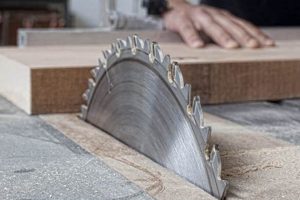
The selection of appropriate reciprocating saw attachments significantly impacts the quality and efficiency of wood-based projects. These specialized components, designed for use with a powered handheld tool, are crucial for achieving precise cuts and desired finishes. Understanding the nuances of blade selection is fundamental to woodworking success, influencing factors such as cut speed, smoothness, and the longevity of both the blade and the material being worked.
Employing suitable attachments offers several advantages. It ensures cleaner cuts, minimizes splintering and tear-out, and ultimately leads to a superior finished product. Historically, the evolution of these tools has paralleled advancements in metallurgy and manufacturing, resulting in a diverse range of options tailored to specific wood types and cutting requirements. Using correct blades also extends tool life and reduces the risk of workpiece damage.
The subsequent sections will delve into the key considerations for selecting the correct cutting implements, exploring different tooth designs, material compositions, and application-specific recommendations. This guide aims to provide a comprehensive overview of essential factors to ensure optimal performance and project outcomes.
Tips for Optimal Selection and Use
Proper selection and utilization of these cutting implements are crucial for woodworking precision and project success. The following tips provide essential guidance for achieving optimal results.
Tip 1: Consider Tooth Design: The tooth configuration significantly impacts cutting performance. Blades with fewer teeth per inch (TPI) are suitable for rapid, rough cuts, while higher TPI blades deliver smoother finishes, particularly in hardwoods. Select TPI based on wood density and desired cut quality.
Tip 2: Evaluate Blade Material: High-speed steel (HSS) blades are versatile and cost-effective for general woodworking. Bi-metal blades, combining HSS with flexible steel, offer increased durability and resistance to breakage, particularly when encountering knots or other obstructions.
Tip 3: Match Blade Length to Material Thickness: Ensure the blade length exceeds the thickness of the material being cut. Insufficient blade length can lead to binding, reduced control, and potential damage to both the blade and workpiece.
Tip 4: Use Appropriate Speed Settings: Adjust tool speed according to the material being cut. Lower speeds are generally recommended for hardwoods and thicker materials to prevent overheating and blade wear. Higher speeds can be used for softer woods and thinner stock.
Tip 5: Employ a Guide or Fence: Utilize a guide or fence whenever possible to ensure straight, accurate cuts. This is particularly important for longer cuts or when working with delicate materials prone to splintering.
Tip 6: Maintain Proper Blade Tension: Verify and adjust blade tension according to the manufacturer’s recommendations. Insufficient tension can result in blade wandering and inaccurate cuts, while excessive tension can lead to premature blade failure.
Tip 7: Consider Blade Width: Narrow blades are ideal for curved cuts, while wider blades offer greater stability and are better suited for straight cuts.
Implementing these tips will significantly improve the efficiency and accuracy of woodworking projects. Correct blade selection and usage extend blade life, enhance cut quality, and minimize the risk of material damage.
The subsequent section will summarize key considerations and offer concluding remarks on the importance of informed blade selection for achieving professional-quality woodworking results.
1. Tooth Geometry

Tooth geometry represents a critical determinant in the performance and suitability of reciprocating saw attachments for woodworking applications. The specific configuration of the teeth directly influences the cutting speed, the smoothness of the resulting cut, and the blade’s effectiveness on various wood types. Variations in tooth shape, set, and rake angle cater to different cutting demands and material properties. For example, blades designed for rapid demolition cuts feature aggressive tooth patterns with larger gullets for efficient chip removal. In contrast, blades intended for fine woodworking exhibit finer teeth with minimal set to minimize splintering and produce clean edges.
The interaction between tooth geometry and wood fiber dictates the cut quality. Blades with a positive rake angle excel at aggressive cutting, removing material quickly but potentially sacrificing finish quality. Conversely, a negative or neutral rake angle provides greater control, resulting in smoother cuts but reduced cutting speed. The tooth set, which refers to the alternating offset of teeth, creates a kerf (the width of the cut) wider than the blade body, preventing binding. Different set patterns are employed for specific purposes, such as wavy sets for general-purpose cutting and raker sets for fast, aggressive removal.
Ultimately, selecting the correct tooth geometry is pivotal for achieving desired woodworking outcomes. Failure to consider this factor can lead to inefficient cutting, poor finish quality, and premature blade wear. Therefore, understanding the relationship between tooth design and material properties is essential for professionals and hobbyists alike, enabling informed decisions and maximizing the tool’s potential.
2. Material Composition

The material composition of reciprocating saw attachments significantly impacts their performance and suitability for various woodworking tasks. The selection of specific materials directly influences blade durability, heat resistance, flexibility, and the ability to maintain a sharp cutting edge. Consequently, understanding the properties of different blade materials is crucial for selecting optimal blades and achieving desired woodworking outcomes. For instance, high-carbon steel blades offer excellent sharpness for softwood cutting but may lack the durability required for hardwoods or abrasive materials. The use of an inappropriate blade composition can lead to premature wear, breakage, and substandard cut quality.
High-speed steel (HSS) represents a common and versatile material choice for woodworking blades. HSS blades provide a good balance of hardness and toughness, making them suitable for general-purpose cutting across a range of wood types. Bi-metal blades, constructed by welding a strip of HSS to a flexible alloy steel back, offer enhanced durability and resistance to fracture, especially when encountering nails or knots within the wood. Carbide-tipped blades represent the premium option, exhibiting exceptional hardness and wear resistance, enabling them to maintain sharpness for extended periods, particularly when working with dense hardwoods or abrasive materials like plywood or fiberboard. The increased cost of carbide is often justified by its extended lifespan and superior cutting performance in demanding applications.
In summary, the material composition of a reciprocating saw attachment directly determines its performance characteristics and suitability for specific woodworking tasks. Selecting blades composed of appropriate materials is essential for maximizing cutting efficiency, ensuring longevity, and achieving professional-quality results. Neglecting this aspect can lead to compromised outcomes and increased operational costs. The importance of material selection should be emphasized to both professional woodworkers and hobbyists for ensuring optimal tool performance and project success.
3. Blade Thickness

Blade thickness is a critical parameter in the selection of reciprocating saw attachments for woodworking. Its influence extends to cut stability, precision, and the blade’s ability to withstand bending forces during operation. The proper thickness is essential for achieving clean, accurate cuts and maximizing blade lifespan. Inappropriately sized blades can lead to wandering cuts, increased vibration, and premature failure, thus impacting the overall quality of woodworking projects.
- Cut Stability
Increased blade thickness provides greater resistance to bending, resulting in improved cut stability. This is especially important when cutting thicker materials or following complex curves. A thicker blade is less likely to deflect, maintaining a straighter cutting path and reducing the potential for inaccuracies. An example is using a thicker blade when cutting hardwoods, where the resistance to the blade’s motion is higher.
- Vibration Reduction
Thicker blades tend to exhibit less vibration during use. Reduced vibration enhances operator control, minimizing fatigue and improving cut quality. Excessive vibration can lead to splintering, especially in delicate woods. For instance, when trimming delicate moldings, a blade of adequate thickness minimizes unwanted movement, resulting in cleaner edges.
- Kerf Width
Blade thickness directly influences the width of the kerf, or the cut channel. Thicker blades produce wider kerfs, removing more material with each pass. This may be advantageous in certain applications where material removal speed is prioritized. However, it can also lead to increased material waste and potentially weaker joints. A thicker blade, for instance, will remove more material than a thin one, thus a thinner blade needs to be considered depending on needs.
- Durability and Lifespan
Generally, thicker blades are more durable and resistant to breakage. The increased mass provides greater strength and helps dissipate heat more effectively, extending the blade’s lifespan. This is particularly important when cutting abrasive materials or engaging in demanding applications. In industrial settings, the longer life of a thicker blade helps maximize blade performance.
In summary, blade thickness represents a crucial factor in selecting the optimal reciprocating saw attachment for woodworking. The appropriate thickness balances cut stability, vibration reduction, kerf width considerations, and durability to achieve desired results. Selecting the wrong blade thickness can compromise cut quality, reduce blade lifespan, and increase the risk of workpiece damage. Choosing a blade thickness that corresponds to the material and desired cuts, for both production environments, ensures that the best outcome is provided for woodworking results.
4. TPI (Teeth Per Inch)

Teeth Per Inch (TPI) is a crucial specification when selecting reciprocating saw attachments for woodworking. It directly influences the cut’s smoothness, speed, and suitability for various wood types. Understanding TPI is fundamental to achieving desired results and optimizing blade performance. This section delves into key aspects of TPI and its relationship to efficient woodworking.
- Cut Smoothness and Finish
Higher TPI values result in smoother cuts and finer finishes. Blades with more teeth produce smaller chips, minimizing splintering and tear-out, particularly in hardwoods and delicate materials. For example, when crafting intricate moldings or fine furniture components, a blade with a high TPI count ensures clean edges and reduces the need for extensive sanding.
- Cutting Speed and Aggressiveness
Lower TPI values are associated with faster, more aggressive cutting. Blades with fewer teeth remove larger amounts of material per stroke, increasing cutting speed but potentially sacrificing finish quality. These blades are well-suited for rough cuts, demolition work, or when speed is prioritized over precision. A practical example would be quickly sectioning lumber for framing where a smooth finish is not critical.
- Wood Type and Density
The optimal TPI varies based on the wood’s density and hardness. Softer woods generally benefit from higher TPI blades to prevent splintering, while denser hardwoods may require lower TPI blades to prevent blade binding and overheating. Adjusting the TPI to match the material properties is essential for efficient cutting and extended blade life. For instance, cutting through oak may benefit from a lower TPI blade as the hardness of oak wood can wear down a high TPI blade faster.
- Blade Material and Durability
The blade’s material composition can influence the optimal TPI selection. High-speed steel (HSS) blades may perform well with a moderate TPI, while bi-metal or carbide-tipped blades can effectively utilize higher TPI values due to their increased durability and heat resistance. Choosing the appropriate TPI based on the blade’s material properties is crucial for maximizing performance and preventing premature wear. An application using a carbide-tipped blade with high TPI, will allow the blade to stay sharp longer.
In conclusion, the selection of an appropriate TPI is integral to optimizing the performance of reciprocating saw attachments for woodworking. By considering factors such as cut smoothness, cutting speed, wood type, and blade material, woodworkers can select blades that deliver efficient, precise, and high-quality results. Careful attention to TPI ensures that blades are well-matched to specific tasks, leading to improved outcomes and extended blade life. Selecting the TPI, combined with blades that are considered the best, for the woodworking project, will allow the task to be completed in a timely fashion with the appropriate output.
5. Application Specificity
Application specificity constitutes a fundamental criterion in the selection of optimal reciprocating saw attachments for woodworking. Matching the blade characteristics to the demands of the particular task is paramount for maximizing cutting efficiency, precision, and overall project success. Failure to account for application-specific requirements can lead to compromised cut quality, increased blade wear, and potential workpiece damage.
- Curve Cutting versus Straight Cutting
Blades designed for curve cutting typically feature narrow profiles and specialized tooth geometries that facilitate maneuverability. These blades enable the creation of intricate shapes and smooth arcs. Straight cutting, conversely, benefits from wider, more rigid blades that provide enhanced stability and resistance to bending. Employing a curve-cutting blade for straight cuts can result in wandering and inaccurate results, while using a straight-cutting blade for curves may prove impossible or result in blade breakage.
- Wood Thickness and Density
Thin, flexible blades are well-suited for cutting thin materials, minimizing splintering and tear-out. Thicker, more robust blades are necessary for cutting dense hardwoods, providing the strength and rigidity required to maintain a straight cutting path. Selecting a blade that is insufficiently robust for the material being cut can lead to blade flexing, reduced control, and a compromised finish. Wood thickness is an important attribute to consider to have the right blade to finish the task
- Plunge Cutting and Pocket Creation
Specific blade designs incorporate features such as tapered backs or aggressive tooth patterns to facilitate plunge cutting, the process of initiating a cut from within a workpiece. These blades enable the creation of pockets, mortises, and other internal features. Attempting plunge cuts with blades not designed for this purpose can result in kickback, material damage, or operator injury. Having the correct blade can help make plunge cutting safe and produce the necessary cut.
- Material Composition (Wood, Laminates, Composites)
Different materials necessitate different blade characteristics. Wood-cutting blades are optimized for natural wood fibers, while specialized blades are designed for laminates, composites, and other engineered materials. Laminate blades, for instance, often feature fine teeth and a reverse-tooth configuration to minimize chipping and delamination. The utilization of an inappropriate blade for a given material can compromise cut quality, reduce blade life, and increase the likelihood of material damage.
In conclusion, application specificity plays a pivotal role in selecting the appropriate reciprocating saw attachments for woodworking. By considering factors such as curve cutting versus straight cutting, material thickness and density, plunge-cutting requirements, and material composition, woodworkers can ensure optimal performance, minimize material waste, and achieve professional-quality results. Overlooking these considerations can lead to suboptimal outcomes and potential safety hazards. The combination of application specificity and blades, described as the best, allows the completion of woodworking projects for decades.
Frequently Asked Questions
This section addresses common inquiries regarding the selection and utilization of reciprocating saw attachments in woodworking. The information provided aims to clarify key concepts and address potential misconceptions.
Question 1: What constitutes a “best” blade for woodworking?
The designation of a blade as “best” is subjective and depends heavily on the specific application. A blade considered optimal for cutting hardwoods may be unsuitable for delicate veneers. Factors such as tooth geometry, material composition, and blade thickness must align with the project’s requirements for a blade to be deemed “best”.
Question 2: How does TPI impact cut quality?
Teeth Per Inch (TPI) significantly influences cut quality. Higher TPI values generally yield smoother cuts with less splintering, while lower TPI values prioritize cutting speed. The selection of appropriate TPI is contingent upon the desired finish and material properties.
Question 3: Is blade material composition important?
Blade material composition is a crucial determinant of blade durability, heat resistance, and overall performance. High-speed steel (HSS), bi-metal, and carbide-tipped blades offer varying levels of hardness and wear resistance, each suited to different woodworking applications.
Question 4: How does blade thickness affect cut accuracy?
Blade thickness directly impacts cut stability and resistance to bending. Thicker blades are less prone to deflection, resulting in straighter, more accurate cuts. However, excessively thick blades may produce wider kerfs and increased material waste.
Question 5: Can any blade be used for plunge cutting?
Not all blades are designed for plunge cutting. Specialized plunge-cutting blades incorporate features that facilitate initiating a cut from within a workpiece. Attempting plunge cuts with inappropriate blades can result in kickback, material damage, or operator injury.
Question 6: How often should blades be replaced?
Blade replacement frequency depends on usage intensity, material being cut, and blade quality. Signs of dulling, such as increased cutting effort or rough cuts, indicate the need for replacement. Regular inspection and timely replacement ensure optimal performance and prevent damage to the workpiece.
The selection of appropriate reciprocating saw attachments requires careful consideration of application-specific factors, including material properties, cut requirements, and blade characteristics. Informed decision-making is crucial for achieving professional-quality woodworking results.
The subsequent section will provide a detailed summary of key considerations and offer concluding remarks on the importance of informed blade selection for achieving professional-quality woodworking results.
Conclusion
This exploration of optimal reciprocating saw attachments for woodworking underscores the critical role these components play in achieving precise, efficient, and high-quality results. Considerations such as tooth geometry, material composition, blade thickness, TPI, and application specificity are not mere details, but rather fundamental elements that dictate the outcome of any woodworking endeavor. Understanding these attributes allows for informed selection, mitigating the risks of substandard cuts, material waste, and potential safety hazards.
The informed application of knowledge concerning the selection and use of reciprocating saw attachments represents a commitment to excellence in woodworking. The continued pursuit of optimized tooling practices will undoubtedly drive innovation and refinement within the craft, empowering woodworkers to achieve ever-greater levels of precision and artistry. Prioritizing this understanding ultimately fosters a more efficient, safe, and rewarding woodworking experience, and leads to projects that are of the highest caliber.