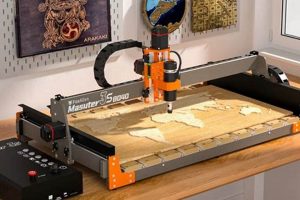
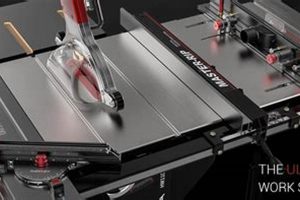
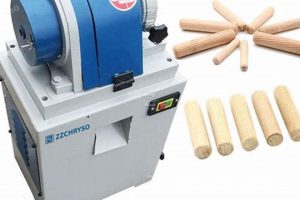
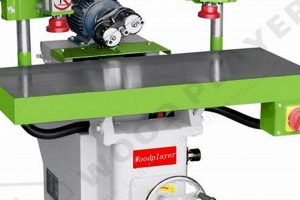
Contemporary fabrication facilities utilize sophisticated tools to shape and refine lumber. These devices employ automated systems, computer numerical control (CNC), and advanced materials to achieve precision and efficiency. Examples include CNC routers, laser cutters, and automated sawing systems.
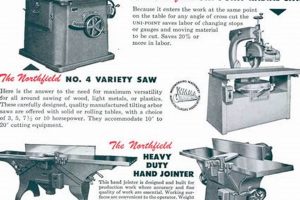
The utilization of advanced equipment offers significant advantages in woodworking operations. It enhances production speed, minimizes material waste, and allows for the creation of intricate designs. Historically, woodworking relied heavily on manual labor and simpler tools; the evolution to automated systems has revolutionized the industry, improving both output and quality control.
The following sections will delve into specific types of equipment, discussing their functionalities, applications, and the impact they have on modern woodworking practices. The focus will remain on providing a comprehensive overview of the tools driving innovation in the sector.
Guidance on Utilizing Advanced Woodworking Equipment
The following guidelines provide insights into the effective and safe operation of current automated systems for shaping timber. These recommendations aim to optimize performance, prolong the lifespan of the machinery, and ensure operator well-being.
Tip 1: Prioritize Operator Training: Comprehensive instruction on the specific model is essential. Untrained personnel can damage the equipment and create safety hazards.
Tip 2: Implement Regular Maintenance Schedules: Consistent upkeep, including lubrication, blade sharpening, and filter replacement, is vital. This preventative measure reduces downtime and prolongs equipment lifespan.
Tip 3: Utilize Integrated Safety Systems: Ensure all safety guards, sensors, and emergency stops are functional and properly engaged during operation. Disabling safety features is strictly prohibited.
Tip 4: Optimize Material Feed Rates: Adjust feed rates according to the material’s density and the complexity of the cut. Excessive feed rates can cause damage to the machine and result in subpar output.
Tip 5: Regularly Calibrate Equipment: Periodic calibration of CNC systems and other automated devices is crucial for maintaining accuracy. Consistent calibration ensures that the finished product meets required specifications.
Tip 6: Employ Dust Collection Systems: Connect equipment to a high-efficiency dust collection system. This reduces airborne particulate matter, improving air quality and preventing damage to internal components.
Tip 7: Adhere to Manufacturer Specifications: Always operate equipment within the parameters defined by the manufacturer. Exceeding those limits can lead to premature wear or catastrophic failure.
Adhering to these principles maximizes the efficiency and longevity of advanced fabrication tools. Proactive maintenance and rigorous safety protocols are essential components of a successful and safe woodworking operation.
The subsequent sections will discuss the economic implications of incorporating these systems into manufacturing processes.
1. Precision

The integration of precise mechanisms within modern woodworking tools represents a fundamental shift from manual techniques. CNC routers, for instance, utilize computer-controlled movements to execute intricate cuts and patterns with tolerances often measured in fractions of a millimeter. This level of accuracy surpasses the capabilities of traditional hand tools, minimizing errors and ensuring consistent replication of designs. The cause-and-effect relationship is clear: precise machinery leads to precise finished products. Without this precision, complex architectural elements, custom furniture pieces, and mass-produced components would be significantly more challenging, if not impossible, to create efficiently.
Furthermore, precision reduces material waste. When cuts are consistently accurate, there is less need for iterative adjustments or discarding flawed pieces. This contributes directly to cost savings and enhances the sustainability of woodworking operations. Consider the production of identical furniture components for large-scale projects. Without precise equipment, variations in dimensions would lead to assembly problems, creating significant delays and increasing the likelihood of material waste. The advent of laser-guided cutting systems further exemplifies the importance of precision. These systems allow for intricate patterns to be etched with utmost exactitude, broadening the design possibilities within woodworking projects.
In conclusion, precision is an indispensable component of contemporary woodworking tools. It is not merely a desirable attribute but a necessity for meeting the demands of modern design and manufacturing. Challenges remain in maintaining calibration and addressing potential software glitches, but the benefits of enhanced accuracy, reduced waste, and expanded design capabilities solidify precision as a driving force in the evolution of the field.
2. Automation

Automation represents a pivotal advancement in shaping timber materials, revolutionizing traditional processes within contemporary workshops. It streamlines production, reduces reliance on manual labor, and enhances overall efficiency, thereby redefining industry standards.
- Enhanced Production Speed
Automated systems enable continuous operation and accelerate the manufacturing timeline. CNC routers, for example, can execute intricate cuts at significantly higher speeds than manual techniques, greatly improving output volume. The implementation of robotic arms for material handling further accelerates the process, reducing cycle times and maximizing throughput in production environments.
- Reduced Labor Costs
Automation minimizes the need for extensive manual intervention, thereby lowering labor expenses. A single operator can oversee multiple automated machines, managing production flow and ensuring quality control. While initial investment costs may be significant, the long-term reduction in labor requirements translates into substantial financial savings and increased profitability.
- Improved Safety Standards
Automated machines often incorporate safety features that minimize risks to operators. Sensors, laser curtains, and emergency stop mechanisms prevent accidents by halting operations in potentially hazardous situations. Removing personnel from direct contact with cutting tools and heavy machinery significantly reduces the likelihood of workplace injuries, promoting a safer working environment.
- Consistent Product Quality
Automated systems maintain uniform precision and repeatability, ensuring consistent product quality. CNC machines execute instructions with high accuracy, minimizing human error and variations in dimensions. This is particularly crucial in mass production environments where adherence to stringent specifications is essential. The result is a higher percentage of usable products and fewer defective items, contributing to improved customer satisfaction.
The incorporation of automated systems into lumber shaping operations has fundamentally transformed the industry. These systems have optimized production speed, diminished labor expenditures, heightened safety protocols, and upheld consistent product standards. As technology advances, automation will undoubtedly continue to play an increasingly crucial role in woodworking operations.
3. Safety
The integration of safety mechanisms within contemporary lumber shaping devices represents a critical design consideration. These mechanisms mitigate risks associated with high-speed operations, sharp cutting edges, and the handling of substantial material. The presence of safety features serves as a direct preventative measure against workplace accidents and injuries. For instance, automated sawing systems often incorporate laser sensors that detect obstructions in the cutting path, immediately halting operation to prevent collisions. The cause is hazardous conditions, and the effect is the immediate cessation of the cutting action. The importance of safety is thus intrinsic to the functionality of the equipment. Without effective safeguards, the inherent risks associated with lumber processing would make these tools impractical for widespread use.
Moreover, safety protocols extend beyond the physical design of the tools. Comprehensive training programs are essential for operators to understand the equipment’s capabilities, limitations, and potential hazards. These programs emphasize proper operating procedures, the use of personal protective equipment (PPE), and emergency response protocols. A real-life example is the implementation of lockout/tagout procedures during maintenance, which prevents the accidental activation of machinery while workers are performing repairs or adjustments. This illustrates the practical application of safety measures. These processes guarantee the worker is safe from physical harm.
In summary, safety is an indispensable component of modern lumber shaping tools. It encompasses both the intrinsic design of the equipment and the procedural protocols implemented during operation. Although challenges remain in ensuring consistent compliance with safety standards and adapting to emerging technologies, the focus on hazard prevention and worker protection is paramount. This focus ultimately enhances the productivity and sustainability of lumber processing operations. Further analysis can focus on the cost-effectiveness of safety measures and the potential legal ramifications of negligence.
4. Efficiency

The relationship between efficiency and contemporary lumber shaping devices is foundational to the modernization of the industry. These devices fundamentally alter traditional processes to achieve superior output and resource utilization. The enhanced efficiency stems from several factors, including automated workflows, optimized material handling, and reduced waste. A key cause-and-effect relationship is evident: improved technology directly results in heightened production rates and lower operational costs. The absence of such efficiency improvements would render fabrication practices economically unviable in many sectors. For example, automated sawing systems minimize material scrap by precisely cutting lumber to specified dimensions. This contrasts sharply with manual techniques, where human error often leads to higher wastage rates. The implementation of automated processes directly translates to cost savings and increased profitability.
Further enhancements in efficiency arise from the integration of computer-aided design (CAD) and computer-aided manufacturing (CAM) systems. These systems facilitate the creation of optimized cutting paths and efficient material layouts, ensuring maximum yield from raw materials. For instance, CNC routers utilize sophisticated algorithms to determine the most efficient sequence of cuts, minimizing tool changes and reducing processing time. Another aspect is energy efficiency; newer devices often incorporate energy-saving features that reduce power consumption during operation. These elements illustrate practical applications of enhanced efficiency and show how advanced machinery significantly reduces operational overhead. A practical example is the fabrication of identical furniture parts for large-scale production, where standardized processes assure consistency and minimize discrepancies, leading to efficient assembly and minimal defects.
In conclusion, efficiency represents a core benefit derived from integrating advanced shaping devices within lumber production. Although challenges related to initial investment costs and equipment maintenance persist, the long-term advantages of heightened productivity, reduced material waste, and minimized labor costs outweigh these considerations. Efficiency is not merely a desirable attribute but an essential factor driving innovation and sustainability within the woodworking sector. The continued pursuit of greater efficiency through technological advancements will likely define the future of lumber fabrication practices.
5. Versatility

The concept of versatility within lumber processing is intrinsically linked to the capabilities of contemporary machinery. These devices are engineered to perform a multitude of tasks, adapting to varying material types, design complexities, and production scales. The cause is the demand for adaptable manufacturing solutions, and the effect is the development of multipurpose shaping tools. Versatility is not merely a desirable attribute, but a fundamental characteristic that enables modern lumber operations to respond to evolving market demands and diverse client needs. A primary example includes CNC machining centers capable of performing routing, drilling, milling, and sawing operations on a single platform. This eliminates the need for multiple specialized machines, streamlining production and reducing capital expenditures. The absence of such versatility would force companies to invest in and maintain a larger array of single-purpose tools, increasing both initial costs and operational complexity.
Further demonstrating the practicality of versatility is the ability of advanced equipment to handle a wide spectrum of materials, from hardwoods and softwoods to composite panels and plastics. Laser cutters, for instance, can etch intricate designs on delicate veneers or cut through thicker boards with equal precision. Likewise, automated sanding systems can adapt to different surface finishes and contours, ensuring a uniform result across diverse material types. This adaptability empowers fabricators to offer a broader range of products and services, attracting a wider client base. Consider custom furniture manufacturers who utilize versatile tools to create pieces from a variety of wood species, accommodating individual client preferences and design specifications. The ability to switch seamlessly between materials and designs enhances responsiveness and minimizes production delays.
In summary, versatility represents a key advantage offered by contemporary lumber shaping machines. While challenges may exist in optimizing performance across all applications and maintaining adaptability to emerging materials, the benefits of enhanced functionality, reduced equipment footprint, and increased product range underscore the significance of versatility. This attribute is not merely a convenience but an essential requirement for modern lumber operations seeking to remain competitive and responsive to evolving customer needs. Continued innovation in multipurpose machinery will likely play a central role in shaping the future of the industry.
6. Materials
The efficacy of advanced fabrication tools is inextricably linked to the properties of the materials being processed. The composition, density, and structural integrity of lumber dictate the operational parameters and tool selection required for optimal performance. The correlation is direct: material characteristics influence machine settings and cutting strategies. The cause is material variability, and the effect is the necessity for adaptable machinery capable of handling a wide range of substrates. The selection and application of appropriate shaping tools are crucial for achieving desired outcomes without causing damage or premature wear. Modern woodworking machines, designed with this interplay in mind, integrate features to monitor and adjust operational settings based on the material properties.
The interaction between material and tool extends beyond simple cutting. The emergence of composite materials, such as medium-density fiberboard (MDF) and plywood, has spurred the development of specialized blades and cutting strategies tailored to minimize chipping and delamination. For example, CNC routers equipped with spiral compression bits are commonly employed for processing laminated panels, ensuring clean edges and preventing the separation of layers. Similarly, laser cutting systems are increasingly used for working with acrylics and other plastics, offering precise and intricate cuts without generating excessive heat or deformation. These instances underscore the practical significance of understanding material-tool compatibility in shaping operations. The failure to consider material characteristics can lead to inefficient processing, reduced product quality, and increased material waste.
In summary, materials represent a critical component in the utilization of advanced shaping equipment. The successful integration of modern tools relies on a thorough understanding of material properties and the selection of appropriate processing techniques. While challenges persist in adapting to emerging composite materials and optimizing machining parameters for diverse substrates, the focus on material-aware shaping strategies is essential for maximizing productivity, minimizing waste, and ensuring the longevity of fabrication equipment. This understanding underscores the fundamental connection between materials and the performance of the machinery used to shape them.
Frequently Asked Questions Regarding Modern Woodworking Machines
The following section addresses common inquiries concerning the capabilities, maintenance, and operational aspects of advanced lumber processing equipment. These questions aim to provide clarity and insight for professionals seeking to integrate modern technologies into their woodworking operations.
Question 1: What are the primary advantages of utilizing CNC routers compared to traditional routing methods?
CNC routers offer superior precision, repeatability, and automation compared to traditional routing. The programmed control system enables intricate designs to be executed with minimal human error, resulting in consistent product quality and reduced material waste. Moreover, CNC routers can operate continuously, increasing production speed and minimizing labor costs.
Question 2: What safety precautions should be observed when operating automated sawing systems?
Operators must adhere to strict safety protocols, including wearing appropriate personal protective equipment (PPE), verifying the functionality of safety interlocks and emergency stop mechanisms, and implementing lockout/tagout procedures during maintenance. Regular training on safe operating practices is essential to prevent accidents and injuries. Under no circumstances should safety features be bypassed or disabled.
Question 3: How frequently should modern woodworking machines undergo maintenance and calibration?
Maintenance and calibration schedules depend on the specific equipment model and usage intensity. However, as a general guideline, lubrication, blade sharpening, and filter replacement should be conducted regularly. Calibration of CNC systems should be performed at least annually, or more frequently if dimensional accuracy is critical. Adherence to manufacturer-recommended maintenance intervals is crucial for prolonging equipment lifespan and ensuring optimal performance.
Question 4: What measures can be taken to minimize dust and particulate matter generated by automated sanding systems?
Effective dust collection systems are essential for mitigating airborne contaminants. Connecting sanding equipment to high-efficiency particulate air (HEPA) filters captures fine dust particles, improving air quality and protecting worker health. Regular cleaning of dust collection systems and proper ventilation of the workspace are also important for maintaining a safe and healthy environment.
Question 5: How does the selection of cutting tools impact the performance of modern woodworking machines?
The choice of cutting tools significantly affects the quality, speed, and efficiency of shaping operations. Selecting appropriate blades, bits, and abrasives for the material being processed is crucial for achieving desired results. Factors such as material hardness, tool geometry, and cutting parameters should be carefully considered to optimize performance and minimize tool wear.
Question 6: What factors influence the longevity and reliability of modern woodworking equipment?
Longevity and reliability are primarily determined by adherence to maintenance schedules, proper operating procedures, and environmental conditions. Regular lubrication, timely replacement of worn components, and protection from excessive dust and moisture are essential for prolonging equipment lifespan. Operating machinery within manufacturer-specified parameters and avoiding overloading or misuse also contribute to enhanced reliability.
In summary, the successful integration of advanced shaping tools necessitates a comprehensive understanding of their capabilities, safety requirements, maintenance protocols, and material-tool interactions. Proactive management and diligent adherence to best practices are essential for maximizing the benefits of modern woodworking technologies.
The subsequent section will explore the future trends shaping the evolution of lumber processing equipment.
Conclusion
This exploration has detailed the functionalities, advantages, and considerations surrounding contemporary lumber processing tools. Enhanced precision, automation, safety protocols, efficiency gains, and versatility are core characteristics defining the current generation of equipment. Understanding the interaction between materials and machine capabilities is paramount for optimal performance and longevity.
Continued advancements in technology will undoubtedly reshape the landscape of lumber fabrication. Professionals within the industry must remain informed about emerging trends and best practices to leverage these tools effectively. The successful adoption and management of advanced fabrication systems will be crucial for maintaining competitiveness and driving innovation within the lumber sector.