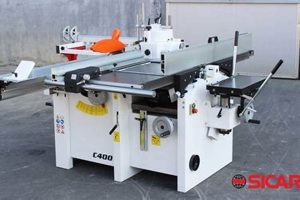
The construction of shop tools and equipment for processing lumber and creating wooden objects through personal fabrication is a growing trend. This often involves modifying existing tools, repurposing materials, or building from scratch using readily available components and plans. Such endeavors frequently address the need for specialized tools not readily accessible or affordable on the commercial market.
The advantages of this approach include significant cost savings, customization tailored to specific project requirements, and the opportunity to develop a deeper understanding of machine mechanics and woodworking principles. Historically, machinists and woodworkers have routinely adapted and modified their equipment to suit unique tasks, often resulting in innovative solutions and improvements in woodworking techniques. This practice promotes resourcefulness, encourages innovation, and fosters a greater appreciation for the craft.
The following sections will delve into the various aspects of creating equipment for shaping wood in a home shop, including safety considerations, design principles, material selection, and popular projects that showcase the practical application of these skills. Topics such as milling machines, lathes, saws, and sanders are explored in terms of their homemade construction and operation.
Considerations for Building Woodworking Equipment
Constructing woodworking tools and machinery requires careful planning and execution. The following guidelines offer critical insights for those engaging in such projects. These are some of the most important elements to consider when using diy woodworking machines:
Tip 1: Prioritize Safety: All designs must incorporate safety features, including guards, emergency stops, and secure mounting. Neglecting safety protocols can lead to severe injury.
Tip 2: Select Appropriate Materials: The materials used in construction should be robust enough to withstand the forces and stresses involved in woodworking. Steel, cast iron, and high-quality hardwoods are generally suitable choices.
Tip 3: Emphasize Precision: Accuracy is paramount when building tools designed for precise woodworking tasks. Take meticulous measurements and use accurate machining techniques to ensure proper alignment and functionality.
Tip 4: Research Existing Designs: Before embarking on a project, thoroughly research existing designs and adaptations. Learning from the experience of others can prevent common mistakes and improve the final product.
Tip 5: Start with Simpler Projects: Begin with simpler projects to gain experience and confidence. Attempting complex designs before mastering basic techniques can lead to frustration and failure.
Tip 6: Consider Power Requirements: Understand the power requirements of the equipment and ensure the electrical system can handle the load safely. Consult with a qualified electrician if necessary.
Tip 7: Regular Maintenance: Once built, woodworking equipment requires regular maintenance to ensure continued safe and efficient operation. This includes lubrication, cleaning, and inspection for wear and tear.
Adherence to these tips will not only enhance the quality and longevity of the constructed woodworking machinery but also contribute significantly to a safer and more enjoyable woodworking experience.
The following sections will explore specific projects and further considerations in realizing custom-built woodworking solutions.
1. Design blueprints and diy woodworking machines
Design blueprints serve as the foundational documentation for the successful fabrication of woodworking machinery by individual craftsmen and hobbyists. These blueprints articulate the precise specifications, dimensions, and assembly instructions essential for constructing functional and safe equipment.
- Dimensional Accuracy and Machine Functionality
Dimensional accuracy, explicitly detailed within the blueprint, directly impacts the functionality of the resulting machine. Precise measurements ensure proper alignment of components, such as bearings and cutting blades, preventing premature wear, vibration, and potential operational hazards. A deviation of even a fraction of a millimeter can compromise the machine’s ability to perform its intended task with the desired precision. For example, inaccuracies in the table saw fence alignment described in the blueprint will result in inaccurate cuts and jeopardise project success.
- Material Selection and Structural Integrity
Blueprints often specify the appropriate materials for each component, taking into account load-bearing requirements, vibration dampening properties, and resistance to wear. For instance, a blueprint for a lathe may indicate the use of high-carbon steel for the spindle to withstand high rotational forces. Deviations from recommended materials can compromise the structural integrity of the machine, potentially leading to catastrophic failure under stress.
- Safety Feature Integration
A comprehensive blueprint will integrate safety features, such as blade guards, emergency stop switches, and dust collection ports, directly into the machine’s design. These features are not afterthoughts but rather integral components of the overall plan. Omitting or modifying these safety elements drastically increases the risk of injury during operation. For example, a design for a belt sander must include a fully enclosed belt and an effective dust extraction system to reduce the risk of airborne particle inhalation.
- Assembly Sequencing and Operational Efficiency
Design blueprints will often describe an assembly sequence. This detail is critical to successfully producing a diy woodworking machine. Consider a situation, for instance, where motor placement is described. This placement should be carefully considered in order to minimize vibrations from the motor interfering with other machine parts.
In essence, design blueprints are the key factor in the construction of woodworking machinery, bridging the gap between conceptualization and functional reality. They are the source of truth from which a home builder is able to create diy woodworking machines.
2. Component Sourcing and diy woodworking machines

The effective construction of shop tools and equipment through individual effort relies significantly on meticulous component sourcing. The selection and acquisition of materials, hardware, and specialized parts determine the functionality, durability, and ultimately, the success of these projects.
- New Versus Salvaged Components
Component sourcing involves a fundamental decision: whether to utilize new, manufactured parts or to repurpose salvaged materials. New components offer the assurance of known specifications and quality, often accompanied by warranties. Salvaged components, conversely, can provide cost savings and contribute to sustainability, but require careful inspection and assessment to ensure they meet the project’s demands. For example, a salvaged motor from a discarded appliance could power a small lathe, provided it is carefully evaluated for power output, speed, and overall condition.
- Specialized Hardware and Fasteners
Woodworking machines require specialized hardware and fasteners designed to withstand vibration, stress, and environmental factors. The selection of appropriate bolts, nuts, bearings, and other hardware is crucial for structural integrity and operational reliability. Inadequate or incorrectly sized fasteners can lead to premature failure, posing safety risks and reducing the lifespan of the equipment. A drill press, for instance, relies on robust bearings to maintain spindle alignment and minimize runout, directly affecting drilling accuracy.
- Motor Selection and Power Transmission
The motor is a critical component that dictates the performance and capabilities of many woodworking machines. Component sourcing must include careful consideration of motor power, speed, voltage, and enclosure type. The appropriate choice depends on the intended application and the machine’s design parameters. Furthermore, the selection of power transmission components, such as belts, pulleys, or gears, must match the motor’s output characteristics and the machine’s operational requirements. An undersized motor or an improperly matched transmission system can result in insufficient power, overheating, or premature component wear.
- Material Quality and Availability
The selection of raw materials, such as steel, cast iron, and hardwoods, impacts the machine’s overall durability and performance. Component sourcing must account for the availability, cost, and quality of these materials. In certain instances, substitute materials may be employed, but careful consideration must be given to their mechanical properties and suitability for the intended application. The construction of a bandsaw frame, for example, requires steel with sufficient strength and rigidity to withstand the tension of the blade and maintain accurate cutting.
In conclusion, effective component sourcing is essential to the successful creation of tools and equipment. Prudent selection of appropriate materials and parts leads to robust and safe diy woodworking machines. The component is a crucial step toward success of this effort.
3. Motor specifications

Motor specifications are pivotal in the design and construction of shop tools and equipment through individual effort. The selected motor dictates a machine’s power, speed, and overall functionality, making its specification a critical step in the creation of woodworking machinery.
- Power Output and Material Capacity
A motor’s power output, typically measured in horsepower (HP), directly determines the machine’s capacity to process various materials. Insufficient power may lead to stalling, reduced cutting efficiency, and potential motor damage. For example, a lathe intended for turning large hardwood pieces necessitates a motor with sufficient HP to maintain consistent speed under load. The selection of an appropriate motor should align with the intended material types and project scales.
- Speed and Torque Characteristics
Motor speed, often expressed in revolutions per minute (RPM), influences the cutting or shaping speed of the machine. Torque, the rotational force exerted by the motor, is crucial for maintaining consistent speed under varying loads. Different woodworking tasks require different speed and torque characteristics. A drill press benefits from a high-speed motor for drilling small holes, while a bandsaw requires higher torque for cutting thicker stock. Understanding these requirements is essential for selecting a motor that optimizes performance and prevents overloading.
- Voltage and Phase Requirements
Electrical specifications, including voltage and phase, must be compatible with the available power supply. Motors are typically designed for either single-phase or three-phase power. Using an incompatible motor can result in damage to the motor or the electrical system. Single-phase motors are commonly used in residential settings, while three-phase motors are more prevalent in industrial environments due to their higher efficiency and power capabilities. Careful attention to voltage and phase compatibility is crucial for safe and reliable operation.
- Enclosure Type and Environmental Considerations
The motor’s enclosure type protects internal components from dust, moisture, and other environmental factors. Enclosures are classified based on their level of protection, with designations such as open drip-proof (ODP), totally enclosed fan-cooled (TEFC), and explosion-proof. The selection of an appropriate enclosure depends on the operating environment. A woodworking shop generates significant dust, necessitating a TEFC motor to prevent dust accumulation and overheating. Considering environmental factors ensures the motor’s longevity and prevents potential hazards.
Motor specifications are integral to the performance and safety of woodworking equipment fabricated by individual enthusiasts. Proper motor selection ensures that each machine can reliably and efficiently handle its intended tasks, contributing to the overall success of individual projects and workshop operations. The integration of carefully chosen motor specifications makes the difference between an amateur device and robust diy woodworking machines.
4. Material Strength and diy woodworking machines
Material strength is a paramount consideration in the design and fabrication of woodworking machines through do-it-yourself methodologies. The structural integrity of these machines, and consequently their safety and efficacy, is directly contingent upon the materials employed and their ability to withstand applied stresses. Inadequate material strength can lead to component failure, compromising the machine’s performance and potentially causing hazardous situations. For example, a poorly constructed table saw stand, utilizing materials with insufficient tensile strength, may collapse under the weight of the saw and workpiece, leading to injury.
The selection process for materials must account for both static and dynamic loads. Static loads refer to the weight of the machine itself and any workpieces placed upon it. Dynamic loads encompass the forces generated during operation, such as cutting forces, vibration, and impact. Materials must possess adequate yield strength to prevent permanent deformation under static loads and sufficient fatigue strength to resist cracking or failure under cyclic loading. Consider the construction of a lathe bed: cast iron, known for its damping properties and compressive strength, is often preferred to minimize vibration and maintain machining accuracy. Substitution with a weaker material could result in excessive vibration, reduced precision, and a shortened lifespan for the machine.
In summary, material strength forms a critical link in the creation of woodworking machines from a do-it-yourself perspective. Choosing appropriate materials, with careful consideration of both static and dynamic forces, is vital for building woodworking machines that are safe and efficient. Prioritizing the strength of material ensures the project achieves its intended woodworking purposes. It is a fundamental prerequisite for woodworking machines with reliability.
5. Safety protocols and diy woodworking machines
The implementation of robust safety protocols is an indispensable element in the creation and operation of shop tools and equipment through personal fabrication. These protocols mitigate risks inherent in working with machinery, protecting the user from potential injury and ensuring a safe working environment. Safety practices are not an optional addendum but a fundamental requirement for any undertaking involving the design, construction, or utilization of woodworking machinery.
- Machine Guarding and Personal Protection Equipment
The incorporation of machine guards represents a primary safety measure. These guards, designed to physically prevent contact with moving parts such as blades, belts, and pulleys, are essential for preventing accidental injury. Concurrently, the use of personal protective equipment (PPE), including safety glasses, hearing protection, and dust masks, provides an additional layer of defense against hazards such as projectiles, noise exposure, and airborne particulate matter. Ignoring either machine guarding or PPE protocols increases the risk of injury significantly. A table saw, for instance, must have a blade guard and anti-kickback pawls installed and functioning correctly, while the operator must wear safety glasses and hearing protection at all times.
- Emergency Stop Systems and Lockout Procedures
Emergency stop systems provide a means to immediately halt machine operation in the event of an anomaly or dangerous situation. Strategically placed emergency stop buttons allow the user to quickly shut down the machine, preventing further escalation of the incident. Lockout/tagout procedures are also crucial during maintenance or repair, ensuring that the machine cannot be inadvertently started while work is being performed. Disconnecting power and applying a physical lock prevents accidental activation, protecting the worker from potential harm.
- Safe Operating Procedures and Training
Establishing and adhering to safe operating procedures is essential for preventing accidents. These procedures should encompass all aspects of machine operation, from setup and adjustment to cutting techniques and routine maintenance. Adequate training is equally important, ensuring that the user understands the machine’s capabilities and limitations, as well as the potential hazards involved. Lack of training and disregard for safe operating procedures contribute significantly to woodworking accidents. A user should be thoroughly familiar with a bandsaw’s blade tensioning, tracking, and guarding mechanisms before attempting to cut any material.
- Regular Inspection and Maintenance
Regular inspection and maintenance are critical for maintaining the safety and reliability of woodworking machinery. Routine inspections should include checking for loose fasteners, worn components, damaged wiring, and malfunctioning safety devices. Timely maintenance, such as lubrication, blade sharpening, and belt replacement, prevents breakdowns and reduces the risk of accidents. Neglecting regular inspection and maintenance can lead to unexpected machine failures, creating hazardous situations. A dull saw blade, for example, requires more force to push the workpiece, increasing the likelihood of kickback and potential injury.
The strict adherence to safety protocols is an indispensable component of any successful undertaking of personally built woodworking machinery. By embracing these practices, individuals engaged in the creation and use of shop tools and equipment can significantly mitigate risk, ensuring a safer and more fulfilling woodworking experience. Safety, consequently, emerges as not just a precautionary measure but as an essential ingredient in the achievement of successful and safe projects.
6. Calibration precision and diy woodworking machines
The operational efficacy of self-constructed woodworking machinery is directly correlated to the calibration precision achieved during the build process. Inaccuracies introduced during the assembly phase translate to amplified errors during material processing, undermining the utility of the equipment. For example, a table saw with an improperly calibrated blade angle will produce inaccurate cuts, rendering it unsuitable for precise joinery. Similarly, a lathe with misaligned centers will generate workpieces that are out-of-round, limiting its capacity for producing high-quality turned objects. Calibration precision, therefore, is not merely an aesthetic consideration but a functional imperative that determines the overall performance and reliability of the homemade machinery.
Achieving suitable calibration precision requires meticulous attention to detail and the application of appropriate measurement techniques. The use of precision instruments, such as dial indicators, levels, and squares, is essential for verifying alignment and ensuring accuracy. Furthermore, a thorough understanding of machine mechanics and the principles of error propagation is necessary for identifying and correcting potential sources of inaccuracy. A dial indicator, for example, can be used to measure the runout of a lathe spindle, allowing for adjustments to minimize vibration and improve surface finish. The impact of calibration on the final product can be demonstrated in the case of a self-built milling machine. Correcting for backlash, tramming the spindle, and dialing in the vise are crucial calibrations that impact the accuracy of the parts produced.
In summary, calibration precision forms a critical component in the creation and performance of self-assembled woodworking machinery. Its importance lies in its influence on the accuracy, reliability, and safety of the equipment. Despite the challenges inherent in achieving high levels of precision, the rewards, in terms of improved machining capabilities and enhanced project outcomes, justify the investment of time and effort in this crucial aspect of construction.
Frequently Asked Questions About diy woodworking machines
This section addresses common inquiries regarding the design, construction, and operation of shop tools and equipment created through personal fabrication.
Question 1: What level of skill is required to build woodworking machinery?
The skills required vary depending on the complexity of the project. Simpler projects may require basic woodworking and mechanical aptitude, while more complex builds may necessitate proficiency in machining, welding, and electrical wiring. Prior experience with similar projects is beneficial.
Question 2: Where can suitable design blueprints be obtained?
Design blueprints can be found in woodworking magazines, online forums, and specialized books. Some manufacturers of woodworking tools may also offer plans for constructing similar machines. Careful evaluation of the blueprint’s clarity and completeness is advised before commencing construction.
Question 3: What are the primary safety concerns when operating homemade woodworking machinery?
The primary safety concerns include unguarded moving parts, inadequate dust collection, and electrical hazards. Proper machine guarding, personal protective equipment (PPE), and adherence to safe operating procedures are essential for mitigating these risks.
Question 4: How can calibration precision be ensured in self-constructed machinery?
Calibration precision can be enhanced through the use of precision measuring instruments, such as dial indicators, levels, and squares. Meticulous attention to detail during assembly and adjustment is also crucial. Understanding error propagation and implementing corrective measures is essential.
Question 5: What materials are most suitable for building woodworking machinery?
Steel, cast iron, and high-quality hardwoods are generally suitable materials for constructing woodworking machinery. The selection of appropriate materials depends on the specific application and the load-bearing requirements of each component.
Question 6: Are there legal considerations associated with building and operating homemade woodworking machines?
Legal considerations may vary depending on local regulations and the intended use of the machinery. It is advisable to consult with local authorities or legal professionals to ensure compliance with applicable safety standards and building codes.
In conclusion, the construction of woodworking machinery requires a blend of skill, knowledge, and attention to detail. Adherence to safety protocols and a commitment to calibration precision are essential for creating reliable and safe equipment.
The following section will explore example diy woodworking machines projects in more detail.
diy woodworking machines
This exploration has outlined the multifaceted considerations involved in the design, construction, and operation of woodworking machines created through personal fabrication. The importance of precise design, careful component sourcing, appropriate motor selection, adequate material strength, rigorous safety protocols, and meticulous calibration has been emphasized. Each element is integral to creating functional and safe equipment for woodworking applications.
The successful implementation of these principles represents not only a cost-effective alternative to commercially manufactured tools but also an opportunity for individual makers to gain a deeper understanding of machine mechanics and enhance their woodworking skills. Continued innovation and adherence to best practices will further advance the field, fostering greater accessibility and customization in woodworking.