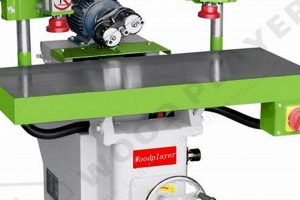
A specialized piece of equipment employed in woodworking, the machine in question facilitates the creation of precisely aligned holes in a workpiece. These holes, typically arranged in a straight line, are crucial for hardware installation, joinery, and various assembly processes. For instance, cabinet construction frequently relies on consistently spaced holes for shelf supports and hinges, a task efficiently accomplished with this type of machinery.
Utilizing this method offers significant advantages in terms of accuracy, repeatability, and speed compared to manual drilling techniques. The consistent hole placement ensures structural integrity and aesthetic uniformity in finished projects. Historically, the development of this technology has streamlined production processes, allowing for increased output and reduced labor costs in woodworking industries.
The subsequent sections will delve into the different types of these machines, their operational principles, and the specific applications where their use proves most advantageous. Considerations for selecting the appropriate model based on project requirements and safety protocols will also be addressed.
Tips for Optimal Usage
Effective utilization of the equipment is critical for achieving accurate and consistent results in woodworking projects. Adherence to best practices ensures longevity of the machinery and minimizes the risk of errors.
Tip 1: Material Clamping: Securely clamp the workpiece. Inadequate clamping can result in movement during the drilling operation, leading to misaligned holes and potential damage to the workpiece or the machine.
Tip 2: Drill Bit Selection: Employ drill bits specifically designed for woodworking. Using the wrong type of bit can cause splintering, tear-out, and reduced drilling accuracy. Consider brad point bits for clean hole edges.
Tip 3: Speed and Feed Rate: Adjust the speed and feed rate according to the material being drilled. Hardwoods typically require lower speeds and slower feed rates compared to softwoods. Excessive speed can generate heat and dull the bit.
Tip 4: Dust Extraction: Implement a dust extraction system. Wood dust can accumulate around the drill bit and workpiece, obstructing visibility and potentially affecting drilling accuracy. Efficient dust removal also promotes a safer working environment.
Tip 5: Machine Maintenance: Regularly inspect and maintain the machine. This includes lubricating moving parts, checking for loose components, and ensuring that the drill bits are sharp and properly aligned. Preventative maintenance prolongs the life of the equipment and ensures consistent performance.
Tip 6: Pilot Holes (When Necessary): For certain dense materials or large diameter holes, pre-drilling pilot holes can improve accuracy and reduce strain on the equipment.
Tip 7: Consistent Drilling Depth: Utilize depth stops or similar mechanisms to ensure uniform drilling depth across all holes. This is particularly important when drilling blind holes for hardware installation.
Following these guidelines enhances the precision, efficiency, and safety of hole creation in woodworking projects. Consistent adherence to these practices minimizes errors and maximizes the return on investment in the equipment.
The following section will present a conclusion summarizing the essential aspects of employing this type of machinery in woodworking.
1. Hole Alignment

Hole alignment is a foundational principle in woodworking, particularly when employing machinery to create rows of precisely spaced holes. Its accuracy directly affects the structural integrity, aesthetic appeal, and functional performance of the finished product. The efficacy of a line boring machine is intrinsically linked to its ability to consistently deliver accurate hole alignment.
- Hardware Installation
Misaligned holes during hardware installation, such as for hinges or shelf supports, can prevent proper functionality. Doors may fail to close correctly, shelves may be unstable, and the overall appearance of the piece suffers. The line boring machine, when properly calibrated, eliminates these issues by ensuring consistent hole spacing and depth, allowing for seamless hardware integration.
- Joinery Precision
In woodworking, precise joinery relies on accurate hole placement for dowels, screws, or other fasteners. Misaligned holes can compromise the strength and stability of the joint, leading to structural failure. The line boring machine facilitates consistent and repeatable hole placement, creating robust and durable joints that withstand stress and strain.
- Aesthetic Consistency
Visually, inconsistent hole alignment detracts from the overall aesthetic appeal of a woodworking project. Especially noticeable in applications like cabinetry or furniture where rows of holes are visible, uneven spacing creates a perception of poor craftsmanship. The machine’s ability to maintain uniform hole patterns contributes significantly to the aesthetic quality and perceived value of the finished piece.
- Operational Efficiency
When hole alignment is accurate, subsequent assembly processes are streamlined. Components fit together correctly without requiring adjustments or modifications. This minimizes time wasted on rework, reduces material waste, and increases the overall efficiency of the woodworking process. A line boring machine, therefore, contributes to enhanced productivity and cost-effectiveness.
The capacity to produce precisely aligned holes, therefore, defines the utility and value of a machine for line boring in woodworking. The combination of the right equipment, skillful execution, and appreciation for hole alignment leads to woodworking projects of high quality, integrity and accuracy.
2. Drilling Precision

Drilling precision, in the context of woodworking with specialized machinery, is the degree to which holes are created according to specified dimensions and locations. It is a critical factor influencing the quality, functionality, and longevity of woodworking projects. Attaining drilling precision relies heavily on the capabilities of the machine and the operator’s expertise.
- Dimensional Accuracy
Dimensional accuracy refers to how closely the actual hole diameter and depth match the intended specifications. Deviations from the specified dimensions can lead to loose or overly tight fittings for hardware, affecting the structural integrity of joints. The rigidity and control mechanisms inherent in machinery designed for line boring contribute to achieving consistent and accurate hole dimensions, minimizing tolerance issues.
- Positional Accuracy
Positional accuracy describes the extent to which holes are drilled in the precise locations dictated by the design. Inaccurate hole placement can result in misalignment during assembly, compromising both the aesthetic appearance and the structural soundness of the project. Machines designed for creating rows of consistently spaced holes incorporate indexing systems and precise positioning controls to ensure high positional accuracy, especially crucial in applications like cabinet construction.
- Hole Quality
Hole quality encompasses factors such as the smoothness of the hole walls, the absence of tear-out or splintering, and the perpendicularity of the hole to the workpiece surface. Poor hole quality can weaken joints and create an unprofessional appearance. Appropriate bit selection, controlled feed rates, and effective dust extraction systems, as often integrated into these machines, help to achieve clean, smooth, and consistently perpendicular holes.
- Repeatability
Repeatability is the ability of the machine to consistently produce holes of similar dimensions and positions across multiple workpieces. Inconsistent drilling can lead to variability in the final product and increased assembly time. Line boring machines, particularly those with automated features, are designed to deliver highly repeatable results, crucial for mass production or projects requiring multiple identical components.
The cumulative effect of these facets of drilling precision underscores the importance of employing specialized machinery when creating rows of holes in woodworking. These machines provide a level of control and consistency unattainable with manual drilling methods, ultimately contributing to higher quality, more durable, and aesthetically pleasing woodworking projects.
3. Machine Types
The selection of appropriate machinery significantly impacts the efficiency and precision of creating aligned holes in woodworking. Different types of machines cater to varying project scales, material types, and desired levels of automation. Understanding the characteristics of each type is crucial for optimizing the woodworking process.
- Single-Spindle Machines
Single-spindle machines feature one drilling head and are suitable for smaller-scale projects or situations requiring customized hole patterns. These machines often involve manual workpiece positioning between each hole, making them less efficient for mass production but more versatile for intricate designs. An example is a small cabinet shop producing bespoke furniture where flexibility is prioritized over speed. The implication for hole creation is precise control over each hole’s placement, though at a slower rate.
- Multi-Spindle Machines
Multi-spindle machines incorporate multiple drilling heads, enabling the simultaneous creation of several holes in a single operation. These machines are ideal for high-volume production where consistent hole patterns are required, such as in manufacturing cabinet components or shelving units. An example would be a large-scale furniture factory. The advantage lies in significantly reduced cycle times and improved repeatability, leading to increased output.
- CNC (Computer Numerical Control) Machines
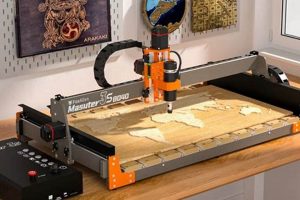
CNC machines offer the highest level of automation and precision. These machines utilize computer-controlled movements to position the workpiece and control the drilling process, allowing for complex hole patterns and variable hole depths. An application includes manufacturing custom architectural millwork, where intricate designs and exact specifications are paramount. CNC technology minimizes human error and enables the creation of highly complex and customized hole configurations.
- Portable Machines
Portable machines are designed for on-site use or in situations where moving large workpieces to a stationary machine is impractical. These machines typically offer limited capabilities compared to larger stationary models but provide flexibility and convenience for specific applications. An example would be installing hardware in a pre-assembled cabinet or modifying existing structures. The trade-off is reduced precision and limited capacity compared to stationary counterparts.
The diversity in machine types demonstrates the range of options available for creating aligned holes. Selecting the correct machine depends on balancing factors such as production volume, required precision, budget constraints, and the complexity of the woodworking project. While each type has distinct advantages and limitations, their primary function remains the same: to create precisely aligned holes efficiently and accurately.
4. Workpiece Clamping

Securely holding the workpiece is a foundational prerequisite for achieving accurate and consistent results when employing machinery for creating aligned holes. Inadequate clamping compromises drilling precision, potentially damaging the workpiece and the machine. Proper clamping is, therefore, integral to the efficient and safe operation of such equipment.
- Vibration Dampening
Vibrations generated during the drilling process can induce movement in an unsecured workpiece. This movement introduces inaccuracies in hole placement and dimension. Effective clamping mechanisms absorb and dampen these vibrations, maintaining stability and ensuring that holes are drilled precisely according to the design specifications. This is particularly critical when working with dense hardwoods or when using larger diameter drill bits.
- Preventing Material Slippage
The rotational force exerted by the drill bit can cause an improperly secured workpiece to shift or slip. Such slippage results in misaligned holes, rendering the workpiece unusable or requiring costly rework. Clamping systems with sufficient holding force prevent this slippage, maintaining the workpiece’s position throughout the drilling operation. Examples include pneumatic clamps or toggle clamps, which provide consistent and reliable holding pressure.
- Ensuring Consistent Depth
Variations in workpiece thickness or inconsistencies in the clamping pressure can lead to variations in the drilled hole depth. This is problematic when creating blind holes for hardware installation, as inconsistent depths can compromise the functionality and aesthetics of the final product. Clamping systems that maintain uniform pressure across the workpiece surface ensure consistent depth control, leading to uniform results. The machine depth stop may be miscalibrated based on the improper clamping of a material.
- Promoting Operator Safety
An unsecured workpiece poses a significant safety hazard to the machine operator. If the workpiece becomes dislodged during drilling, it can be propelled from the machine, potentially causing injury. Reliable clamping systems mitigate this risk by firmly securing the workpiece, preventing accidental movement and protecting the operator from potential harm. Safety protocols are often in place.
The interplay between secure clamping and the machinery that creates aligned holes is crucial for successful woodworking. The selection of appropriate clamping mechanisms, coupled with proper operating procedures, ensures that the machine functions optimally and delivers the desired results safely and efficiently. It also enhances the life and stability of woodworking parts as the holes must be drilled to a required length.
5. Bit Selection

The effectiveness of machinery designed for creating aligned holes in woodworking is inextricably linked to the selection of appropriate drill bits. The drill bit acts as the primary cutting tool, directly influencing the precision, cleanliness, and efficiency of hole creation. Incompatible or worn bits compromise the machine’s capabilities, leading to substandard results and potentially damaging the equipment.
Different woodworking applications necessitate specific bit types. For instance, brad point bits, characterized by their sharp central spur, are favored for creating clean, splinter-free holes, crucial in cabinet making or furniture construction. Forstner bits, with their cylindrical shape and central pilot, produce flat-bottomed holes often used for installing concealed hinges. Twist drill bits, while versatile, may produce more tear-out in wood and are generally less suitable for applications requiring a high degree of surface quality. The composition of the woodworking material also influences bit selection; hardwoods require bits with higher hardness and durability compared to softwoods. The use of an incorrect bit type can result in inaccurate hole dimensions, ragged edges, and increased friction, potentially overheating the bit and damaging the workpiece. Moreover, bit sharpness is paramount; dull bits require increased force, leading to bit deflection and compromising hole alignment. Regular bit maintenance, including sharpening or replacement, is therefore essential for maintaining optimal performance of the equipment.
Ultimately, the selection of drill bits for use with machinery in woodworking involves a comprehensive understanding of material properties, desired hole characteristics, and the capabilities of various bit types. A deliberate approach to bit selection, coupled with diligent maintenance, maximizes the efficiency and precision of the equipment, ensuring consistently high-quality results in woodworking projects. Neglecting this aspect undermines the investment in the machinery itself and increases the risk of producing flawed or structurally unsound components.
6. Speed Control

Effective speed control is integral to the functionality and performance of machinery employed for creating aligned holes in woodworking. The rotational speed of the drill bit directly affects the cutting efficiency, hole quality, and tool longevity. An inappropriately selected speed can lead to a range of problems, from material damage to premature bit wear. Consequently, understanding the relationship between speed control and the woodworking process is crucial for achieving optimal results.
The ideal speed setting varies based on several factors, including the material being drilled, the diameter of the drill bit, and the type of bit being used. Hardwoods generally require lower speeds to prevent burning and splintering, while softer woods can tolerate higher speeds. Larger diameter bits require lower speeds to reduce stress on the motor and prevent bit deflection. For instance, drilling a series of holes in oak for shelf supports demands a slower, more controlled speed than drilling the same number of holes in pine. Failure to adjust the speed accordingly can result in rough hole edges, inaccurate hole dimensions, and increased risk of bit breakage. Variable-speed machines afford the flexibility needed to accommodate these varying requirements, allowing the operator to fine-tune the drilling speed for optimal performance. In a practical setting, a cabinet maker utilizing a multi-spindle line boring machine would adjust the speed downwards when switching from drilling pilot holes in poplar to drilling larger dowel holes in maple components.
Mastering speed control in machinery for creating aligned holes in woodworking presents challenges, primarily in selecting the optimal speed for a given set of conditions. The ability to accurately assess material properties and bit characteristics, coupled with practical experience, is essential for achieving consistent and high-quality results. Precise speed regulation minimizes material waste, extends the lifespan of cutting tools, and ultimately contributes to the efficient production of superior woodworking projects. Addressing this skill is key to the value of this machinery.
7. Maintenance

Sustained operational efficiency and precision in woodworking utilizing machinery that creates aligned holes depend critically on diligent maintenance practices. Neglecting routine maintenance compromises machine performance, reduces its lifespan, and increases the risk of producing inaccurate or flawed workpieces.
- Lubrication of Moving Parts
The moving components of such machinery, including spindles, bearings, and guide rails, require regular lubrication to minimize friction and prevent premature wear. Inadequate lubrication leads to increased heat generation, reduced operating efficiency, and eventual component failure. A woodworking shop employing a multi-spindle machine, for example, must adhere to a strict lubrication schedule to ensure the smooth operation of all spindles and prevent costly downtime. Conversely, appropriate lubrication extends the service life of these critical parts.
- Inspection and Replacement of Drill Bits
Drill bits are subject to wear and tear during operation, becoming dull or damaged over time. Dull bits require increased force to penetrate the workpiece, leading to bit deflection and inaccurate hole placement. Regular inspection for signs of wear and timely replacement with sharp, high-quality bits are essential for maintaining drilling precision. A cabinet maker, upon noticing increased tear-out or burning during drilling, should promptly replace the affected bit to avoid compromising the quality of the finished product. As such, there are also drill bit sharpeners as a tool to provide sharpness for the drill bits.
- Cleaning and Dust Removal
Wood dust accumulation around the machine’s moving parts and within its internal mechanisms can impede functionality and accelerate wear. Dust obstructs visibility, affects drilling accuracy, and contributes to overheating. Regular cleaning and dust removal are crucial for maintaining optimal machine performance and prolonging its lifespan. Integrating a dust extraction system and implementing a routine cleaning schedule are essential practices in woodworking environments employing these machines. Many machines have ports for a vacuum attachment to remove dust.
- Calibration and Alignment Checks
Maintaining the correct alignment of spindles, fences, and other critical components is essential for ensuring accurate hole placement. Over time, vibrations and operational stresses can cause these components to shift out of alignment, leading to inaccuracies. Periodic calibration and alignment checks, performed by qualified technicians, are necessary to restore the machine to its original specifications and maintain its precision. This ensures consistent results and reduces the risk of producing misaligned or dimensionally inaccurate workpieces, and increases project quality.
These maintenance facets are not independent but are collectively vital to the continued functionality and accuracy of machinery designed for creating aligned holes in woodworking. By adhering to a comprehensive maintenance program, woodworking shops can minimize downtime, reduce repair costs, and ensure consistently high-quality output, thus maximizing the return on their investment in this specialized equipment.
Frequently Asked Questions
This section addresses common queries regarding the application, operation, and maintenance of equipment designed for creating aligned holes in woodworking. The information presented aims to provide clarity and promote effective utilization of these specialized machines.
Question 1: What constitutes a “line boring” operation in woodworking?
The term “line boring” refers to the process of drilling a series of precisely aligned holes along a straight line in a workpiece. This technique is commonly employed for hardware installation, joinery, and various assembly processes in woodworking projects.
Question 2: What are the primary advantages of utilizing a dedicated machine for line boring compared to manual drilling methods?
Utilizing specialized machinery offers increased accuracy, repeatability, and speed compared to manual drilling techniques. The consistent hole placement ensures structural integrity and aesthetic uniformity in finished projects. Furthermore, machine use reduces the potential for human error.
Question 3: What types of drill bits are best suited for line boring in woodworking applications?
Brad point bits are generally preferred for creating clean, splinter-free holes. Forstner bits are suitable for flat-bottomed holes, while specialized dowel drill bits are optimized for creating precise holes for dowel joinery. The selection depends on the specific application and material being worked.
Question 4: What factors influence the appropriate speed setting for a line boring machine?
The ideal speed setting depends on several factors, including the material being drilled, the diameter of the drill bit, and the type of bit being used. Hardwoods generally require lower speeds to prevent burning and splintering, while softer woods can tolerate higher speeds.
Question 5: How can the alignment of a line boring machine be verified and maintained?
Alignment can be verified using precision measuring tools such as dial indicators and straight edges. Calibration and alignment adjustments should be performed by qualified technicians, following the manufacturer’s recommendations.
Question 6: What safety precautions should be observed when operating a line boring machine?
Safety glasses must be worn at all times. The workpiece must be securely clamped. Hands should be kept clear of the drill bit during operation. Regular inspection and maintenance of the machine are essential for safe operation. Adherence to the manufacturer’s safety guidelines is paramount.
These FAQs provide a foundational understanding of the techniques used in creating aligned holes. Proper application of these principles will help to reduce error and improve product output.
The subsequent section will cover troubleshooting common problems and issues in woodworking machine use.
Conclusion
The preceding discussion has elucidated the core principles and practices associated with employing specialized machinery in woodworking. Key considerations encompass machine types, bit selection, speed control, workpiece clamping, and routine maintenance. Understanding and implementing these elements are critical for achieving accuracy, efficiency, and safety in woodworking projects that require precisely aligned holes.
The continued advancement in tooling and machine processes will drive increased efficiency in woodworking processes, and mastery of those operations will remain vital for maintaining a competitive advantage. Further research and training in modern techniques are encouraged to maximize the potential of these specialized tools.