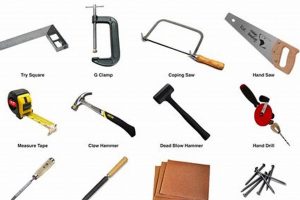
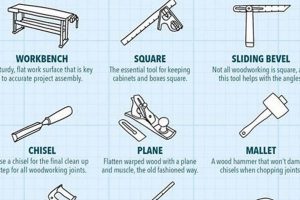
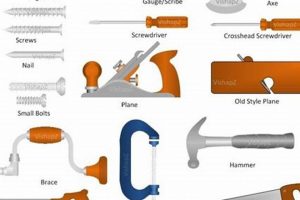
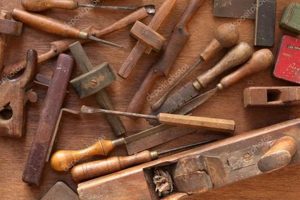
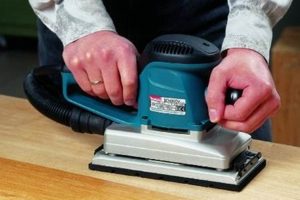
The practice involves shaping wood using solely human-powered implements. Chisels, hand planes, saws, and hammers are typical instruments in this approach. This contrasts with techniques employing electrically powered machinery for material removal and shaping.
Adopting this method encourages precision, mindful craftsmanship, and a deeper understanding of wood properties. Historically, it represented the primary mode of fabrication, predating industrial advancements. Today, it provides a connection to traditional skills, reduces reliance on electricity, and offers a quieter, more sustainable alternative to mechanized processes, yielding unique and often heirloom-quality pieces.
The following sections will delve into essential tools, fundamental techniques, joinery methods, wood selection considerations, and project planning strategies applicable to this particular branch of woodworking.
Essential Guidance for Hand Tool Woodworking
The following recommendations aim to enhance accuracy, efficiency, and overall success when engaging in woodworking through manual methods. Proper technique and tool maintenance are paramount.
Tip 1: Sharpen Tools Rigorously: Maintain exceptionally sharp edges on all cutting tools. Dull tools require excessive force, leading to inaccurate cuts and increased risk of injury. Employ sharpening stones and strops regularly to achieve optimal sharpness.
Tip 2: Prioritize Wood Selection: Carefully consider the wood species based on project requirements. Grain orientation, hardness, and stability vary between species. Matching the wood to the intended application will influence the final result’s integrity and aesthetics.
Tip 3: Master Basic Joinery: Accurate and strong joints are critical for durable constructions. Practice fundamental joinery techniques, such as dovetails, mortise and tenon, and rabbets, until proficiency is achieved. Precise layout and execution are essential.
Tip 4: Utilize Bench Hooks and Vises: Secure workpieces effectively. Bench hooks provide a stable platform for sawing, while vises offer firm clamping for planing, chiseling, and other operations. Proper workholding contributes to accuracy and safety.
Tip 5: Practice Controlled Cuts: Focus on deliberate and controlled movements. Allow the tool to do the work, avoiding excessive force. This promotes cleaner cuts, reduces the risk of splintering, and improves overall control.
Tip 6: Regularly Inspect and Maintain Tools: Inspect tools for damage or wear before each use. Clean tools after each session to prevent rust and maintain smooth operation. Lubricate moving parts as needed.
Tip 7: Understand Grain Direction: Pay close attention to wood grain direction when planing or chiseling. Working with the grain minimizes tear-out and produces a smoother surface. Reversing direction may be necessary depending on the grain pattern.
Hand tool woodworking requires patience, precision, and a commitment to honing fundamental skills. Mastery of these techniques results in craftsmanship characterized by quality and enduring value.
The ensuing discussion will outline specific project ideas suitable for those pursuing this craft, emphasizing skill development and creative expression.
1. Tool Sharpness
The correlation between tool sharpness and success in woodworking exclusively with manual implements is not merely significant; it is foundational. In the absence of mechanized power, the cutting edge’s acuity directly dictates the ease, precision, and quality of the resulting work. A sharp tool severs wood fibers cleanly, minimizing tearing and enabling controlled material removal. Conversely, a dull tool crushes and distorts the wood, demanding excessive force, increasing the likelihood of errors, and resulting in a rough, unsatisfactory surface. For instance, attempting to plane a surface with a dull hand plane results in chatter, uneven thickness, and potential workpiece damage; a razor-sharp plane, however, glides across the wood, producing a smooth, polished finish.
The dependence on sharpness extends to all facets of the craft, from sawing and chiseling to carving and shaping. Consider the creation of dovetail joints, a hallmark of traditional woodworking. Precise, clean cuts are essential for tight-fitting, structurally sound joints. A dull chisel cannot execute the necessary crisp edges and precise angles, leading to gaps and compromised joint strength. Furthermore, the physical exertion required to compensate for a dull edge significantly increases user fatigue, impacting accuracy and potentially leading to injuries. Maintaining optimal sharpness through consistent honing and sharpening is therefore not simply a matter of convenience but a prerequisite for achieving professional-quality results.
In summary, tool sharpness is the linchpin of manual woodworking. Its impact extends beyond mere efficiency; it fundamentally affects the quality, precision, and safety of the entire process. The conscientious craftsman recognizes that investing time in maintaining razor-sharp edges is an investment in the quality and longevity of their work, transforming wood from a resistant material into a pliable medium under their skilled hands.
2. Wood Selection

In woodworking employing only manual implements, material selection transcends mere preference; it becomes a critical determinant of project feasibility and outcome. The absence of powered machinery necessitates a deeper understanding of wood properties and their compatibility with hand-tooling techniques.
- Grain Direction and Workability
Grain direction significantly impacts the ease and quality of cuts made with hand tools. Straight, even grain allows for smooth planing and chiseling, minimizing tear-out and promoting clean surfaces. Conversely, highly figured or interlocked grain can present considerable challenges, demanding specialized techniques and sharper tools to avoid undesirable results.
- Hardness and Density Considerations
Wood species vary widely in hardness and density, directly affecting the effort required for shaping and joining. Softer woods, such as pine or basswood, are generally easier to work with hand tools, making them suitable for beginners or intricate detailing. Harder woods, like maple or oak, demand greater force and sharper tools but offer increased durability and resistance to wear.
- Moisture Content and Stability
The moisture content of wood influences its stability and susceptibility to warping or cracking. Kiln-dried lumber is typically preferred for woodworking, as it has a lower and more consistent moisture content. Working with green or improperly dried wood can lead to dimensional changes and structural failures over time, particularly in complex joinery.
- Species-Specific Properties and Applications
Different wood species possess unique characteristics that make them suitable for particular applications. For example, walnut is prized for its rich color and fine grain, making it ideal for furniture and decorative items. Cherry offers a smooth texture and reddish hue, lending itself well to cabinetry and turned objects. Understanding these properties allows the craftsman to select the most appropriate wood for the intended purpose.
The judicious selection of wood, therefore, is paramount in hand tool woodworking. Careful consideration of grain direction, hardness, moisture content, and species-specific properties enables the craftsman to work efficiently, achieve desired aesthetic qualities, and create durable, long-lasting pieces. Neglecting these factors can lead to frustration, wasted materials, and ultimately, a compromised final product.
3. Joinery Precision

In the context of woodworking executed solely with manual implements, joinery precision assumes an elevated level of importance. The absence of power tools inherently places a greater demand on the accuracy and execution of joints. Imperfections, which might be masked or compensated for by machine-driven techniques, become readily apparent and directly compromise the structural integrity and aesthetic quality of the finished piece. Consequently, a craftsman engaging in this methodology must prioritize meticulous layout, precise cutting, and diligent fitting to achieve functional and visually appealing results. For example, a hand-cut dovetail joint lacking in precision will exhibit gaps, weakening the connection and detracting from the overall appearance. Conversely, a well-executed joint reflects the craftsman’s skill and contributes to the longevity of the woodworking.
The significance of joinery precision manifests in numerous practical applications. Chairmaking, for instance, necessitates strong and accurate joinery to withstand repeated stress and ensure stability. Mortise-and-tenon joints, frequently employed in chair construction, must be precisely fitted to distribute weight evenly and prevent loosening over time. Similarly, in the construction of cabinetry, the accuracy of joinery impacts the alignment of drawers and doors, influencing both functionality and visual harmony. The creation of complex joinery, such as compound angles or curved surfaces, further accentuates the need for precision, demanding advanced skills and a deep understanding of woodworking principles. The implementation of proper measuring tools and the use of jigs and fixtures becomes indispensable in assisting the woodworker to achieve these precise connections.
In summary, joinery precision is not merely a desirable attribute but an essential component of woodworking with hand tools. Its impact extends from structural soundness to aesthetic refinement, demanding meticulous craftsmanship and a commitment to accuracy. While challenges undoubtedly exist, mastering this aspect of manual woodworking yields pieces of enduring quality and showcases the inherent artistry of the craft. A dedicated emphasis on tight-fitting and robust connections becomes paramount in every project.
4. Technique Mastery

Technique mastery, in the realm of woodworking limited to manual tools, represents more than mere skill; it embodies a profound understanding and refined execution of fundamental principles. It is the cornerstone upon which quality, precision, and efficiency are built, compensating for the absence of mechanized assistance. Mastery ensures the woodworker is in harmony with the chosen material.
- Sharpening Proficiency
The ability to achieve and maintain a razor-sharp edge on all cutting tools is paramount. Consistent sharpness directly correlates with reduced effort, cleaner cuts, and enhanced control. A dull tool necessitates excessive force, increasing the risk of errors and injury. Skilled sharpening involves understanding steel properties, employing appropriate sharpening media, and consistently maintaining proper angles.
- Planing Precision
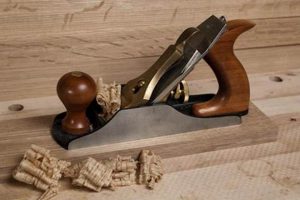
Mastering the hand plane allows for the creation of perfectly flat and smooth surfaces. This involves understanding grain direction, adjusting the plane iron for optimal cutting depth, and maintaining consistent pressure and angle throughout the stroke. Proficiency in planing is essential for preparing stock, creating tight-fitting joints, and achieving a refined finish.
- Sawing Accuracy
Accurate sawing is fundamental for efficient material removal and precise joinery. This requires developing proper stance, grip, and stroke technique to maintain a straight line and consistent angle. Skillful sawing minimizes waste, reduces the need for extensive cleanup, and ensures that joinery components fit together seamlessly.
- Chiseling Control
Chiseling, both for removing waste and refining joinery, demands precise control and understanding of grain direction. Sharp chisels, coupled with controlled mallet strikes, enable the creation of clean, accurate cuts. Proficiency in chiseling is essential for creating intricate details, fitting joints tightly, and achieving a professional-quality finish.
These aspects of technique mastery are not isolated skills but rather interconnected components of a holistic approach to woodworking by hand. Their integration allows the woodworker to achieve results comparable to, and in some cases exceeding, those attainable through mechanized methods. The commitment to honing these skills is the defining characteristic of the dedicated hand tool woodworker, fostering a deep appreciation for the material and the craft itself.
5. Patience Required
The inherent relationship between woodworking employing only manual implements and the attribute of patience is undeniable and profound. The absence of power-assisted processes necessitates a deliberate and measured approach to each task. Progress is incremental, demanding sustained focus and meticulous execution. Unlike mechanized woodworking, where material removal is rapid and often forceful, manual techniques require careful planning, controlled movements, and a willingness to invest significant time in each phase of the project. The preparation of lumber, the shaping of components, and the assembly of joints all demand an unwavering commitment to precision and a resistance to the impulse of haste. A woodworker operating under these conditions must understand that rushing the process inevitably leads to errors, compromised quality, and potential material wastage. A seasoned practitioner appreciates that the time invested is not merely expended but rather contributes directly to the integrity and beauty of the finished product.
The cultivation of patience extends beyond the execution of individual tasks and permeates the entire woodworking process. For example, the sharpening of tools, a critical component of manual woodworking, requires consistent effort and a willingness to invest time in honing and maintaining cutting edges. Similarly, the learning of new techniques or the mastering of intricate joinery demands a persistent and methodical approach. Setbacks are inevitable, and the ability to persevere through challenges without becoming discouraged is essential. This commitment to the long-term process fosters a deeper understanding of the wood, the tools, and the inherent limitations of the craft, ultimately leading to a greater sense of accomplishment. Many who shift from power tools to hand tools have to relearn the speed and timeline of making. This can only be done with practice and acceptance that this style of woodworking takes longer and is meditative.
In conclusion, patience is not merely a virtue but an indispensable tool in the arsenal of the woodworker employing only manual implements. It is the catalyst for precision, the antidote to frustration, and the foundation for creating pieces of enduring quality. Recognizing and embracing this fundamental connection allows the craftsman to approach the craft with a mindset conducive to success, transforming the challenges of manual woodworking into opportunities for skill development, artistic expression, and a profound appreciation for the inherent beauty of the material and the process itself. It is crucial to practice in a slow and deliberate manner to fully embrace this style of woodworking.
Frequently Asked Questions
The following addresses prevalent inquiries and clarifies misconceptions concerning the practice of woodworking solely with manual implements.
Question 1: What are the primary advantages of woodworking exclusively with hand tools compared to employing power tools?
The practice fosters precision, encourages a deeper understanding of wood properties, reduces reliance on electricity, minimizes noise pollution, and promotes a more sustainable approach to woodworking.
Question 2: Is specialized training required to engage in woodworking solely with manual implements, or can one learn independently?
While formal training is beneficial, self-directed learning through books, online resources, and practice is viable. The gradual acquisition of skills and knowledge is crucial for success.
Question 3: What constitutes the essential toolset for initiating projects in woodworking solely with manual implements?
A basic set typically includes a hand plane, chisels, saws (rip and crosscut), a marking gauge, a combination square, and sharpening equipment.
Question 4: Are certain wood species more amenable to woodworking with manual implements than others?
Softer woods, such as pine and basswood, are generally easier to work with, while hardwoods, like maple and oak, require greater effort and sharper tools. Species selection depends on project requirements and skill level.
Question 5: How does the time investment in woodworking exclusively with hand tools compare to that of power tool-assisted woodworking?
Manual woodworking typically demands a significantly greater time investment due to the absence of power-driven material removal. Each step requires meticulous planning and precise execution.
Question 6: What strategies can mitigate common challenges encountered in woodworking solely with manual implements, such as tear-out or inaccurate cuts?
Maintaining sharp tools, understanding grain direction, employing proper techniques, and securing workpieces effectively are essential for minimizing these issues.
Mastering these techniques offers a path to craftsmanship marked by quality and durability. Hand tool woodworking allows to make pieces of enduring value. Emphasis on fundamental skills results in unique, and often heirloom-quality pieces.
The succeeding section will offer a comparative analysis of specific hand tools and power tools used in similar woodworking operations.
Conclusion
This exploration has delineated the core principles underpinning woodworking with hand tools only. The emphasis on sharp tools, judicious wood selection, precise joinery, technique mastery, and the necessity of patience underscores the disciplined approach required. Mastery of these elements fosters projects characterized by durability, aesthetic integrity, and a tangible connection to traditional craftsmanship.
The enduring relevance of this practice lies in its ability to cultivate a deeper understanding of materials and processes, offering a sustainable alternative to mechanized methods. The diligent application of these principles leads to work exhibiting both technical competence and artistic merit.