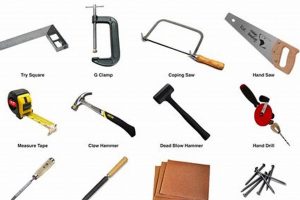
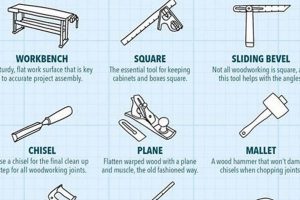
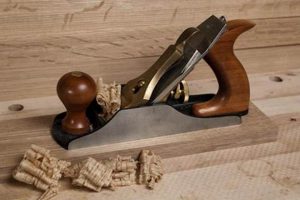
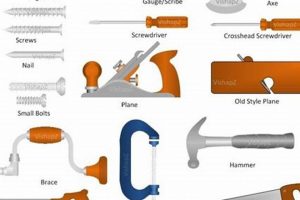
The foundational equipment for individuals new to shaping wood by manual methods encompasses a selection of implements designed for precision, control, and safety. These implements facilitate tasks such as cutting, shaping, joining, and finishing wood. A well-curated collection typically includes saws for creating accurate cuts, chisels for refining shapes and creating joinery, planes for smoothing surfaces, measuring and marking tools for precision, and sharpening equipment to maintain optimal tool performance.
Mastering woodworking with manual implements offers several advantages. It fosters a deeper understanding of wood properties and grain direction, promotes enhanced control over the shaping process, and provides a more intimate connection to the craft. Historically, hand tools represent the original method of woodworking, predating power tools and connecting practitioners to a long tradition of craftsmanship. The practice encourages patience, problem-solving skills, and a meticulous approach to each project.
A forthcoming exploration will examine specific implements crucial for initiating hand tool woodworking. Considerations will be given to selecting quality equipment that is appropriate for initial projects and skill development. Guidance on essential techniques, tool maintenance, and safety practices will also be provided to ensure a successful and rewarding introduction to this craft.
Essential Guidance for Novice Woodworkers
The following recommendations are crucial for those starting their woodworking journey using manual implements. Adhering to these principles will foster skill development, ensure safety, and promote project success.
Tip 1: Prioritize Sharpness. A sharp tool is safer and more effective. Dull tools require excessive force, increasing the risk of slips and inaccuracies. Regularly hone and sharpen all cutting implements.
Tip 2: Start with Softwoods. Working with softwoods like pine or basswood allows for easier shaping and cutting, reducing initial frustration. Softwoods are more forgiving for beginners learning to control their tools.
Tip 3: Master the Fundamentals. Focus on developing proficiency in basic techniques such as sawing straight lines, planing flat surfaces, and creating accurate joinery before tackling complex projects. Strong fundamentals are the bedrock of woodworking.
Tip 4: Secure Workpieces Effectively. Proper workpiece clamping is essential for safety and accuracy. Ensure the wood is firmly secured to the workbench to prevent movement during sawing, chiseling, or planing operations.
Tip 5: Invest in Quality Marking Tools. Precision begins with accurate marking. A sharp marking knife, a reliable square, and a precise ruler are indispensable for laying out cuts and joinery.
Tip 6: Embrace Practice. Consistent practice is key to developing muscle memory and improving technique. Dedicate time to honing skills through focused exercises and small practice projects.
Tip 7: Seek Educational Resources. Consult instructional books, online tutorials, and experienced woodworkers to learn new techniques and troubleshoot challenges. Continuous learning is a hallmark of craftsmanship.
Tip 8: Understand Wood Grain. Gaining knowledge of wood grain direction and its impact on cutting and shaping is fundamental. Working with the grain reduces tear-out and improves surface quality.
By emphasizing sharpness, starting with softwoods, and focusing on fundamental skills, the aspiring woodworker lays a solid foundation for future endeavors. Mastery of these principles will enhance project quality, increase safety, and enrich the overall woodworking experience.
The subsequent sections of this exposition will delve into specific projects suitable for those new to the craft, highlighting the application of these tips and providing practical guidance for achieving successful outcomes.
1. Tool Quality

Tool quality directly impacts the efficacy, safety, and learning curve associated with woodworking. For individuals new to the craft, the selection of tools characterized by robust construction, durable materials, and precise manufacturing tolerances is crucial for developing fundamental skills and fostering a positive initial experience.
- Material Durability
The composition of tool components, such as the steel used in blades and the hardwood used in handles, dictates the tool’s resistance to wear, deformation, and breakage. Lower-quality materials are prone to dulling quickly, chipping, or failing under stress, leading to inaccurate cuts, increased effort, and potential safety hazards. Higher-quality tools maintain their edge longer, withstand more rigorous use, and provide a more consistent and reliable performance. For instance, a chisel made from high-carbon steel will hold an edge far longer than one made from a lower grade of steel.
- Manufacturing Precision
Precise manufacturing processes are essential for ensuring accuracy and proper function. For example, the flatness of a plane sole, the squareness of a saw’s teeth, and the alignment of a chisel’s blade are all critical for achieving clean cuts and accurate joinery. Tools with imprecise manufacturing tolerances can introduce errors, making it difficult for beginners to develop accurate techniques. A poorly manufactured plane, for example, may rock during use, resulting in an uneven surface.
- Edge Retention
Edge retention refers to a cutting tool’s ability to maintain a sharp cutting edge over prolonged use. Tools with superior edge retention require less frequent sharpening, reducing downtime and minimizing the potential for mistakes during sharpening. This is particularly important for beginners, who may not yet have mastered sharpening techniques. A saw with hardened teeth, for example, will stay sharp significantly longer than one with unhardened teeth.
- Balance and Weight
The balance and weight distribution of a tool directly affect its handling and control. A well-balanced tool feels natural in the hand and requires less effort to maneuver, reducing fatigue and improving accuracy. Improperly balanced or excessively heavy tools can be difficult to control, leading to imprecise cuts and increased risk of injury. For instance, a well-balanced hand plane allows for smooth, controlled passes across the wood surface.
The selection of tools characterized by robust construction, durable materials, and precise manufacturing tolerances is crucial for individuals new to woodworking. These attributes directly influence the learning process, safety, and ultimately, the enjoyment derived from the craft. Investing in quality tools is an investment in skill development and long-term woodworking satisfaction.
2. Ergonomic Design

Ergonomic design, as it relates to hand tools for novice woodworkers, significantly influences user comfort, efficiency, and safety. Inappropriately designed tools can induce strain, fatigue, and potentially, musculoskeletal disorders, hindering skill development and discouraging continued practice. Conversely, tools with well-considered ergonomics facilitate proper grip, reduce required force, and promote efficient movement, allowing beginners to focus on technique rather than struggling with tool handling. For example, a hand plane with a contoured handle designed to fit the natural curvature of the hand minimizes wrist strain during prolonged planing operations. This design feature allows the novice to maintain consistent pressure and control, resulting in a smoother, more accurate surface.
The practical implications of ergonomic design extend to specific tool features. Handle shape and material, tool weight, and balance all contribute to overall comfort and usability. Larger diameter handles may be easier for individuals with larger hands to grip securely. Shock-absorbing materials in handles can reduce vibration and minimize stress on joints. A well-balanced tool reduces the effort required to maintain control, decreasing fatigue and improving accuracy. A backsaw with a pistol-grip handle allows for a more natural wrist angle, reducing strain during sawing. Lightweight tools are easier to maneuver, particularly for beginners who may lack the strength and dexterity of experienced woodworkers.
In summation, ergonomic design is not merely a superficial consideration but an integral component of suitable implements for those new to woodworking. Prioritizing implements with ergonomically sound design contributes to a more comfortable, efficient, and safe learning environment. The challenges associated with mastering woodworking techniques are compounded by using ill-fitting or poorly designed instruments; selecting tools that prioritize user ergonomics is essential for fostering skill development and promoting a positive experience with the craft.
3. Ease of Sharpening

Ease of sharpening constitutes a critical attribute of suitable woodworking hand tools for beginners. The ability to readily restore a keen cutting edge directly influences tool performance, user safety, and the overall learning experience. Implements that are difficult to sharpen can lead to frustration, poor results, and potentially dangerous working conditions.
- Steel Type and Hardness
The type of steel used in the tool’s construction significantly affects its sharpenability. High-carbon steels, commonly found in quality woodworking tools, offer a good balance between hardness and ease of sharpening. Softer steels are easier to sharpen but dull more quickly, while harder steels hold an edge longer but require more effort and specialized techniques to sharpen effectively. Beginner-friendly tools typically employ a steel that allows for relatively straightforward sharpening using readily available methods.
- Tool Geometry and Bevel Angle
The geometry of the cutting edge and the bevel angle influence the ease with which the tool can be sharpened and the sharpness that can be achieved. Tools with simple, consistent bevel angles are generally easier to sharpen accurately. Complex or irregular bevels require more advanced techniques and can be challenging for beginners to master. A shallow bevel angle produces a sharper edge but is more fragile, while a steeper bevel angle is more durable but less sharp. The optimal bevel angle represents a compromise between sharpness and durability, and beginner tools often feature angles that are relatively easy to maintain.
- Accessibility of the Cutting Edge
The design of the tool should allow for easy access to the cutting edge during sharpening. Tools with obstructed or difficult-to-reach cutting edges can be challenging to sharpen effectively, even with the appropriate equipment. A chisel with a wide, unobstructed blade is easier to sharpen than one with a narrow or awkwardly shaped blade. Similarly, a plane iron that is easily removed from the plane body is easier to sharpen than one that is difficult to access.
- Sharpening Methods and Equipment
The availability of appropriate sharpening methods and equipment plays a crucial role in the overall ease of sharpening. Traditional sharpening methods, such as using oilstones or waterstones, require skill and practice but can produce exceptionally sharp edges. More modern methods, such as using honing guides or powered sharpening systems, can simplify the process and make it more accessible to beginners. The choice of sharpening method and equipment should be appropriate for the tool’s steel type, geometry, and the user’s skill level.
Tools designed with ease of sharpening in mind contribute significantly to the novice woodworker’s success. A tool that can be readily sharpened encourages regular maintenance, leading to improved performance, safer working conditions, and a greater appreciation for the craft. Selecting tools based on their sharpenability is a fundamental aspect of assembling a beginner-friendly woodworking toolkit.
4. Safety Features

The integration of safety features within implements is a paramount consideration when assembling a collection of woodworking hand tools intended for novice users. These features mitigate the inherent risks associated with sharp edges, manual exertion, and the potential for user error, thereby fostering a secure and conducive learning environment.
- Blade Guards and Sheaths
Protective coverings for blades, such as guards for saws and sheaths for chisels, prevent accidental cuts and punctures during storage and handling. These simple additions significantly reduce the risk of injury when tools are not in active use. For example, a saw guard that snaps securely into place protects against unintended contact with the sharp teeth. Similarly, a chisel sheath made of durable leather or plastic prevents the blade from causing harm when stored in a toolbox or drawer. These protective measures are especially crucial for beginners who may not yet have developed the muscle memory and awareness necessary to handle tools with utmost care.
- Non-Slip Handles
Textured or rubberized handles provide a secure grip, even when hands are sweaty or oily. This enhanced grip reduces the likelihood of tools slipping during use, which can lead to inaccurate cuts and potential injuries. For instance, a plane with a handle featuring a textured surface allows for a firm hold, even when applying significant pressure. This stable grip minimizes the risk of the plane skidding across the wood surface, which could result in both damage to the workpiece and potential injury to the user. The use of ergonomic handle designs further enhances grip and reduces fatigue, contributing to safer and more controlled tool operation.
- Depth Stops and Guides
Depth stops on tools like saws and chisels limit the depth of cut, preventing overcutting and reducing the risk of injury. Guides, such as those found on marking gauges, ensure accurate and controlled cuts. A depth stop on a dovetail saw, for instance, prevents the user from inadvertently cutting too deep into the wood, ensuring the integrity of the joint and minimizing the risk of damaging the workpiece. Similarly, a marking gauge with a fence that rides along the edge of the wood ensures a consistent and accurate scribe line, reducing the likelihood of errors that could lead to unsafe tool operation.
- Secure Blade Locking Mechanisms
Tools with adjustable blades, such as utility knives or some types of saws, should feature secure locking mechanisms to prevent the blade from accidentally retracting or dislodging during use. A robust locking mechanism ensures that the blade remains firmly in place, even when subjected to significant force. This stability is particularly important when performing demanding tasks that require precise control and consistent pressure. A reliable locking mechanism reduces the risk of the blade slipping or breaking, which could result in serious injury to the user.
The integration of these safety features into woodworking hand tools intended for novice users is not merely a matter of compliance but rather a fundamental aspect of promoting responsible and safe woodworking practices. By mitigating the risks associated with tool use, these features empower beginners to focus on developing their skills and fostering a lifelong appreciation for the craft, without undue concern for potential injuries. Therefore, meticulous attention to safety features is critical when selecting the appropriate tools for initiating the journey into woodworking.
5. Versatility

In the context of implements for novice woodworkers, versatility denotes the capacity of a single tool to perform multiple functions or adapt to diverse tasks. The presence of this characteristic directly influences the efficiency and economy of a starter kit, allowing individuals to undertake a range of projects without requiring a substantial initial investment in a large number of specialized tools. For instance, a block plane, due to its compact size and adjustable blade, can be used for smoothing small surfaces, chamfering edges, and even cleaning up joinery. This multi-functionality reduces the number of separate tools needed for these common operations.
The practical significance of versatility extends beyond mere cost savings. A tool exhibiting this trait encourages exploration and experimentation. A backsaw, typically employed for precise joinery cuts, can also be utilized for general crosscutting tasks on smaller stock if a dedicated crosscut saw is not immediately available. This adaptability fosters a more holistic understanding of tool capabilities and encourages creative problem-solving. Moreover, it reduces the initial learning curve by allowing beginners to become proficient with a smaller set of implements, mastering fundamental techniques before expanding their arsenal with more specialized options. For example, a set of chisels of varying sizes can be used for everything from creating mortises to paring tenons, and refining complex shapes.
However, it is crucial to acknowledge that while versatility offers advantages, it is not a substitute for dedicated implements when precision or efficiency is paramount. A versatile tool may not always perform a specific task as effectively as a specialized tool designed solely for that purpose. The initial focus on multipurpose tools is a strategic approach to minimize expenses, facilitate initial training, and promote adaptability. It supports the acquisition of fundamental woodworking knowledge while deferring the more substantial capital investment associated with procuring a complete array of specialized tools until a deeper understanding of individual woodworking needs and preferences is developed.
6. Project Suitability

The selection of implements for introductory woodworking projects is inextricably linked to project suitability. Determining the appropriate tools is not solely about acquisition; it is a strategic decision predicated on the demands of the intended projects. The inverse relationship between tool complexity and project difficulty is a central consideration. For instance, attempting to construct a complex dovetail joint using a poorly chosen saw can lead to frustration and inaccurate results, hindering skill development and potentially discouraging continued engagement with the craft. Project selection should, therefore, precede tool acquisition, influencing the choices made based on the specific tasks required.
The importance of project suitability manifests in the practical efficiency and safety of task completion. Attempting to smooth a large surface with a small block plane, when a longer jointer plane would be more appropriate, demonstrates a mismatch that increases both time and effort. Conversely, utilizing a heavy mallet with a delicate carving chisel poses a risk of damage to both the tool and the workpiece. Suitable project choice allows for a manageable learning curve. Initial projects that emphasize straight cuts and simple joinery, such as a basic box or shelf, permit the development of fundamental sawing, planing, and joining skills without the added complexity of intricate shapes or advanced joinery techniques. This progressive approach to project selection ensures that the tools selected are both appropriate for the task at hand and conducive to skill acquisition.
In conclusion, project suitability represents a critical filter through which the selection of implements for new woodworkers must pass. Prioritizing manageable projects allows for the strategic selection of tools that facilitate learning and promote safety, ultimately fostering a positive and productive introduction to the craft. Ignoring this connection between project requirements and tool selection can lead to inefficiency, frustration, and an increased risk of injury, thereby hindering the development of essential woodworking skills.
7. Budget Considerations

Budgetary limitations significantly influence the selection of equipment for individuals commencing woodworking with manual implements. The acquisition of a comprehensive set of high-end tools can represent a substantial financial undertaking, potentially acting as a barrier to entry for aspiring craftspeople. Consequently, a pragmatic approach entails prioritizing essential tools and gradually expanding the collection as skills develop and financial resources allow. For example, rather than purchasing a full set of premium chisels, an individual might initially acquire two or three high-quality chisels in commonly used sizes, adding more specialized options later. This approach balances the need for functional equipment with the realities of limited financial means.
The impact of budgetary constraints extends to the compromise between quality and cost. While investing in high-quality tools offers long-term advantages in terms of durability, performance, and precision, affordable alternatives can provide a suitable entry point for beginners. Refurbished or vintage tools, often available at lower prices, represent a viable option, provided they are carefully inspected for condition and functionality. A well-maintained vintage hand plane, for instance, can perform as effectively as a new model at a fraction of the cost. Furthermore, exploring budget-friendly brands can provide access to functional tools without incurring excessive expense, with the understanding that these tools may require more frequent maintenance or lack the refined features of higher-end options.
Therefore, budgetary considerations represent an integral facet of the equipment selection process for novice woodworkers. A balanced approach involves prioritizing essential tools, exploring affordable alternatives, and gradually upgrading as skills and financial capabilities evolve. This strategy allows individuals to embark on their woodworking journey without incurring prohibitive expenses, fostering a sustainable and rewarding engagement with the craft. Recognizing the interplay between cost, quality, and project requirements is crucial for making informed decisions and maximizing the value of available resources.
Frequently Asked Questions
This section addresses common inquiries and concerns regarding the selection and utilization of manual woodworking tools for individuals new to the craft. The information provided aims to clarify misconceptions and offer practical guidance for informed decision-making.
Question 1: Is it necessary to purchase an entire set of chisels at the outset?
No. A comprehensive chisel collection is not essential for beginners. Starting with three to four chisels in common sizes (e.g., 1/4 inch, 1/2 inch, 3/4 inch, and 1 inch) provides sufficient versatility for initial projects. Additional sizes can be acquired as needs evolve.
Question 2: What is the significance of tool steel composition?
The steel composition significantly impacts edge retention and sharpenability. High-carbon steels generally offer a good balance for beginners, providing adequate edge retention while remaining relatively easy to sharpen. Avoid tools constructed from excessively soft or brittle steels.
Question 3: Are vintage tools a viable alternative to new tools?
Vintage tools can represent a cost-effective option, provided they are in good working condition. Carefully inspect vintage tools for rust, damage, and excessive wear. Ensure that any necessary repairs or restoration can be performed before purchasing.
Question 4: What sharpening equipment is essential for beginners?
A basic sharpening setup should include a honing guide, a medium-grit sharpening stone (e.g., oilstone or waterstone), and a honing compound. This minimal setup allows for maintaining a sharp edge on essential cutting tools.
Question 5: How does tool weight impact usability?
Tool weight influences fatigue and control. Overly heavy tools can lead to fatigue, while excessively light tools may lack stability. A balanced weight distribution promotes greater control and reduces strain, particularly during prolonged use.
Question 6: Is it essential to purchase premium-branded tools?
Premium brands often offer superior quality and precision, but they are not strictly necessary for beginners. Functional tools from reputable mid-range brands can provide adequate performance for initial projects, allowing for skill development before investing in more expensive options.
In summary, the selection of implements for novice woodworkers requires a balanced approach, considering tool quality, suitability for initial projects, and budgetary constraints. Prioritizing essential tools and gradually expanding the collection as skills evolve represents a pragmatic strategy for embarking on this craft.
The subsequent section of this exposition will delve into specific tool recommendations, offering practical guidance for assembling a beginner-friendly woodworking toolkit.
Conclusion
The preceding analysis has explored crucial considerations in selecting equipment appropriate for individuals initiating woodworking with manual implements. Quality, ergonomics, sharpenability, safety, versatility, project suitability, and budget all function as vital filters through which prospective tool acquisitions must be assessed. A deliberate emphasis on these attributes facilitates skill development, promotes safe practices, and ensures a productive and rewarding initial woodworking experience.
The informed selection of “best woodworking hand tools for beginners” serves as a foundational step, empowering individuals to embark on a journey of skill acquisition and creative expression. Prudent tool selection, coupled with dedicated practice and a commitment to continuous learning, will enable aspiring craftspeople to realize their woodworking aspirations and contribute to the enduring legacy of this craft.