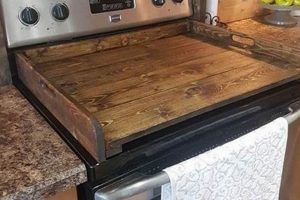
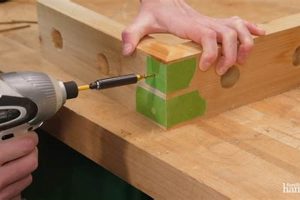
The assembly of simple items from wood, accompanied by documented procedures, represents an accessible entry point into the craft. These undertakings typically involve minimal complexity in design and construction, using basic tools and readily available materials. A birdhouse constructed from pre-cut lumber serves as a common example, offering a tangible introduction to fundamental woodworking principles.
The value of beginning with manageable creations lies in their ability to foster skill development, build confidence, and provide a rewarding sense of accomplishment. Historically, undertaking small-scale fabrication has served as a gateway to more complex carpentry and joinery. This approach enables individuals to learn essential techniques and understand material properties without significant investment of time or resources.
The following sections detail specific undertakings suitable for novice woodworkers, outlining necessary tools, materials, and step-by-step instructions. This will provide a foundation for readers to embark on their own creative endeavors and progress towards more advanced applications of this versatile medium.
Essential Considerations for Simple Woodworking Endeavors
The successful completion of introductory woodworking tasks hinges on careful planning and execution. The following points offer guidance to mitigate potential challenges and maximize the learning experience.
Tip 1: Material Selection: Opt for softwood lumber such as pine or fir for initial projects. These species are generally easier to cut, shape, and fasten compared to hardwoods.
Tip 2: Tool Proficiency: Gain familiarity with basic hand tools, including a saw, hammer, measuring tape, and sandpaper, before operating power tools. Practice on scrap wood to develop control and precision.
Tip 3: Precise Measurement and Marking: Accurate measurements and clear markings are crucial for ensuring proper fit and assembly. Utilize a sharp pencil and a reliable measuring tool to minimize errors.
Tip 4: Secure Fastening Techniques: Employ appropriate fasteners, such as screws or nails, based on the wood type and joint configuration. Pre-drilling pilot holes can prevent wood splitting, especially when working with hardwoods.
Tip 5: Gradual Assembly: Assemble components in a logical sequence, ensuring each joint is properly aligned and secured before proceeding. Dry-fitting pieces before applying adhesive or fasteners can identify potential issues early in the process.
Tip 6: Surface Preparation and Finishing: Sand all surfaces thoroughly to remove imperfections and create a smooth finish. Apply a protective coating, such as varnish or paint, to enhance durability and aesthetics.
Tip 7: Prioritize Safety: Wear appropriate personal protective equipment, including safety glasses and ear protection, at all times. Work in a well-ventilated area and follow all safety guidelines for power tool operation.
Adhering to these recommendations will contribute to a positive and productive introduction to woodworking, fostering skill development and encouraging continued exploration of the craft.
The subsequent sections will address common mistakes to avoid, reinforcing best practices and supporting the creation of quality woodworking items.
1. Simplicity

The core tenet of accessible woodworking lies in uncomplicated designs. A project’s complexity directly affects the skills, tools, and time required for completion. Items characterized by straight lines, minimal joinery, and basic shapes represent initial favorable undertakings. For instance, a simple wooden box requires only basic cutting and fastening skills, whereas a curved-leg table demands advanced techniques and specialized tools. A deliberate embrace of simplicity in initial woodworking activities reduces the likelihood of errors, allowing individuals to build confidence and master fundamental skills effectively. This approach minimizes the learning curve and encourages the continued pursuit of woodworking. The inherent relationship between these two elements facilitates a positive and productive learning experience.
The selection of an adequately simple undertaking is not merely about ease; it is about targeted learning. Complex projects attempted prematurely can lead to frustration, improper technique development, and potentially unsafe practices. Starting with something manageable, such as a small shelf or a basic picture frame, allows the woodworker to focus on the fundamentals of measuring, cutting, and joining. As proficiency grows, designs can be progressively more intricate, incorporating advanced techniques such as dovetail joints or complex curves. This graduated approach ensures a solid foundation of skills and knowledge.
In conclusion, a focus on uncomplicated designs serves as the cornerstone of accessible woodworking. By strategically selecting basic endeavors, individuals minimize initial difficulties, enhance their understanding of essential techniques, and cultivate a sustainable interest in the craft. The integration of simplicity into the selection process directly influences success and lays the groundwork for advanced pursuits in woodworking.
2. Material Selection

The choice of material significantly influences the feasibility and outcome of elementary woodworking activities. Selecting appropriate lumber constitutes a critical component of successful and simple fabrication. Softer wood species, such as pine, cedar, or fir, are frequently recommended for initial projects due to their lower density and ease of workability. These woods require less force to cut, shape, and fasten, thereby reducing the physical demands on the novice woodworker and minimizing the risk of tool-related mishaps. Conversely, hardwoods like oak, maple, or walnut, while aesthetically appealing and structurally robust, present greater challenges due to their density and inherent resistance to cutting and fastening. The use of hardwoods in beginner-level woodworking often necessitates more powerful tools and specialized techniques, potentially leading to frustration and compromised results.
Beyond wood species, material selection extends to dimensional lumber characteristics. Straight and relatively knot-free boards are preferable, as excessive knots can impede cutting and weaken structural integrity. Similarly, warping or twisting can introduce difficulties in achieving precise joints and level surfaces. Utilizing reclaimed lumber, while potentially cost-effective and environmentally conscious, requires careful inspection to ensure structural soundness and absence of contaminants like nails or screws. The use of composite materials, such as plywood or MDF, can offer advantages in terms of stability and cost-effectiveness for certain projects, but their workability characteristics may differ from solid wood and necessitate specialized cutting tools and fastening techniques. For example, a simple bookshelf can be constructed from pine with minimal tools, while a similar shelf made of oak might require a power saw and specialized fasteners.
In summary, careful material selection is paramount to success when attempting beginner-level woodworking tasks. Prioritizing softwoods with minimal defects, coupled with an understanding of the properties of different lumber types, directly impacts the ease of construction, the quality of the finished product, and the overall learning experience. Choosing an accessible material streamlines the woodworking process and maximizes skill acquisition, facilitating a positive and productive introduction to the craft. Failure to prioritize appropriate material selection can significantly increase the difficulty and complexity, negating the intended benefits of “easy woodworking projects and plans.”
3. Accurate Measurement

Precise dimensional assessment forms a foundational element within the realm of simplified woodworking endeavors. The correlation between dimensional accuracy and the successful completion of rudimentary fabrication tasks is causal and demonstrable. Inaccurate measurements directly precipitate misaligned joints, structural instability, and aesthetic imperfections in the finished artifact. For instance, if component dimensions for a basic picture frame deviate from specified values, the resulting frame will exhibit skewed corners and an inability to properly contain the intended artwork. Consequently, meticulous measurement constitutes an indispensable skill for individuals pursuing woodworking at the introductory level. The precision obtained through careful dimensional assessment directly affects the final outcome.
The practical implications of accurate measurement extend beyond mere aesthetic considerations. Correct dimensions facilitate proper assembly, ensuring that components fit together seamlessly and securely. A well-measured mortise and tenon joint, for example, will provide superior strength and stability compared to one that is poorly fitted due to dimensional inaccuracies. Furthermore, accurate measurements reduce material waste by minimizing the need for corrections and adjustments. Prioritizing dimensional precision enables woodworkers to maximize resource utilization and minimize project costs. A simple birdhouse constructed with precisely measured components will not only be visually appealing but also structurally sound and resistant to environmental stressors. The skill is applicable across a spectrum of woodworking pursuits, regardless of complexity.
In summation, accurate measurement is inextricably linked to the successful execution of simplified woodworking activities. Its practical significance lies in its direct impact on structural integrity, aesthetic quality, and resource efficiency. The challenges associated with inaccurate measurements underscore the necessity of cultivating this fundamental skill. This competency transcends introductory projects and constitutes a core principle applicable to all levels of woodworking proficiency, emphasizing its importance as a vital component of effective craftsmanship.
4. Tool Familiarity

Proficiency in the use of woodworking implements forms a crucial determinant in the successful execution of accessible woodworking fabrication. The level of familiarity with tools directly influences the achievable complexity and precision of projects. Basic hand tools, such as saws, chisels, and hand planes, require practical experience to operate effectively. Without sufficient knowledge of their proper use and maintenance, even the simplest projects can become arduous and prone to error. For example, an improperly sharpened chisel can lead to inaccurate cuts and damaged material, hindering the creation of a basic box joint. Tool competency is a foundational aspect of accomplishing “easy woodworking projects and plans”.
The acquisition of tool skills extends beyond mere operation; it encompasses an understanding of tool limitations and safety protocols. Power tools, such as drills, sanders, and circular saws, demand adherence to strict safety guidelines to prevent injury. Attempting to operate these tools without adequate training or awareness of their potential hazards significantly increases the risk of accidents. The creation of a simple wooden shelf, which might appear straightforward, necessitates the safe and competent use of a power drill for fastening purposes. Therefore, tool proficiency is not merely an advantage but a prerequisite for safe and effective woodworking at any skill level. Choosing appropriate tools to reduce safety hazards are a core consideration for success, allowing woodworkers to focus on other critical components of “easy woodworking projects and plans”.
In conclusion, familiarity with woodworking tools constitutes an essential prerequisite for engaging in accessible woodworking fabrication. A lack of tool proficiency can impede project completion, compromise safety, and diminish the overall learning experience. Cultivating a strong understanding of tool operation, maintenance, and safety protocols is paramount for individuals seeking to embark on woodworking endeavors. This aspect should be emphasized as central to the framework of “easy woodworking projects and plans,” acknowledging the interdependence between skill development and project feasibility.
5. Secure Joinery

The integrity of any woodworking creation relies fundamentally on the strength and stability of its joinery. In the context of straightforward projects, secure joints are not merely desirable but essential for longevity and safety. Poorly executed joints present a point of structural weakness, leading to premature failure, especially under load or stress. For example, a basic bookshelf constructed with inadequately joined shelves will eventually sag or collapse, rendering it unusable. Secure joinery within “easy woodworking projects and plans” ensures that the completed article can withstand intended use. A robust connection translates to a more durable and functional product, bolstering confidence in the builder and encouraging continued learning.
Simplifying joint selection does not equate to compromising strength. While complex joinery techniques like dovetails may be beyond the scope of introductory work, simpler methods such as butt joints reinforced with screws or dowels, rabbet joints, or lap joints can provide adequate strength for many applications. The proper execution of these simpler joints, including accurate cutting and precise fastening, is crucial. Glue, when used in conjunction with mechanical fasteners, significantly enhances joint strength. A well-glued and screwed butt joint can often outperform a poorly executed more complex joint. Therefore, selecting the appropriate joint type for the intended load and carefully executing the connection are critical considerations.
In conclusion, secure joinery is a non-negotiable component of successful “easy woodworking projects and plans”. While complex techniques may be reserved for advanced projects, the careful selection and execution of simpler joints are paramount for ensuring structural integrity and long-term durability. Understanding the principles of joint design and employing proper construction techniques are essential skills for any woodworker, regardless of experience level. The rewards of mastering secure joinery in these endeavors include increased confidence, enhanced skill development, and the creation of functional and lasting pieces.
6. Finishing Techniques

The application of suitable coatings or surface treatments significantly influences the overall aesthetic, durability, and service life of elementary woodworking creations. Finishing techniques are integral to the success of “easy woodworking projects and plans,” elevating them from basic constructions to refined articles.
- Protection from Environmental Factors
The primary function of a finish is to protect the wood from moisture, ultraviolet radiation, and physical abrasion. Unfinished wood is susceptible to warping, cracking, discoloration, and fungal growth. A properly applied finish, such as varnish or paint, creates a protective barrier that mitigates these risks. For example, an outdoor planter box requires a weather-resistant finish to withstand exposure to rain, sun, and temperature fluctuations. The absence of such protection would lead to premature deterioration and structural failure.
- Enhancement of Aesthetic Appeal
Finishing techniques offer a wide array of options for enhancing the visual characteristics of wood. Stains can be used to alter the wood’s color, highlighting its natural grain patterns or achieving a specific aesthetic. Clear finishes, such as lacquer or polyurethane, enhance the wood’s natural beauty while providing protection. Paint allows for complete color customization and can be used to create decorative effects. The choice of finish depends on the desired aesthetic and the intended use of the project. A simple wooden toy can be transformed from a plain object to a visually appealing plaything through the application of non-toxic paint or stain.
- Simplification of Maintenance and Cleaning
Finished surfaces are typically easier to clean and maintain compared to unfinished wood. A smooth, sealed finish prevents dirt and grime from penetrating the wood’s pores, allowing for easy removal with a damp cloth. This is particularly important for projects that are subject to frequent handling or exposure to spills. For instance, a wooden kitchen utensil holder benefits from a durable finish that can withstand repeated cleaning and prevent the absorption of food particles.
- Promotion of Safety
Certain finishing techniques can enhance the safety of woodworking projects, particularly those intended for children. Non-toxic finishes, such as milk paint or beeswax, are safe for contact with food and prevent the release of harmful chemicals. Furthermore, a smooth finish eliminates splinters and sharp edges, reducing the risk of injury. A child’s rocking horse, finished with a non-toxic sealant, minimizes the potential for harm and ensures a safe play experience.
The selection and application of suitable finishing techniques represent a critical step in the completion of “easy woodworking projects and plans.” Properly finished articles exhibit enhanced durability, aesthetic appeal, ease of maintenance, and safety, transforming basic creations into functional and lasting items. The knowledge of finishing techniques empowers woodworkers to enhance the value and longevity of their endeavors.
7. Safety Protocol

Adherence to established safety procedures is paramount in all woodworking activities, irrespective of project complexity. The execution of seemingly “easy woodworking projects and plans” does not diminish the inherent risks associated with tool usage and material handling. Consequently, the consistent application of safety protocols is crucial for preventing injuries and ensuring a secure working environment.
- Eye Protection
The use of appropriate eye protection, such as safety glasses or goggles, is mandatory at all times. Woodworking activities generate airborne particles, including sawdust and splinters, which pose a significant risk of eye irritation or injury. Eye protection safeguards against these hazards, preventing potential vision impairment. For instance, sanding a wooden surface without eye protection can result in immediate discomfort and long-term eye damage. The consistent use of eye protection is a fundamental aspect of safe woodworking practices.
- Respiratory Protection
Inhalation of sawdust and other airborne particles can lead to respiratory problems, including allergic reactions and chronic lung diseases. The utilization of a dust mask or respirator is recommended, particularly when performing activities that generate significant amounts of dust, such as sanding or sawing. Respiratory protection prevents the inhalation of harmful substances, mitigating the risk of respiratory ailments. For example, prolonged exposure to sawdust without proper respiratory protection can result in the development of occupational asthma. Wearing a dust mask is essential for maintaining respiratory health.
- Hearing Protection
The operation of power tools, such as saws and routers, often generates high levels of noise that can cause hearing damage. The consistent use of hearing protection, such as earplugs or earmuffs, is crucial for preventing noise-induced hearing loss. Hearing protection attenuates the intensity of sound waves, reducing the risk of auditory impairment. For instance, prolonged exposure to the sound of a running circular saw without hearing protection can result in irreversible hearing loss. Implementing hearing protection is critical for preserving auditory function.
- Proper Attire and Tool Handling
Wearing appropriate attire, including closed-toe shoes and fitted clothing, is essential for preventing injuries. Loose clothing can become entangled in power tools, posing a significant safety hazard. Proper tool handling techniques, including maintaining a firm grip and using tools for their intended purpose, are crucial for preventing accidents. The utilization of push sticks and feather boards enhances safety when operating saws and other cutting tools. Adhering to these guidelines minimizes the risk of injury and promotes a safe working environment.
The aforementioned safety protocols, while seemingly straightforward, are indispensable for minimizing risks associated with “easy woodworking projects and plans.” Consistent adherence to these guidelines fosters a culture of safety, reducing the likelihood of accidents and ensuring a secure and productive woodworking experience. Neglecting safety protocols, even in the context of simple projects, can have severe consequences, highlighting the importance of prioritizing safety in all woodworking activities.
Frequently Asked Questions
The following addresses common inquiries regarding simplified woodworking endeavors, aiming to clarify misconceptions and provide concise, factual responses.
Question 1: Are specialized tools required for basic woodworking tasks?
While advanced tools can enhance efficiency, fundamental hand tools are sufficient for many introductory projects. A saw, hammer, measuring tape, sandpaper, and a basic fastening device constitute a functional starting set. Power tools can augment capability but are not strictly necessary for initial endeavors.
Question 2: What is the most appropriate type of wood for a novice woodworker?
Softwood species, such as pine or fir, are generally recommended due to their ease of workability. These materials are less dense and require less force to cut, shape, and fasten, thereby minimizing physical strain and reducing the potential for tool-related mishaps.
Question 3: How critical is precision in measurement during woodworking?
Dimensional accuracy is paramount for achieving proper fit and structural integrity. Inaccurate measurements can lead to misaligned joints, instability, and aesthetic imperfections. Meticulous measurement practices are indispensable for successful woodworking outcomes.
Question 4: Is prior experience necessary to engage in simple woodworking projects?
Prior experience is not a prerequisite, but a willingness to learn and follow instructions is essential. Resources such as books, online tutorials, and woodworking classes can provide valuable guidance for beginners.
Question 5: How can potential safety hazards be mitigated during woodworking activities?
Adherence to established safety protocols is crucial. Eye protection, respiratory protection, and appropriate attire are mandatory. Familiarity with tool operation and the use of safety devices, such as push sticks, are also essential for minimizing risk.
Question 6: What finishing techniques are appropriate for beginner projects?
Simple finishes, such as sanding followed by the application of varnish or paint, are suitable for introductory projects. These finishes enhance the appearance of the wood while providing protection against moisture and abrasion. Selecting non-toxic finishes is particularly important for projects intended for children or food contact.
In summary, understanding the fundamentals of tools, materials, measurement, safety, and finishing significantly contributes to the successful execution of basic woodworking endeavors. Adherence to these principles fosters skill development and enhances the overall woodworking experience.
The subsequent section provides a compilation of project ideas suitable for individuals new to woodworking, offering detailed guidance and practical instructions.
Conclusion
This exposition has delineated essential aspects pertaining to accessible woodworking fabrication. Critical considerations include material selection, dimensional accuracy, tool familiarity, secure joinery, appropriate finishing techniques, and stringent adherence to safety protocols. Mastery of these elements contributes significantly to the successful realization of straightforward woodworking endeavors.
Effective implementation of “easy woodworking projects and plans” enables individuals to develop valuable skills, foster creativity, and produce functional items. Continued exploration of this craft, while consistently prioritizing safety and precision, facilitates ongoing skill enhancement and the creation of increasingly complex and rewarding woodworking projects.