



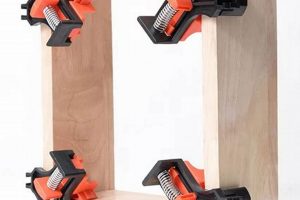
These specialized tools are designed to hold workpieces at precise 90-degree angles, facilitating accurate and secure assembly in various woodworking projects. They offer a reliable method for creating strong corner joints, essential for constructing cabinets, frames, drawers, and other structures requiring rigid right angles. For example, a woodworker building a cabinet frame would use these devices to ensure the stiles and rails are joined perfectly square before permanent fastening.
The significance of these devices lies in their ability to improve the precision and efficiency of woodworking. By providing firm and consistent clamping pressure, they minimize the risk of misalignment and ensure a tight, gap-free joint. This leads to enhanced structural integrity and a professional, aesthetically pleasing finished product. Their historical roots can be traced to the need for accurate joinery in traditional woodworking, evolving from simpler clamping methods to more sophisticated and adjustable designs.
The following sections will delve into the specific features that differentiate models, discuss optimal usage techniques, and explore their application in achieving enhanced precision during project construction.
Tips for Effective Utilization
Optimizing the use of these devices requires attention to detail and adherence to established techniques. The following tips will enhance the accuracy and efficiency of woodworking projects.
Tip 1: Ensure Proper Adjustment: Prior to clamping, verify that the jaws are adjusted to match the thickness of the workpieces being joined. Over-tightening can damage the wood, while insufficient pressure will compromise the joint’s integrity.
Tip 2: Use Protective Pads: Employ protective pads between the clamp jaws and the workpiece surface to prevent marring or indentation, particularly when working with softwoods or delicate materials.
Tip 3: Apply Even Pressure: Distribute clamping pressure evenly across the joint to avoid distortion or misalignment. Using multiple clamps can help achieve consistent and uniform pressure distribution.
Tip 4: Check for Squareness: Before permanently fastening the joint, use a reliable square to verify the accuracy of the 90-degree angle. Make any necessary adjustments before the adhesive sets or fasteners are driven.
Tip 5: Consider Material Compatibility: When working with different wood species, be mindful of their differing densities and adjust clamping pressure accordingly. Softer woods may require less pressure than hardwoods to avoid damage.
Tip 6: Clean and Maintain Regularly: Periodically clean the clamps to remove sawdust, glue residue, and other debris that can interfere with their operation. Lubricate moving parts as needed to ensure smooth and reliable performance.
Tip 7: Select the Appropriate Size: Choose a clamp size that is appropriate for the dimensions of the workpieces being joined. Using excessively large clamps can be cumbersome and may not provide the necessary precision.
By implementing these techniques, users can maximize the benefits derived, achieving accurate, strong, and aesthetically pleasing corner joints in their woodworking endeavors.
The subsequent section will address common issues encountered during utilization and provide troubleshooting guidance.
1. Precise Angle

The attainment of a precise 90-degree angle is a fundamental requirement in numerous woodworking applications. These specialized tools directly address this need by providing a reliable means to secure workpieces at the desired orientation during assembly. The accuracy afforded by these devices significantly impacts the structural integrity and aesthetic appeal of the finished product.
- Consistent Joint Formation
These devices facilitate the creation of consistent corner joints by holding workpieces firmly in place at a right angle. This eliminates guesswork and reduces the likelihood of errors that can compromise the squareness of the assembled frame or structure. For example, when constructing a cabinet, maintaining precise angles is essential for ensuring that doors and drawers fit properly.
- Reduced Error Margin
The inherent accuracy of these clamping tools minimizes the error margin associated with manual alignment methods. This is particularly critical in projects requiring tight tolerances, where even slight deviations from 90 degrees can result in noticeable imperfections or functional issues. A frame for a picture or mirror, for example, demands near-perfect right angles to avoid visual distortion.
- Enhanced Structural Stability
Precisely angled joints contribute to the overall structural stability of a woodworking project. When corners are accurately aligned, stress is distributed evenly across the joint, reducing the risk of failure under load. This is especially important in load-bearing structures such as shelves or tables.
- Improved Aesthetic Outcome
Accurate right angles enhance the visual appeal of finished woodworking projects. Sharp, clean corners convey a sense of craftsmanship and attention to detail, contributing to a professional-looking result. Conversely, poorly aligned corners can detract from the overall aesthetic and diminish the perceived quality of the piece.
The relationship between these devices and precise angles is thus inextricable. The clamps provide a practical and effective solution for achieving the accuracy required for successful woodworking projects, ensuring both structural integrity and aesthetic excellence.
2. Secure Holding

Secure holding is a critical function, enabling accurate assembly of woodworking projects. This ensures stability during the fastening process, preventing misalignment and contributing to robust, durable joints. Bessey corner clamps directly facilitate secure holding, addressing a key need in woodworking.
- Prevention of Joint Slippage
These devices mitigate the risk of workpieces shifting during assembly. The consistent pressure applied by the clamps maintains the alignment of the joint while adhesive sets or fasteners are installed. A common example is assembling a picture frame; without secure holding, the corners can easily slip out of alignment, resulting in a skewed frame.
- Enhancement of Clamping Pressure Distribution
Properly designed corner clamps distribute clamping pressure evenly across the joint surfaces. This uniform pressure ensures a tight bond and minimizes the chance of gaps or weak points in the assembly. When constructing a cabinet, the clamps provide the necessary force to ensure the face frame is securely attached to the cabinet box.
- Facilitation of Hands-Free Operation
By securely holding the workpieces in place, these devices free the user’s hands to perform other tasks, such as applying adhesive, driving screws, or making adjustments. This hands-free capability significantly enhances efficiency and reduces the likelihood of errors. This is helpful, for example, when joining mitered corners on crown molding, where both hands are needed to align the pieces and drive fasteners.
- Reduction of Material Waste
Secure holding reduces the chance of errors and misalignments that can lead to material waste. By ensuring that joints are assembled accurately the first time, these devices help to minimize the need for rework or replacement of damaged components. A common example is the construction of drawers; improper corner joinery can require complete reconstruction of the drawer box.
The facets of secure holding outlined above demonstrate the integral role of these specialized tools in improving the quality and efficiency of woodworking projects. By preventing slippage, distributing pressure, enabling hands-free operation, and reducing waste, secure holding is a cornerstone of precise and reliable corner joinery. These devices provide an effective solution for achieving the stability required for successful woodworking outcomes.
3. Durable Construction
The enduring utility of specialized tools in woodworking is inextricably linked to their durable construction. Clamping devices are subjected to significant stress during operation, necessitating robust design and high-quality materials to ensure consistent performance and longevity.
- Material Selection
The choice of materials directly influences the clamp’s ability to withstand repeated use and maintain its structural integrity. High-strength steel, for instance, is commonly employed in the construction of frames and threaded spindles due to its resistance to deformation under load. The selection of corrosion-resistant coatings further enhances durability by protecting against environmental degradation, particularly in humid workshop conditions. Components of glass-reinforced nylon can be added, providing strength to the product while remaining resistant to cracking and abrasion.
- Structural Design
The clamp’s structural design determines its ability to distribute clamping force effectively and resist bending or twisting. Reinforced frames, precision-machined threads, and robust pivot points contribute to overall stability and minimize the risk of failure under pressure. The design is an integral factor in maintaining a tight, consistent, and secure grip on the work pieces to be joined together.
- Manufacturing Processes
The manufacturing processes employed in the production of clamping devices have a direct impact on their durability. Precision machining, heat treating, and quality control procedures ensure that components meet stringent tolerances and perform reliably over time. The clamping performance depends on strict quality control, ensuring that the finished product meets expected benchmarks for dimensional accuracy and durability. These components are an essential part of long term use and the reliability of the product over its life span.
- Resistance to Wear and Tear
Durable clamping devices are designed to withstand the inevitable wear and tear associated with regular use in a woodworking environment. This includes resistance to abrasion, impact, and exposure to adhesives and solvents. Durable products offer longevity when exposed to abrasive chemicals such as Acetone and paint thinners. Proper material selection can limit the damage sustained during repeated exposure.
The aspects of durable construction highlighted above underscore its importance in ensuring the long-term functionality and reliability of clamping devices. Robust materials, intelligent structural design, precise manufacturing processes, and resistance to wear and tear combine to deliver a tool that can withstand the demands of rigorous woodworking applications.
4. Adjustable Pressure
Adjustable pressure is a pivotal feature in specialized clamping devices, enabling adaptability to the diverse materials and joinery techniques encountered in woodworking. The capacity to modulate clamping force directly influences joint integrity and the preservation of workpiece surfaces.
- Optimized Joint Integrity
The ability to regulate pressure allows for the creation of secure and lasting joints. Excessive pressure can crush wood fibers, weakening the joint, while insufficient pressure can result in gaps or incomplete adhesive bonding. Appropriate pressure, therefore, ensures optimal contact between surfaces and maximizes the strength of the connection. For instance, when gluing softwoods like pine, lower pressure settings are necessary to prevent indentation, while hardwoods such as maple may require higher pressure to achieve a tight fit. Applying a specific clamping pressure of 100 PSI or 1700 N is critical for creating strong adhesive bonds on various woodworking joints.
- Surface Preservation
Adjustable pressure minimizes the risk of marring or denting workpiece surfaces, particularly when working with delicate materials or applying finishes. The use of protective pads, in conjunction with pressure modulation, allows for secure clamping without compromising the aesthetic quality of the finished product. High clamping pressure on soft wood pieces could leave lasting damage, destroying project integrity.
- Adaptability to Variable Material Thickness
Adjustable pressure facilitates the accommodation of workpieces with varying thicknesses. By fine-tuning the clamping force, users can ensure that the joint is properly aligned and secured, regardless of dimensional differences. This is particularly useful when working with reclaimed wood or components that have not been precisely dimensioned. Accurate pressure ensures consistent results, despite variations in material.
- Controlled Adhesive Squeeze-Out
The capacity to regulate clamping pressure influences the amount of adhesive squeeze-out during assembly. Moderate pressure promotes even distribution of adhesive across the joint surface, while excessive pressure can force out too much adhesive, resulting in a weak or starved joint. The squeeze-out demonstrates a reliable amount of glue has been applied to the project and is evenly dispersed throughout. Appropriate pressure allows for controlled squeeze-out, indicating a proper bond.
The integration of adjustable pressure within these tools affords woodworkers enhanced control over the assembly process, enabling the creation of strong, accurate, and aesthetically pleasing joints across a range of materials and applications. Precise pressure is an essential aspect of woodworking project success.
5. Material Compatibility

Material compatibility is a crucial consideration in woodworking, directly influencing the effectiveness and longevity of joints created using devices. The interaction between the clamp’s material and the workpiece material determines the potential for damage, contamination, or compromised joint integrity.
- Prevention of Chemical Reactions
The materials used in corner clamps must be inert and non-reactive with common wood adhesives, finishes, and wood species. Certain metals, for example, can react with acidic wood species, leading to discoloration or corrosion. Likewise, some plastics may be dissolved or degraded by solvents in adhesives. The selection of clamps with chemically compatible materials minimizes the risk of adverse reactions that can weaken or damage the joint. Selecting clamps constructed of anodized aluminum or stainless steel mitigates the risk of chemical reactions, ensuring joint integrity.
- Minimization of Surface Damage
The hardness and texture of the clamp’s contact surfaces must be considered in relation to the workpiece material. Clamps with excessively hard or abrasive surfaces can mar or dent softer woods, such as pine or cedar. The use of protective pads or coatings on the clamp jaws mitigates this risk, allowing for secure clamping without surface damage. Utilizing clamps with rubber or cork-lined jaws safeguards the surface of delicate wood species from indentation and abrasion.
- Accommodation of Material Expansion and Contraction
Different wood species exhibit varying rates of expansion and contraction in response to changes in humidity and temperature. The clamping device must be able to accommodate these dimensional changes without compromising joint integrity. Clamps with adjustable pressure settings or flexible jaws allow for controlled compression, minimizing stress on the joint as the wood expands or contracts. Allowing for natural material movement prevents stress fractures and ensures long-term joint stability.
- Compatibility with Wood Finishing Processes
The clamp’s material must be compatible with wood finishing processes, such as staining, painting, or varnishing. Certain clamp materials may leach contaminants that interfere with the finish, while others may be damaged by solvents or chemicals in the finishing products. Selecting clamps with non-reactive surfaces ensures that the finish adheres properly and maintains its aesthetic qualities. Utilizing clamps with coatings resistant to common wood finishing solvents prevents degradation of the clamp and ensures a clean, professional finish.
These aspects of material compatibility highlight the importance of selecting appropriate devices for specific woodworking applications. By considering the interaction between the clamp’s material and the workpiece material, woodworkers can minimize the risk of damage, contamination, or compromised joint integrity, ensuring the creation of strong, durable, and aesthetically pleasing joints. Therefore, material compatibility considerations are essential for maximizing joint longevity and the overall quality of the finished product.
6. Efficient Workflow

Efficient workflow is an essential objective in woodworking, encompassing the streamlined execution of tasks to maximize productivity and minimize wasted time and resources. The utilization of specialized clamping devices directly contributes to this goal by simplifying and expediting the assembly process.
- Reduced Setup Time
Specialized clamping devices are designed for rapid setup and adjustment, minimizing the time required to prepare workpieces for assembly. This reduces workflow bottlenecks and allows for faster completion of projects. Traditional clamping methods often involve time-consuming alignment and adjustment procedures, whereas devices offer intuitive operation and quick clamping action. A woodworker assembling multiple picture frames can significantly reduce setup time by using these devices compared to manually aligning each corner.
- Simplified Assembly Procedures
These tools streamline assembly procedures by providing a secure and stable platform for joining workpieces. The clamps hold components firmly in place, freeing the user’s hands to apply adhesive, drive fasteners, or make adjustments. This hands-free capability reduces the likelihood of errors and improves overall efficiency. When constructing a cabinet, these tools allow the woodworker to apply glue and fasten the frame without needing an assistant to hold the pieces steady.
- Minimized Rework and Errors
By ensuring accurate alignment and secure holding, specialized clamping tools minimize the risk of errors and rework. This reduces wasted material, labor, and time, contributing to a more efficient workflow. Misaligned corners or improperly joined components can necessitate costly repairs or complete reconstruction, whereas these tools promote precise and consistent results. Reducing errors in dovetail joints for drawers, ensures that drawers fit and operate smoothly without requiring adjustments or rebuilds, improving overall project completion time.
- Improved Task Sequencing
These devices enable the sequential execution of tasks with greater ease and precision. Woodworkers can efficiently assemble multiple components in a controlled manner, maintaining consistent quality and minimizing disruptions to the workflow. For example, when constructing a series of identical frames, these devices allows the woodworker to quickly assemble each frame in succession, maintaining consistent dimensions and squareness.
These facets of efficient workflow highlight the significant benefits associated with the utilization of devices. By reducing setup time, simplifying assembly procedures, minimizing rework and errors, and improving task sequencing, these tools contribute to a more streamlined and productive woodworking process. These improvements result in the quick production and completion of projects with consistent results.
Frequently Asked Questions
This section addresses common inquiries regarding the application, maintenance, and selection of clamping devices within woodworking projects. Understanding these frequently asked questions is essential for optimizing the utilization and ensuring the longevity of these specialized tools.
Question 1: What is the appropriate clamping pressure for joining softwood components?
Excessive pressure can damage softwood fibers. A lower pressure setting, typically in the range of 50-75 PSI, is recommended to avoid indentation and ensure a secure joint without compromising material integrity. The application of protective pads further minimizes the risk of surface damage.
Question 2: How can contamination of the clamp surfaces be prevented when using adhesives?
Adhesive residue can impede the clamp’s functionality and compromise joint accuracy. Regular cleaning with a solvent-resistant cloth is recommended to remove excess adhesive. The application of a release agent, such as wax paper or Teflon tape, to the clamp jaws prior to use can also facilitate cleanup.
Question 3: What is the recommended storage method for clamping devices when not in use?
Proper storage prevents corrosion and extends the lifespan of the tool. Clamping devices should be stored in a dry, climate-controlled environment, away from direct sunlight and moisture. Lubricating the threaded spindles and pivot points prior to storage can further protect against rust and corrosion.
Question 4: How frequently should the alignment of the clamping device be checked for accuracy?
Maintaining accurate alignment is critical for ensuring precise corner joints. The alignment of the clamp should be checked periodically, particularly after prolonged use or accidental impact. A reliable square or angle gauge can be used to verify the accuracy of the 90-degree angle.
Question 5: What are the key considerations when selecting a clamping device for a specific woodworking project?
The selection process should consider the dimensions of the workpieces, the material being joined, and the required clamping force. Clamps with adjustable jaws and pressure settings offer greater versatility, while clamps constructed from durable materials ensure long-term reliability.
Question 6: How can the effects of wood expansion and contraction be mitigated when using corner clamps?
Wood is hygroscopic. Allow for movement by not over-tightening. Alternately, consider flexible jaws or designs to adapt to changes, preventing stress on the joint during humidity and temperature shifts. These mechanisms preserve overall joint strength.
Understanding these frequently asked questions facilitates proper use of clamping devices, leading to enhanced project outcomes.
The following section will summarize key takeaways for those woodworking with the tool.
Conclusion
This exploration of bessey corner clamps for woodworking has underscored their crucial role in achieving accurate and robust corner joinery. Key features such as precise angle maintenance, secure holding mechanisms, durable construction, adjustable pressure capabilities, material compatibility considerations, and efficient workflow integration have been examined. These elements collectively contribute to enhanced precision and productivity in woodworking projects.
The judicious application of these devices is integral to producing high-quality finished products. Consistent implementation of proper techniques will facilitate optimal project outcomes, ensuring the longevity and structural integrity of assembled pieces. Continued advancements in clamping technology hold the promise of further refinements in woodworking practices, offering improved efficiency and precision for artisans and manufacturers alike.
![Top-Rated: Best Quick Clamps for Woodworking Projects [2024] | Step-by-Step Guides, Tools & Inspiration to Build Beautiful Wooden Decor on a Budget](https://woodfromhome.com/wp-content/uploads/2026/04/th-264-300x200.jpg "Top-Rated: Best Quick Clamps for Woodworking Projects [2024] Step-by-Step Guides, Tools & Inspiration to Build Beautiful Wooden Decor on a Budget")