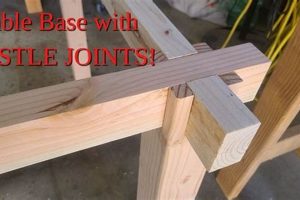
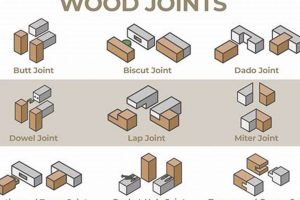
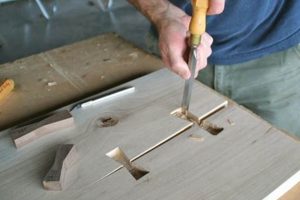
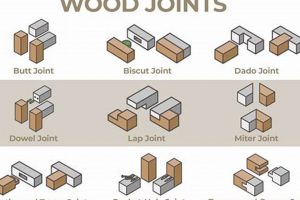
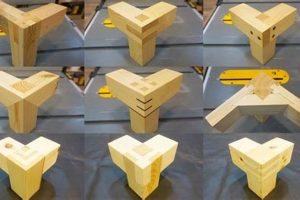
Methods of connecting pieces of wood are fundamental to constructing stable and aesthetically pleasing wooden objects. These connections, achieved through various interlocking or adhering techniques, provide the structural integrity required for furniture, buildings, and countless other applications. A common example involves creating a mortise and tenon, where a projecting tongue (tenon) fits snugly into a corresponding hole (mortise), forming a robust mechanical bond.
The strength and durability of a wooden structure are directly dependent on the quality of its connective elements. Historically, the evolution of these techniques reflects advancements in toolmaking and an increasing understanding of wood properties. Proper execution ensures longevity, prevents structural failure, and enhances the overall appearance of the finished product. This results in pieces that can endure stress and stand the test of time.
Understanding the principles behind these essential connections is crucial for anyone working with wood. The following sections will explore several common methods, discussing their respective strengths, weaknesses, and applications. This detailed analysis will provide a foundation for selecting the appropriate connection method for various woodworking projects.
Essential Considerations for Wood Connection Techniques
The following guidelines offer crucial insights to enhance the effectiveness and longevity of wood-based constructions. Adhering to these principles will improve structural integrity and aesthetic appeal.
Tip 1: Wood Selection is Critical. The choice of wood species directly impacts the strength of the connection. Hardwoods, such as oak or maple, offer superior holding power for fasteners compared to softwoods like pine or fir. Select species appropriate for the intended stress and environmental conditions.
Tip 2: Ensure Precise Cuts and Measurements. Accuracy in cutting and measuring is paramount. Even slight discrepancies can compromise the fit and integrity of the connection. Employ precise measuring tools and cutting techniques to minimize gaps and ensure proper alignment.
Tip 3: Implement Proper Glue Application. When utilizing adhesives, apply a uniform and sufficient layer to both surfaces being joined. Insufficient glue can lead to weak bonds and eventual failure. Clamp the components securely until the adhesive has fully cured, following the manufacturer’s instructions.
Tip 4: Consider Grain Direction. The orientation of the wood grain significantly influences strength. Avoid situations where stress is applied perpendicular to the grain, as this can lead to splitting. Align the grain direction to maximize resistance to applied forces.
Tip 5: Use Appropriate Fasteners. Select fasteners (screws, nails, dowels) that are appropriately sized and designed for the specific wood species and application. Pilot holes are often necessary to prevent splitting, particularly when working with hardwoods.
Tip 6: Test the Joint. Before proceeding with assembly, dry-fit the components to ensure proper alignment and fit. This allows for adjustments and corrections prior to final assembly, minimizing potential errors.
Tip 7: Reinforce When Necessary. For high-stress applications, consider reinforcing the connection with additional mechanical fasteners or by combining different techniques. This will provide added stability and ensure long-term durability.
Proper application of these considerations will significantly enhance the reliability and longevity of woodworking projects. Attention to detail and adherence to best practices are crucial for achieving optimal results.
The subsequent sections of this article will delve into specific connection techniques and provide detailed instructions for their execution.
1. Strength

The strength of a wood connection dictates the overall integrity and longevity of any woodworking project. The type of connection employed directly influences its ability to withstand applied forces, ranging from simple static loads to dynamic stresses encountered through daily use. A weak connection will inevitably lead to failure, compromising the functionality and aesthetic value of the piece. Consider, for instance, a poorly executed dovetail in a drawer front. Under repeated opening and closing, the inadequate connection will loosen, eventually causing the drawer front to detach. This illustrates the direct cause-and-effect relationship between connection strength and structural performance.
The selection of an appropriate connection method is paramount in ensuring adequate strength. A butt joint, for example, offers minimal resistance to tensile forces and is primarily suitable for applications where loads are distributed across a larger surface. Conversely, a mortise and tenon joint, characterized by its interlocking components, provides significantly greater resistance to both tensile and shear stresses. The design of the joint itself, including factors such as surface area, interlocking geometry, and the type of adhesive used, all contribute to its overall strength. In constructing a load-bearing table, a properly sized and executed mortise and tenon connection is essential to prevent leg failure under weight.
Understanding the relationship between connection type and strength is therefore a critical component of sound woodworking practice. While aesthetic considerations are important, prioritizing structural integrity through the selection and execution of robust connections ensures the creation of durable and functional pieces. The challenge lies in selecting the optimal connection for each application, balancing strength requirements with aesthetic goals and available resources. By mastering these principles, woodworkers can create enduring projects that withstand the test of time, demonstrating the practical significance of a deep understanding of the relationship between wood connections and their capacity to endure stress.
2. Precision

In woodworking, precision is not merely a desirable attribute but a fundamental requirement for achieving strong, aesthetically pleasing, and lasting constructions. The effectiveness of any method relies heavily on the accuracy of cuts, measurements, and alignment. Deviations from intended dimensions or angles can lead to weakened structures, visual imperfections, and ultimately, premature failure of the wooden object.
- Dimensional Accuracy
Dimensional accuracy refers to the extent to which the actual dimensions of a component match the planned dimensions. For instance, in a mortise and tenon, if the tenon is even slightly oversized, it may not fit properly into the mortise, leading to stress and potential splitting of the wood. Conversely, an undersized tenon results in a loose and unstable connection. Precision in this aspect ensures a snug fit, maximizing surface contact for adhesive and mechanical strength.
- Angular Conformity
Angular conformity pertains to the accuracy of angles, particularly crucial in joints like dovetails and miters. An imprecise dovetail angle results in gaps and a weakened interlock. Similarly, inaccurate miter angles create unsightly gaps at corners, compromising both the aesthetic and structural integrity of the assembled piece. Accurate angular cuts guarantee tight, seamless connections that distribute stress evenly across the entire joint.
- Alignment Integrity
Alignment integrity signifies the proper positioning of components relative to one another. Misalignment in a connection, such as a lap joint, can introduce uneven stress distribution, leading to warping or eventual separation. Ensuring precise alignment requires careful marking, clamping, and fastening techniques. When elements are properly aligned, the resulting structure achieves maximum stability and resistance to external forces.
- Surface Flatness and Smoothness
Surface preparation, particularly flatness and smoothness, is critical for adhesive performance. In a butt joint relying primarily on glue, uneven surfaces reduce the contact area between the components, weakening the bond. Precise planing or sanding to achieve flat, smooth surfaces maximizes the glue surface, significantly enhancing the joint’s resistance to tensile and shear forces. This preparation is essential for maximizing bond strength and ensuring the joint’s integrity over time.
The significance of precision extends beyond individual components; it affects the overall success and longevity of any woodworking endeavor. Examples include furniture making, cabinetry, and timber framing. By prioritizing meticulous measurement, accurate cutting, and careful assembly, woodworkers can ensure that their creations not only meet functional requirements but also exhibit exceptional craftsmanship and enduring quality. The pursuit of precision, therefore, is not merely a technical exercise but an investment in the long-term value and performance of woodworking projects.
3. Adhesion

The effectiveness of many wood connections hinges critically on adhesion, the process by which two surfaces are held together by intermolecular forces. While mechanical interlocking provides initial stability in some techniques, adhesive bonding contributes significantly to the joint’s overall strength, resistance to stress, and long-term durability. Proper understanding and application of adhesive principles are thus paramount for achieving robust and reliable connections in woodworking.
- Glue Selection and Compatibility
The choice of adhesive directly impacts the success of a wood connection. Different adhesives possess varying strengths, water resistance, and gap-filling capabilities. Polyvinyl acetate (PVA) glues are commonly used for general woodworking due to their strength and ease of application. However, for exterior applications or situations requiring increased water resistance, polyurethane or epoxy adhesives are more suitable. Compatibility with the specific wood species is also critical; some woods, particularly oily varieties, may require surface preparation to ensure adequate adhesion. Selecting the correct glue based on project requirements is fundamental to achieving a strong and lasting bond.
- Surface Preparation
Proper surface preparation is essential for maximizing adhesion. Surfaces must be clean, dry, and free from contaminants such as dust, oil, or old finish. Sanding or planing the surfaces immediately prior to gluing creates a fresh surface with increased surface area, promoting better mechanical interlocking of the adhesive. Degreasing with appropriate solvents may be necessary for oily woods. Failure to adequately prepare the surfaces can significantly reduce the strength of the adhesive bond, leading to premature joint failure. Correctly preparing surfaces improves the adhesive bond.
- Glue Application Technique
The method of applying adhesive affects its effectiveness. A uniform layer of glue should be applied to both surfaces being joined to ensure complete coverage and maximize bonding area. The amount of glue used is also important; insufficient glue can result in a weak bond, while excessive glue can lead to glue starvation as the wood absorbs the adhesive and dries the surfaces. Applying the correct amount and achieving uniform coverage are key elements in creating a strong adhesive bond. Glue should also be applied quickly before it skins over, reducing its bonding ability.
- Clamping Pressure and Time
Clamping pressure plays a crucial role in adhesive bonding. Applying sufficient pressure forces the adhesive into the wood pores and ensures intimate contact between the two surfaces. The amount of clamping pressure required varies depending on the adhesive and wood species. Clamping time is also critical; adhesives require a specific curing period to develop their full strength. Premature removal of clamps can result in a weakened bond. Adhering to the adhesive manufacturer’s recommendations regarding clamping pressure and time is essential for achieving optimal bond strength.
These aspects of adhesion underscore its importance in constructing durable wood connections. From selecting the appropriate adhesive and preparing the surfaces to applying the glue correctly and using clamps effectively, careful attention to detail is required to create robust and reliable bonds. The interplay between mechanical joints and adhesive forces represents a cornerstone of quality woodworking, ensuring the creation of stable, aesthetically pleasing, and long-lasting wooden objects. Correct application ensures robust wooden objects.
4. Alignment
Proper alignment is paramount in the construction of robust and aesthetically pleasing wood structures. The precise positioning of wood components within a connection directly influences its structural integrity, appearance, and overall longevity. Misalignment introduces stress points, compromises aesthetic appeal, and can lead to premature joint failure.
- Planar Alignment
Planar alignment refers to ensuring that surfaces intended to be flush are indeed on the same plane. In a basic butt joint, a lack of planar alignment results in an uneven surface, detracting from the finished piece’s appearance and creating a potential tripping hazard in applications such as flooring or tabletops. Achieving planar alignment necessitates careful preparation, precise cutting, and secure clamping during assembly.
- Axial Alignment
Axial alignment pertains to the correct positioning of components along a central axis. In mortise and tenon joints, misalignment of the mortise and tenon axes compromises the joint’s strength. The tenon may not seat correctly within the mortise, resulting in a weakened connection susceptible to racking forces. Precise marking and accurate cutting are essential for achieving proper axial alignment in these techniques.
- Edge Alignment
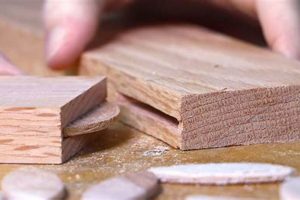
Edge alignment focuses on ensuring that the edges of adjoining pieces are precisely aligned. In edge-to-edge connections, such as those used in creating wide panels from multiple boards, misalignment creates visible seams and detracts from the smooth, continuous surface. Careful edge preparation, precise jointing, and the use of alignment aids like dowels or biscuits are necessary for achieving seamless edge alignment.
- Angular Alignment
Angular alignment concerns the accurate positioning of components at specified angles. Miter joints, used to create corners, require precise angular alignment to ensure a tight, gap-free connection. Inaccurate miter angles result in open seams, compromising both the aesthetic and structural integrity of the corner. Precise measurements, accurate cutting techniques, and the use of specialized tools like miter saws are crucial for achieving accurate angular alignment.
These aspects of alignment, whether planar, axial, edge, or angular, are intrinsic to successful joint construction. Achieving proper alignment necessitates a combination of precise measurement, accurate cutting, careful assembly, and the use of appropriate clamping techniques. Each aspect contributes directly to the overall structural integrity and visual appeal of the finished wooden object, demonstrating the indispensable role of alignment in woodworking practice. The interplay between these elements guarantees strong and long lasting outcomes.
5. Materials

The selection of materials is a foundational element in woodworking, directly influencing the strength, durability, and aesthetic qualities of any constructed joint. The inherent properties of the chosen wood species, along with supplementary materials like adhesives and fasteners, dictate the performance and longevity of the connection. Understanding the characteristics of these materials is thus crucial for selecting the optimal combination for a specific woodworking application.
- Wood Species and Grain Orientation
Different wood species exhibit varying levels of hardness, density, and grain patterns, each affecting the joint’s ability to withstand stress. Hardwoods like oak and maple provide superior strength and resistance to wear compared to softwoods like pine or fir. The orientation of the wood grain relative to the applied forces also significantly influences joint performance. A mortise and tenon joint, for instance, benefits from the tenon’s grain running parallel to the direction of applied force, maximizing its resistance to splitting. Careful selection of wood species and consideration of grain orientation are essential for creating robust and durable wood connections.
- Adhesives and Bonding Agents
Adhesives play a critical role in many wood connections, supplementing mechanical interlocking and enhancing overall joint strength. The type of adhesive used must be compatible with the wood species and the intended application. Polyvinyl acetate (PVA) glues are commonly used for interior applications, offering good strength and ease of use. However, for exterior applications or situations requiring water resistance, polyurethane or epoxy adhesives are more suitable. Proper surface preparation, including cleaning and sanding, is essential for maximizing adhesive bond strength. Correct selection and application of adhesives contribute significantly to the long-term performance of wood connections.
- Fasteners: Screws, Nails, and Dowels
Mechanical fasteners, such as screws, nails, and dowels, provide additional reinforcement to wood connections. The type and size of fastener must be appropriate for the wood species and the stresses the joint will experience. Screws offer greater holding power than nails, particularly in hardwoods, while dowels provide a clean, concealed method of strengthening connections. Pilot holes are often necessary to prevent splitting, especially when using screws in hardwoods. Proper selection and installation of fasteners enhance the structural integrity and longevity of wood connections.
- Material Compatibility and Environmental Factors
The compatibility of different materials used in a wood connection is a critical consideration. Combining dissimilar materials can lead to issues like differential expansion and contraction, resulting in stress and potential joint failure. Environmental factors, such as humidity and temperature fluctuations, also influence material behavior and joint performance. Using materials that are well-suited to the anticipated environmental conditions is essential for ensuring the long-term stability and durability of wood connections. Consideration of these factors is critical for selecting proper woods.
These facets collectively highlight the importance of material selection in creating strong, durable, and aesthetically pleasing wood connections. Whether choosing the ideal wood species, selecting the appropriate adhesive, or employing suitable fasteners, a thorough understanding of material properties and their interaction is essential for achieving optimal results. Careful consideration of these factors ensures that basic woodworking projects not only meet their intended purpose but also withstand the test of time.
6. Application

The intended application exerts a definitive influence on the selection and execution of fundamental wood connections. The type of joint suitable for a delicate jewelry box differs considerably from that required for a load-bearing structural element. Ignoring the specific demands of the application results in compromised structural integrity, diminished longevity, and potential failure. Consider a simple butt joint, adequate for lightly stressed picture frames, yet wholly unsuitable for supporting the weight of a table leg. The forces acting upon the joint, including tension, compression, shear, and torsion, must be carefully analyzed to determine the appropriate connection method. A successful application of woodworking relies heavily on proper and safe building.
Furthermore, the aesthetic requirements of the application often dictate the choice of joint. A highly visible connection may necessitate a decorative technique, such as a dovetail or miter joint, where the visual appeal of the interlocking elements contributes to the overall design. Conversely, a hidden connection might prioritize strength and simplicity, favoring techniques like mortise and tenon or lap joints. The construction of a traditional timber-framed building exemplifies this principle. The exposed mortise and tenon joints not only provide structural support but also serve as a prominent visual element, showcasing the craftsmanship and joinery skills involved. Selecting the right joint enhances the wood’s look.
In summary, the application serves as a critical determinant in the selection and execution of basic wood connections. Understanding the forces acting upon the joint, the aesthetic considerations, and the long-term performance requirements are essential for ensuring a successful outcome. Failure to adequately consider the application results in structurally unsound and visually unappealing woodworking projects. A careful balance must be achieved between functional needs and design preferences, ensuring that the chosen connection not only meets the structural demands but also complements the overall aesthetic vision. A good grasp of application ensures longevity.
7. Longevity
The durability of a wooden object is intrinsically linked to the quality of its connecting methods. Proper execution of these fundamental techniques is not merely an aesthetic concern; it is a critical determinant of the lifespan and continued functionality of the piece.
- Material Selection and Degradation Resistance
The inherent properties of the wood species significantly influence its resistance to degradation over time. Certain woods possess natural oils and compounds that deter insects and fungal growth, thereby extending the lifespan of the structure. Employing rot-resistant species in exposed applications or regions with high humidity is crucial for preventing premature deterioration. The appropriate choice of wood enhances the overall durability of the interconnected components.
- Joint Design and Stress Distribution
The design of a connection directly affects its ability to withstand applied forces and environmental stresses. Techniques that distribute stress evenly across the joint, such as dovetails and mortise-and-tenon joints, are inherently more durable than methods that concentrate stress in a single point, such as simple butt joints. A well-designed connection minimizes the risk of cracking, warping, or separation over time. The overall performance is highly dependent on this even distribution.
- Adhesive Selection and Bond Integrity
Adhesives play a significant role in augmenting the strength and longevity of many wood connections. The selection of an adhesive that is compatible with the wood species and resistant to moisture, temperature fluctuations, and UV exposure is critical for maintaining bond integrity over time. Proper surface preparation and application techniques are equally important for ensuring a strong and durable adhesive bond. When proper adhesion is practiced the product’s durability is enhanced.
- Maintenance and Environmental Control
Routine maintenance practices, such as applying protective finishes and controlling environmental factors like humidity, significantly extend the lifespan of wooden objects. Protective coatings shield the wood from moisture, UV radiation, and physical abrasion, reducing the rate of degradation. Maintaining consistent humidity levels minimizes the risk of warping, cracking, and joint failure. Through these factors, a prolonged wood life can be attained.
These interconnected facets underscore the crucial role that fundamental wood connections play in determining the lifespan of wooden objects. From selecting decay-resistant materials to implementing stress-distributing designs and employing durable adhesives, each aspect contributes to the overall resilience and lasting quality of the piece. Neglecting these considerations inevitably results in diminished longevity and premature failure, highlighting the importance of expertise in quality woodworking.
Frequently Asked Questions
This section addresses common inquiries regarding fundamental wood connections, providing clarity and insight into their practical applications and limitations.
Question 1: What constitutes a structurally sound wood connection?
A structurally sound wood connection effectively transfers loads between components without failure. This involves selecting an appropriate type for the anticipated stresses, ensuring precise execution, and utilizing compatible materials. Factors such as wood species, grain orientation, adhesive selection, and fastener usage all contribute to the connection’s overall strength and durability. Connections must adhere to all stress guidelines.
Question 2: What are the primary differences between a mortise and tenon and a dovetail?
The mortise and tenon features a projecting tenon inserted into a corresponding mortise, primarily resisting tensile and shear forces. The dovetail employs interlocking, wedge-shaped projections that resist pulling forces. Mortise and tenon connections are often used for structural framework, while dovetails are preferred for drawer construction and applications where aesthetic appeal is paramount.
Question 3: What role does adhesive play in strengthening wood connections?
Adhesive bonding augments mechanical interlocking by filling gaps, distributing stress, and preventing movement between components. The type of adhesive must be compatible with the wood species and the environmental conditions. Proper surface preparation and clamping pressure are essential for maximizing bond strength. However, adhesive alone is generally insufficient for high-stress applications and should be used in conjunction with mechanical techniques.
Question 4: How does grain orientation influence the strength of wood connections?
Grain orientation significantly impacts a connection’s resistance to splitting and warping. Orienting the grain parallel to the direction of applied force maximizes strength, while exposing end grain can weaken the connection. Careful consideration of grain orientation is crucial for preventing premature failure, particularly in high-stress applications.
Question 5: When is a simple butt suitable, and when is it inadequate?
Butt are suitable for low-stress applications where aesthetics are not a primary concern, such as attaching a backing to a cabinet or creating a temporary support structure. The minimal surface area and lack of mechanical interlocking render them inadequate for load-bearing applications or situations subject to significant tensile or shear forces.
Question 6: What are common causes of failure?
Common causes of failure include improper selection, inaccurate execution, incompatible materials, inadequate adhesive bonding, and exposure to excessive stress or environmental extremes. Inadequate preparation is a major cause. Addressing these potential vulnerabilities through careful planning and meticulous execution is essential for ensuring the long-term reliability and performance of wood connections.
In conclusion, a thorough understanding of the principles governing wood connections is crucial for achieving structural integrity and longevity in woodworking projects. These factors are essential for stable wood.
The following sections of this article delve into specific techniques, providing detailed instructions and practical tips for achieving optimal results.
Basic Woodworking Joints
This exploration has detailed the importance of fundamental methods for connecting wood. These connections, essential to any woodworking endeavor, demand careful consideration of strength, precision, adhesion, alignment, material selection, application, and longevity. A comprehensive understanding of these elements forms the bedrock upon which durable and aesthetically pleasing wooden structures are built. Mastering such skills and following specific guidelines ensures a proper and safe build.
The proficiency in joining techniques is more than just a technical skill; it represents a commitment to quality and enduring design. By embracing these principles, woodworkers contribute to a legacy of craftsmanship that values both structural integrity and lasting beauty. Continued study and practice are crucial for anyone seeking excellence in the art of woodworking.