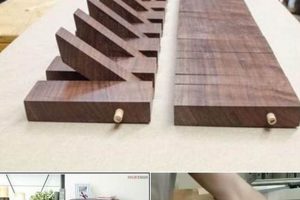
Essential instruments required for initiating the craft of shaping wood are foundational to any woodworking endeavor. This equipment, typically characterized by its relative simplicity and ease of use, allows individuals to perform fundamental tasks such as measuring, cutting, shaping, and joining wood components. For example, a hand saw enables precise cuts, while a measuring tape facilitates accurate dimensioning of materials.
Possessing a core set of these instruments provides several advantages. It fosters independence in completing minor repairs and home improvement projects, encourages creative expression through personalized designs, and cultivates valuable problem-solving skills. Historically, the ability to manipulate wood was crucial for constructing shelter, tools, and furniture; its continued relevance lies in its capacity to blend functionality with artistic craftsmanship.
The following sections will delve into specific items that form this collection, examining their functions, selecting criteria, and proper usage techniques. This detailed exploration aims to equip aspiring woodworkers with the knowledge necessary to confidently navigate the initial stages of this rewarding pursuit.
Guidance for Novice Woodworkers’ Equipment Acquisition
The selection and utilization of entry-level woodworking implements demand careful consideration to ensure safety, efficiency, and project success. Adherence to the following recommendations will facilitate a productive and enjoyable introductory experience.
Tip 1: Prioritize Safety Gear. Before acquiring any tools, invest in essential safety equipment. Safety glasses protect against flying debris, while work gloves enhance grip and minimize the risk of splinters. A dust mask is crucial for preventing respiratory irritation from sawdust.
Tip 2: Start with Hand Tools. Hand tools offer greater control and tactile feedback during the learning process. A quality hand saw, chisels, and a hand plane are excellent starting points for developing fundamental skills.
Tip 3: Choose Quality over Quantity. It is preferable to invest in a few high-quality implements rather than acquiring numerous inexpensive, substandard ones. Durable, well-made equipment will provide better performance and longevity.
Tip 4: Learn Proper Sharpening Techniques. Sharp instruments are safer and more effective than dull ones. Invest in sharpening stones or a honing system and learn how to maintain the edges of your chisels and plane irons.
Tip 5: Master Measuring and Marking. Accurate measurements are paramount in woodworking. A reliable measuring tape, a combination square, and marking gauges are essential for precise layout and dimensioning.
Tip 6: Familiarize Yourself with Wood Grain. Understanding the grain direction of wood is critical for preventing tear-out and achieving clean cuts. Observe the grain pattern carefully before cutting or shaping any piece.
Tip 7: Practice Jointing Techniques. Learn basic joinery methods, such as butt joints, lap joints, and mortise-and-tenon joints. These skills are fundamental for constructing sturdy and aesthetically pleasing projects.
Tip 8: Seek Educational Resources. Utilize books, online tutorials, and woodworking courses to expand your knowledge and skills. Continuous learning is essential for progressing in the craft.
By implementing these suggestions, individuals embarking on their woodworking journey can establish a solid foundation for future endeavors. Emphasis on safety, quality, and continuous learning will contribute to a rewarding and fulfilling experience.
The subsequent sections will elaborate on advanced techniques and specialized equipment, building upon the foundational knowledge presented herein.
1. Measurement accuracy

Measurement accuracy forms the bedrock of successful woodworking, especially for beginners. Inaccurate measurements compromise the integrity and aesthetics of any project, leading to material wastage, structural instability, and ultimately, a disheartening experience for the novice woodworker. Understanding its connection to basic instruments is paramount.
- Tape Measure Reliability
A tape measure, seemingly simple, demands careful use. Ensuring the tape is straight and taut, reading the correct increment, and accounting for the tape’s thickness are critical. For example, failing to account for the tape measure hook’s thickness when measuring the inside of a cabinet will result in a piece that is too short. Inaccuracy here cascades through the entire project.
- Squareness and Right Angles
A combination square is invaluable for verifying right angles. Inaccurate cuts, resulting from a compromised square, can lead to furniture pieces that do not sit flush or joints that fail to align correctly. A seemingly minor deviation from 90 degrees accumulates with each subsequent cut, exacerbating the problem.
- Marking Gauges and Consistent Lines
Marking gauges produce consistent, parallel lines essential for joinery. When creating mortise-and-tenon joints, for instance, inconsistent markings will result in ill-fitting components. This leads to gaps, weakened joints, and a visually unappealing outcome, directly highlighting the importance of maintaining tool precision.
- The Cumulative Effect of Error
Each instance of measurement inaccuracy, however small, compounds throughout a project. A 1/16-inch error in multiple cuts can quickly become a 1/4-inch discrepancy overall. Beginners should meticulously double-check each measurement and cut to mitigate this cumulative effect and ensure the final product aligns with the intended design.
Therefore, cultivating diligent measurement habits is integral to effectively utilize essential woodworking tools. The ability to accurately measure, mark, and cut materials not only saves time and resources but also fosters confidence and mastery as a budding woodworker progresses through increasingly complex projects.
2. Sharpness maintenance

Maintaining the cutting edges of implements is indispensable for safe and efficient woodworking, particularly for those new to the craft. Sharp instruments require less force, yielding cleaner cuts, improved control, and reduced risk of injury. The principles of sharpness maintenance are therefore foundational in a beginner’s woodworking education.
- Safety Implications of Dull Tools
Dull edges demand increased pressure to achieve desired cuts. This elevated force compromises control, increasing the likelihood of slippage and accidental injuries. For instance, a dull chisel is more prone to glancing off the wood, potentially striking the user’s hand. Sharp tools minimize this risk by biting into the wood with minimal effort.
- Efficiency and Quality of Cut
Sharp instruments sever wood fibers cleanly, resulting in smooth, precise cuts that require less subsequent sanding or finishing. A dull hand saw, conversely, tears the wood, leaving a ragged edge. This directly impacts project quality and increases the time required for refinement. The investment in proper sharpening techniques translates directly into enhanced productivity and superior results.
- Sharpening Stones and Honing Guides
The use of sharpening stones, often in conjunction with honing guides, provides a controlled method for restoring and maintaining sharp edges. Honing guides ensure consistent sharpening angles, which are crucial for preserving the tool’s intended performance. Beginners can practice honing on less expensive tools before applying these techniques to their primary set. The appropriate grade of stone needs to be understood for rough sharpening versus polishing.
- Preventative Measures and Edge Care
Maintaining sharpness also involves proactive measures to protect cutting edges. Proper storage, such as tool rolls or dedicated drawers, prevents damage from contact with other tools. Regularly cleaning the cutting edges after use removes pitch and debris that can dull the blade over time. Simple preventative actions prolong the life of the sharp edge and reduce the frequency of sharpening.
Therefore, a commitment to sharpness maintenance is not merely a matter of convenience, but a fundamental aspect of responsible woodworking. Novice woodworkers who prioritize this skill will not only produce higher-quality projects, but also cultivate a safer and more enjoyable working environment. The ability to properly sharpen and care for instruments is a skill that extends far beyond the initial stages of learning and continues to benefit the woodworker throughout their career.
3. Joint construction

Proficiency in joint construction forms the backbone of durable and aesthetically pleasing woodworking projects. For individuals beginning their engagement with woodcraft, the mastery of fundamental joinery techniques using elementary instruments is paramount. The efficacy of any woodworking project hinges on the strength and precision of its joints.
- Butt Joints and Clamping Techniques
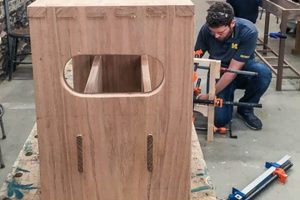
Butt joints, the simplest form of connection, necessitate accurate cuts and effective clamping. A hand saw, when wielded precisely, allows for clean, square ends. Clamps, strategically positioned, provide the necessary pressure to ensure a strong glue bond. Improper clamping or inaccurate cuts result in weak joints prone to failure under stress. The butt joint serves as an introduction to the importance of precision and controlled force in joint construction.
- Lap Joints and Chisel Work
Lap joints, offering increased surface area for gluing, require the removal of material from both joining pieces. Chisels, in conjunction with a marking gauge, enable the creation of precise recesses. Sharp chisels and accurate marking are crucial for achieving a flush, gap-free connection. Incorrect chisel technique can lead to uneven surfaces and weakened joint integrity. Mastering lap joints introduces the concepts of material removal and precise fitting.
- Dowel Joints and Drilling Accuracy
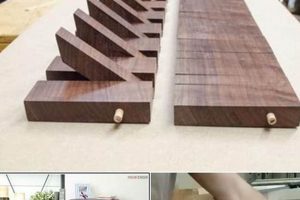
Dowel joints utilize cylindrical pins to reinforce the connection between two pieces of wood. A drill, guided by careful measurements and marking, creates the necessary holes. Accurately aligned holes are essential for ensuring that the dowels provide optimal support. Misaligned holes compromise the strength of the joint and can lead to structural instability. Dowel joints emphasize the significance of precise hole placement and alignment in joint construction.
- Mortise and Tenon Joints and Compound Techniques
The mortise and tenon joint, a hallmark of woodworking, involves fitting a projecting tenon into a corresponding mortise. This requires careful layout, precise cutting with a saw, and meticulous chiseling to create a snug fit. A well-executed mortise and tenon joint provides exceptional strength and stability. Inaccurate cuts or poorly fitted components diminish the joint’s effectiveness and overall structural integrity. Mortise and tenon joints underscore the importance of complex layout and precise execution in joint construction.
Therefore, the successful execution of joint construction relies heavily on the proper application of instruments. Mastering these fundamental techniques is essential for aspiring woodworkers. The ability to create strong, accurate joints using simple, is a cornerstone of the craft.
4. Safety practices
The safe operation of entry-level woodworking instruments is inextricably linked to preventing injuries and ensuring successful project completion. Novice woodworkers must understand that operating any tool without adhering to established safety guidelines significantly increases the risk of accidents. The relationship between safety practices and the employment of equipment is one of direct causality: neglecting proper protocols can lead to immediate negative consequences, potentially resulting in cuts, abrasions, eye injuries, or more severe trauma.
Essential personal protective equipment (PPE) forms the first line of defense against woodworking hazards. Eye protection, such as safety glasses or goggles, shields against flying debris produced during sawing, chiseling, or sanding operations. Hearing protection, typically in the form of earplugs or earmuffs, mitigates the risk of hearing damage from prolonged exposure to loud machinery or hand tool usage. Respiratory protection, such as a dust mask or respirator, prevents the inhalation of fine wood particles, which can cause respiratory irritation and long-term health problems. Secure footwear and appropriate clothing are equally important in minimizing the risk of slips, trips, and entanglement with equipment.
Safe woodworking practices extend beyond PPE to encompass proper tool handling, workspace organization, and awareness of potential hazards. Before using any instrument, beginners should familiarize themselves with the manufacturer’s instructions and safety recommendations. Workspaces should be kept clean and free of obstructions to prevent accidents. Workpieces must be securely clamped to a stable surface during cutting or shaping operations to prevent movement and potential loss of control. When using edged implements, such as saws or chisels, it is crucial to maintain a firm grip and keep hands clear of the cutting path. By consistently implementing these safety measures, novice woodworkers can cultivate a safe working environment and minimize the risk of injuries, ensuring a positive and productive introduction to the craft.
5. Material compatibility

The selection of materials appropriate for basic woodworking instruments directly influences the quality, safety, and efficiency of woodworking projects undertaken by beginners. An understanding of material characteristics and their interaction with tools is essential for achieving successful outcomes and preventing equipment damage.
- Softwoods vs. Hardwoods
Softwoods, such as pine and fir, generally require less force to cut and shape than hardwoods like oak or maple. Beginners often find softwoods more manageable with hand tools due to their lower density and reduced tendency to splinter. Using a fine-toothed saw on softwood minimizes tear-out, while attempting to cut hardwood with the same saw may result in binding and difficulty.
- Grain Direction and Cutting Techniques
The grain direction of wood significantly affects cutting behavior. Cutting against the grain can lead to tear-out and rough surfaces, particularly with hardwoods. Beginners should learn to identify grain direction and adjust their cutting techniques accordingly. For example, when planing, working with the grain minimizes the risk of creating an uneven surface. Improper grain orientation can dull blades rapidly.
- Density and Tool Selection
The density of wood dictates the type of tools that are most effective. Denser hardwoods require sharper and more robust tools. Beginners might find that chiseling dense hardwoods with inexpensive chisels results in blade deformation or breakage. Investing in higher-quality tools with hardened steel blades is often necessary for working with denser materials.
- Material Stability and Project Longevity
The stability of wood, its resistance to warping or cracking due to changes in moisture content, impacts the longevity of woodworking projects. Beginners should understand that using improperly dried lumber can lead to joint failures and dimensional changes over time. Selecting kiln-dried lumber and understanding proper acclimation techniques are crucial for ensuring that projects remain stable and structurally sound.
In summary, the successful use of essential implements hinges on selecting materials that are appropriate for both the project and the capabilities of the instrument. Understanding the properties of different types of wood and how they interact with basic implements is a vital skill for individuals commencing their woodworking journey. Proper material selection reduces frustration, enhances project quality, and extends the lifespan of the equipment.
6. Ergonomic design

The ergonomic design of essential woodworking implements is a critical consideration for novice woodworkers. Instruments crafted with ergonomic principles in mind aim to minimize physical strain, reduce fatigue, and enhance user control, thereby promoting both safety and efficiency. The consequences of using poorly designed tools can range from minor discomfort to chronic musculoskeletal disorders. The importance of ergonomic design stems from its ability to align the tool with the natural movements and postures of the human body. A hand saw with a handle shaped to fit the contours of the hand, for example, reduces the force required to grip and maneuver the instrument. A chisel with a cushioned handle minimizes vibrations and impact forces transmitted to the hand and wrist. These design features contribute to a more comfortable and controlled woodworking experience.
Practical applications of ergonomic design in equipment are evident in several key areas. Handle materials, such as rubber or textured synthetics, improve grip and reduce slippage, particularly when hands are sweaty or the tool is exposed to moisture. Handle angles are often optimized to minimize wrist flexion and extension, reducing the risk of carpal tunnel syndrome. Tool weight is carefully balanced to prevent excessive strain on specific muscle groups. In the case of a hand plane, a well-balanced design allows the user to maintain consistent pressure without requiring excessive force. Furthermore, the overall dimensions of the instrument are tailored to accommodate a range of hand sizes, ensuring that the tool feels comfortable and secure in the user’s grip.
In summary, the integration of ergonomic design principles into implements is not merely a matter of comfort; it is an essential element of safe and effective woodworking practice. Novice woodworkers who prioritize tools with ergonomic features will be less prone to fatigue and injury, enabling them to develop their skills and pursue woodworking projects with greater confidence and enjoyment. The challenge lies in educating beginners about the importance of ergonomic design and providing access to affordable, well-designed equipment that meets their needs.
Frequently Asked Questions
This section addresses prevalent inquiries concerning the selection, application, and maintenance of fundamental equipment required for commencing woodworking projects.
Question 1: What constitutes the minimum equipment necessary for initiating woodworking projects?
The fundamental instruments consist of a hand saw, a measuring tape, a combination square, a marking gauge, a chisel set, a hand plane, and appropriate personal protective equipment, including safety glasses, work gloves, and a dust mask.
Question 2: How does one ascertain the quality of a hand saw before purchase?
Factors influencing hand saw quality include blade material, tooth geometry, handle ergonomics, and overall balance. High-carbon steel blades maintain sharpness longer, while impulse-hardened teeth provide extended cutting life. A comfortable, well-balanced handle enhances control and reduces fatigue.
Question 3: What are the safety protocols for operating a chisel?
Safety measures when utilizing a chisel necessitate securing the workpiece with clamps, maintaining a firm grip on the handle, directing the cutting edge away from the body, and utilizing a mallet to strike the chisel when necessary. Dull chisels should be avoided due to the increased risk of slippage and injury.
Question 4: How frequently should woodworking implements be sharpened?
The frequency of sharpening hinges on the type of wood being worked, the intensity of use, and the quality of the instrument. A discernible decrease in cutting performance indicates the necessity for sharpening. Regular honing between sharpening sessions prolongs the sharpness of the edge.
Question 5: What are the advantages of utilizing a hand plane over power tools for surface preparation?
Hand planes offer superior control over material removal, enabling precise adjustments and the creation of exceptionally smooth surfaces. Furthermore, they operate silently and without producing dust, making them ideal for smaller workshops or noise-sensitive environments.
Question 6: How does one properly store woodworking implements to prevent damage?
Proper storage methods include hanging saws by their handles, storing chisels and planes in protective sheaths or rolls, and keeping all implements in a dry environment to prevent rust. Regular cleaning and lubrication further prolong the lifespan of the instruments.
In conclusion, understanding the appropriate selection, operation, and maintenance of basic woodworking implements is crucial for successful project execution and personal safety. Diligent adherence to established guidelines fosters a safe and rewarding woodworking experience.
The following article sections will delve into advanced equipment and specialized techniques, expanding upon the foundational knowledge provided herein.
Conclusion
This discourse has illuminated the significance of foundational implements for individuals initiating woodworking endeavors. Emphasis was placed on safety protocols, the imperative of sharpness maintenance, the nuances of joint construction, the relevance of material compatibility, and the benefits of ergonomic design. These core principles, when rigorously applied, establish a solid groundwork for subsequent skill development.
The cultivation of proficiency with this equipment extends beyond mere task completion; it fosters a deeper understanding of material properties and construction techniques. Mastery of these fundamentals empowers individuals to pursue more intricate projects with confidence, contributing to both personal enrichment and the preservation of a time-honored craft. Continued dedication to learning and refining these skills will undoubtedly yield increasingly sophisticated and aesthetically pleasing results.