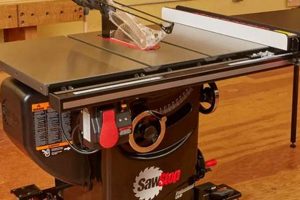
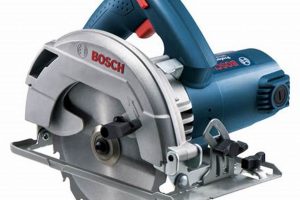
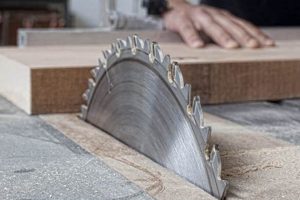
A rotating cutting tool with a toothed periphery, essential for shaping and sizing timber, composite materials, and certain plastics in a variety of construction, remodeling, and crafting applications. Its design allows for efficient and precise cuts when paired with a power tool, enabling a wide range of woodworking tasks.
This cutting implement facilitates efficiency and accuracy in projects. Its utilization enhances productivity, reduces material waste, and enables the creation of intricate designs. The development of this tool has significantly shaped woodworking techniques and construction practices, permitting faster and more precise material processing compared to earlier hand-powered methods.
The following sections will detail the various types of these cutting tools, discuss optimal selection criteria, explore necessary safety precautions, and outline best practices for maintenance and prolonged lifespan.
Optimizing Performance
The following guidelines offer insights into maximizing the effectiveness and longevity of your cutting implement, ensuring safer and more precise woodworking operations.
Tip 1: Material Compatibility: Select an appropriate cutting tool for the specific material. Using an implement designed for softwood on hardwood can lead to premature wear and tear, reduced cutting efficiency, or even blade damage.
Tip 2: Arbor Size Verification: Prior to installation, confirm that the arbor size of the cutting implement precisely matches the saw’s arbor. An improper fit can result in dangerous vibrations and inaccurate cuts.
Tip 3: Sharpness Maintenance: Regularly inspect the cutting edge and resharpen or replace when dull. A dull implement requires more force, increasing the risk of kickback and splintering.
Tip 4: Stabilizer Use: Employ stabilizers, particularly with large-diameter implements, to reduce vibration and improve cut quality, especially in dense materials.
Tip 5: Feed Rate Control: Maintain a consistent and controlled feed rate, avoiding forcing the material through the saw. Excessive force can overload the motor and lead to kickback.
Tip 6: Appropriate RPM: Ensure the saw’s RPM setting aligns with the recommended speed for the specific implement and material being cut. Operating outside the specified range can compromise safety and cut quality.
Tip 7: Cleaning Procedures: Routinely clean resin and pitch buildup from the surface to maintain optimal cutting performance and prevent overheating. Specialized blade cleaners are available for this purpose.
Adhering to these recommendations can significantly improve the quality of work, extend the lifespan of the cutting implement, and enhance safety during woodworking tasks.
The subsequent sections will explore common issues encountered during operation and offer troubleshooting advice to resolve them effectively.
1. Blade Diameter

Blade diameter, a critical specification, dictates the maximum cutting depth attainable with a circular saw blade. This measurement, typically expressed in inches or millimeters, represents the distance across the blade from one tooth tip to the directly opposing tooth tip. For woodworking applications, the selection of the diameter must align with the intended use and the saw’s operational capacity. Using an improperly sized blade is a safety hazard. For example, a 7 1/4-inch diameter is common for portable circular saws used in framing, while a 10-inch or 12-inch diameter is typical for table saws used in more precise woodworking operations. The blade diameter must never exceed the saw’s rated capacity.
The appropriate diameter is determined by the material thickness and the type of cut required. For instance, a 7 1/4-inch diameter can cut through dimensional lumber up to approximately 2 1/4 inches thick at 90 degrees. Thicker materials necessitate a larger diameter. Bevel cuts further reduce the maximum cutting depth, therefore this factor must also be considered. Specific project requirements, such as creating deep mortises or tenons, will directly impact the selection of the appropriate blade diameter. Failure to account for these considerations can lead to incomplete cuts or the need for multiple passes, compromising both accuracy and efficiency.
Understanding blade diameter’s role is fundamental to achieving accurate cuts in woodworking. Careful consideration of this specification, aligned with project needs and equipment limitations, contributes to both safety and precision. Improper blade diameter selection may overload the motor of the saw, causing tool failure, kickback, or damage to the material. Therefore, the blade diameter directly affects the performance and safety of circular saw operations in woodworking, necessitating a thorough understanding of its implications.
2. Tooth Count
Tooth count, a key determinant of a woodworking implement’s cutting characteristics, directly influences the smoothness and speed of the cut. The number of teeth arranged around the periphery of the circular blade correlates inversely with the cutting speed and directly with the finish quality. A lower tooth count, such as those found on ripping blades, removes more material per tooth, resulting in faster cuts along the grain of wood. Conversely, a higher tooth count, characteristic of crosscut or combination blades, yields a smoother, less splintered cut across the wood grain.
The selection of an implement with an appropriate tooth count is dictated by the specific woodworking task. Ripping operations, requiring the efficient removal of material along the grain, benefit from fewer teeth. Crosscutting, focused on creating a clean edge across the grain, necessitates a higher tooth count to minimize tear-out. For example, when constructing cabinetry, a higher tooth count blade is preferred to achieve smooth, finished edges on doors and drawer fronts. Conversely, when framing a house, a lower tooth count ripping blade is employed to quickly dimension lumber.
Ultimately, the tooth count of a circular saw blade represents a compromise between cutting speed and finish quality. Understanding this trade-off allows woodworkers to select the appropriate tool for the task at hand, optimizing both efficiency and precision. The improper selection of tooth count can lead to inefficient cutting, excessive splintering, and increased material waste, thereby impacting the overall quality of the finished product and project cost.
3. Kerf Width
Kerf width, in the context of woodworking implements, refers to the amount of material removed by the blade during a cut. It is a crucial specification that directly impacts material yield, cut precision, and overall efficiency. Specifically, the blade’s kerf dictates the actual width of the cut produced in a workpiece, distinct from the blade’s physical thickness due to the set of the teeth. Understanding kerf width is paramount for precise joinery, efficient material usage, and minimizing waste, especially when working with expensive hardwoods or optimizing dimensional lumber.
A wider kerf removes more material, which can be advantageous for certain applications, such as creating dados or grooves. However, it also results in greater material loss, which can be significant in large projects or when working with expensive materials. Thin-kerf blades, conversely, remove less material, increasing material yield and reducing the power required from the saw. An example of the practical significance of kerf is apparent when cutting multiple pieces of a specific size from a larger board. Using a thin-kerf blade will result in more usable pieces compared to a standard or thick-kerf blade, minimizing waste and maximizing the efficient use of the lumber. This difference, while seemingly small per cut, accumulates over the course of a project.
The selection of an implement with the appropriate kerf width must align with the project’s requirements and material constraints. Challenges associated with ignoring kerf width include inaccurate joinery, insufficient material to complete a project, and increased material costs due to excessive waste. Accurate accounting for kerf width is essential for professional woodworking and DIY projects alike, ensuring precision, efficiency, and responsible material usage. Furthermore, when designing complex joinery, like box joints or dovetails, factoring in the kerf is essential for the pieces to fit together as designed. The blade itself is useless without understanding its properties and how it will affect the material when cutting.
4. Arbor Size
Arbor size, in the context of woodworking and circular saw blades, represents the diameter of the central hole in the blade designed to fit onto the saw’s rotating spindle, also known as the arbor. Its measurement, typically expressed in inches or millimeters, must precisely match the saw’s arbor diameter to ensure safe and accurate operation. A mismatch between the blade’s arbor size and the saw’s arbor prevents proper mounting, leading to vibration, blade slippage, inaccurate cuts, and potentially hazardous conditions, including blade detachment during operation. For example, a blade with a 5/8-inch arbor will not securely mount on a saw with a 1-inch arbor, and attempting to force the fit can damage both the blade and the saw. Improper arbor size is a frequent cause of circular saw accidents.
The standardization of arbor sizes across different types of circular saws simplifies blade selection; however, variations exist. Table saws frequently utilize a 5/8-inch arbor, whereas smaller handheld circular saws may use different sizes. Adapters, sometimes referred to as reducing rings, can bridge minor size discrepancies between a blade’s arbor hole and the saw’s arbor, but their use requires caution. Incorrectly installed or poorly manufactured adapters can introduce instability and increase the risk of blade failure. The blade should sit flush against the saw’s flange (the mating surface) to minimize vibration and ensure the load is evenly distributed. Therefore, any adapters need to be of the proper thickness to allow for proper blade seating and spindle nut engagement. Furthermore, using reducing rings is not advised for larger size mismatches as stability is generally compromised by excessive adapter use.
In summary, arbor size is a critical parameter in circular saw blade selection, directly impacting safety and performance. Careful verification of the arbor size compatibility between blade and saw, coupled with diligent inspection of any adapters used, is crucial for safe and accurate woodworking operations. Ignoring this specification can lead to tool damage, material waste, and potentially serious injuries, underscoring the importance of meticulous attention to detail when selecting and installing circular saw blades. Blade manufacturers often specify arbor size, and it is the woodworker’s responsibility to verify these measurements before use.
5. Hook Angle

Hook angle, a critical design element in woodworking implements, refers to the angle at which the tooth face is inclined relative to a radial line extending from the blade’s center. This angle influences the aggressiveness of the cut, impacting both the feed rate and the quality of the resulting surface. A positive hook angle signifies that the tooth is leaning forward, effectively “grabbing” the material and pulling the blade into the cut. Conversely, a negative or neutral hook angle indicates that the tooth is perpendicular or leaning backward, resulting in a less aggressive cut with reduced risk of kickback, but also potentially requiring more force to advance the blade. This characteristic directly affects the circular saw blade’s performance and suitability for various woodworking operations.
The selection of an implement with an appropriate hook angle is dictated by the type of material being cut and the desired cutting characteristics. For ripping operations, where speed and efficient material removal are paramount, a positive hook angle is typically preferred. This configuration allows the blade to aggressively engage with the wood grain, resulting in faster cuts. However, the increased aggressiveness also increases the risk of splintering and tear-out, especially in brittle materials or when cutting against the grain. Conversely, for crosscutting or working with delicate materials, a negative or neutral hook angle offers greater control and reduces the likelihood of damage. For instance, when cutting melamine or veneered plywood, a blade with a negative hook angle minimizes chipping and produces a cleaner, more professional-looking edge. As an illustration, a cabinet maker might choose a blade with a high positive hook angle for rapidly milling lumber to rough dimensions but would then switch to a blade with a less aggressive, potentially negative, hook angle to complete the final, precision cuts.
In summary, hook angle is a key parameter influencing a circular saw blade’s cutting performance and suitability for specific woodworking tasks. Understanding this parameter, along with the material properties, enables informed selection and optimization of the cutting process, thereby maximizing efficiency, minimizing waste, and enhancing the quality of the finished product. The relationship between hook angle and workpiece material is a primary concern for advanced woodworking and contributes to safety during operation. Improper hook angle selection can lead to excessive vibration, inaccurate cuts, kickback, and damage to both the material and the saw.
6. Grind Type

Grind type, in the context of woodworking implements, designates the specific geometry imparted to the cutting edge of each tooth. This geometry profoundly influences the blade’s cutting action, efficiency, and the quality of the resulting cut. The selection of the appropriate grind type is contingent upon the material being processed and the desired finish.
- Alternate Top Bevel (ATB)
The Alternate Top Bevel grind features teeth that are alternately beveled to the left and right. This configuration allows for a slicing action, producing clean cuts in both hardwoods and softwoods. ATB blades are commonly employed for crosscutting and general-purpose woodworking where a balance of speed and finish is desired. In practice, ATB blades are widely used for cutting plywood and composite materials where minimizing splintering is paramount. Its relevance can be seen where the alternate bevel design ensures that the edges of the cut are cleanly severed, reducing tear-out and producing a smoother surface.
- Flat Top Grind (FTG)
The Flat Top Grind exhibits teeth with a flat, square cutting edge. This grind type excels in ripping operations, where speed and efficient material removal along the grain are prioritized over finish quality. FTG blades are particularly effective for cutting thick lumber and producing square-bottomed grooves or dados. In framing construction, an FTG blade is selected for fast, rough cuts along the wood grain to quickly break down boards to a more manageable size.
- Triple Chip Grind (TCG)
The Triple Chip Grind features a combination of flat-topped teeth and beveled teeth, alternating in a repeating pattern. This grind type is designed for cutting hard or abrasive materials, such as non-ferrous metals, plastics, and laminates. TCG blades are characterized by their durability and ability to withstand high temperatures, making them suitable for demanding applications. The benefit is clear in the cutting of abrasive materials, such as laminate flooring or aluminum trim where the TCG blade’s alternating teeth design effectively chips away at the material, resisting wear and producing a clean cut.
- Combination Grind
Combination Grind blades incorporate elements of multiple grind types, typically featuring a repeating sequence of ATB teeth followed by a flat-top raker tooth. This design aims to provide a balance of crosscutting and ripping capabilities, making it a versatile option for general woodworking tasks. Combination blades are often chosen for projects involving a variety of cuts in different types of wood, offering a compromise between speed and finish quality. This is seen when building furniture where cuts of varying grain direction and material can occur in the same piece.
The selection of the appropriate grind type is a critical factor in optimizing circular saw blade performance for specific woodworking applications. By carefully considering the material properties and desired cut characteristics, woodworkers can select the grind type that delivers the best results in terms of cutting speed, finish quality, and blade longevity. Ultimately, grind type contributes significantly to safety during operation, efficiency of cut, and the value of the final product.
7. Material Compatibility

Material compatibility represents a critical factor in the selection and application of circular saw blades for woodworking. The interaction between the blade’s composition, tooth geometry, and the material being cut directly influences cutting performance, blade longevity, and user safety. Selecting a blade incompatible with the workpiece material can lead to inefficient cutting, premature blade wear, increased risk of kickback, and compromised surface finish. For instance, utilizing a blade designed for softwood on a dense hardwood can result in overheating, tooth damage, and potential motor overload on the saw. This cause-and-effect relationship underscores the importance of understanding material properties and their impact on the cutting process.
Specifically, blades intended for hardwood commonly feature a higher tooth count and a more aggressive tooth geometry to efficiently shear the dense wood fibers. In contrast, blades designed for softwood often have fewer teeth and a less aggressive geometry to prevent excessive splintering. When processing composite materials like plywood or MDF, specialized blades with specific tooth configurations are essential to minimize tear-out and ensure clean edges. Real-world examples illustrate this point: a fine-toothed blade with an ATB (Alternate Top Bevel) grind is often preferred for cutting plywood to prevent chipping of the veneer layers. This meticulous selection process demonstrates that blade selection is not merely a matter of diameter and arbor size, but also involves considering the material’s hardness, density, and grain structure.
Ultimately, understanding material compatibility is paramount for achieving optimal woodworking results. This comprehension enables efficient cutting, extends the lifespan of the blade, and enhances safety. Challenges arise when processing unfamiliar or composite materials, necessitating careful research and potentially the use of test cuts to determine the most suitable blade. Addressing material compatibility issues strengthens the overall woodworking process, aligning blade selection with project requirements, thereby promoting precision, safety, and efficient material utilization.
Frequently Asked Questions
The following addresses common inquiries regarding the selection, operation, and maintenance of cutting implements, providing clarification on essential aspects of woodworking practices.
Question 1: How does tooth count affect the cutting performance?
A higher tooth count generally results in a smoother finish but slower cutting speed, while a lower tooth count offers faster cutting speed but a rougher finish. The selection depends on the specific woodworking task and desired balance between speed and quality.
Question 2: What is the significance of the hook angle?
The hook angle influences the aggressiveness of the cut. Positive hook angles are suitable for ripping operations, while negative or neutral hook angles are preferred for crosscutting or delicate materials to minimize splintering.
Question 3: How does kerf width impact woodworking projects?
Kerf width dictates the amount of material removed during a cut. Thin-kerf blades maximize material yield and reduce power consumption, while wider kerf blades may be necessary for specific applications like creating dados.
Question 4: Why is material compatibility important?
Selecting a blade designed for the material being cut ensures optimal performance, extends blade life, and enhances safety. Using an incompatible blade can lead to inefficient cutting, premature wear, and increased risk of kickback.
Question 5: What is the role of grind type?
Grind type influences the cutting action and finish quality. ATB (Alternate Top Bevel) grinds are suitable for general-purpose cutting, while FTG (Flat Top Grind) excels in ripping operations, and TCG (Triple Chip Grind) is designed for hard or abrasive materials.
Question 6: How should the implement be maintained for longevity?
Regular cleaning to remove resin buildup, periodic sharpening, and proper storage are essential for maintaining optimal performance and extending the lifespan. Dull blades should be resharpened or replaced promptly.
Understanding these essential aspects contributes to safer and more effective woodworking practices. Proper blade selection, operation, and maintenance are paramount for achieving desired results.
The following resources offer additional information and guidance for advanced woodworking techniques and applications.
Conclusion
This article has provided an overview of critical considerations for circular saw blades for woodworking. Selecting the correct diameter, tooth count, kerf width, hook angle, grind type, and ensuring material compatibility are paramount. Understanding these factors directly influences safety, efficiency, and the quality of woodworking projects.
Mastery of this essential cutting tool’s characteristics empowers informed decision-making, leading to optimized results and enhanced craftsmanship. Continued study and practical application of these principles will yield improved performance and contribute to the advancement of woodworking skills.