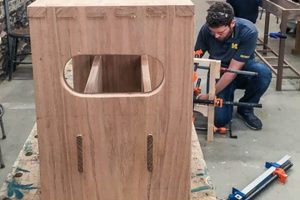
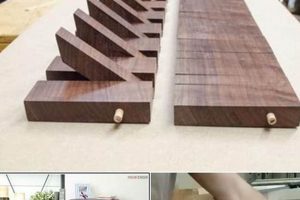
Engaging in hands-on construction with wood, specifically oriented toward individuals with little to no prior experience, represents an accessible entry point into the broader realm of woodworking. Projects suited for this audience typically involve simplified designs, readily available materials, and basic tools to foster initial skill development. A simple birdhouse construction, for example, exemplifies a project appropriate for those starting their journey.
The significance of this introductory approach lies in its capacity to cultivate creativity, problem-solving abilities, and practical skills, while simultaneously offering a tangible sense of accomplishment. Historically, learning woodworking often began with apprenticeship, but current resources, including online tutorials and community workshops, have democratized access to this craft. This shift allows individuals to acquire foundational knowledge and confidence at their own pace.
Therefore, subsequent sections will explore essential tools, fundamental techniques, appropriate wood selection, and a curated list of beginner-friendly projects. Emphasis will be placed on safety protocols and best practices to ensure a positive and productive learning experience.
Essential Guidance for Novice Woodworkers
The following guidelines aim to provide a structured and informed approach to initiating a woodworking practice. These recommendations focus on mitigating common challenges faced by individuals new to the craft and fostering a safe and productive learning environment.
Tip 1: Prioritize Safety Equipment: Comprehensive personal protective equipment is paramount. Safety glasses, ear protection, and dust masks should be consistently used during all phases of woodworking. Improper use of tools and inhalation of wood dust can pose significant health risks.
Tip 2: Master Fundamental Techniques: Begin with basic skills such as accurate measuring, precise cutting, and proper sanding. Mastery of these core competencies forms the basis for more advanced projects. Practice on scrap wood is highly recommended.
Tip 3: Select Appropriate Wood Species: Softwoods like pine and fir are typically more manageable for beginners due to their relative ease of cutting and shaping. Avoid hardwoods with complex grain patterns until proficiency with simpler materials is established.
Tip 4: Invest in Quality Hand Tools: While power tools can expedite certain tasks, a selection of well-maintained hand tools, including a hand saw, chisels, and a smoothing plane, offers greater control and tactile feedback. This facilitates a deeper understanding of wood properties.
Tip 5: Utilize Accurate Joinery Techniques: Strong and reliable joinery is crucial for structural integrity. Practice basic joints such as butt joints, lap joints, and dado joints before attempting more complex connections like dovetails.
Tip 6: Adhere to Detailed Plans: Follow established project plans meticulously. These plans provide clear dimensions, material lists, and step-by-step instructions, minimizing errors and maximizing efficiency. Deviations from the plans should only be undertaken with a thorough understanding of the implications.
Tip 7: Emphasize Proper Finishing Techniques: The finishing process protects the wood and enhances its aesthetic appeal. Learn to apply stains, sealants, and topcoats evenly and consistently. Proper surface preparation is essential for optimal results.
Effective implementation of these recommendations will contribute to the development of a solid foundation in woodworking, minimizing potential hazards and maximizing the likelihood of successful project completion. Patience, diligence, and a commitment to continuous learning are key to achieving proficiency in this craft.
The subsequent sections will delve into specific project ideas tailored for the beginner woodworker, further reinforcing the principles outlined above.
1. Tool Acquisition

Tool acquisition forms a crucial and often initial step in the process. The selection and procurement of appropriate tools directly influence the feasibility, safety, and ultimately, the success of beginner woodworking projects. Inadequate or inappropriate tools can lead to frustration, substandard results, and increased risk of injury. For instance, attempting to cut a straight line with a dull saw, or shaping wood with poorly maintained chisels, will invariably yield imprecise outcomes and potentially hazardous situations.
A judicious approach to tool acquisition involves prioritizing essential hand tools, such as a hand saw, measuring tape, combination square, chisel set, and a smoothing plane. These tools, when properly used and maintained, allow the novice woodworker to develop fundamental skills in measuring, cutting, shaping, and finishing wood. While power tools can increase efficiency, the acquisition of a firm foundation in hand tool techniques is invaluable for understanding the properties of wood and developing a sense of control over the material. Consider the construction of a simple wooden box. A properly sharpened hand saw ensures clean, accurate cuts, while a well-honed chisel allows for precise fitting of the box’s components. A smoothing plane creates a refined surface finish, enhancing the overall aesthetic appeal.
Effective tool acquisition, therefore, is not merely about accumulating an arsenal of equipment; it is about selecting the right tools, understanding their proper use, and maintaining them in optimal condition. This deliberate and informed approach is a critical determinant of the overall experience and serves as a catalyst for continued learning and progression in woodworking. Conversely, neglecting this fundamental aspect can hinder progress and discourage those new to the craft. Careful planning, research, and a gradual investment in quality tools are key to a positive and productive start.
2. Material Selection

Material selection exerts a considerable influence on the success of woodworking projects, particularly for beginners. The type of wood chosen directly affects ease of workability, the quality of the final product, and the overall learning experience. Softwoods, such as pine, fir, and cedar, represent common choices for novice woodworkers due to their relative affordability, availability, and pliability. These species are less dense than hardwoods, allowing for easier cutting, shaping, and fastening with basic tools. Conversely, attempting to construct a project using a dense hardwood, like maple or oak, without adequate experience and appropriate tooling can lead to frustration and subpar results. The selection of inappropriate materials, therefore, serves as a potential impediment to a beginner’s progress.
The characteristics of the selected material also impact the longevity and intended use of the finished piece. For example, a simple bookshelf constructed from untreated pine may be suitable for light-duty storage indoors, but would be ill-equipped to withstand exposure to moisture or heavy loads. Understanding the properties of different wood species, including their strength, durability, and susceptibility to warping or insect infestation, is crucial for selecting the appropriate material for a given project. Furthermore, the cost of materials can significantly impact the overall budget for project, making affordable and readily available softwoods a practical choice for beginners practicing basic skills.
In conclusion, material selection is an integral component. The choice of wood determines not only the ease of construction but also the functionality and lifespan of the finished product. Beginners benefit from focusing on softwoods to develop foundational skills and gain confidence before progressing to more challenging materials. Proper consideration of material properties, cost, and project requirements will greatly increase the likelihood of a positive and successful initial woodworking experience. The understanding developed through careful selection directly informs the quality and practicality of completed projects.
3. Joint Fundamentals

The integrity of any woodworking project, particularly for novices, hinges upon the successful application of joint fundamentals. Joints are the structural connections that unite individual wood components, and their effectiveness directly influences the stability, durability, and aesthetic appeal of the finished piece. For a beginner, mastering basic joints such as butt joints, lap joints, and mortise-and-tenon joints (in simplified form) represents a foundational skill. A poorly executed joint will inevitably lead to structural weakness, component separation, and ultimately, project failure. For example, a beginner attempting to construct a simple table without a solid understanding of jointing techniques will likely produce a wobbly, unstable structure prone to collapse under minimal weight. The mastery of joint fundamentals is, therefore, not merely an optional consideration, but rather a critical determinant of project success.
The practical significance of understanding joint fundamentals extends beyond structural integrity. Accurate and well-fitted joints contribute significantly to the aesthetic appeal of woodworking projects. A flush, seamless joint enhances the visual harmony of the piece, while a poorly aligned or improperly fitted joint detracts from its overall appearance. Furthermore, proficiency in jointing techniques opens up a wider range of design possibilities for the beginner woodworker. As skills develop, more complex and visually interesting joints, such as dovetails and miters, can be incorporated into projects, adding both structural strength and aesthetic refinement. A solid grasp of jointing principles also minimizes material waste. Accurate cutting and fitting of joints reduces the likelihood of errors that necessitate recutting components, thereby conserving resources and reducing project costs.
In summary, the relationship between joint fundamentals and introductory woodworking is one of direct dependence. Mastery of basic jointing techniques provides the essential structural foundation for successful project completion, enhances the aesthetic appeal of finished pieces, expands design possibilities, and promotes efficient material utilization. While challenges undoubtedly exist in mastering these techniques, particularly for beginners, the rewards in terms of project quality and skill development are substantial. Prioritizing the acquisition of sound jointing skills is, therefore, a critical investment in the long-term success and enjoyment of woodworking endeavors.
4. Project Simplicity

The principle of project simplicity is paramount in the context of introductory woodworking endeavors. The level of complexity inherent in a given project directly correlates with the likelihood of success for those with limited experience. Complicated designs involving intricate joinery, demanding precision, and requiring specialized tools can quickly overwhelm beginners, leading to frustration and ultimately, abandonment of the craft. Conversely, starting with simple projects builds confidence, reinforces fundamental skills, and fosters a sense of accomplishment. For instance, constructing a basic wooden box, a simple birdhouse, or a small shelf requires only basic tools, straightforward techniques, and readily available materials, thereby minimizing the potential for error and maximizing the chances of a positive outcome. The positive feedback loop generated by successful completion of simple projects encourages continued learning and skill development.
The importance of project simplicity extends beyond immediate outcomes. Beginning with less complex tasks allows beginners to focus on mastering essential skills such as accurate measuring, precise cutting, and proper fastening techniques. These skills form the foundation for more advanced woodworking endeavors. Attempting a complicated project before acquiring these fundamentals is akin to constructing a building without a solid foundation; the final result is likely to be structurally unsound and aesthetically unpleasing. A practical example of this principle is the construction of a basic picture frame. This project introduces beginners to mitered joints, a fundamental skill in woodworking, without demanding the precision and complexity of more advanced joinery techniques. Success in this endeavor builds confidence and provides a solid foundation for tackling more challenging projects in the future.
In conclusion, project simplicity is not merely a preference but a fundamental requirement for successful engagement with introductory woodworking. Starting with less complex tasks allows beginners to develop essential skills, build confidence, and foster a positive learning experience. While the allure of more ambitious projects may be strong, the long-term benefits of focusing on simplicity in the initial stages of learning cannot be overstated. The understanding of this principle provides a framework for gradual skill development, ensuring that beginners progress at a manageable pace and ultimately achieve proficiency in the craft.
5. Safety Practices

The integration of robust safety practices is paramount for all woodworking activities, particularly for individuals new to the craft. The potential for injury inherent in using sharp tools and machinery necessitates a comprehensive understanding and strict adherence to safety protocols. Failure to prioritize safety can result in severe injuries, ranging from minor cuts and abrasions to more serious incidents involving power tools. A proactive approach to safety mitigates risk and ensures a positive and productive learning experience.
- Personal Protective Equipment (PPE)
The consistent use of appropriate PPE is non-negotiable. This includes, at minimum, safety glasses to protect against flying debris, ear protection to mitigate noise-induced hearing loss, and a dust mask or respirator to prevent inhalation of harmful wood dust. For example, operating a power saw without safety glasses can result in permanent eye damage from splinters. Similarly, prolonged exposure to the noise generated by power tools without hearing protection can lead to irreversible hearing impairment. The selection and proper use of PPE are fundamental aspects of a safe woodworking environment.
- Tool Handling and Maintenance
Safe tool handling requires a thorough understanding of each tool’s operation and limitations. Tools should be used only for their intended purposes and maintained in optimal condition. Dull or damaged tools are more likely to cause accidents than sharp, well-maintained ones. For example, attempting to force a dull chisel can result in the tool slipping and causing a serious cut. Regular inspection, cleaning, and sharpening of tools are essential components of a safe woodworking practice.
- Workshop Environment
A well-organized and properly lit workshop is crucial for preventing accidents. Cluttered workspaces increase the risk of trips, falls, and accidental contact with sharp tools. Adequate lighting ensures clear visibility, reducing the likelihood of errors and misjudgments. For instance, inadequate lighting while operating a table saw can lead to inaccurate cuts and potential injury. Maintaining a clean and organized workspace promotes a safer and more efficient working environment.
- Safe Operating Procedures
Adhering to established safe operating procedures for all tools and machinery is critical. This includes reading and understanding the manufacturer’s instructions, maintaining a safe distance from moving parts, and never operating tools while fatigued or under the influence of drugs or alcohol. For example, bypassing safety guards on a power saw significantly increases the risk of serious injury. Following established procedures ensures consistent and predictable operation, minimizing the potential for accidents.
The facets described above underscore the criticality of integrating safety practices into every aspect of woodworking, especially for those embarking on introductory projects. Consistent adherence to these principles fosters a culture of safety, minimizing the risk of injury and promoting a more rewarding and sustainable engagement with the craft. Neglecting safety practices not only jeopardizes personal well-being but also undermines the potential for skill development and long-term enjoyment of woodworking.
Frequently Asked Questions
The following section addresses common inquiries and misconceptions encountered by individuals beginning a journey into woodworking. The information presented aims to provide clarity and guidance based on best practices and established principles.
Question 1: What are the essential tools a beginner woodworker needs to acquire?
A foundational toolkit typically includes a hand saw (crosscut and rip), a combination square, a measuring tape, a set of chisels, a block plane, a coping saw, and various clamps. Power tools such as a drill and sander may be considered as experience grows. Emphasis should be placed on quality and proper maintenance of all tools.
Question 2: What type of wood is most suitable for beginner projects?
Softwoods such as pine, fir, and cedar are generally recommended due to their ease of workability and affordability. These species are less dense than hardwoods, allowing for easier cutting, shaping, and fastening. Avoid complex grain patterns until proficiency is achieved.
Question 3: How important is it to follow project plans when starting out?
Adhering to detailed project plans is highly recommended, especially for beginners. Plans provide clear dimensions, material lists, and step-by-step instructions, minimizing errors and maximizing efficiency. Deviations should only be undertaken with a thorough understanding of the implications.
Question 4: What are the most critical safety precautions to take when woodworking?
Comprehensive personal protective equipment (PPE) is paramount. Safety glasses, ear protection, and a dust mask or respirator should be consistently used. A clean and well-lit workspace is also essential. Safe operating procedures for all tools and machinery must be followed meticulously.
Question 5: How can I ensure accurate measurements and cuts?
Precise measuring and cutting are foundational skills. Use a sharp pencil and a reliable measuring tape. A combination square ensures right angles. Take your time, double-check measurements, and practice on scrap wood to refine technique.
Question 6: How should I approach wood finishing?
Proper surface preparation is essential for optimal results. Sand the wood smooth, removing any imperfections. Apply stain, sealant, and topcoat evenly and consistently. Allow adequate drying time between coats. Practice finishing techniques on scrap wood to achieve desired results.
In conclusion, attention to detail, consistent practice, and unwavering adherence to safety guidelines are crucial for success. These fundamentals should be viewed as building blocks that accumulate into confidence.
Further sections will address specific project tutorials to provide concrete illustrations of the aforementioned principles.
Conclusion
The preceding discourse has systematically explored essential facets of DIY woodworking for beginners. It has underscored the significance of foundational skills, appropriate material selection, meticulous safety practices, and the benefits of initiating projects with simplified designs. The guidance presented aims to equip novice woodworkers with the knowledge and understanding necessary to embark on a rewarding and sustainable journey within this craft. A thorough understanding of these components helps foster competence, safety, and the capability to produce quality projects.
The pursuit of woodworking mastery is an iterative process, contingent upon consistent application of fundamental principles and a commitment to continuous learning. It requires patience, precision, and an unwavering dedication to safety. The benefits extend beyond the tangible creation of wood objects, fostering problem-solving abilities, creative expression, and a profound appreciation for the versatility and enduring nature of wood. The mastery of these skills provides a foundation for continued project development.